
Introduction
Authentic Moroccan Coconut Snowball Cookies: Amazing!
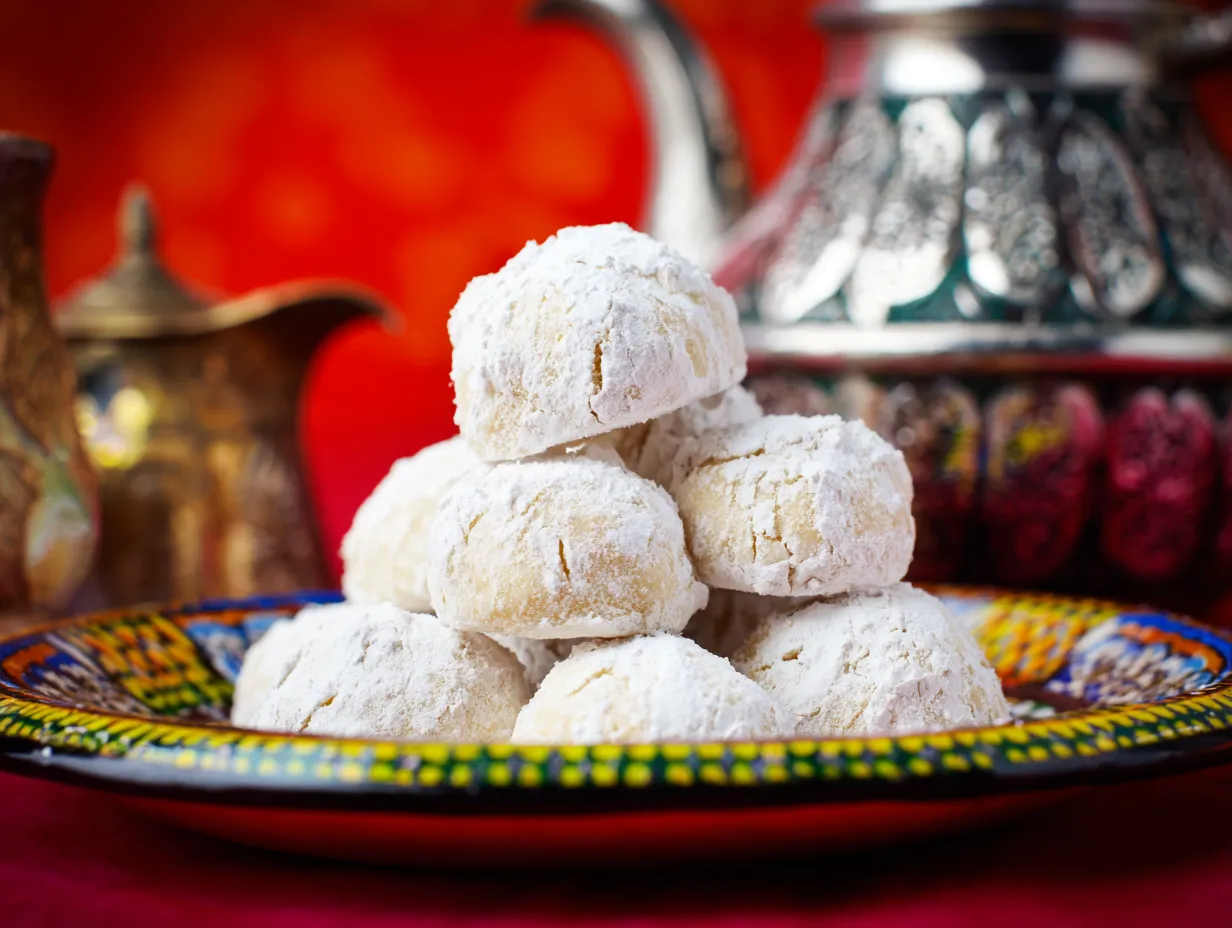
Have you ever taken a bite of a cookie and been instantly transported to a place you’ve never been? That’s the magic of Ghoriba the authentic Moroccan coconut snowball cookie. These aren’t your typical macaroons or basic sugar balls; they are a delightful, fragrant journey wrapped in a thick, snowy layer of Confectioner’s Sugar. With their signature cracked tops, intensely moist interiors, and the unmistakable scent of Orange Blossom Water, these cookies are genuinely an Amazing! treat. We know you want a recipe that’s not just good, but real, so we’ve stripped away the noise to bring you the genuine method cherished across the Maghreb. Ready to bake a piece of Morocco in your own kitchen? Let’s dive into what makes this Ultimate recipe so special!
Key Takeaways: Your Baking Checklist
If you’re skimming for the essentials before diving into the full recipe, here are the non-negotiable tips to ensure your Moroccan Coconut Cookies come out perfectly moist and chewy every time.
- Mind the Moisture: Always let the dough rest for at least 15 minutes after mixing. This allows the shredded coconut and semolina (if using) to fully hydrate, preventing dry, crumbly dough.
- The Orange Blossom Secret: Don’t skip the Orange Blossom Water! It provides the iconic, gentle floral fragrance that differentiates a true Ghoriba from any other coconut cookie.
- The Crack Technique: To guarantee the beautiful, cracked surface, roll the cookie balls thickly in Confectioner’s Sugar and start the bake at a higher temperature for the first five minutes before reducing it.
- Don’t Overbake: Pull the Easy Coconut Snowball Recipe cookies out of the oven when they still look pale and slightly soft. They will continue to set as they cool, ensuring that Craveable, chewy center.
Table of Contents
1. The Amazing Magic and History of Ghoriba
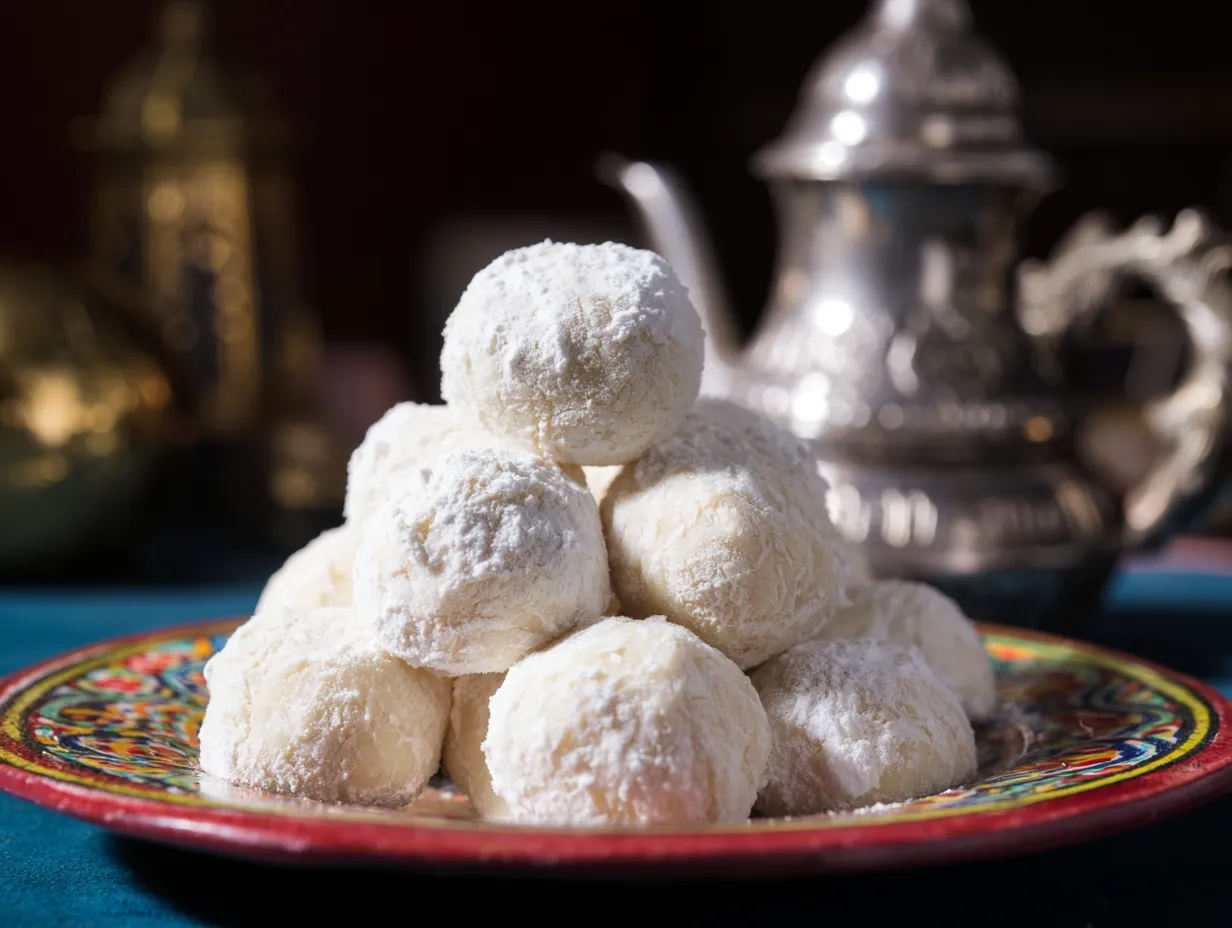
Have you ever tasted a cookie that instantly transports you across the globe? That’s exactly the amazing magic contained within these Authentic Moroccan Coconut Snowball Cookies. Known locally as Ghoriba (pronounced gho-ree-bah), this isn’t just a dessert; it’s a centuries-old tradition baked into a perfect, sugar-dusted sphere. It’s a treat that evokes instant joy, blending a simple, wholesome texture with an intricate, floral aroma. If you’ve been searching for that one truly remarkable North African dessert that captures the heart of Moroccan hospitality, you’ve officially found it. Our goal here is to guide you in recreating this powerful, authentic experience right in your kitchen.
The Cultural Heart of Moroccan Sweets
In Morocco, food is never simply sustenance it’s an expression of warmth, family, and profound celebration. Ghoriba holds a truly special place in this cultural tapestry, shining brightest during religious festivals like Eid and major family gatherings. When a guest arrives, presenting a tray of these magnificent, powdered coconut cookies isn’t just polite; it’s a time-honored gesture of respect and welcome.
This is where the magic of homemade treats intersects with deep-seated tradition. What does mastering this specific recipe mean for you, the modern baker?
- You are participating in a rich history passed down through generations of cooks across the Maghreb.
- The recipe is incredibly satisfying to master a true baker’s badge of honor once you nail that signature crackle.
- By understanding the context, you move past just mixing ingredients; you’re serving a piece of edible history.
By sharing these Moroccan Coconut Snowball Cookies, you aren’t just serving dessert; you are giving your guests an authentic taste of Morocco.
What Makes the Macaroon-Like Texture So Unique?
What sets the Ghoriba apart from a standard European macaroon or simpler coconut cookie? It’s all about the remarkable, intentional contrast in texture.
This confection features a signature structure that’s both chewy and fragile, achieved through careful ingredient balance and a specific baking method:
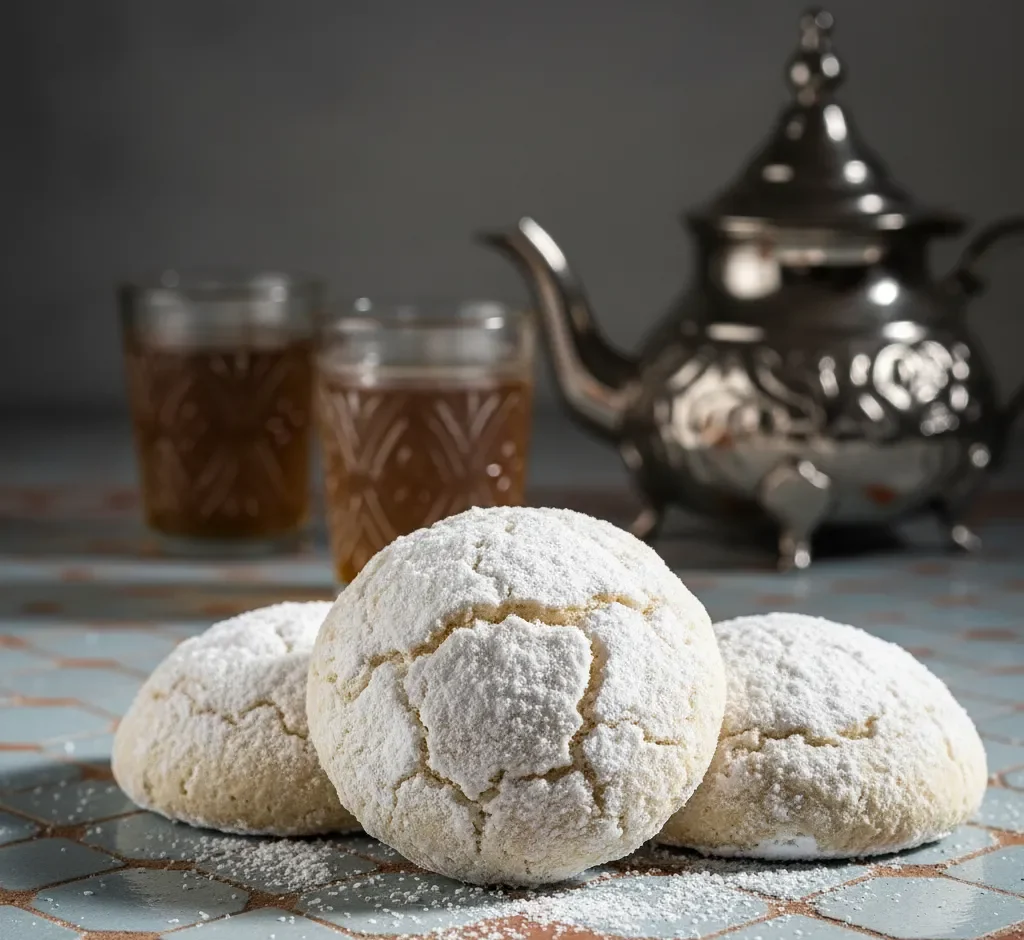
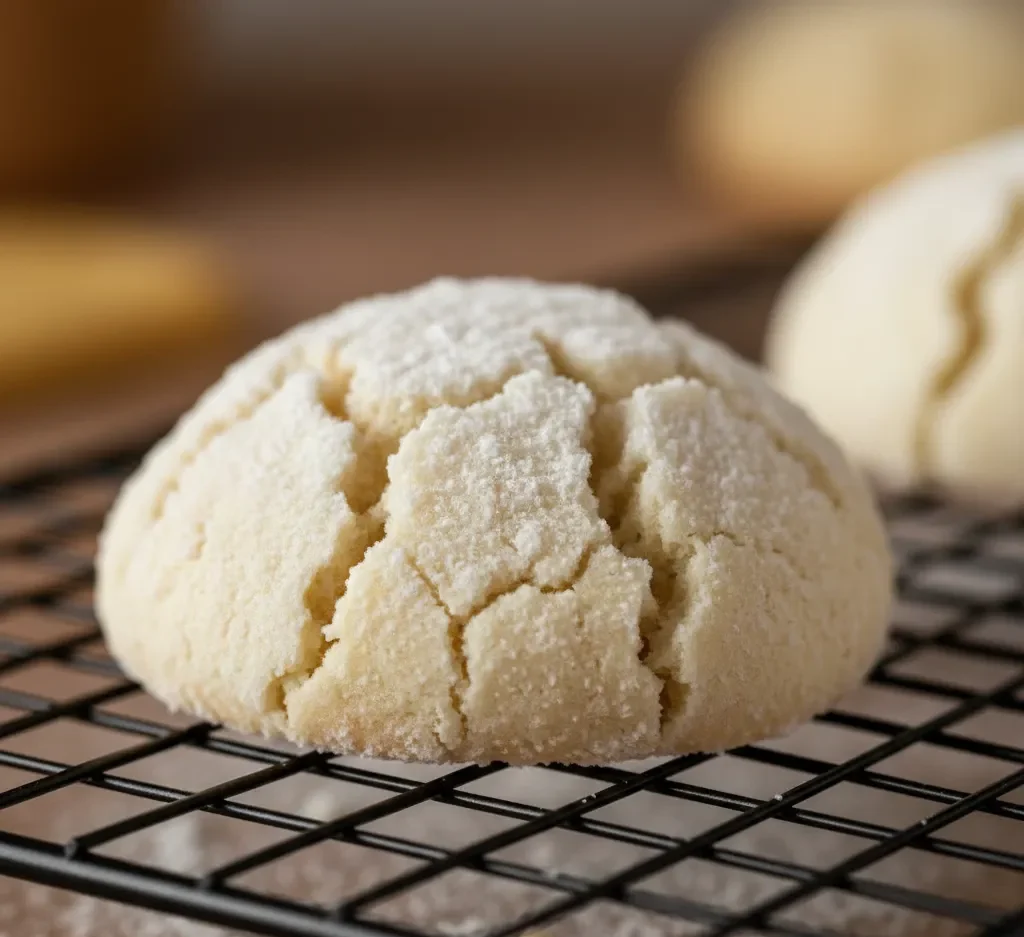
- The Crackled Exterior: A beautiful, slightly dusty, and crisp crust that results from the initial high-heat bake and the final, generous coating of confectioner’s sugar.
- The Chewy Core: Thanks to the inclusion of finely ground coconut and, optionally, a touch of semolina, the center remains incredibly moist, dense, and elastic.
- The Melt-in-Your-Mouth Finish: This successful balance creates a cookie often described as “crackled and gooey” the definitive texture of a perfectly baked Authentic Moroccan Coconut Snowball Cookie.
For those of you focused on maximizing that coveted chewiness: the secret lies in the quality of your coconut. Aim for fresh, finely processed flakes if possible, as the moisture level is crucial.
Why Orange Blossom Water is Non-Negotiable
If you try to skip this one ingredient, you’re missing the soul of the Ghoriba. Orange blossom water (or mazhar in Arabic) is the aromatic cornerstone of many Moroccan desserts. It’s not just an extract; it’s a delicate, complex distillation of orange blossoms that provides a subtle, deeply satisfying perfume-like finish.
Why is this essential for achieving true authenticity?
- Aroma: It gracefully cuts through the sweetness of the sugar and the richness of the coconut, preventing the cookie from feeling heavy or cloying.
- Depth: It instantly adds a layer of flavor complexity that distinguishes the authentic North African version from simpler global recipes.
- Tradition: It links the modern cookie directly back to its historical roots, honoring the classic flavor profile cherished for centuries.
Expert Tip: To guarantee a deep, pervasive floral scent in every single bite, try incorporating a few extra drops of orange blossom water into the simple syrup used for dipping before the final sugar roll. This is the secret step that elevates your baking from good to truly amazing!
2. Essential Ingredients for the Ultimate Flavor
If the history of Ghoriba is the soul of this cookie, then the essential ingredients are its backbone. Don’t be fooled by the cookie’s simple appearance; mastering the recipe is all about quality and understanding how each component interacts. We aren’t just listing items; we are exploring the why behind what makes this specific dessert so incredible. Are you ready to dive into the core flavors? Let’s check your pantry!
| Quantity | Ingredient |
| 2 Cups | Dried, unsweetened finely shredded Coconut |
| 1 Cup | Granulated Sugar |
| 1/2 Cup | Vegetable or Canola Oil |
| 3 Large | Eggs |
| 2 Tbsp | Orange Blossom Water |
| 2 Tbsp | Finely ground Semolina (optional, but highly recommended for texture) |
| 1 tsp | Baking Powder |
| Pinch | Salt |
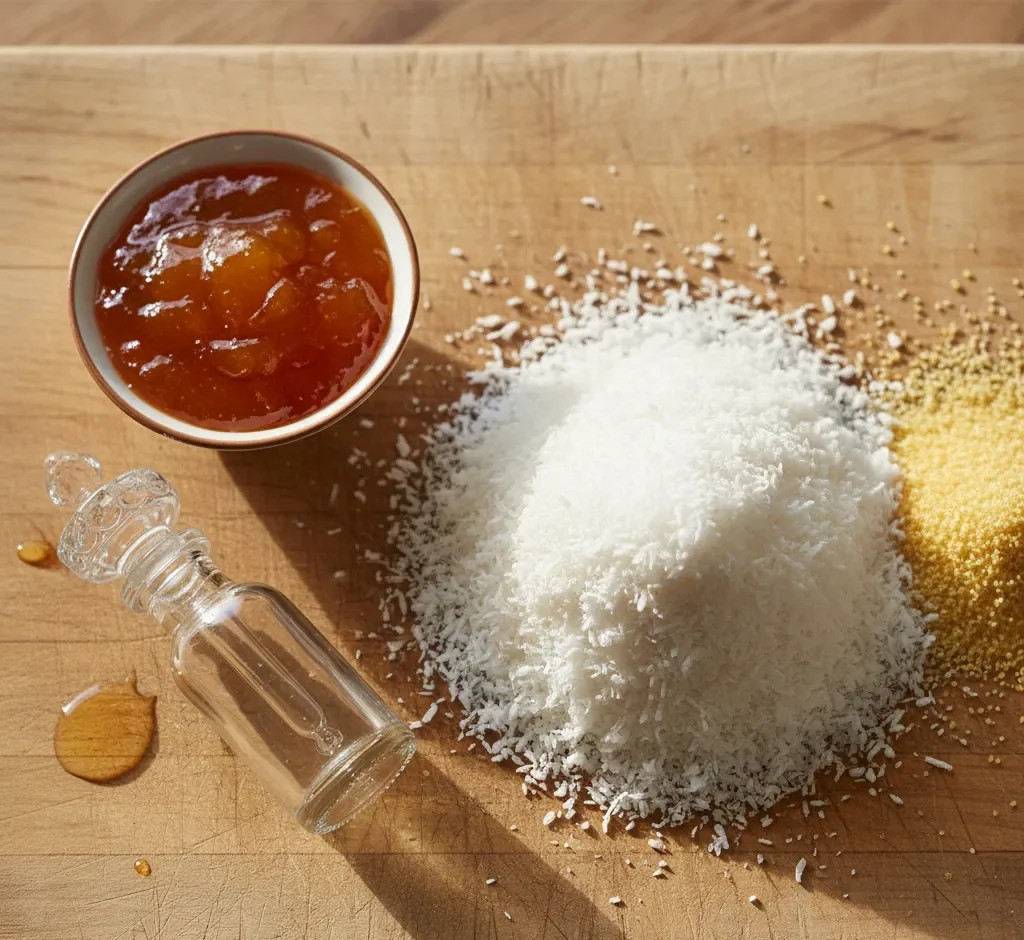
| 1/2 Cup | High-quality Apricot Jam (for dipping) |
| 1/2 Cup | Confectioner’s Sugar (for coating) |
The Secret to Perfect Coconut Shreds
When it comes to the coconut, size and moisture absolutely matter. For true Ghoriba texture that perfect blend of chewy and soft you must avoid the thick, large flakes sometimes sold for baking. Instead, seek out finely shredded coconut (often labeled desiccated). Using unsweetened coconut gives you complete control over the final sugar content and allows the natural flavor of the coconut to shine, rather than getting masked by excess sweetness.
A Quick Tip: If your desiccated coconut feels overly dry, try pulsing it lightly in a food processor a few times before mixing. This releases some of the natural oils, resulting in a more integrated, moist dough and preventing those frustrating, crumbly snowball attempts!
Choosing Your Binding Agent: Apricot Jam vs. Simple Syrup
The dipping process is what transforms a humble ball of dough into a glorious coconut snowball cookie. After baking, the cookies are traditionally dipped to help the outer coating adhere, and this step allows for some personalization.
While some recipes use a thin simple syrup infused with more orange blossom water, the classic and most popular method utilizes heated, strained apricot jam.
- Apricot Jam: Provides a subtle, fruity tang that contrasts beautifully with the coconut and sugar. It creates a slight tackiness that bonds the final confectioner’s sugar coating perfectly. Look for a high-quality jam with minimal added sugar for the best flavor.
- Simple Syrup: If you prefer a purer coconut flavor, a warm syrup (made from equal parts sugar and water) is a great alternative. Be sure to generously infuse it with orange blossom water to maintain that signature Moroccan scent.
Whichever you choose, the key is dipping the warm cookie into the warm binding agent this fusion ensures a cohesive, non-messy finish.
The Role of Finely Ground Semolina (Optional but Recommended)
Now for a touch of true Moroccan baking wisdom: the inclusion of semolina. While not all recipes for Moroccan Coconut Cookies call for this ingredient, adding a small amount of finely ground semolina (often used in pasta) takes the texture from good to sublime. It’s the secret to that delightfully chewy, slightly dense, and stable interior that makes the Ghoriba so addictive. It helps the dough absorb moisture evenly, leading to better structural integrity and that sought-after soft “cracked” exterior. Think of it as your insurance policy for perfect chewiness!
3. Step-by-Step Guide to Simple Cookie Perfection
You’ve gathered your premium ingredients, and now comes the truly rewarding part: turning them into those addictive little snowballs. Creating these treats is surprisingly approachable; it’s an Easy Coconut Snowball Recipe that delivers an exceptional payoff. The method relies on a few fundamental techniques that, once mastered, ensure you get that coveted, cracked finish every time. Let’s make some cookie magic!
Mixing and Preparing the Craveable Dough
The texture of your dough is the first and most critical step. Unlike butter cookies, this dough is oil-based and quite soft. It shouldn’t be dry or overly sticky; it should feel like thick, wet sand that just holds its shape when gently squeezed.
Here’s how to mix the dough for maximum chewiness:
- Wet Ingredients First: In a large bowl, whisk together the eggs, oil, and granulated sugar until well combined and slightly pale. This ensures the sugar begins to dissolve early, leading to a smoother interior.
- Add Aromatics: Stir in your essential Orange Blossom Water now. This distributes the fragrance evenly throughout the entire mix.
- The Coconut Foundation: Fold in the finely shredded coconut, semolina (if using), baking powder, and salt. Use a spatula to mix until just combined. Do not overmix! Over-working can result in tough cookies.
- The Rest Period: Cover the bowl and let the dough rest at room temperature for at least 15 minutes. This rest is non-negotiable it allows the semolina and coconut to fully absorb the liquid, stabilizing the dough and preventing it from crumbling when rolled.
Achieving Uniformity: Rolling the Snowball Shapes
To achieve that beautiful, uniform presentation that makes a tray of Ghoriba so visually appealing, consistency is key. We want perfectly sized ‘snowballs’ that are all the same, guaranteeing an even bake.
- Size Matters: Aim for small, bite-sized portions about 1 tablespoon or the size of a walnut. Using a small cookie scoop is the easiest way to ensure every snowball is identical.
- Moisten Hands: Keep a small bowl of Orange Blossom Water nearby. Dip your hands lightly (don’t soak them!) before rolling each ball. This prevents sticking, adds a whisper of extra flavor, and helps create a perfectly smooth surface.
- Gentle Pressure: Roll the dough gently but firmly into a sphere. Unlike rolling pie crust, you want minimal handling to keep the dough cool and moist.
The Crucial Dipping and Double-Bake Method
This is the technique that truly defines the Ghoriba and transforms them from simple baked coconut balls into gorgeous Moroccan treats.
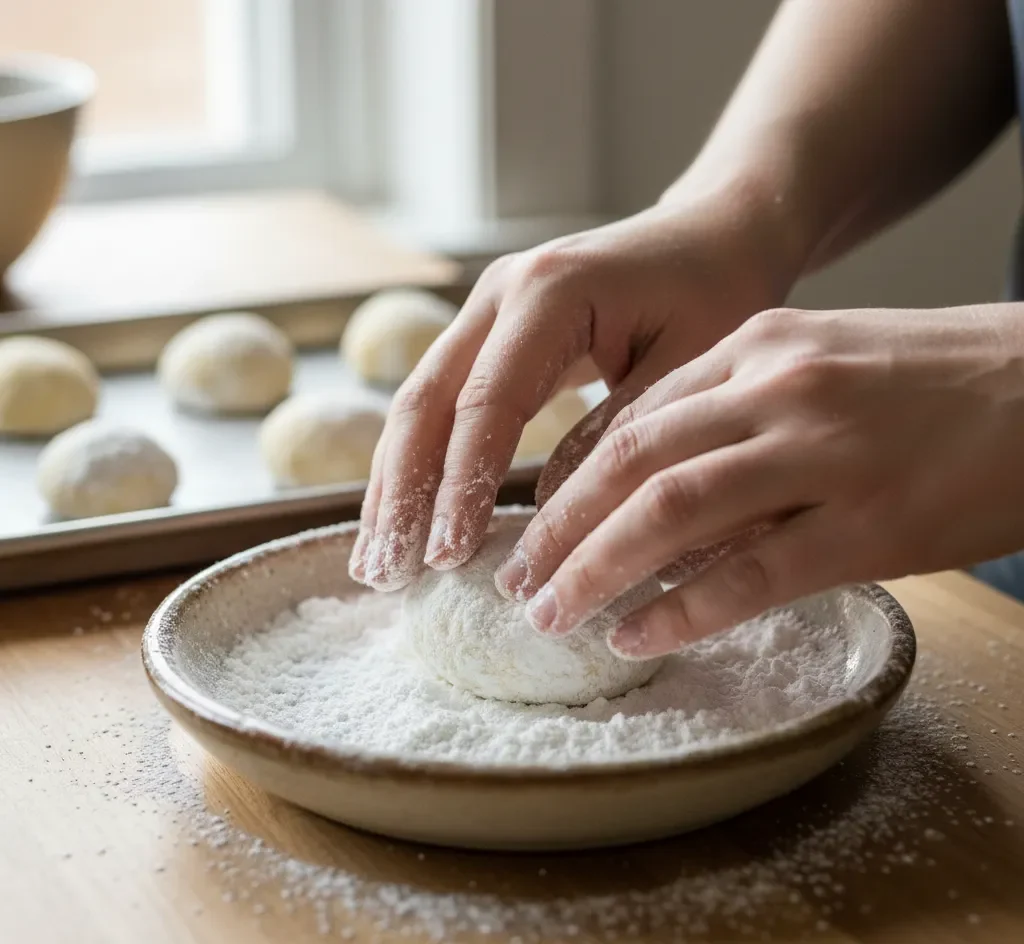
- The Sugar Bath Prep: Place a generous amount of Confectioner’s Sugar (powdered sugar) into a shallow dish. If you are using Apricot Jam, heat it gently in a small saucepan and strain it to remove any large fruit pieces.
- The Dip: Once the rolled dough balls are ready, roll each one thoroughly in the Confectioner’s Sugar. Press the sugar into the surface gently, ensuring a thick, matte white coating.
- The Bake: Place the balls on a parchment-lined baking sheet, leaving ample space between them. The initial high-heat exposure (for about 5 minutes) is what forces the dough to crack, achieving the classic look. Then, drop the temperature down to finish the bake. Don’t overbake; the center should remain soft and craveable!
The Iconic “Cracked” Appearance: How to Guarantee Success
Why do we love the sight of that naturally “cracked” top? Because it signals authentic technique! It’s the visual cue that your Simple Magic worked. This technique is easier than you think and relies on precise temperature control:
- High Heat to Start: Preheating your oven correctly and exposing the sugar-coated cookie to that burst of initial heat is the mechanical trigger for the cracking.
- The Sugar Barrier: The thick layer of Confectioner’s Sugar coating the dough acts as a kind of ‘crust,’ which solidifies quickly while the interior is still expanding, forcing the surface to fracture beautifully.
- Avoid Handling: Once they crack, do not touch them. Let them cool completely on the baking sheet before proceeding to the final dip.
4. Troubleshooting: How to Achieve Ultimate Coconut Snowball Success
Even with the most straightforward Easy Coconut Snowball Recipe, little things can go wrong but don’t panic! Mastering the Authentic Moroccan Coconut Snowball Cookies is less about following a rigid formula and more about understanding the dough’s texture. We want you to feel confident, so here is a guide to solving the most common issues, ensuring your final result is truly Ultimate.
Why Isn’t My Ghoriba Cracking on Top?
The beautiful, fractured surface is the signature of a successful Ghoriba. If your cookies come out smooth, it means the surface set too slowly, or the expansion wasn’t forceful enough.
- The Problem: Smooth tops, not cracked.
- The Fix: Oven Temperature is Key. The dough needs a shock of heat to expand rapidly before the exterior sets. Ensure your oven is fully preheated to the initial high temperature before placing the cookies in. Don’t rely on the oven light; use an oven thermometer!
- The Fix: Dough Wetness. If the dough is too dry, it won’t have enough steam built up to push through the crust. Check that you used the correct amount of oil/eggs. If the dough seems crumbly after the rest period, mix in a few drops of extra oil or Orange Blossom Water.
- The Problem: Cookies spread too much.
- The Fix: Chill Time. If your kitchen is warm, the oil in the dough might be too soft. Give the rolled, sugar-coated balls a quick 10-minute chill in the refrigerator before baking. This helps the cookies hold their shape during the initial high-heat blast.
“Baking is an act of creation, and like any creation, it often requires gentle correction. Patience and precision are the spices of an Ultimate baker.”
Dealing with Crumbly Dough or Hard Centers
The perfect Moroccan Coconut Cookie is simultaneously crisp on the outside and wonderfully moist and chewy inside. A tough center signals either too much baking time or incorrect ingredient ratios.
- If the Dough Crumbles During Rolling:
- The Fix: Moisture Check. Your coconut was likely too dry. Slowly mix in an extra teaspoon of oil or Orange Blossom Water until the dough holds its shape when squeezed without feeling greasy.
- If the Cookies Are Hard After Cooling:
- The Fix: Under-Baking is Over-Baking Protection. These cookies set up and firm up significantly as they cool. If they look completely golden-brown when you pull them out, they are already overbaked. They should look barely set and still feel quite soft when you remove them from the oven. Aim for a pale, soft center. Remember, you want that Craveable chewiness, not cookie brittle!
Storage and Shelf-Life for Ultimate Freshness
These wonderful treats actually improve slightly after a day! Knowing how to store them is essential to preserving their texture and their delicate scent of Orange Blossom Water.
- Cool Completely: Always let the cookies cool entirely on the baking sheet before dipping or storing. Moving them too soon will cause them to fall apart.
- Airtight is Best: Once cooled, dipped, and coated with Confectioner’s Sugar, store your Moroccan Coconut Snowball Cookies in an airtight container at room temperature.
- Longevity: They will remain fresh and delicious for about one week. You can also freeze the baked cookies (un-dipped) for up to three months. Just defrost them and proceed with the dipping and final sugar coating when you’re ready to serve!
5. Serving & Pairing: Elevating Your Moroccan Dessert Experience
You’ve successfully baked a batch of authentic Ghoriba! Now comes the best part: sharing and enjoying this gorgeous North African dessert. How you present these snowball cookies and what you pair them with can elevate the entire experience, transforming them from a simple cookie into a sophisticated cultural treat.
Traditional Pairings and Occasions
In Morocco, these cookies are far more than just a snack; they are a symbol of hospitality and celebration.
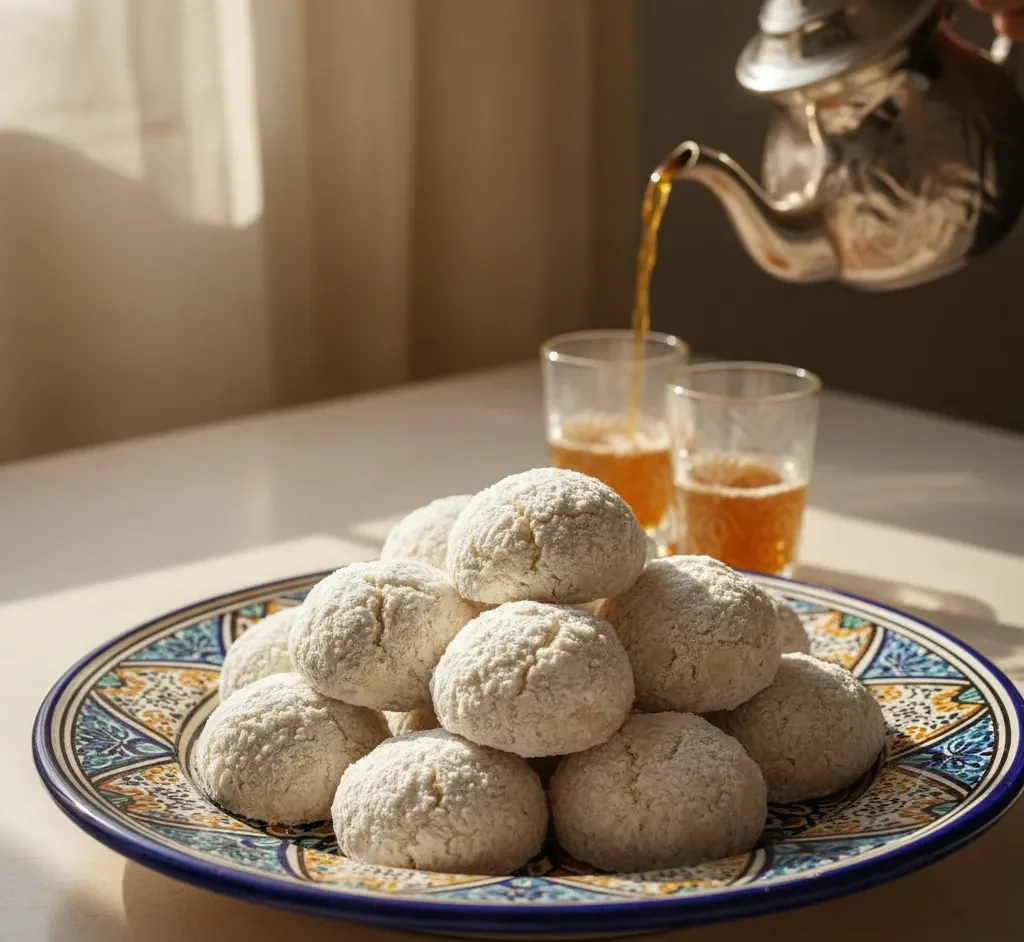
- Moroccan Mint Tea: The definitive pairing. The warm, sweet, and highly aromatic traditional mint tea cuts through the sweetness of the coconut snowball cookie, providing a beautiful balance. Serving these cookies with a freshly brewed cup of mint tea is the most authentic way to honor this recipe.
- Special Celebrations: You’ll find these cookies, often alongside other tiny sweets, presented during major holidays, most notably as Eid treats. If you’re hosting a dinner or celebration, including Ghoriba on your dessert platter instantly adds a touch of exotic elegance and warmth.
- Modern Coffee Pairings: For a modern twist, these cookies are delightful alongside a strong, freshly pulled espresso or a simple latte. The rich, creamy coffee complements the chewy coconut and the subtle floral notes of the orange blossom water.
Presentation Tips for Visual Appeal
The final look matters, especially for a blog post! Here are a few ways to make your Authentic Moroccan Coconut Snowball Cookies truly shine on your table:
- The Final Dip: After they have cooled and been double-baked, quickly reheat your apricot jam or simple syrup. Dip the bottom of each cookie lightly into the warm liquid, then immediately roll it one last time in a fresh bowl of Confectioner’s Sugar. This ensures a pristine, thick white coat.
- Show the Crack: When arranging them, make sure the beautiful cracked tops are facing upward. Serve them on a colorful, intricately patterned platter think blues, greens, or terracotta tones typical of Moroccan ceramics to contrast with the pure white of the snowballs.
- Garnish: A gentle sprinkling of finely chopped pistachios or a single, small edible flower placed next to the cookies can add a pop of color and visual interest.
More North African Dessert Delights to Explore
If you loved mastering this Ghoriba recipe, you’re ready to explore the vast and delicious world of North African dessert cuisine! Many cookies in this region, like Ghriba Bahla (a cracked semolina cookie) or Fekkas (biscotti), share similar principles of simple ingredients delivering complex flavors.
We believe that baking is a journey, not a destination. These Moroccan Coconut Cookies are just the beginning of your adventure into the delicious, aromatic, and history-rich treats of the Maghreb. Don’t forget to link up to our guide on semolina cookies if you want to diversify your cookie platter!
Conclusion: Share Your Sweet Success
Congratulations! You’ve mastered the art of baking the Authentic Moroccan Coconut Snowball Cookies. Whether you prepared them as Eid treats, for a special family gathering, or just to enjoy with your afternoon tea, you’ve created a delicious piece of North African dessert heritage. This recipe is proof that the simplest ingredients like coconut, sugar, and a little Orange Blossom Water can yield the most profound and delicious results. We truly hope you found this guide helpful and that your kitchen is now filled with the sweet, unmistakable aroma of success.
Q&A: Your Moroccan Cookie Questions Answered
This section tackles common questions from fellow bakers, offering clear, authoritative answers for complex baking topics:
Q: Can I make this cookie recipe gluten-free?
A: Absolutely! This specific Authentic Moroccan Coconut Snowball Cookies recipe is naturally gluten-free if you stick to the pure, finely shredded coconut, sugar, eggs, and baking powder. Even the optional semolina is often a wheat byproduct, so if you are strictly gluten-free, simply increase the amount of shredded coconut slightly to compensate for the missing bulk. Always double-check your baking powder labels for gluten-free certification.
Q: Why do the cookies taste overwhelmingly of soap or perfume?
A: This is a common issue when first experimenting with Orange Blossom Water! It is an extremely potent flavor, and a little goes a long way. If the floral note is too strong, you may have used too much. Next time, measure precisely, or try substituting half the amount with simple vanilla extract for a subtler, sweeter aroma. Remember, the floral scent should be a pleasant background note, not the dominant flavor.
Q: Can I use different types of jam for the dipping step?
A: While classic Ghoriba uses apricot jam which provides a subtle tartness that balances the sweetness of the coconut you can absolutely experiment! A strained raspberry jam works beautifully, offering a slightly sharper flavor, or you could opt for a thick honey thinned with a bit of warm water. The purpose of the jam is to act as a warm, sticky glue for the final layer of Confectioner’s Sugar, so ensure it is warm and seedless before dipping.