
Introduction
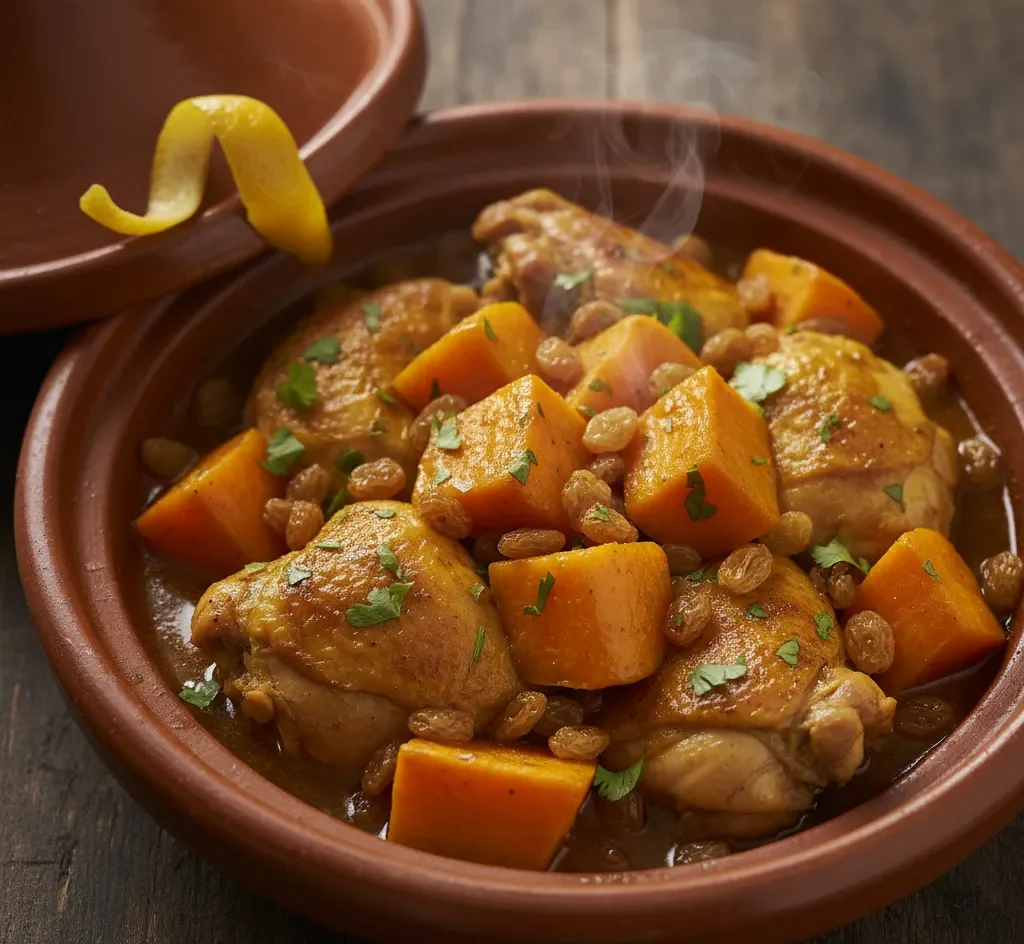
There are some meals that simply transcend the dinner table and become instant memories. This Chicken and Sweet Potato and Raisins Tagine: Perfect Dinner recipe is one of them. Hailing from the rich culinary traditions of Moroccan cuisine, this dish captures a brilliant dichotomy: a luxurious, slow-cooked stew that feels both exotic and utterly comforting.
Forget everything you think you know about weeknight chicken. This is a journey into the masterful world of sweet and savory chicken, where warming Ras el Hanout spices embrace earthy sweet potatoes and plump, caramelized raisins. Whether you cook it low and slow for a deep, complex flavor or use a pressure cooker for speed, the result is the same: a stunning, fork-tender comfort food classic that’s guaranteed to impress.
Ready to transform your kitchen into a fragrant, North African oasis? Let’s dive into the core takeaways of this incredible tagine recipe best practice guide!
Key Takeaways
After diving deep into the ingredients and cooking methodology, here are the most important elements to remember for achieving a truly amazing tagine every time:
- Patience in Braising: The success of this Moroccan chicken stew relies on the low-and-slow heat of braising. Resist the urge to open the lid frequently, especially during the crucial first hour. This steam retention is the secret to ultimate meat tenderness and flavor concentration.
- The Power of Contrast: The flavor profile is defined by the tension between sweet and savory. Do not skip the golden raisins and a touch of honey (or sugar) alongside the bright, briny pop of preserved lemons. These counterpoints are non-negotiable for an authentic tagine.
- Aromatic Foundation: Always spend a few minutes searing the chicken and properly sautéing the onions, ginger, and garlic until soft before adding the liquid. Building this base layer of flavor prevents the dish from tasting one-dimensional.
- Don’t Forget the Finish: A generous handful of fresh cilantro and mint, added right at the end, provides a cool, herbaceous contrast that brightens the entire feast.
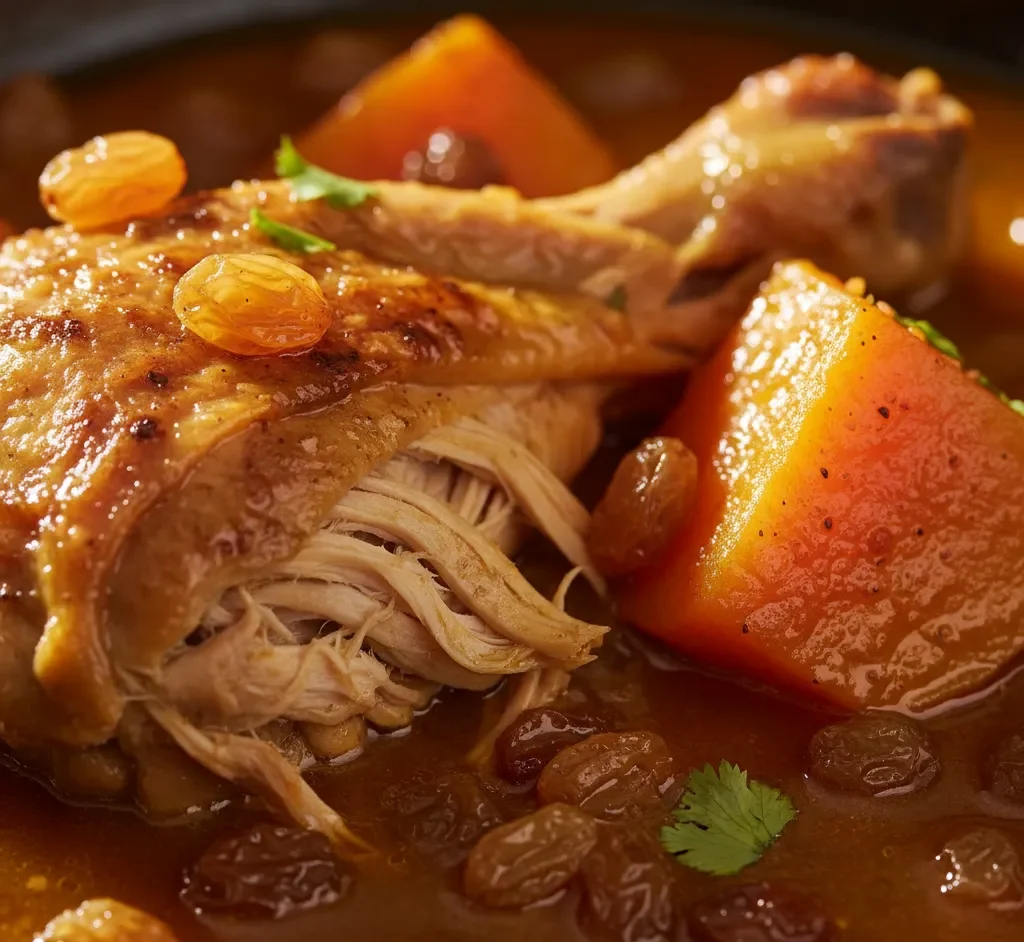
Table of Contents
The Moroccan Secret: Mastering the Sweet and Savory Balance
Have you ever wondered what makes certain dishes feel like a warm, comforting hug? When it comes to global comfort food, few things hit the spot quite like an authentic Moroccan chicken stew. This isn’t just a meal; it’s an experience rooted in centuries of North African tradition, where the spice cabinet holds the key to culinary magic.
The secret to this chicken and sweet potato and raisins tagine lies entirely in its masterful ability to dance between sweetness and spice, richness and acidity. We are moving far beyond the simple concept of sweet dishes or savory ones; we are exploring a harmonious flavor profile that is completely unique to Moroccan cuisine.
Decoding the Ras el Hanout Spice Blend
Every great tagine starts with a great spice blend, and for us, that means Ras el Hanout. This name literally translates to “head of the shop,” implying it’s the best blend the spice merchant has to offer. But what exactly is inside this legendary mixture, and why is it so crucial to our sweet and savory chicken?
- Complexity is Key: Ras el Hanout isn’t a single spice; it’s typically a mixture of 10 to 30 different components. Think of exotic additions like dried rosebuds, cubeb peppers, mace, and lavender.
- The Warming Base: At its core, you’ll find classic, warm spices like cinnamon, cardamom, and clove, which lay the foundation for the dish’s deep flavor.
- A Unique Voice: This complex blend ensures that every bite of your chicken and sweet potato and raisins tagine offers something new, making it feel less like a weeknight meal and more like a trip to Marrakech.
Harnessing the Earthy Sweetness of Sweet Potatoes
While the chicken is the star protein, the humble sweet potato is the unsung hero that gives this Moroccan chicken stew its incredible texture and body.
The natural sugars in the potato caramelize slightly as the dish slow cooks, releasing a depth of flavor that is miles ahead of a standard potato. More importantly, as the sweet potatoes soften, they begin to break down, naturally thickening the braising liquid into a rich, velvety sauce.
- Optimal Variety: Choose firmer sweet potato varieties (like Jewel or Garnet) that hold their shape better than softer ones, preventing the stew from turning mushy.
- The Power of Density: Cutting the potatoes into larger, uniform 1.5-inch chunks ensures they cook evenly alongside the chicken.
The Essential Role of Golden Raisins and Honey
This is where the ‘sweet’ truly earns its place in the sweet and savory chicken debate. The raisins aren’t just an afterthought; they are a vital contrast.
As the golden raisins plump up in the simmering, spiced broth, they release concentrated bursts of fruity sweetness. A touch of honey (or maple syrup for a vegan option) added toward the end enhances this dried fruit element, creating that classic comfort food classic profile that truly satisfies the soul. This interplay of spice and sugar is what makes the tagine an unbelievable culinary treat.
Sourcing and Prep: Quality Ingredients for a Superior Stew
A great tagine is built from the ground up. You can have the best Ras el Hanout blend in the world, but if your base ingredients aren’t right, the final flavor profile the hallmark of the perfect dinner will fall flat. Don’t worry; getting this right is simpler than you think. This section focuses on the non-negotiable elements you need for an truly authentic tagine experience.
First things first, let’s make sure your shopping basket is complete.
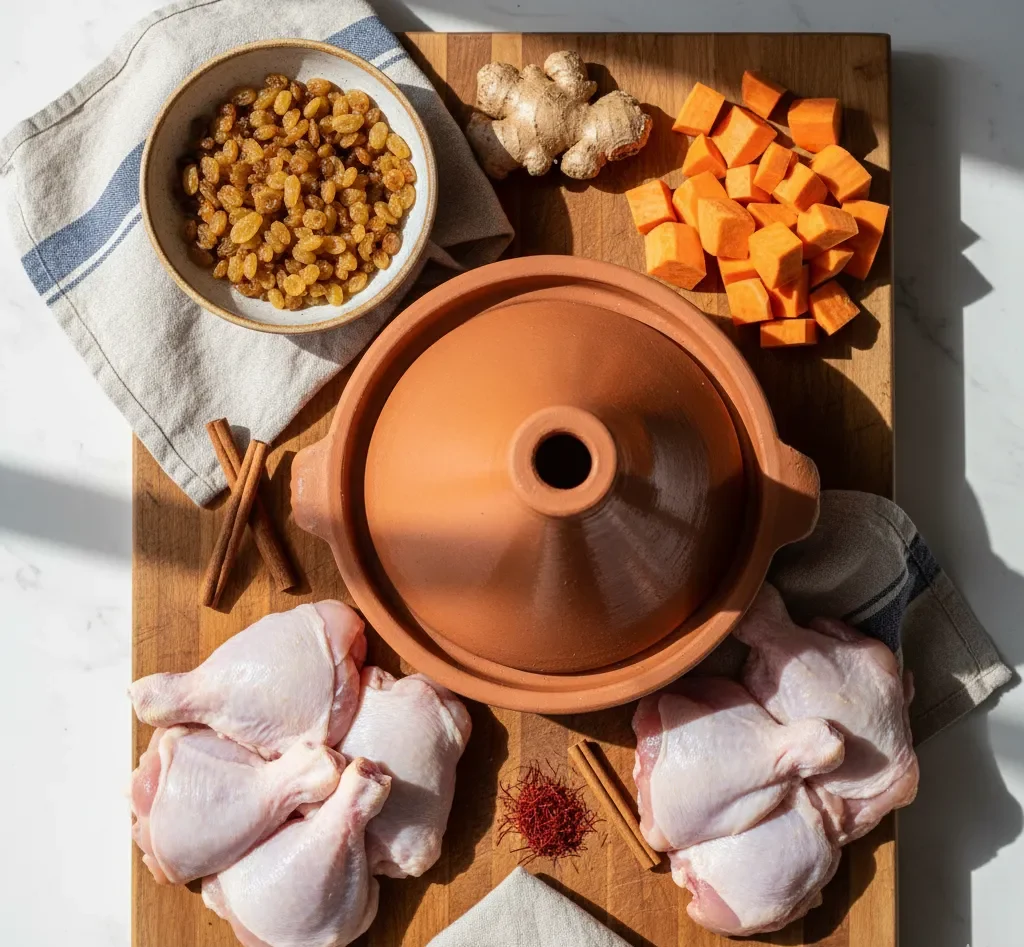
| Quantity | Ingredient | Notes on Sourcing |
| 2 lbs | Bone-in, Skin-on Chicken Thighs | Provides the deepest flavor and stays moist during long, slow cooking. |
| 2 large | Sweet Potatoes | Diced into 1.5-inch chunks. Look for firm, dense varieties. |
| 1 large | Yellow Onion | Finely diced. The base of all great stews. |
| 4 cloves | Fresh Garlic | Minced or finely grated. |
| 1 Tbsp | Fresh Ginger | Grated or finely minced. The ginger brightens the warming spices. |
| 1 cup | Chicken Broth (low sodium) | Essential for creating that rich braising liquid. |
| 1/2 cup | Golden Raisins | Choose plump, soft raisins for maximum flavor release. |
| 1 tsp | Saffron Threads | Crumbled slightly before use. Provides color and subtle flavor. |
| 1 Tbsp | Ras el Hanout | Your key spice blend! |
| 1/2 tsp | Cinnamon | Ground. Use in addition to the blend for extra warmth. |
| 2 Tbsp | Olive Oil | For browning the chicken and sautéing aromatics. |
Selecting the Best Chicken Cuts for Slow Cooking
When preparing a dish that relies on long, gentle heat whether in a traditional tagine pot or your trusty slow cooker you must choose a cut of meat that thrives under those conditions. Lean breast meat will dry out; dark meat, however, gets better the longer it cooks.
We recommend bone-in, skin-on chicken thighs. Here’s why this choice is crucial for a tender Moroccan chicken stew:
- Moisture Retention: The combination of fat and bone ensures the meat remains incredibly juicy and tender, literally falling off the bone by the time the dish is ready.
- Flavor Depth: The bones release collagen and gelatin into the braising liquid, naturally enriching and thickening the sauce. This means less work for you, and a more luxurious finish.
Before you begin, pat the chicken pieces thoroughly dry. A dry surface is vital for getting a beautiful golden-brown sear, which locks in flavor before you even start the braising process.
Saffron, Ginger, and Cinnamon: Layering the Aromatics
Think of your aromatics ginger, onion, and garlic as the supporting cast that elevates the star. Don’t just toss them in! Timing is everything when layering these potent flavors.
- Initial Sauté: Start by sautéing the diced onion until it’s soft and translucent. Only then add the garlic and fresh ginger, cooking them for just 30 seconds until fragrant. This prevents them from burning and turning bitter.
- The Saffron Steep: To get the most from your precious saffron threads, steep them in a small amount of warm chicken broth for 10 minutes before adding them to the pot. This pre-hydrates the threads, maximizing both their color and their delicate flavor contribution to the authentic tagine spices.
- The Cinnamon Finish: While the cinnamon is present in the Ras el Hanout, adding a little extra ground cinnamon and perhaps a stick of whole cinnamon during the simmer provides a warm, sweet aroma that perfectly complements the sweet potato and raisins.
Getting the prep work done correctly now sets you up for effortless slow cooking later! Are you ready to move on to the actual cooking process and learn the secret to achieving fall-off-the-bone chicken?
From Pot to Plate: Step-by-Step Cooking Methodology
We’ve covered the flavor philosophy and gathered our quality ingredients—now for the magic of the transformation! The secret to truly unforgettable tagine lies not in how you cook it, but how slowly and gently you allow the heat to work. This process, known as braising, is what turns humble chicken and vegetables into a fork-tender, amazing dinner.
Whether you’re using an authentic clay tagine, a heavy Dutch oven, or even a slow cooker chicken tagine insert, the goal is the same: create a moist, even-heat environment.
The Art of Marination: Why Overnight is Optimal
If time is on your side, don’t skip this step! Marinating the chicken allows the aromatic spices especially the saffron and Ras el Hanout to fully penetrate the meat fibers. This is how you achieve deep, uniform flavor, rather than just seasoning the surface.
- Quick Marinade (Minimum): At least 30 minutes. Toss the chicken thighs with half of the spice blend, a drizzle of olive oil, and a squeeze of lemon juice.
- Optimal Marinade (Best): 4 to 12 hours. Marinate overnight in the refrigerator. The longer the marriage between the chicken and spices, the more fragrant and flavorful the final dish.
Building the Simmer: Stacking Ingredients in the Tagine Pot
Once your chicken is seasoned, you’re ready to build the stew. Unlike many conventional American stews, a tagine is often built with the ingredients layered rather than stirred together constantly.
- Searing the Chicken: First, quickly sear the marinated chicken thighs (skin-side down, if applicable) in olive oil until golden brown. Remove them and set them aside. This step adds rich color and flavor complexity.
- Aromatic Base: Cook your onions, ginger, and garlic until soft. Add the remaining dry spices and cook for 60 seconds until they become fragrant.
- The Layering: Return the chicken to the pot. Arrange the sweet potatoes and golden raisins around and over the chicken. Pour in your broth, making sure it comes about halfway up the ingredients (you don’t need to completely submerge everything).
- The Gentle Heat: Bring the liquid to a simmer, then immediately drop the heat to the absolute lowest setting possible. Cover the pot tightly. The key to a tender tagine is consistent, low heat that coaxes the meat to surrender its juices.
The Long, Gentle Simmer: Key to Tenderness
This is the non-negotiable step that gives you fall-off-the-bone slow-cooked chicken. Once the lid is on, leave it alone! Peeking under the lid releases precious steam, which is the very mechanism that ensures a moist cooking environment.
If you’re using a traditional tagine pot, the condensation drips down the steep sides back into the stew, concentrating the flavor a truly brilliant design.
- Time Check: Expect the braising process to take between 1.5 to 2 hours on the stovetop or 6 to 8 hours on LOW in a slow cooker. The chicken is ready when its internal temperature is 165∘F and the meat separates easily with a fork.
- The Final Touch: In the last 15 minutes, stir in your preserved lemons and any final seasoning adjustments, like a touch of honey or salt, to brighten the whole dish.

Perfect Pairings: Completing Your North African Feast
Congratulations! Your chicken and sweet potato and raisins tagine is finished, fragrant, and falling-apart tender. But wait serving this dish correctly is almost as important as cooking it. To truly transform this meal into a perfect dinner that captures the spirit of North African cooking, you need the right accompaniments.
Moroccan meals are often a feast a communal, layered experience. The tagine is the heart, but the surrounding side dishes provide textural contrast, temperature variation, and a crucial element for soaking up every drop of that rich, sweet and savory sauce.
Fluffy Couscous: The Non-Negotiable Side
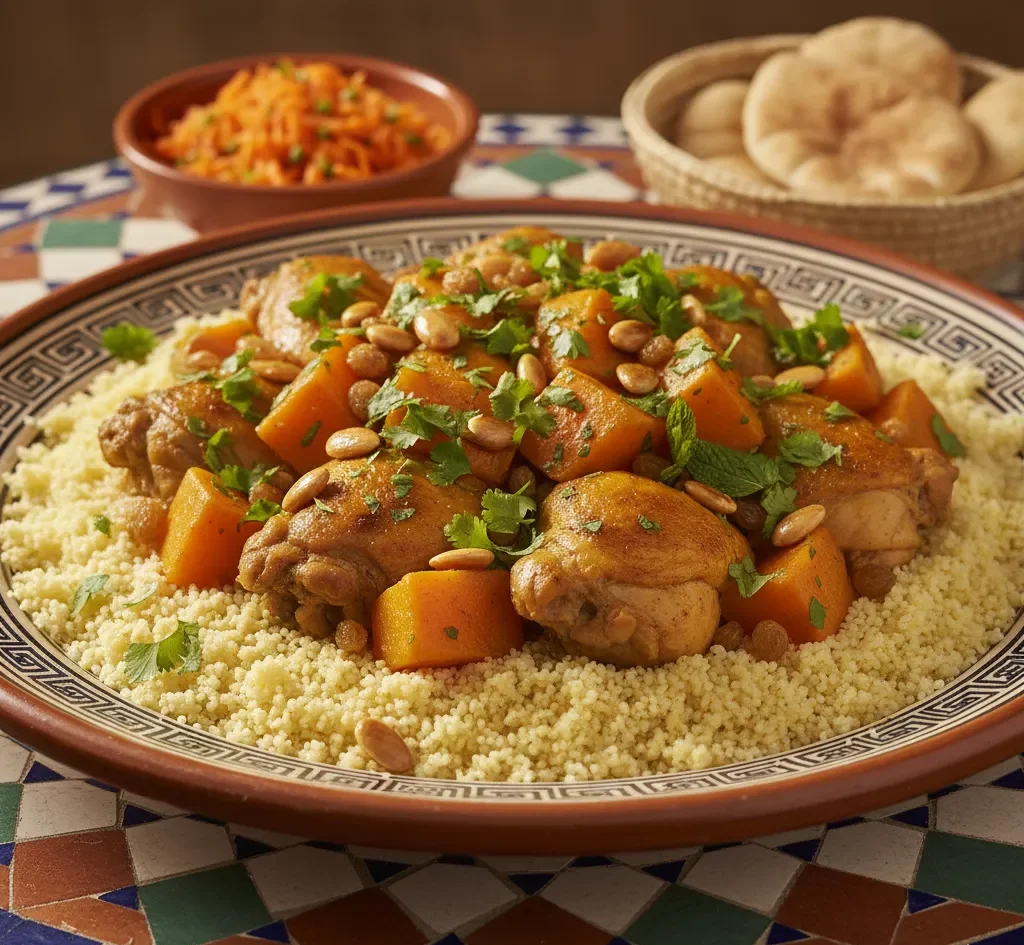
There’s simply no better partner for a tagine than expertly prepared couscous. This small, steamed semolina pasta is the ideal sponge for the luscious, spiced sauce created by the braising process. When done right, it should be light, airy, and fluffy, not sticky or dense.
- The Absorption Method: The best technique involves pouring boiling, salted liquid (broth or water) over the couscous and immediately covering it tightly. Let it sit for 5 minutes, then fluff vigorously with a fork.
- Aromatic Boost: For extra flavor, stir in a teaspoon of butter or a tiny pinch of saffron threads into the water before boiling.
- Serving Style: Serve the couscous heaped onto a large platter, creating a “bed” for the tagine, allowing the sauce to gently cascade over the grains.
Fresh Herb Garnish: Mint and Cilantro
After hours of slow cooking and warming spices, you need a jolt of freshness to awaken the palate. This is where the garnish moves from being decorative to functional.
A generous sprinkling of freshly chopped herbs added just before serving is critical.
- Cilantro’s Role: Provides an herbaceous, slightly sharp contrast to the heaviness of the chicken and sweet potatoes.
- Mint’s Touch: Finely minced fresh mint adds a cool, unexpected aromatic lift, especially when paired with the sweetness of the raisins.
- Texture: The crispness of the fresh herbs contrasts beautifully with the soft, melt-in-your-mouth texture of the comfort food classic stew.
Serving Dishes: Moroccan Carrot Salad or Flatbread
While couscous is essential, providing another small salad or a bread item ensures you cover all your bases texture, temperature, and portability.
- The Cool Counterpoint: A quick Moroccan carrot salad (carrots grated and dressed simply with orange juice, cinnamon, and cumin) offers a cool, bright, and slightly crisp element against the hot stew.
- Bread for Dipping: Offering warm pita or crusty bread is a universal gesture of hospitality and ensures that no drop of the delectable Moroccan chicken stew sauce is left behind.
As the great chef and food writer Julia Child once said, reflecting the communal nature of this dish:
“People who love to eat are always the best people.”
This tagine is a meal meant to be shared, enjoyed slowly, and savored. Don’t be afraid to serve it family-style, letting everyone reach in for the amazing flavors.
Troubleshooting and Variations: Your Tagine Q&A
Now that you’ve mastered the classic version of the chicken and sweet potato and raisins tagine, let’s talk about how to make this recipe truly your own, or how to fix it if things go slightly awry! Even the most skilled cook runs into an issue now and then, but don’t worry most tagine issues are incredibly simple to resolve. This section is all about ensuring your dish is consistently an amazing and effortless perfect dinner.
Too Watery? Simple Fixes for a Runny Sauce
Did your beautiful sauce end up thinner than you’d hoped? This often happens if the pot wasn’t sealed tightly, or if the chicken or sweet potatoes released more moisture than anticipated. Remember, you want a rich, viscous sauce that coats the couscous, not a soup!
Here are two quick troubleshooting methods to thicken your sauce right before serving:
- The Lid-Off Reduction: Simply remove the lid entirely during the last 15 minutes of cooking and raise the heat slightly (to a gentle bubble, not a boil). This allows steam to escape, reducing the volume of the liquid and concentrating the flavors.
- The Cornstarch Slurry: Mix one tablespoon of cornstarch with two tablespoons of cold water in a small bowl until completely smooth. Stir this slurry slowly into the simmering sauce. Let it cook for 2 to 3 minutes. The sauce will thicken beautifully and quickly without altering the flavor of the Moroccan chicken stew.
Speeding it Up: Adapting the Recipe for a Pressure Cooker
While the traditional slow cooking method is unbeatable for flavor development, sometimes life calls for speed! If you own an Instant Pot or other pressure cooker, you can slash the cooking time dramatically.
- Prep is the Same: Complete the searing and sautéing steps (the “Building the Simmer”) directly in the pressure cooker pot using the ‘Sauté’ function.
- Pressure Time: Assemble the ingredients as usual, seal the lid, and cook on high pressure for 18 to 20 minutes.
- Natural Release is Key: Allow the pressure to release naturally for at least 10 minutes before manually venting. This residual cooking time ensures the meat achieves that signature tenderness.
Ingredient Swaps: Using Apricots or Dates Instead of Raisins
If raisins aren’t your favorite, or if you simply want to introduce a slightly different character to your sweet and savory chicken dish, swapping the dried fruit is easy and encouraged in North African cooking!
- Dried Apricots: Use dried apricots for a more pronounced tangy and tart flavor. Cut them into halves before adding them to the pot so they plump up nicely during the braise.
- Dates: For a deeper, almost caramel-like sweetness, use pitted Medjool dates. Add them in the last 30 minutes of cooking to prevent them from dissolving entirely.
- Prunes: Prunes (dried plums) offer a rich, smoky sweetness that pairs wonderfully with the cinnamon and ginger.
By understanding these easy adaptations, you ensure this delicious best tagine recipe stays in your rotation, no matter your schedule or specific flavor preference.

Conclusion
We hope this deep dive has inspired you to grab your spices and try this truly unbelievable tagine! This recipe for Chicken and Sweet Potato and Raisins Tagine is more than just a set of instructions; it’s an invitation to engage with a powerful culinary history. It’s flexible, it’s forgiving, and it guarantees a sense of cozy, global elegance right in your own dining room.
This stew always tastes even better the next day, so consider making a double batch! We’d love to hear how you customized yours—did you use dates or apricots? Did you serve it with traditional flatbread? Let us know in the comments below!
If you want to dive deeper, we have great related guides on mastering fluffy couscous techniques and the simple art of making your own preserved lemons at home. Happy cooking!
Q&A: Quick Tagine Solutions
Here are quick answers to some of the most common questions people ask when making their first chicken with dried fruit stew:
Q: Can I use chicken breast instead of thighs? A: While you can, we strongly advise against it for this dish. Chicken breast will dry out quickly during the long braising time required to soften the sweet potatoes. If you must use it, reduce the cooking time to about 45 minutes and check for doneness often.
Q: Why do I need to use low-sodium broth? A: Because the sauce reduces and concentrates over time during the slow cooking process, the salt content also concentrates. Using low-sodium broth allows you to control the final seasoning precisely, preventing the stew from becoming overly salty.
Q: I don’t have a tagine pot. What should I use? A: A heavy, lidded pot like a Dutch oven (cast iron or enameled) is the perfect substitute. It retains heat well and ensures a moist cooking environment, perfectly mimicking the function of a traditional tagine pot. You can also follow the instructions for the slow cooker chicken tagine variation.
Q: Can this dish be frozen? A: Yes! This comfort food classic freezes beautifully. Cool it completely, then transfer it to an airtight container. It keeps well for up to three months. Thaw it overnight in the refrigerator and reheat gently on the stovetop, adding a splash of broth if the sauce has become too thick.