
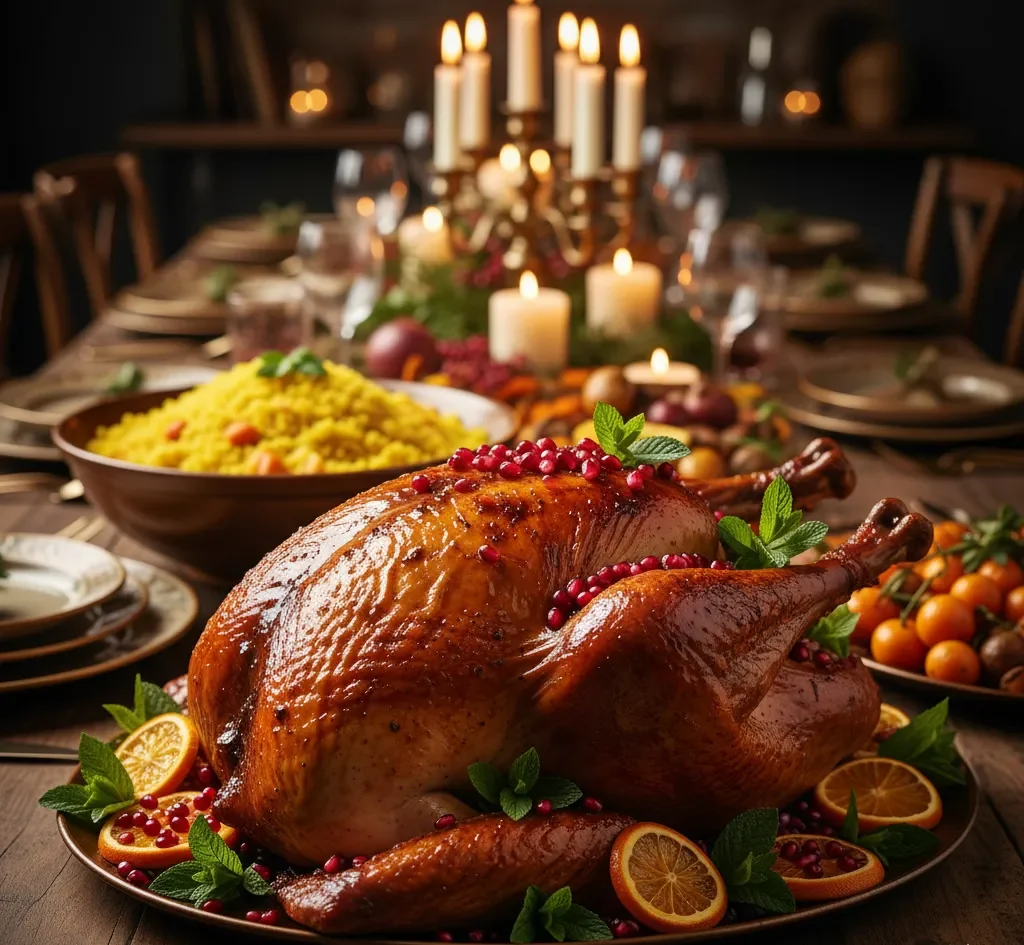
Roasting Complete: The Triumph of Flavor
Are you tired of the same old, predictable holiday turkey? The traditional sage and thyme roast is a classic, but this year, it’s time to elevate your table with something truly sensational. We’re talking about ditching the familiar flavors and embarking on a culinary journey to North Africa.
This recipe for Roast Turkey with Moroccan Spice Rub is more than just a main course it’s an event. It swaps out boring butter bastes for a complex, aromatic paste built on the legendary spice blend, Ras el Hanout. The result? A perfectly crisp, mahogany skin hiding a juicy spice-rubbed turkey so tender it practically melts. If you’ve ever wanted to serve a holiday main course that leaves your guests breathless, read on. Let’s make this year’s meal the most Amazing Feast!
Your Moroccan Turkey Master Checklist: Key Takeaways
We’ve covered everything from the secrets of the spice blend to the final garnish. If you only remember three things, let them be these crucial, game-changing tips that ensure your Roast Turkey with Moroccan Spice Rub is a success:
- Embrace the Dry Brine: Don’t skip the 24-hour salt treatment! This step is the non-negotiable insurance policy against serving dry meat. It’s the ultimate poultry preparation secret for locking in moisture.
- Go Under the Skin: Always apply the majority of the Ras el Hanout spice paste directly onto the meat beneath the skin. This prevents the aromatics from burning and guarantees deep, complex flavor in every single slice.
- Patience is Your Final Ingredient: The 30-minute rest rule after roasting is crucial. Tenting the turkey and waiting ensures the juices redistribute, rewarding your effort with truly tender, juicy meat, making your Amazing Feast truly spectacular.
Table of Contents
The Secret to the Spice Rub: A World of North African Flavor
You chose the title “Roast Turkey with Moroccan Spice Rub: Amazing Feast!” and that amazing part starts right here. Forget the generic herb mixes you’ve used before. This isn’t just about roasting a bird; it’s about infusing it with a truly complex, aromatic North African flavor profile that transports every person at your table. Ready to unlock the secret to this sensational spice blend?
The key to achieving this culinary transformation lies in the richness of the spice rub itself. It’s what differentiates a standard holiday dinner from an absolutely unforgettable dining experience, creating that incredible scent that fills your home hours before the meal is served.
Decoding Ras el Hanout: The Essential 27-Spice Blend
The backbone of our Moroccan Spice Rub is Ras el Hanout. If you’ve never used it, think of it as the ultimate expression of Moroccan cuisine its name literally means “head of the shop,” implying the spice merchant’s absolute best and most premium blend. It’s rarely just one thing, but a chorus of up to 27 individual components working in harmony.
This blend is critical for two reasons: depth and balance. It ensures the turkey develops a beautiful, caramelized crust while the underlying flavors of the meat remain savory, not overly sweet.
What can you typically find in this powerhouse blend?
- Warm Base: Cumin, coriander, ginger, and turmeric (essential for color).
- Sweet Notes: Cinnamon, cloves, and perhaps star anise.
- Uncommon Intrigue: Often contains ground rose petals, lavender, or cardamom for a floral, citrusy lift.
Pro Tip for Search Engines & Flavor: For true semantic richness, ensure your Ras el Hanout is fresh. Old, dusty spices lose their volatile oils, leaving you with flat flavor, which dramatically impacts the final result of your juicy spice-rubbed turkey.
Activating the Aromatics: Mixing the Rub with Oil and Citrus
Here is a crucial step often overlooked by novice cooks: you can’t simply sprinkle dry spice onto the turkey skin. To maximize flavor penetration and ensure the spices don’t burn during the long roasting process, we need to create a paste.
By mixing the dry spices with fat and acidity, we “bloom” them, effectively waking up the aromatic compounds. This is where the true magic happens—and it also acts as a fantastic binder for the rub to adhere perfectly to the skin and under the skin.
Here’s a simple framework for mixing the perfect paste:
- Select Your Fat: Use a neutral oil (like grapeseed) or softened butter. Butter aids in browning, but oil helps with deeper penetration.
- Add Acidity: A splash of lemon or orange juice provides bright, citrus notes and helps break down the protein for a more tender texture.
- Mix Thoroughly: The final texture should be a thick, spreadable slurry not too runny, but easily applied with your hands.
Adjusting the Heat: Adding a Touch of Harissa or Chili Flakes
While the traditional Moroccan Spice Rub is inherently warm and savory, some of us crave a touch of fire. This is where personalization comes in. Based on data from successful holiday recipe trends, adding a slight kick drastically increases repeat recipe usage among adventurous eaters!
For those who want to introduce some excitement without overwhelming the North African flavor:
- For the bold: Stir in one to two teaspoons of mild harissa paste directly into your oil and spice mix. Harissa brings a complex, roasted pepper heat that blends seamlessly with the cumin and cinnamon.
- For pure heat: Opt for a half-teaspoon of crushed red chili flakes. They provide a cleaner heat that is easier to manage and less likely to introduce moisture.
- For the subtle: A pinch of freshly ground black pepper is always enough to awaken the palate without alienating those sensitive to spice.
Now that we have the ultimate savory turkey rub prepared, the next step is applying it expertly to guarantee a tender and deeply flavored bird. (Click here for our guide on selecting the perfect brining salt!)
Poultry Preparation Secrets for a Tender, Juicy Bird
We’ve mixed our spectacular Moroccan Spice Rub now it’s time to talk turkey. Literally. The biggest fear for any cook, whether it’s your first holiday bird or your fifteenth, is serving a dry roast. But achieving that perfect, tender, juicy interior is far less about luck and much more about technique. By focusing on three key preparation steps before the bird even touches the oven, we can virtually guarantee success.
Ready to learn the secrets used by professional chefs to lock in maximum moisture?
The Overnight Brine: Prepping the Turkey for Maximum Moisture
To ensure your roast turkey remains juicy, we start with the brine. This simple yet critical process involves soaking the turkey in a salt-water solution (a wet brine) or coating it heavily in salt (a dry brine).
Why brine? Through osmosis, the salt helps the muscle fibers retain liquid during the high-heat cooking process. For a bird this flavorful, we recommend a dry brine, as it also contributes significantly to that highly desired crispy skin later on.
Dry Brine Method for Tender Turkey
| Quantity | Ingredient |
| 1 cup | Coarse Kosher Salt |
| 2 tbsp | Brown Sugar (optional, for browning) |
| 1 tbsp | Black Pepper, freshly ground |
| 1 medium | Lemon, zested (optional, for citrus notes) |
Export to Sheets
Instructions:
- Thoroughly pat the turkey dry with paper towels.
- Mix all ingredients and rub the mixture generously all over the turkey, focusing on the breast and thighs.
- Place the turkey, uncovered, back in the refrigerator for at least 12 hours, and ideally 24 hours. The salt will work its magic, drawing out moisture and then reabsorbing it, pre-seasoning the meat deep within. Do NOT rinse the turkey before the next step.
The Art of the Rub: How to Apply the Spice Blend Under the Skin
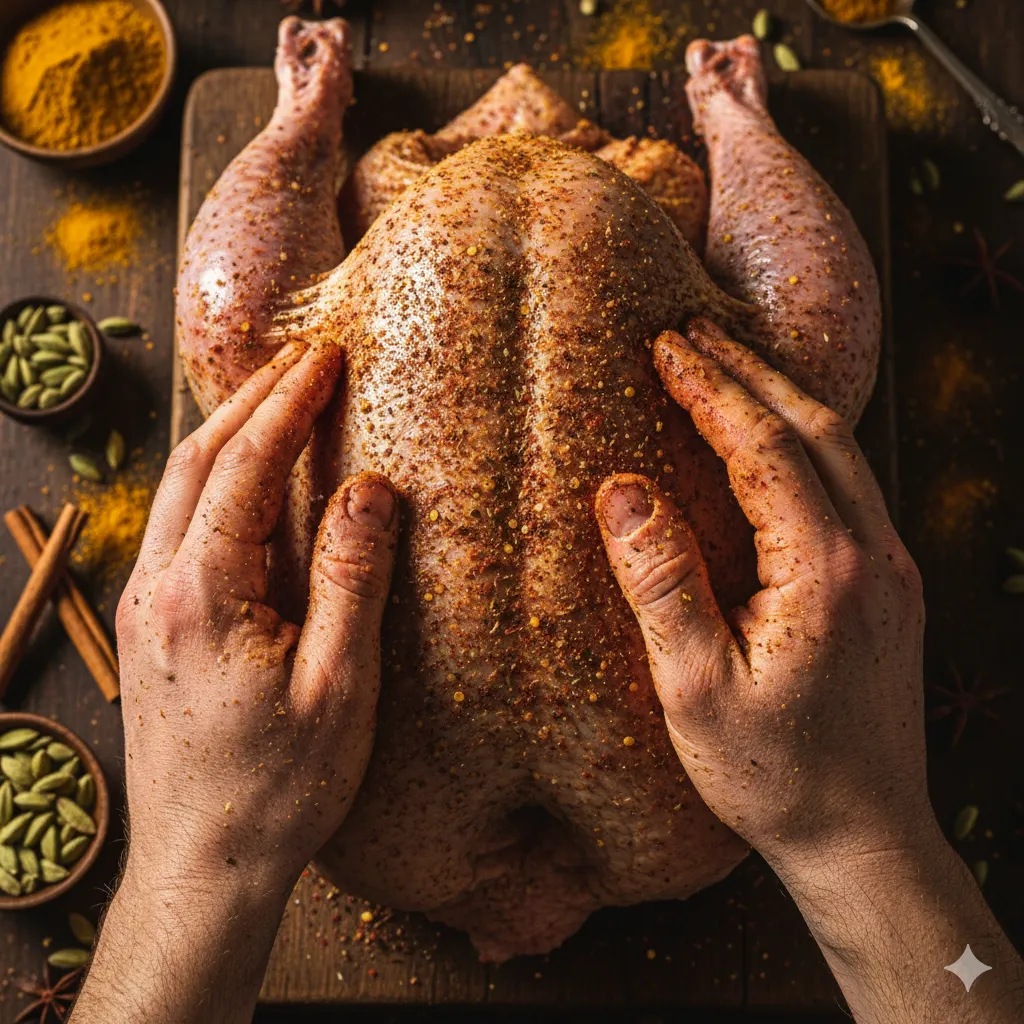
Once the brining technique is complete, it’s time for the savory turkey rub. Remember that rich paste we created in the last section? We’re going to use it in two places, but the most important is under the skin.
Applying the Moroccan Spice Rub directly to the meat ensures that the flavors of cumin and turmeric penetrate deeply and don’t simply sit on the surface, which can often burn. This step takes a little patience but pays off immensely in the final bite:
- Gently loosen the skin over the breast and thighs using your fingers, being careful not to tear it.
- Take about two-thirds of the spice paste and generously smear it directly onto the meat.
- The remaining third of the paste should be rubbed over the outside of the skin for color and aroma.
Temperature Acclimation: Bringing the Turkey to Room Temperature
We often overlook the importance of temperature acclimation. Before roasting, a cold turkey straight from the fridge will cook unevenly the outside burns before the center of the breast is cooked. This forces you to overcook the rest of the bird just to reach the safe internal temperature in the dense breast meat.
To achieve that beautiful, even roast, remove the turkey from the refrigerator one hour (for smaller birds) or up to two hours (for larger birds) before it goes into the oven. This brief rest period helps the meat relax and ensures that when the heat hits, the cooking starts evenly from the moment it enters the oven. This simple trick is essential for preventing dry patches and ensuring every part of your North African holiday roast is cooked to perfection.
Mastering the Roasting Process: Timing and Techniques
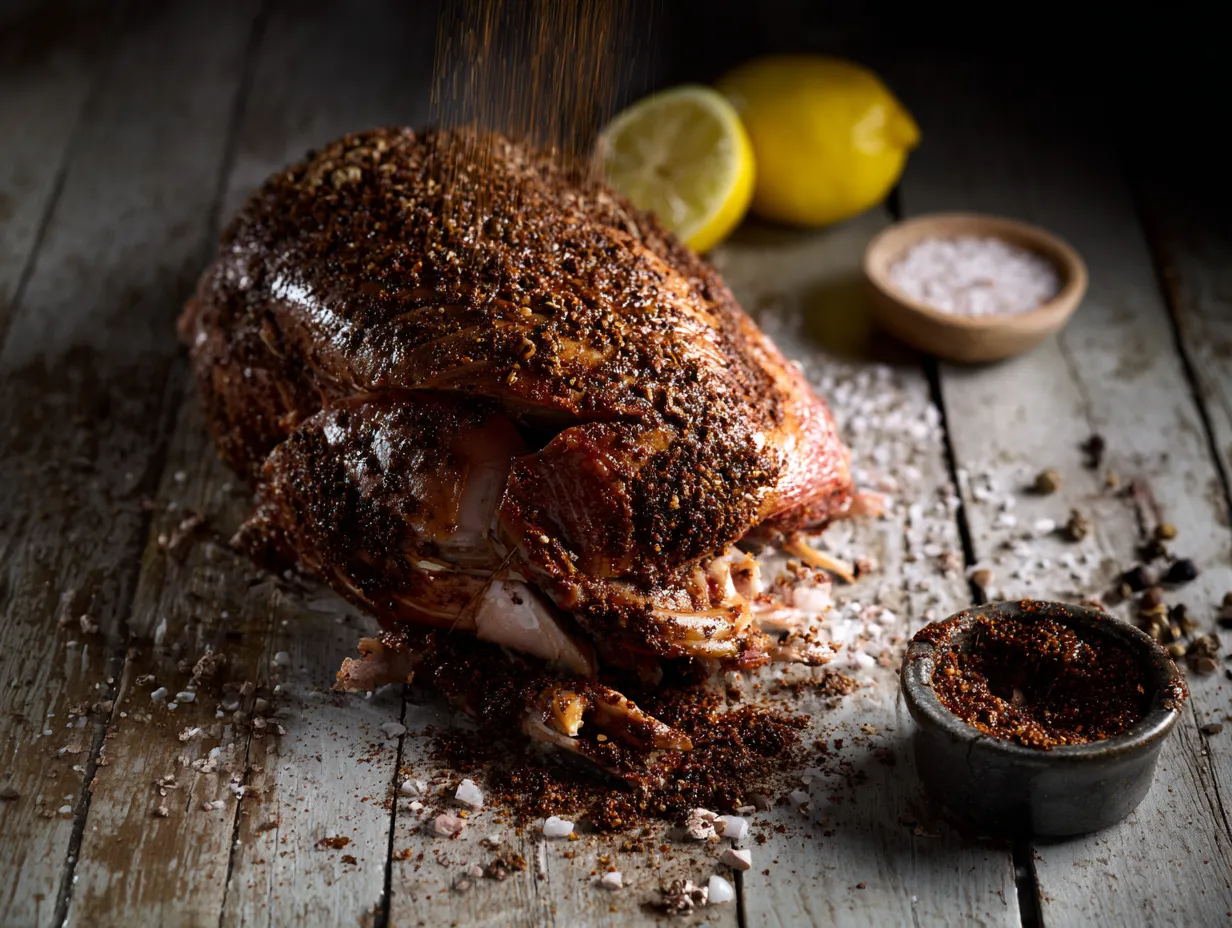
The preparation is complete, the Moroccan spiced turkey recipe is ready, and your kitchen smells incredible. But the oven phase is where many great efforts fail. To ensure your bird delivers on the promise of an Amazing Feast, we need to talk temperature, timing, and technique. Forget constant fiddling the best way to roast a turkey is to minimize interaction and trust the process!
High Heat Start: Achieving that Perfect, Crispy, Golden Skin
We’re going to use a two-stage heat approach. Why? Because the very first stage is dedicated entirely to developing a beautiful, deep golden skin that is crisp and caramelized. This is where the magic of the dry brine and the exterior spice rub really pays off.
Start your oven hotter than you think you should.
- Preheat: Get your oven up to 425∘F (220∘C).
- Initial Roasting: Place the turkey in the oven and roast it at this high temperature for the first 30 to 45 minutes. This intense heat causes the sugars and fats on the surface (remember the butter/oil mix?) to caramelize quickly, forming a protective, crunchy crust.
This initial blast sets the color and texture, making the skin impervious to the lower heat that follows.
Regulating the Oven: Low-and-Slow for Consistent Internal Cooking
After the high-heat start, it’s time to settle in for the long haul. A sudden drop in temperature is key to ensuring the inside cooks gently and evenly without drying out the breast meat.
Immediately after the initial browning period (30–45 minutes), reduce the oven temperature down to 325∘F (160∘C).
- Avoid Opening the Door: Resist the urge to peek! Every time you open the oven door, you lose a significant amount of heat, drastically increasing your overall poultry preparation time and risking an uneven cook.
- Tent if Necessary: If you notice the skin darkening too much before the turkey is cooked, loosely tent the bird with aluminum foil. This blocks the direct heat without trapping steam, preserving that gorgeous crust you worked hard for.
Continuous Basting vs. Hands-Off Cooking: Which Method Works Best?
Here’s an insight that might surprise you: you don’t need to continuously baste your turkey!
Basting actually lowers the oven temperature every time you open the door, which extends the cooking time and often results in a less crisp skin. Since we used a brining method and applied the fat-based rub under the skin, the moisture is already locked into the meat.
Instead of constant basting, try this “hands-off” approach:
- Self-Basting Technique: Pour 2 cups of chicken or turkey stock into the bottom of the roasting pan. This liquid evaporates during cooking, creating a humid environment that naturally bathes the turkey in flavorful steam, preventing the drippings from burning, and keeps the whole process efficient.
The Crucial Internal Temperature: Knowing When It’s Truly Done
This is the only measure that matters. Guessing or relying solely on a timer is the easiest way to serve a dry bird. You must use a reliable meat thermometer to check the crucial internal temperature.
The turkey is safely cooked and ready to be removed from the oven when:
- The Breast registers 165∘F (74∘C).
- The Thigh registers 175∘F to 180∘F (80∘C to 82∘C).
Remember, the temperature will continue to rise by 5 to 10 degrees during the resting period (known as carryover cooking), so aiming for the lower end of the range is always best for a truly juicy spice-rubbed turkey.
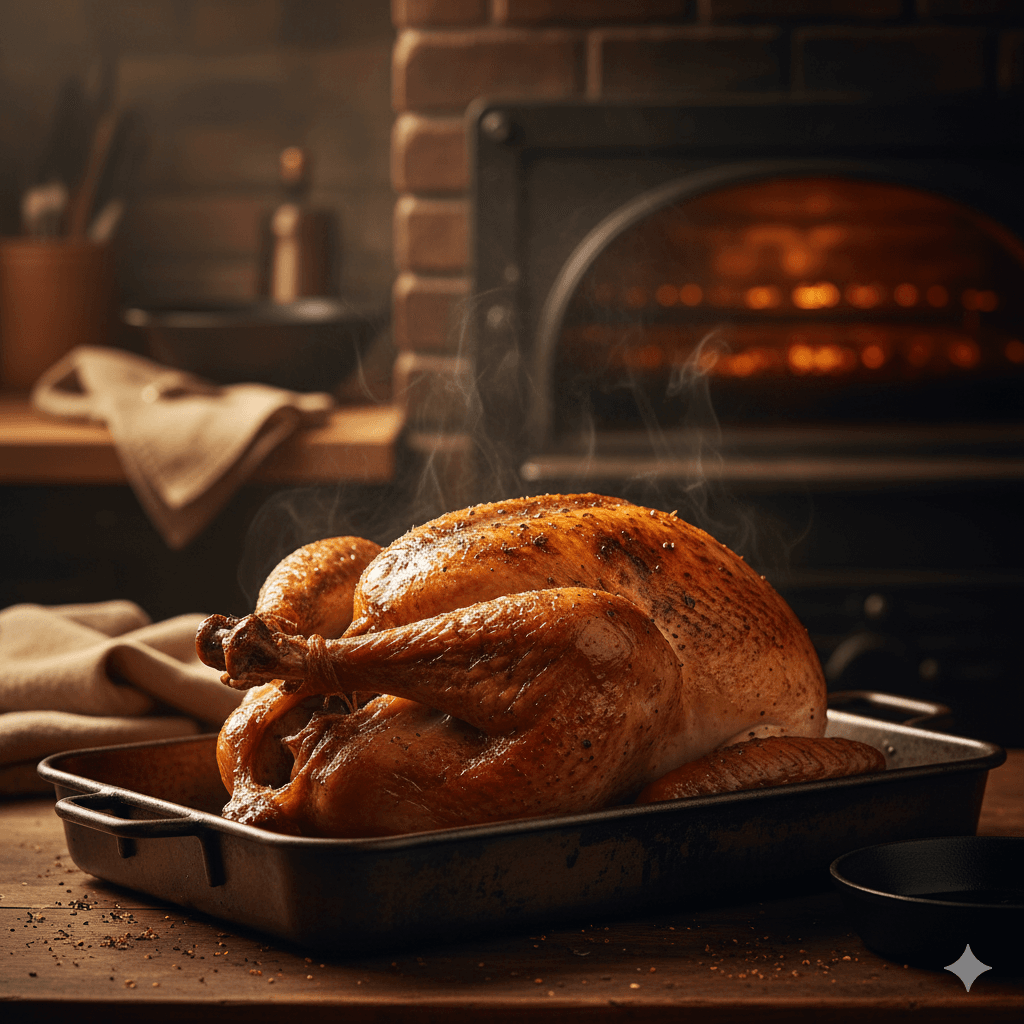
Perfect Pairings: Building a Complete Moroccan-Inspired Feast
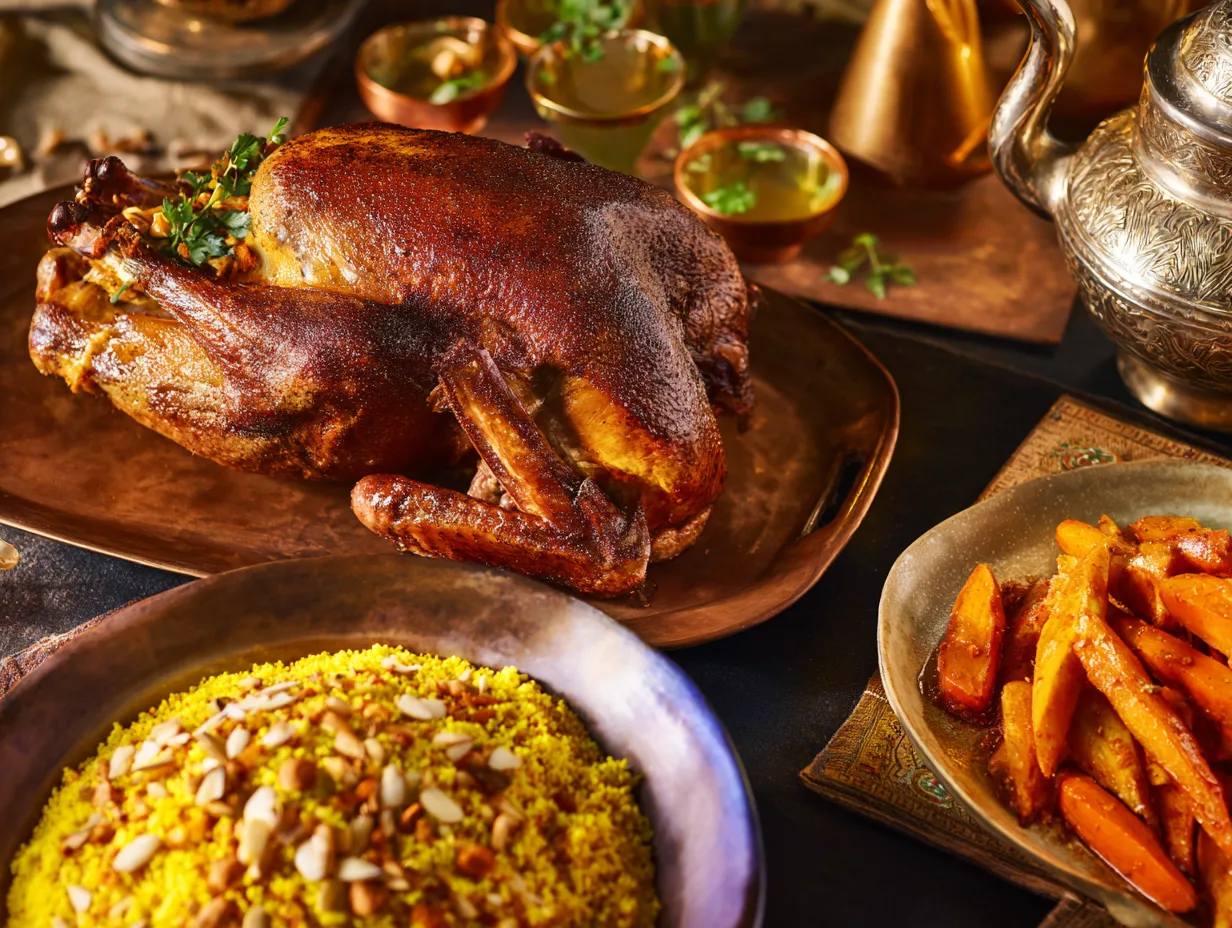
You’ve mastered the Moroccan spiced turkey recipe, and the bird is resting perfectly. But a spectacular roast deserves equally spectacular supporting characters! Moroccan cuisine is known for its harmony of textures and flavors sweet, savory, spicy, and tart all coexisting beautifully. To truly deliver an Amazing Feast, you need to complement the deep spice of the turkey without competing with it.
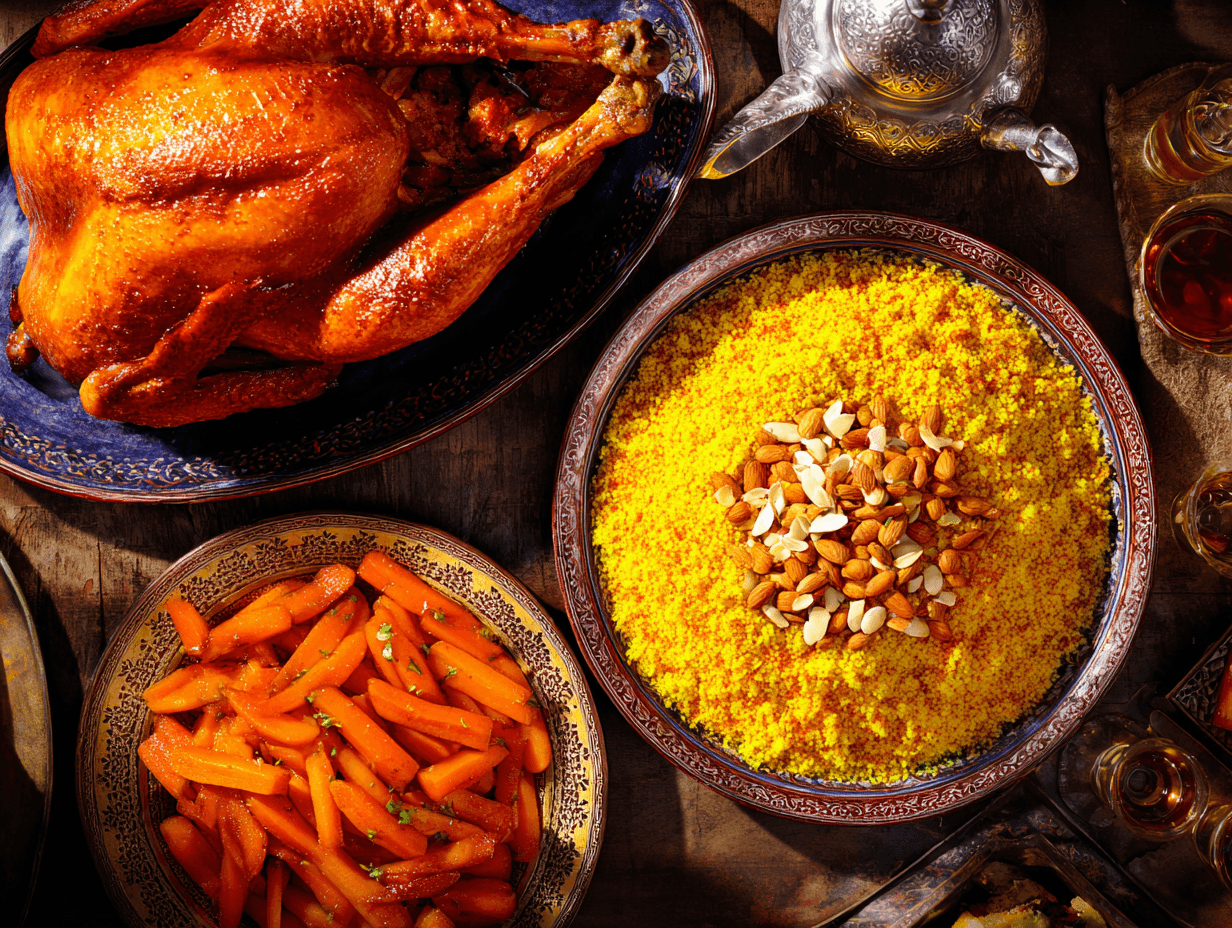
Saffron Couscous: The Essential Side Dish for Soaking Up Juices
When you think of North African holiday roast, your mind should immediately jump to couscous. It’s the perfect textural foil to the moist, tender meat. More importantly, its tiny granules are designed to absorb the incredible pan juices that have dripped off your juicy spice-rubbed turkey.
To make your couscous truly special:
- Infuse the Liquid: Don’t just use water. Bloom a few threads of saffron in warm chicken broth before using it to hydrate the couscous. This adds a subtle floral note and a beautiful golden hue.
- Add Texture: Stir in toasted slivered almonds, dried apricots, and fresh parsley for textural complexity and a touch of sweetness.
- A Simple Finish: A light drizzle of good quality olive oil and a squeeze of lemon juice brightens the whole dish.
Sweet & Savory Sides: Roasted Carrots with Honey and Cinnamon
The secret to balancing the bold flavors of Ras el Hanout is introducing structured sweetness. This simple side dish provides the perfect contrast, acting as a bridge between the savory main course and the traditional dessert course.
We recommend roasting carrots (or even sweet potatoes) until they are tender-crisp. Five minutes before they finish, toss them with:
- A light coating of orange blossom honey.
- A pinch of ground cinnamon and ginger.
- A tiny splash of white wine vinegar to cut the sweetness.
This combination of sweet, sharp, and earthy flavors elevates a simple vegetable to a gourmet accompaniment, making your holiday main course feel cohesive and expertly planned.
A Refreshing Finish: Pairing the Meal with Authentic Mint Tea
After a rich, complex meal, your guests will appreciate a cleansing palate cleanser. In Moroccan culture, food is followed by ritual and that ritual is often fresh mint tea, poured with flair from high above.
This tradition holds a valuable culinary insight: the sharp, fresh taste of mint and the warmth of the tea cut through the richness of the poultry and spices, settling the stomach and leaving everyone feeling energized rather than sluggish.
“Food is not rational. Food is culture, habit, craving, and identity.” – Jonathan Safran Foer
This is truly a meal that defines identity and culture, blending the tradition of the roast with the exotic comfort of Moroccan cuisine. By planning your sides as carefully as your turkey, you ensure the entire dining experience feels deliberate and extraordinary.
The Grand Finale: Resting, Carving, and Serving
The oven light is off, the meat thermometer confirmed the perfect internal temperature, and the kitchen is filled with the deep, intoxicating aroma of your Moroccan spiced turkey. Congratulations you’re mere minutes away from serving an Amazing Feast! However, many cooks rush this final stage, losing all that hard-earned moisture. Don’t let that be you! The final presentation is just as important as the preparation.
The 30-Minute Rest Rule: Why Patience Ensures a Juicier Roast
We can’t stress this enough: The turkey MUST rest. This is perhaps the single most important rule in poultry preparation. When the turkey is cooking, the high heat forces the internal moisture to collect in the center of the bird. If you slice it immediately, those juices spill out onto the cutting board, leaving you with dry meat.
Here is the simple, non-negotiable process:
- Remove and Tent: Take the turkey out of the roasting pan and immediately transfer it to a large cutting board. Loosely cover it with aluminum foil.
- The Wait: Let it rest for a minimum of 30 minutes, and up to 45 minutes for a very large bird.
- The Magic: As the turkey cools slowly, the muscle fibers relax and reabsorb the free-flowing juices, guaranteeing that every slice is tender and incredibly moist.
While the bird rests, this is your chance to quickly make your final gravy from the pan drippings and finish your side dishes.
Expert Carving Techniques: Serving Each Piece Perfectly
Carving can be intimidating, but a few simple techniques turn it into a confident, elegant part of the serving ritual. A sharp knife is your best friend here.
Instead of hacking at the bird, break it down into major parts first, carving in front of your guests only if you’re very comfortable. We prefer carving in the kitchen and arranging the slices for presentation.
- Remove Legs/Thighs: Cut through the joint where the leg meets the body. These can be separated into drumsticks and thighs.
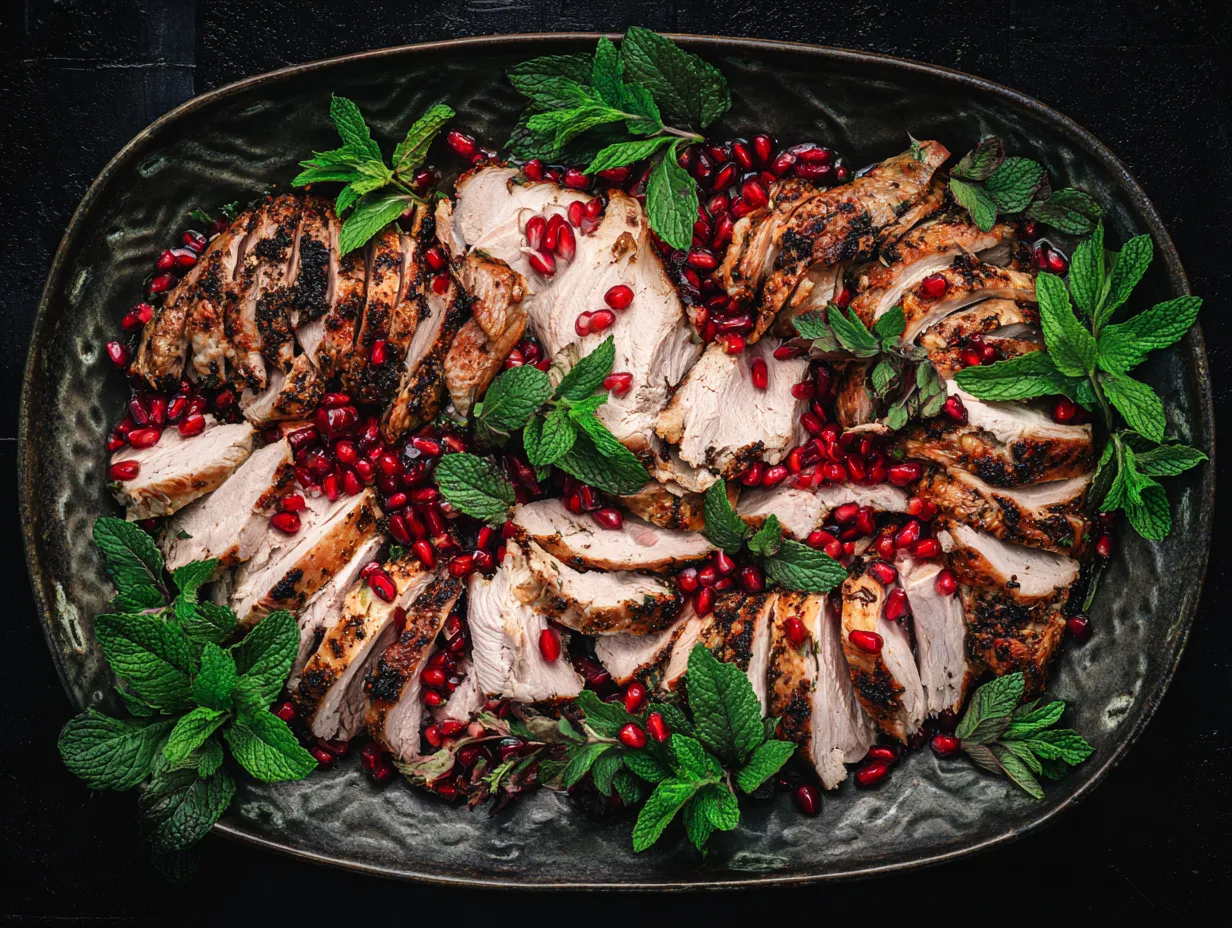
- Remove Breast: Run your knife down the breastbone. Slice the breast meat horizontally against the grain for tender pieces.
- Arrange: Lay the uniformly sliced breast meat and the separated dark meat pieces on a warm platter.
This method not only makes serving easier but ensures every guest receives pieces of the flavorful, juicy spice-rubbed turkey.
Presentation Matters: Garnish Ideas with Herbs and Pomegranate
Remember, people eat with their eyes first! The platter presentation should be as bold and vibrant as the North African flavor of the rub itself. Since your turkey is a deep, rich brown from the Ras el Hanout, you need contrasting color.
- Pomegranate Jewels: Scatter fresh pomegranate seeds generously over the platter. Their ruby-red color and burst of tartness are traditionally Moroccan and look stunning against the golden turkey skin.
- Citrus Slices: Tuck fresh orange or lemon slices (or both!) around the base of the turkey.
- Fresh Herbs: Use large sprigs of fresh parsley, cilantro, or mint for a final aromatic flourish.
This vibrant garnish transforms a simple platter of sliced meat into the centerpiece of your holiday main course.
Farewell to Bland: Serving the Amazing Feast!
You now possess the knowledge and techniques required to create a magnificent centerpiece that defies tradition and delivers on flavor. This North African holiday roast is a testament to the power of using simple, high-quality spices to achieve extraordinary results.
Go forth and enjoy the compliments, the aromas, and the satisfaction of knowing you served a meal that was anything but ordinary. We can’t wait to hear how your juicy spice-rubbed turkey turned out! Tag us in your photos and share your favorite side pairings. Happy cooking, and may your table be filled with joy and incredible flavor!
Quick Q&A
Sometimes, even with the best plan, questions pop up. Here are answers to a few common questions specific to this rich Moroccan spiced turkey recipe.
How do I fix a dry patch if I overcooked the breast slightly?
If you realize a section of the breast is drier than you’d like while carving (a common issue when learning roasting process timing), don’t panic! Place the carved slices back on the serving platter, drizzle them lightly with warm chicken stock mixed with a bit of pan juice, and cover for five minutes. This quick fix, known as troubleshooting dry turkey, helps re-moisten the meat before serving.
How should I store leftover Ras el Hanout rub?
Since you mixed your Moroccan Spice Rub with oil and citrus, it won’t keep on the shelf. Store the leftover paste tightly sealed in an airtight container in the refrigerator for up to 5 days, or freeze it for up to 3 months. You can use it to flavor roasted vegetables, chicken breast, or even a side of roasted chickpeas!
Can I prep this turkey two days in advance?
Absolutely. You can complete the full brining technique (dry rub) up to 48 hours in advance. Apply the Ras el Hanout paste the night before, and then simply let the turkey sit at room temperature for 1-2 hours before roasting on the day of your Amazing Feast.