
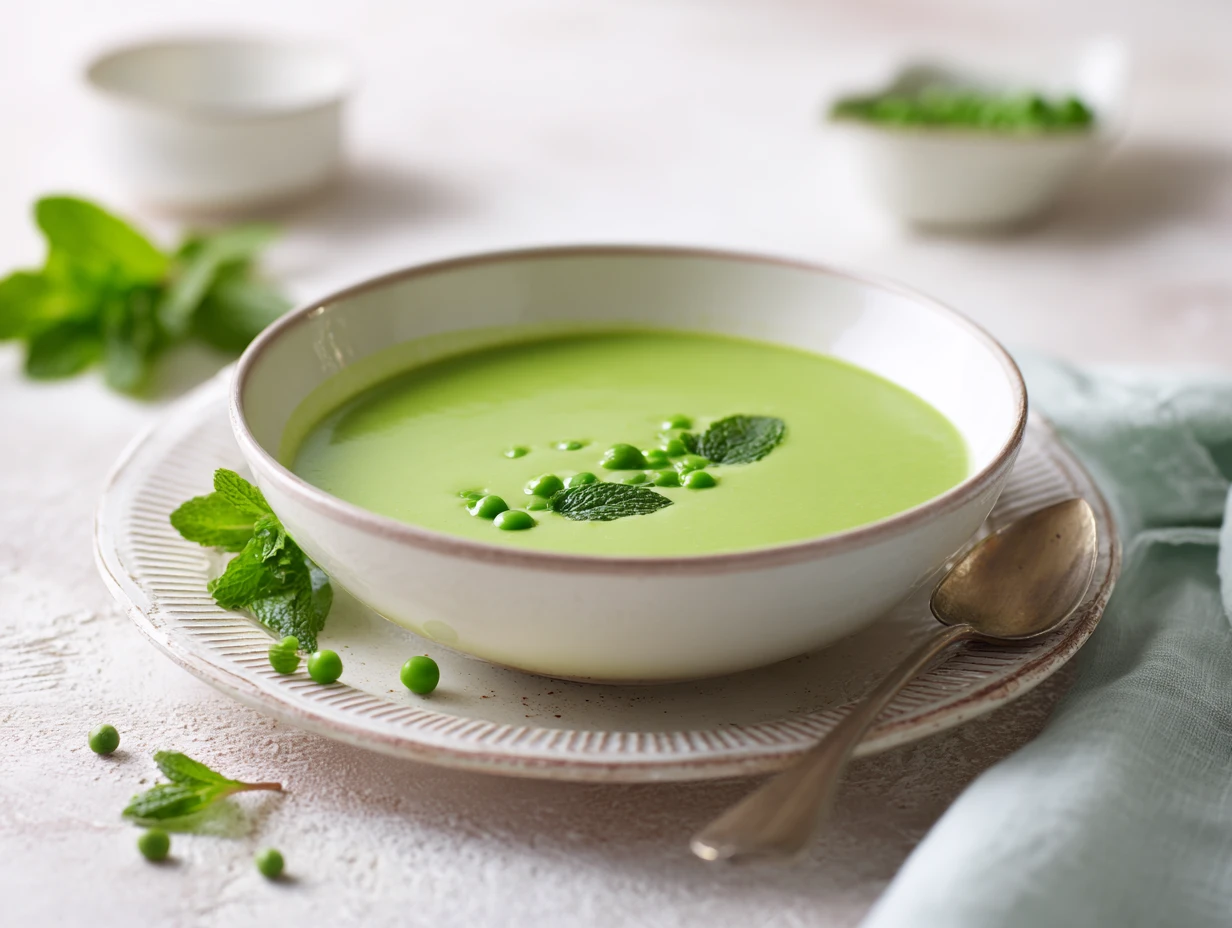
Introduction to Cream of Peas and Mint
Why Peas and Mint Are a Classic Pairing
Have you ever tasted something so simple yet so balanced that it feels almost intentional? That’s exactly what happens when peas and mint come together. Their partnership isn’t accidental it’s rooted in flavor science and tradition. Sweet green peas deliver a natural creaminess and gentle earthiness, while fresh mint cuts through with a cool, aromatic lift.
What makes this pairing so powerful is contrast. Peas are soft, round, and comforting; mint is sharp, clean, and refreshing. Together, they create a cream of peas and mint that feels indulgent without being heavy. If you’re someone who loves dishes that taste fresh but still feel cozy, this combination speaks directly to you.
From an SEO perspective, this harmony also explains why pea and mint soup consistently appears in spring recipe searches it satisfies both nostalgia and modern cravings for lighter, plant-forward meals.
Table of Contents
Table of Contents
The Rise of Green Soups in Modern Cuisine
Green soups are having a moment and honestly, it’s well deserved. As more home cooks lean toward vegetarian soup recipes and seasonal cooking, vibrant green bowls like creamy pea soup are becoming staples rather than side notes.
Why the shift?
- Visual appeal: Bright green signals freshness and health instantly.
- Nutrient density: Peas are rich in plant protein and fiber, making blended soups more satisfying than they look.
- Adaptability: Green soups transition seamlessly from elegant dinner starters to quick weekday lunches.
The cream of peas and mint fits squarely into this trend. It’s minimal, flexible, and endlessly customizable exactly what modern cooks want. Whether you’re blending with dairy cream or opting for a plant-based alternative, the result still feels intentional and refined.
What Makes This Dish “Mind-Blowing”
Let’s be honest “mind-blowing” is a bold claim. But here’s why this dish earns it.
It’s not about complexity. It’s about precision.
A truly great fresh pea soup nails three things:
- Flavor clarity – You should taste peas first, mint second, and richness last.
- Texture – Silky, spoon-coating smoothness without heaviness.
- Aroma – That first inhale of minty steam sets expectations before the first bite.
What surprises most people is how little it takes to get there. With just a handful of ingredients and the right technique, this soup delivers restaurant-level results at home. If you’ve ever thought blended soups were boring, this recipe quietly proves otherwise.
👉 Curious how ingredient choice affects the final texture and color? In the next section, we’ll break down exactly what to look for when selecting peas, mint, and cream.
Key Takeaways
If there’s one thing this cream of peas and mint journey proves, it’s that simplicity when handled with intention can be quietly powerful. Before you move on, here are the essentials worth keeping top of mind:
- Ingredient quality matters more than quantity: Sweet peas and fresh mint do most of the work.
- Timing protects flavor and color: Short cooking and late mint addition keep the soup vibrant.
- Cream is a supporting actor: Use just enough to enhance texture, not overwhelm it.
- Flexibility is built in: This pea and mint soup adapts easily to vegan, chilled, or high-protein versions.
- Presentation completes the experience: Color, garnish, and temperature all influence perception.
If you follow these principles, you’re not just cooking you’re composing.
Ingredients That Define Flavor
Choosing the Best Peas Fresh vs. Frozen
Let’s start with the star of the show: peas. If you’re lucky enough to have access to fresh spring peas, their sweetness is unmatched. But here’s a little insider reassurance high-quality frozen peas are often picked and frozen at peak ripeness, making them a fantastic (and sometimes superior) choice for cream of peas and mint.
Ask yourself:
- Do I want maximum sweetness with zero prep? → Go frozen.
- Do I enjoy shelling peas and cooking seasonally? → Fresh peas are your moment.
From a consistency and color standpoint, frozen peas deliver reliable results for creamy pea soup, especially when blended.
Selecting the Right Mint Variety
Mint isn’t just mint. The variety you choose can quietly make or break your soup.
Spearmint is your best bet. It’s sweet, light, and cooling without overpowering the peas. Peppermint, on the other hand, is far too aggressive and can hijack the flavor profile.
Pro tip:
Add mint at the end of cooking, not the beginning. This preserves its aromatic oils and keeps your pea and mint soup tasting fresh rather than grassy.
Cream Options Dairy and Plant-Based
Cream gives the soup its luxurious mouthfeel, but you’re not locked into one path.
- Heavy cream → Rich, classic, and velvety
- Crème fraîche → Slight tang, restaurant-style depth
- Coconut milk (unsweetened) → Dairy-free with subtle sweetness
- Cashew cream → Neutral, plant-based, and protein-rich
The key is moderation. You want cream to support the peas, not smother them. This balance is what separates an elegant fresh pea soup recipe from a heavy puree.
Supporting Aromatics and Seasonings
Here’s where restraint becomes a skill. This soup thrives on simplicity.
Use:
- Shallots or leeks for gentle sweetness
- Vegetable stock instead of water for depth
- Olive oil or butter, not both
- Salt and white pepper, sparingly applied
Avoid garlic-heavy or spicy additions here they distract from the clean, green flavor that defines this dish.
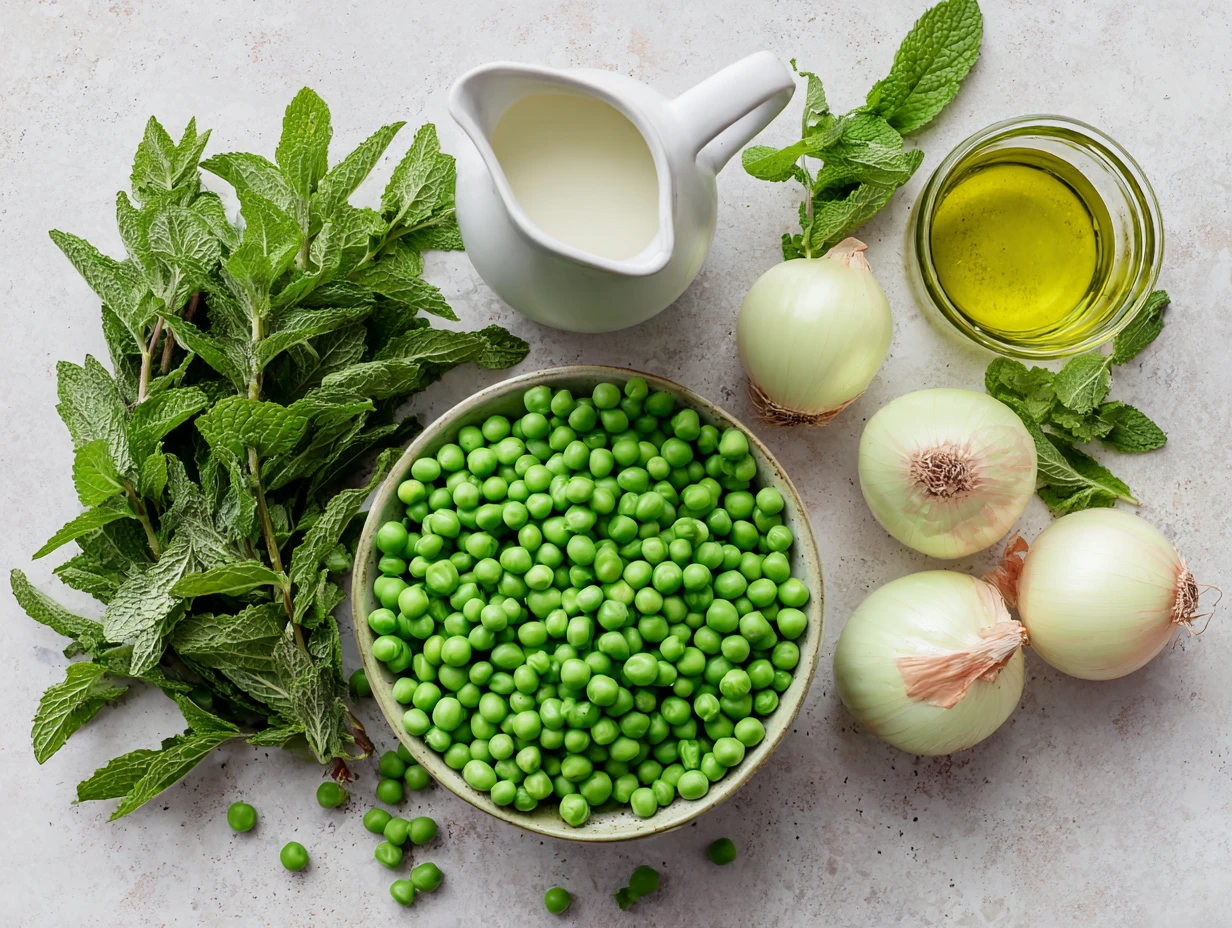
Ingredient & Quantity Table
| Ingredient | Quantity (Serves 4) |
|---|---|
| Green peas (fresh or frozen) | 500 g (about 4 cups) |
| Fresh spearmint leaves | 1 packed cup |
| Shallots (finely chopped) | 2 medium |
| Vegetable stock | 3 cups |
| Heavy cream (or alternative) | ½ cup |
| Olive oil or butter | 1 tbsp |
| Salt | To taste |
| White pepper | To taste |
👉 Wondering how these ingredients come together without dulling that vibrant green color? In the next section, we’ll walk through the cooking process step by step timing, blending, and all the small details that make a big difference.
Step-by-Step Cooking Method
Preparing the Vegetables Properly
Before heat ever touches the pan, preparation sets the tone for your cream of peas and mint. Start by finely chopping your shallots (or leeks) so they melt into the base rather than standing out. Rinse your mint leaves gently and pat them dry excess moisture can dilute their aroma later.
If you’re using frozen peas, there’s no need to thaw them fully. A quick rinse is enough. Fresh peas, on the other hand, benefit from a brief blanching if they’re slightly mature. This keeps your fresh pea soup recipe tasting sweet instead of starchy.
Think of this stage as quiet groundwork. The more care you take here, the less correction you’ll need later.
Building Flavor with Gentle Sautéing
This soup rewards patience. Heat your olive oil or butter over medium-low heat, then add the shallots with a pinch of salt. You’re not browning you’re softening. The goal is translucence, not color.
Why does this matter?
- Browning introduces bitterness
- Gentle heat preserves sweetness
- A soft base blends seamlessly later
Once the shallots are silky, add the peas and stir for about a minute. This brief contact with heat wakes up their natural sugars without dulling their color key for a vibrant creamy pea soup.
Simmering and Blending for Silky Texture
Pour in your vegetable stock just until the peas are barely covered. Bring it to a gentle simmer and cook for 3–5 minutes only. Overcooking is the fastest way to lose that bright green hue.
Now comes the transformation.
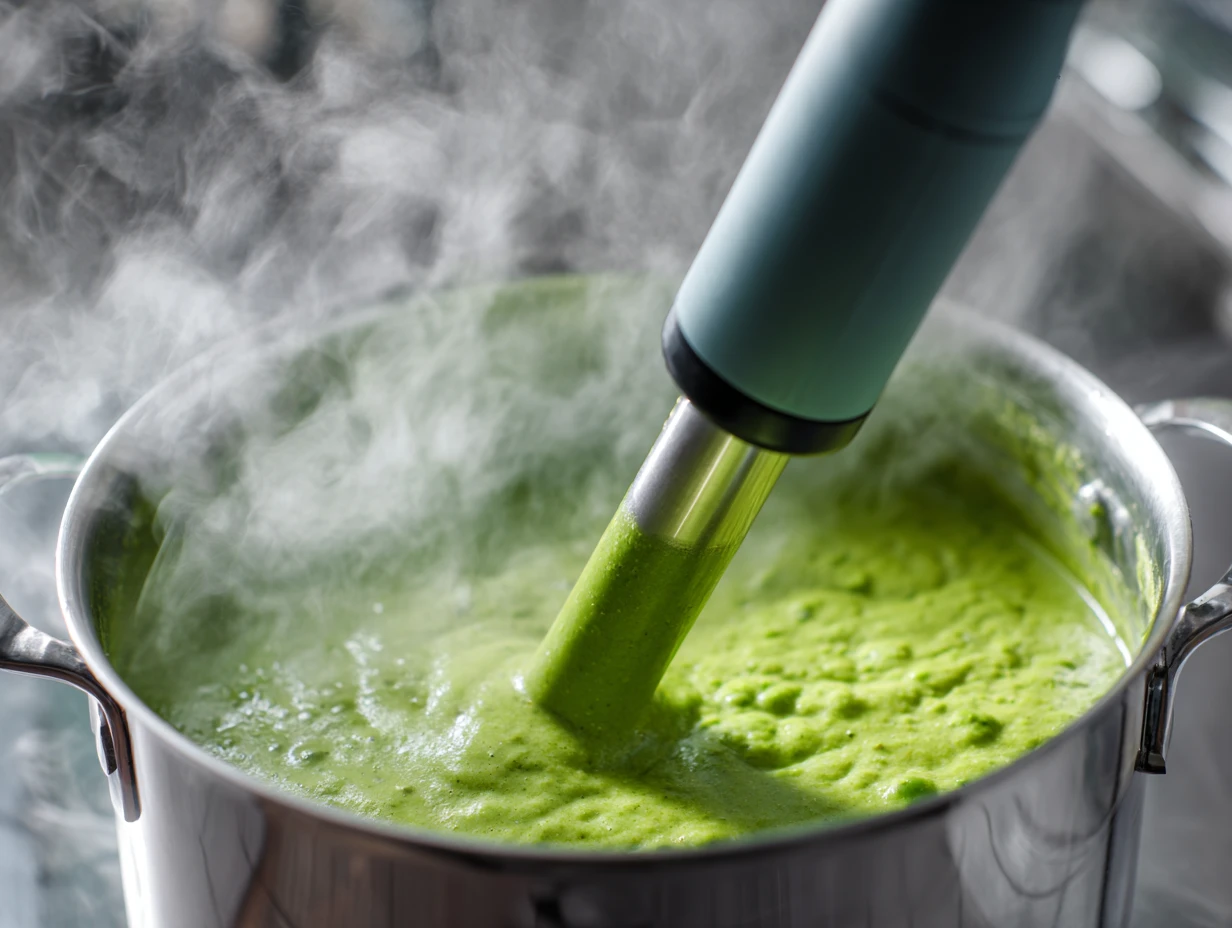
Using a high-speed blender (or immersion blender), blend until completely smooth. If you want restaurant-level texture, strain the soup through a fine sieve but this step is optional and very much a personal preference.
Only after blending do you add:
- Cream (or plant-based alternative)
- Fresh mint leaves
This timing keeps the mint aromatic and the soup tasting fresh rather than cooked.
Adjusting Consistency and Seasoning
This is where you make the soup yours.
Ask yourself:
- Too thick? Add warm stock, a splash at a time
- Too flat? A pinch of salt or white pepper
- Needs lift? A few extra mint leaves, blended in
Taste as you go. A well-made pea and mint soup should feel light on the spoon but satisfying on the palate. When you hit that balance, stop. More tweaking usually does less, not more.
Watch the Technique in Action
If you’re a visual learner, this short, technique-focused video walks through the blending and timing beautifully:
👉 Next up, we’ll focus on texture, color, and presentation because a soup this green deserves to look as good as it tastes.
Texture, Color, and Presentation
Achieving Vibrant Green Color
That unmistakable green glow is one of the biggest visual promises of a great cream of peas and mint and yes, it’s absolutely achievable at home. The secret isn’t food coloring or tricks. It’s timing and temperature.
Here’s what consistently works:
- Cook briefly: Peas only need a few minutes to soften. Longer cooking dulls chlorophyll.
- Blend while hot: Heat helps release color evenly during blending.
- Add mint last: Fresh mint keeps its bright tone when blended off the heat.
If your soup looks lively and fresh before seasoning, you’re on the right path. Color loss almost always signals overcooking, not ingredient quality.
Creaminess Without Heaviness
A silky soup shouldn’t feel like a blanket. The beauty of a well-made creamy pea soup is that it coats the spoon lightly, not thickly.
To strike that balance:
- Start with less cream than you think you need.
- Blend fully before adjusting texture.
- Thin gradually with warm stock, not water.
Peas naturally contain starch, which means they provide body on their own. When cream is used thoughtfully, it enhances mouthfeel rather than dominating it. The result? A pea and mint soup that feels indulgent but still fresh.
Garnishes That Elevate the Dish
Presentation isn’t about over-decorating it’s about intention. A few well-chosen toppings can guide the palate and elevate the entire experience.
Try:
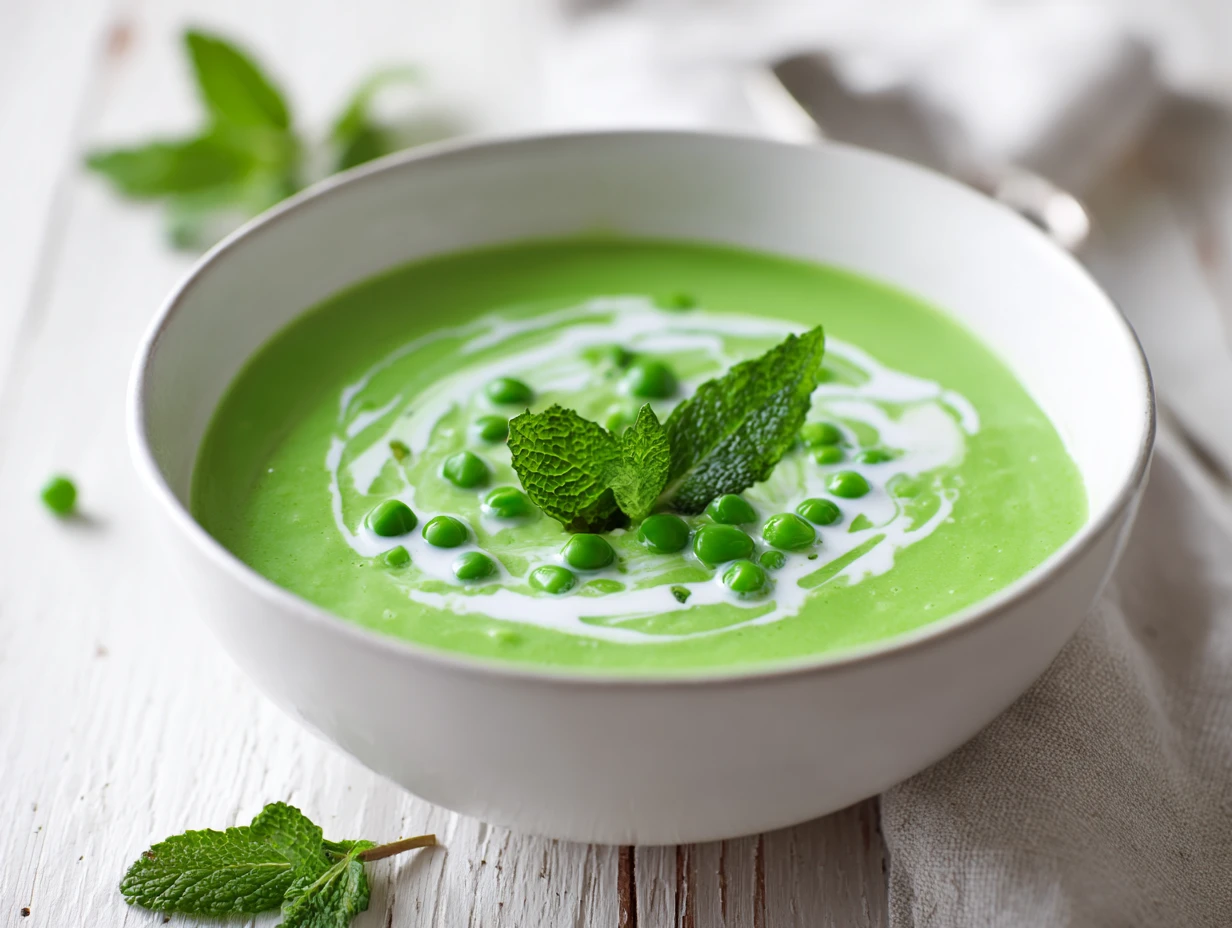
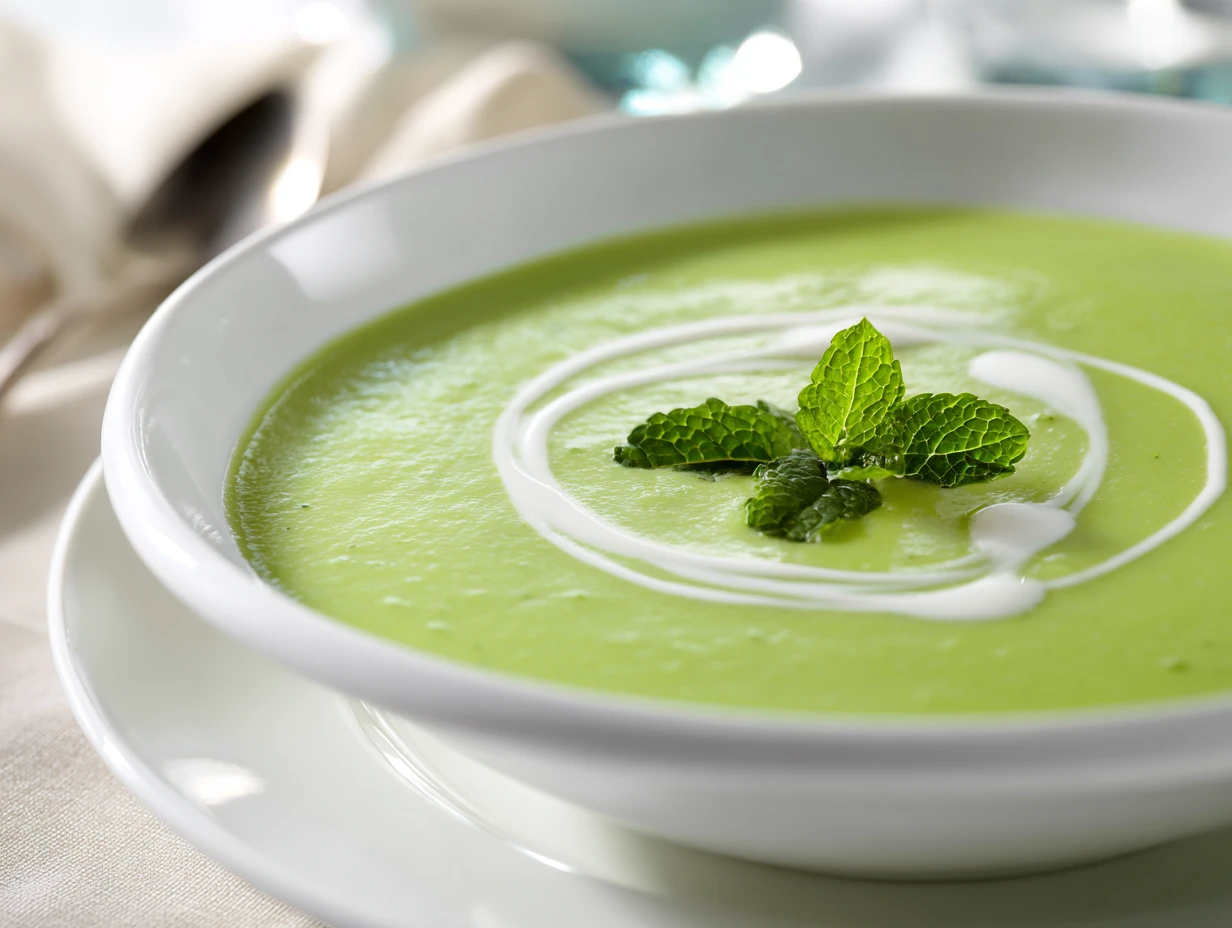
- A swirl of cream or olive oil for contrast
- Finely chopped fresh mint for aroma
- Cracked white pepper for subtle heat
- Warm croutons or sourdough crumbs for texture
Serve the soup in warm bowls to preserve temperature and aroma. Small detail, big payoff.
“Great soup doesn’t shout it whispers confidence through balance, color, and restraint.”
When your soup looks vibrant and feels light yet satisfying, you’ve mastered more than technique you’ve captured intention.
👉 Coming up next: variations and dietary adaptations, so you can make this soup work for every table and lifestyle.
Variations and Dietary Adaptations
Vegan and Dairy-Free Version
If you’re cooking for plant-based eaters or simply want a lighter option the good news is that cream of peas and mint adapts beautifully without dairy. The peas themselves already provide body, so removing cream doesn’t mean sacrificing texture.
Smart swaps that work:
- Cashew cream for a neutral, silky finish
- Unsweetened coconut milk for subtle richness
- Extra-virgin olive oil blended in at the end for gloss
Keep the seasoning restrained and let the peas shine. A dairy-free pea and mint soup should taste clean, fresh, and balanced not like a substitute.
High-Protein or Fiber-Boosted Options
Want your soup to double as a satisfying meal? A few thoughtful additions can increase nutrition without changing the soul of the dish.
Try blending in:
- White beans or cannellini beans for creaminess and protein
- Green lentils (fully cooked) for fiber and structure
- Greek-style plant yogurt (added off heat) for protein and tang
These additions work best when kept subtle. You’re enhancing the creamy pea soup, not turning it into a stew.
Serving Hot vs. Chilled
One of the most underrated qualities of a fresh pea soup recipe is its versatility across seasons.
- Hot: Comforting, aromatic, and perfect for cooler evenings
- Chilled: Bright, refreshing, and ideal for warm weather or elegant starters
If serving chilled, reduce the cream slightly and increase mint just a touch. Cold temperatures mute flavor, so a small adjustment keeps the soup lively and expressive.
Conclusion
So, is cream of peas and mint worth mastering? Absolutely. It’s one of those rare dishes that feels both timeless and current, equally at home on a weeknight table or a dinner-party menu.
What makes it special isn’t complexity it’s restraint. When you respect the ingredients and trust the process, the soup rewards you with clarity of flavor and a sense of calm confidence. And perhaps that’s the real appeal: it invites you to slow down, taste thoughtfully, and enjoy the beauty of something done well.
If this recipe sparked your curiosity, consider experimenting further swap herbs, adjust textures, or play with temperature. Cooking, after all, is a conversation. This soup just happens to be an especially good listener.
Q&A: Cream of Peas and Mint
Q: Can I make this soup ahead of time?
Yes. This creamy pea soup keeps well in the refrigerator for up to three days. Reheat gently and adjust seasoning just before serving.
Q: How do I keep the soup bright green after reheating?
Avoid boiling. Gentle heat and a quick blend before serving help restore color and texture.
Q: Is frozen peas really as good as fresh?
In many cases, yes. High-quality frozen peas often deliver consistent sweetness and color, making them ideal for fresh pea soup recipes.
Q: What’s the best blender for this soup?
A high-speed blender creates the smoothest result, but an immersion blender works well with a bit of patience.