
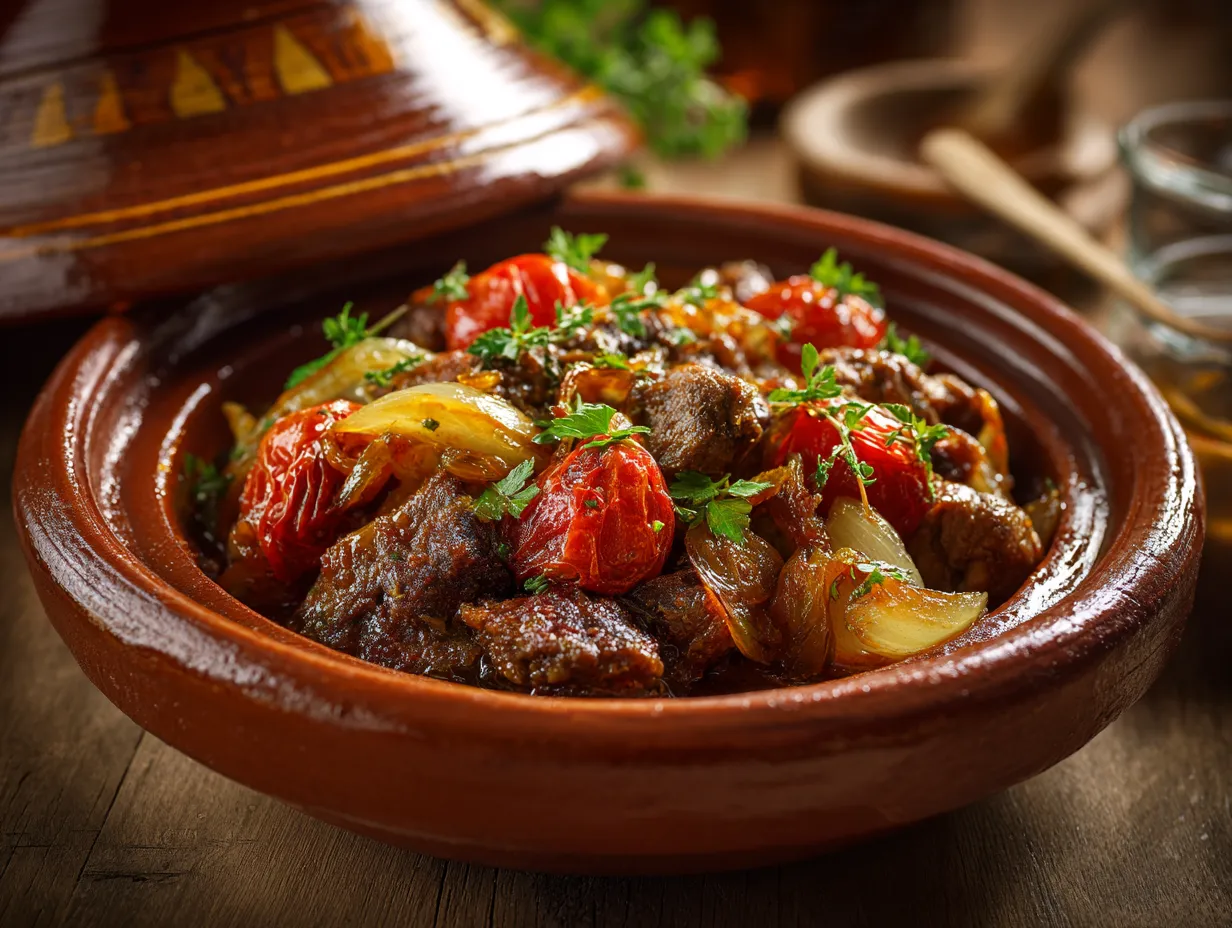
What Makes This Moroccan Tajine So Irresistible
Have you ever tasted a dish that feels both deeply comforting and excitingly complex at the same time? That’s exactly what happens with Lamb or Beef Tajine with caramelized onions and tomatoes. This iconic Moroccan dish isn’t just about slow cooking it’s about intentional layering of flavor, patience, and balance. Let’s break down why this tajine keeps people coming back for “just one more bite.”
The Sweet and Savory Flavor Profile
What makes this tajine truly unforgettable is the contrast between sweet and savory, a hallmark of Moroccan cuisine. Instead of overpowering the palate, each flavor arrives gently, then lingers.
Here’s what’s happening on your taste buds:
- Caramelized onions slowly develop natural sweetness without added sugar
- Warm spices like cinnamon and cumin add depth, not heat
- Lamb or beef absorbs the sauce, becoming rich and melt-in-your-mouth tender
This balance is why Moroccan tajine recipes feel indulgent yet refined. If you’re someone who enjoys dishes that evolve as you eat them, this one delivers.
Table of Contents
Table of Contents
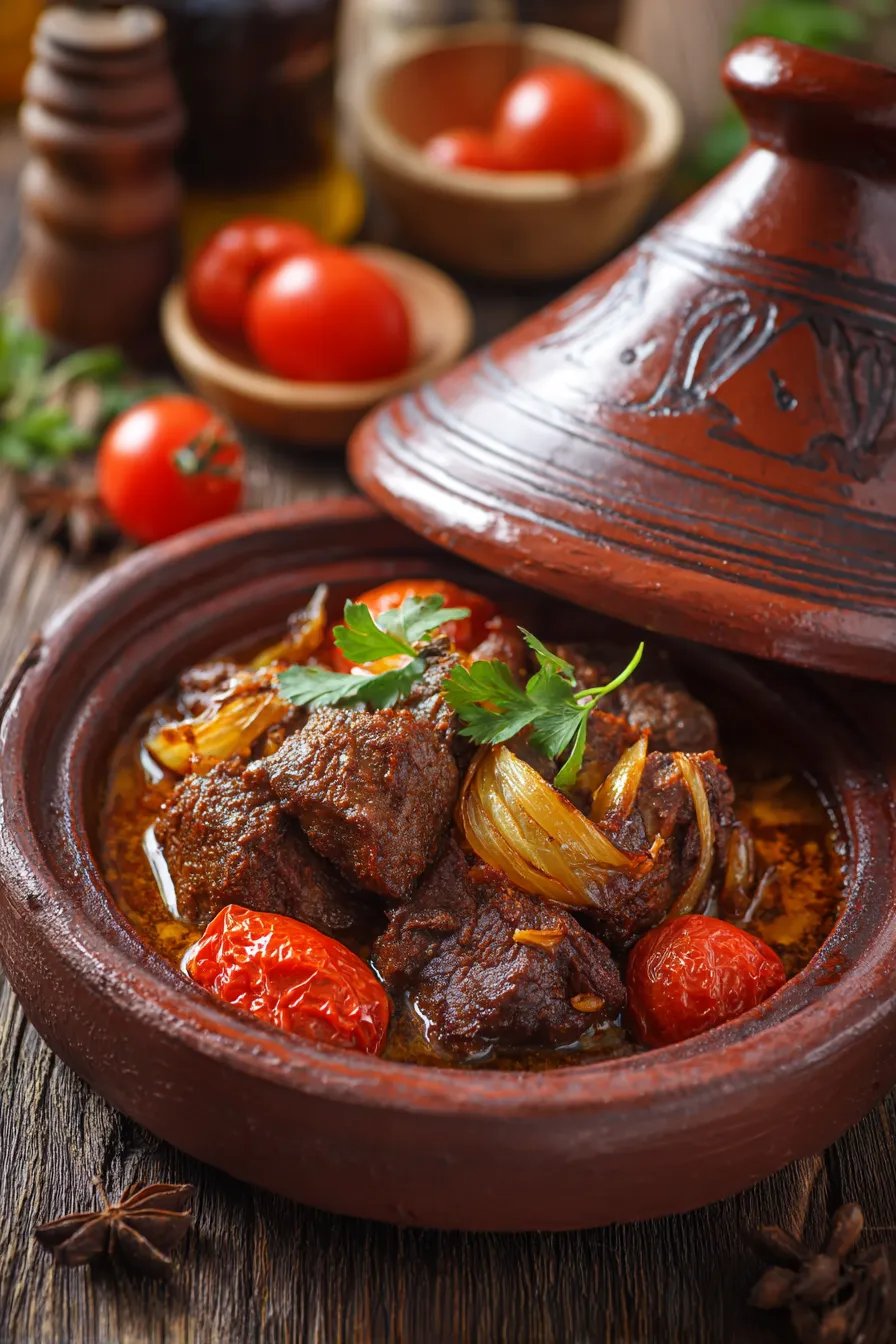
Pro tip: If you enjoy sweet-savory dishes, you might also love exploring prune or apricot-based tajines next.
Why Caramelized Onions Are the Star
Let’s be honest this dish wouldn’t be the same without the onions. In a traditional tajine, onions aren’t just an ingredient; they’re a flavor-building technique.
When onions are cooked low and slow:
- Their moisture evaporates naturally
- Sugars concentrate and deepen
- Texture turns silky, not mushy
The result? A sauce that feels luxurious without cream or butter. For home cooks, this is a great reminder that technique matters more than complexity. You don’t need dozens of ingredients just time and attention.
If you’re short on time, a heavy-bottomed pan works, but using a tajine pot helps regulate heat and prevent burning.
How Tomatoes Balance the Dish
Tomatoes play a quiet but essential role. While onions bring sweetness, tomatoes add brightness and structure to the sauce. Their natural acidity keeps the dish from feeling heavy, especially when using beef tajine cuts.
Why tomatoes work so well here:
- They enhance umami without masking spices
- They help tenderize the meat during slow cooking
- They create a cohesive sauce that clings beautifully to bread
Fresh tomatoes give a lighter, more rustic finish, while canned tomatoes offer consistency year-round. Both work your choice should match your cooking style and schedule.
Curious about ingredient swaps? A related guide on fresh vs canned tomatoes in slow-cooked dishes can help you decide.
Key Takeaways
Patience Pays Off: Letting the tajine rest after cooking ensures flavors meld and sauce clings perfectly to meat.
Layering Matters: Slow cooking with onions, spices, and tomatoes builds a depth of flavor you can’t rush.
Choice of Meat: Lamb brings a rich, aromatic elegance; beef offers heartiness and robust savoriness. Both thrive in a tajine.
Spices Are Your Friends: Cumin, cinnamon, paprika, and ras el hanout transform the dish without overwhelming it. Bloom spices in olive oil for maximum impact.
Accompaniments Elevate: Serve with khobz bread, couscous, or fresh salads to balance richness. Garnishes like parsley or toasted sesame seeds make the presentation irresistible.
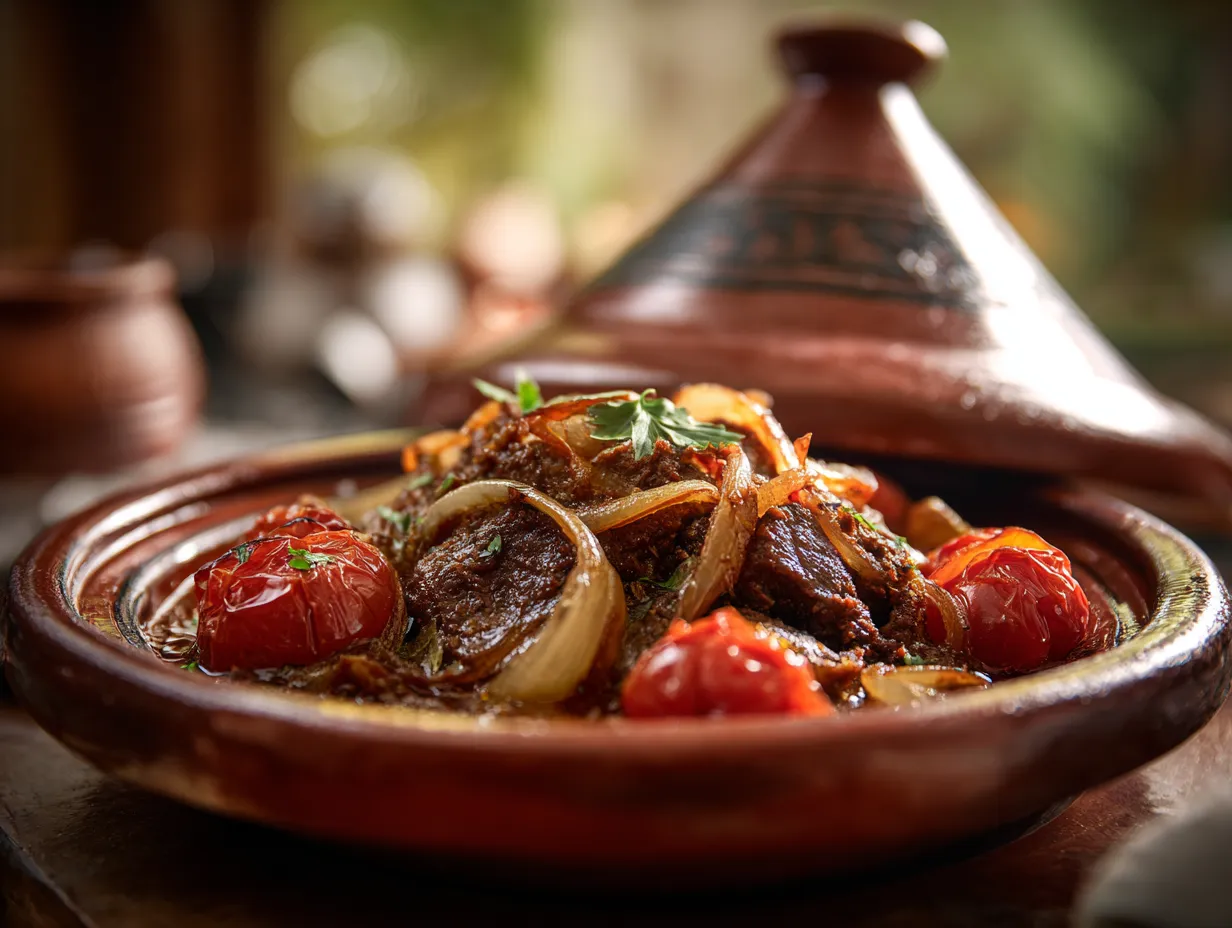
Lamb vs Beef: Choosing the Best Meat for Tajine
One of the first questions readers ask and rightly so is: should I use lamb or beef for tajine? The good news is that both work beautifully. The better question is which one suits your taste, time, and occasion. Let’s walk through it together so you can choose confidently, not guess.
Best Cuts of Lamb for Slow Cooking
Lamb is often considered the classic choice in Moroccan tajine recipes, and for good reason. It naturally pairs with warm spices and develops a luxurious texture when slow-cooked.
For the best results, look for:
- Lamb shoulder – rich, marbled, and forgiving
- Lamb shank – deeply flavorful, perfect for long cooking
- Neck or stew meat – underrated but excellent in a tajine
Why lamb shines here:
- It absorbs spices quickly
- The fat melts into the sauce, adding body
- It complements sweet elements like caramelized onions
If you’re cooking for guests or want a more traditional feel, lamb tajine with onions and tomatoes is hard to beat.
Ideal Beef Cuts for Moroccan Tajine
Beef is a fantastic alternative especially if you prefer a heartier, less gamey flavor. In fact, beef tajine Moroccan style is very popular in everyday home cooking.
Choose cuts that thrive with slow braising:
- Chuck – balanced fat and tenderness
- Brisket – rich flavor, slices beautifully
- Beef shank – gelatin-rich and deeply savory
Beef works especially well if:
- You want a more robust, savory profile
- You’re cooking ahead (beef reheats exceptionally well)
- You’re pairing the dish with crusty bread or couscous
Texture, Flavor, and Cooking Time Compared
Still undecided? This quick comparison helps clarify the differences at a glance.
| Ingredient | Quantity (Serves 4) |
|---|---|
| Lamb shoulder (cubed) | 1 kg / 2.2 lb |
| or Beef chuck (cubed) | 1 kg / 2.2 lb |
And here’s how they behave in the pot:
- Lamb
- Softer, silkier texture
- Slightly shorter cooking time
- Rich, aromatic finish
- Beef
- Firmer bite, deeper savoriness
- Benefits from longer simmering
- Excellent for batch cooking
👉 Personal recommendation:
If this is your first time making Lamb or Beef Tajine with caramelized onions and tomatoes, start with lamb for elegance or beef for comfort. There’s no wrong choice only different (and delicious) outcomes.
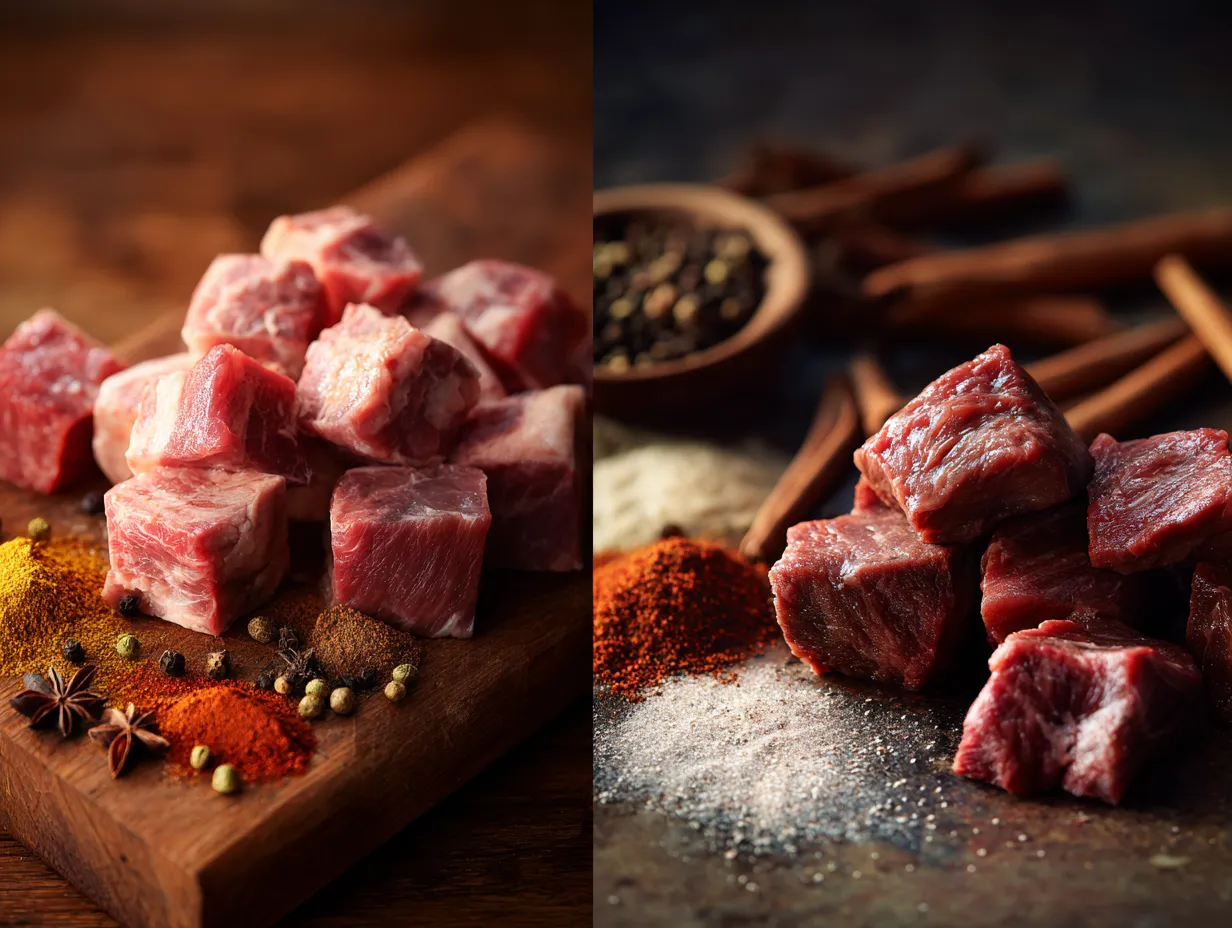
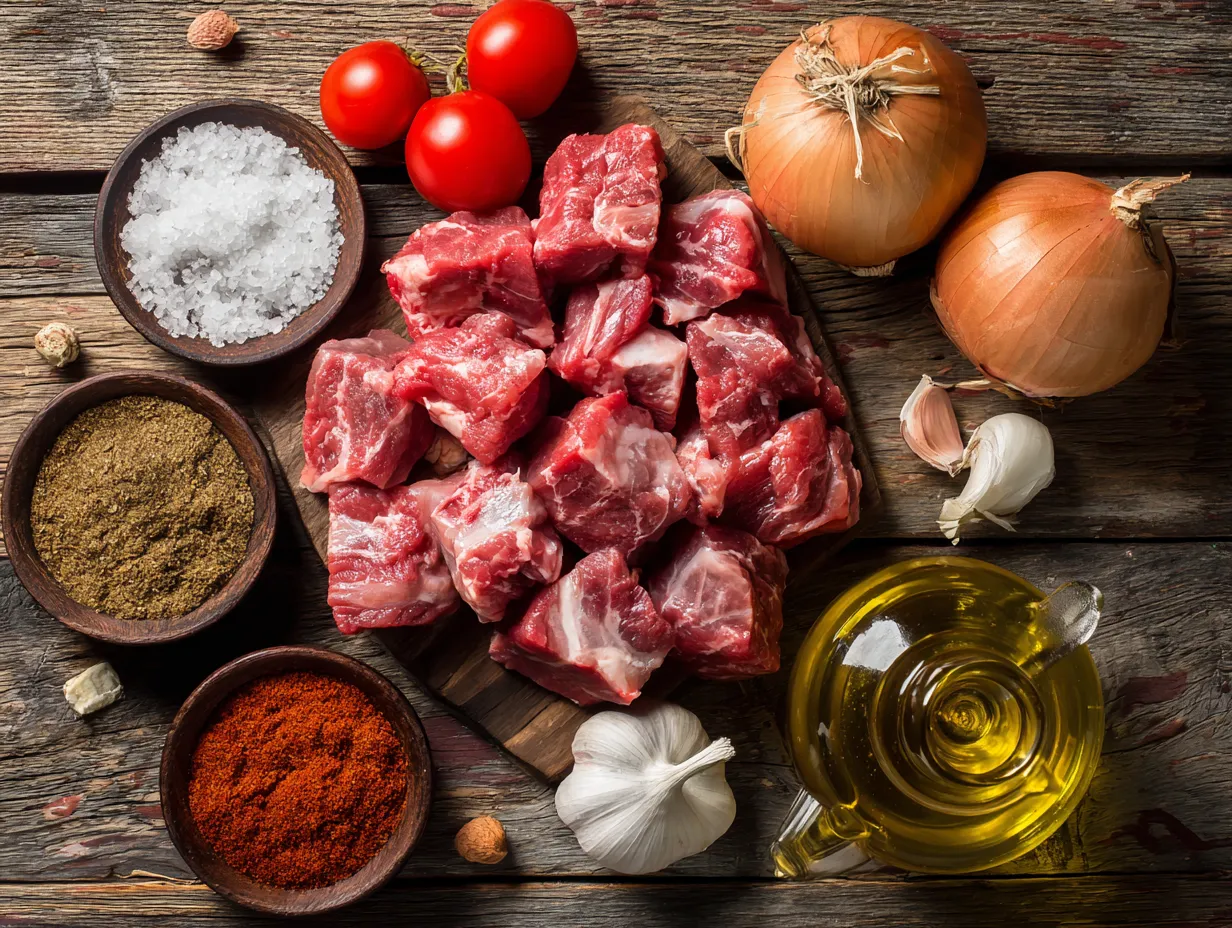
Ingredients for Lamb or Beef Tajine with Caramelized Onions and Tomatoes
The beauty of this tajine lies in its simplicity. Each ingredient has a clear purpose nothing is random, and nothing is wasted. Whether you choose lamb or beef, these components work together to build depth, balance, and that signature Moroccan warmth.
🥘 Core Ingredients Table (with Descriptions)
| Ingredient | Quantity | Description |
|---|---|---|
| Lamb shoulder or beef chuck | 1 kg (2.2 lb) | Slow-cooking cuts that become tender and absorb spices beautifully |
| Yellow onions | 4 large | Slowly caramelized to create natural sweetness and body in the sauce |
| Fresh tomatoes | 500 g (about 4 medium) | Provide acidity and structure; balance the sweetness of the onions |
| Olive oil | 4 tbsp | Traditional cooking fat that enhances flavor and carries spices |
| Garlic cloves | 3–4 | Adds savory depth without overpowering the dish |
| Ground cumin | 1½ tsp | Earthy backbone spice common in Moroccan cuisine |
| Ground cinnamon | ½ tsp | Adds warmth and subtle sweetness |
| Paprika | 1 tsp | Brings mild heat and color to the sauce |
| Black pepper | ½ tsp | Enhances overall flavor |
| Salt | To taste | Adjust gradually as the sauce reduces |
| Water or light stock | 250 ml (1 cup) | Keeps the tajine moist during slow cooking |
Tip for personalization:
If you enjoy richer sauces, increase onions slightly. Prefer a brighter finish? Add an extra tomato.
Why These Ingredients Work Together
This ingredient combination reflects the principles of traditional Moroccan tajine cooking:
- Sweetness from caramelized onions
- Acidity from tomatoes
- Depth from spices rather than heat
- Texture from slow-braised meat
The result is a dish that feels layered and intentional never flat or one-note.
Essential Ingredients and Moroccan Spices
If meat is the foundation of a great tajine, spices are the soul. This is where Lamb or Beef Tajine with caramelized onions and tomatoes truly becomes Moroccan. The goal isn’t heat or heaviness it’s warmth, balance, and aroma. Think inviting, not intimidating.
So let me ask you this: have you ever smelled a dish cooking and felt hungry before tasting it? That’s the power of spices used correctly.
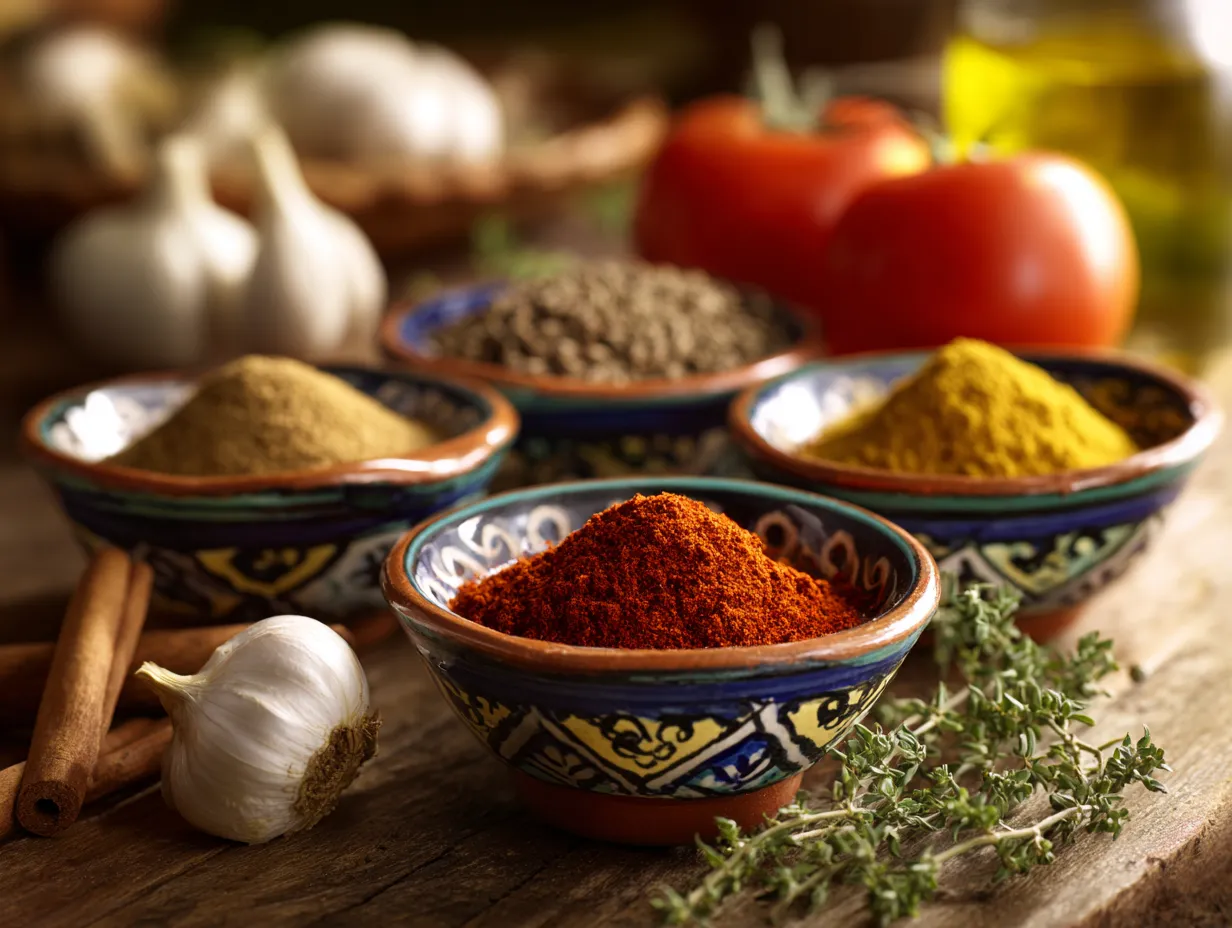
Key Spices Used in Traditional Tajine
Moroccan cooking relies on a small but intentional spice palette. Each one has a role, and when combined, they create something greater than the sum of their parts.
Here are the essentials for this tajine:
- Cumin – earthy and grounding, it anchors the dish
- Cinnamon – subtle sweetness that enhances caramelized onions
- Paprika – mild warmth and rich color
- Black pepper – gentle bite that lifts the sauce
What’s important is how you use them. Spices should be added early, allowing them to bloom in olive oil and mingle with onions and tomatoes. This prevents harshness and creates a rounded, cohesive flavor.
Smart cooking insight: If your spice cabinet is small, don’t worry. Moroccan tajine is about restraint, not excess.
Role of Ras el Hanout in Flavor Depth
If you want to elevate your tajine from excellent to unforgettable, ras el hanout is your secret weapon. This iconic Moroccan spice blend can include anywhere from 8 to 20 spices, depending on the maker.
Why it works so well here:
- Adds complexity without overpowering
- Bridges sweet and savory notes
- Enhances both lamb and beef equally
Use it sparingly about 1 teaspoon is enough. Think of it as a background chorus, not the lead singer.
Fresh vs Canned Tomatoes in Tajine
Tomatoes may seem straightforward, but they quietly shape the entire dish.
- Fresh tomatoes
- Brighter, lighter flavor
- Best when in season
- Ideal if you prefer a fresher sauce
- Canned tomatoes
- Consistent year-round
- Slightly deeper, richer base
- Great for longer simmering
Both work beautifully in a tomato-based tajine. The real trick is balance letting tomatoes support the onions and spices rather than dominate them.
Olive Oil and Aromatics Explained
Olive oil does more than prevent sticking. It acts as a flavor carrier, helping spices coat the meat and onions evenly. Combined with garlic, it sets the stage for slow cooking and deep flavor development.
For best results:
- Warm olive oil gently
- Bloom spices briefly
- Add onions and aromatics before meat
This order builds layers one of the defining techniques in Moroccan cuisine.
Step-by-Step Cooking Method
This is where everything comes together. Cooking Lamb or Beef Tajine with caramelized onions and tomatoes isn’t about rushing from step to step it’s about slowing down and letting flavors build naturally. If you’ve ever wondered why restaurant tajines taste deeper than home versions, the answer is usually process, not ingredients.
Let’s walk through it in a way that feels doable, even if this is your first tajine.
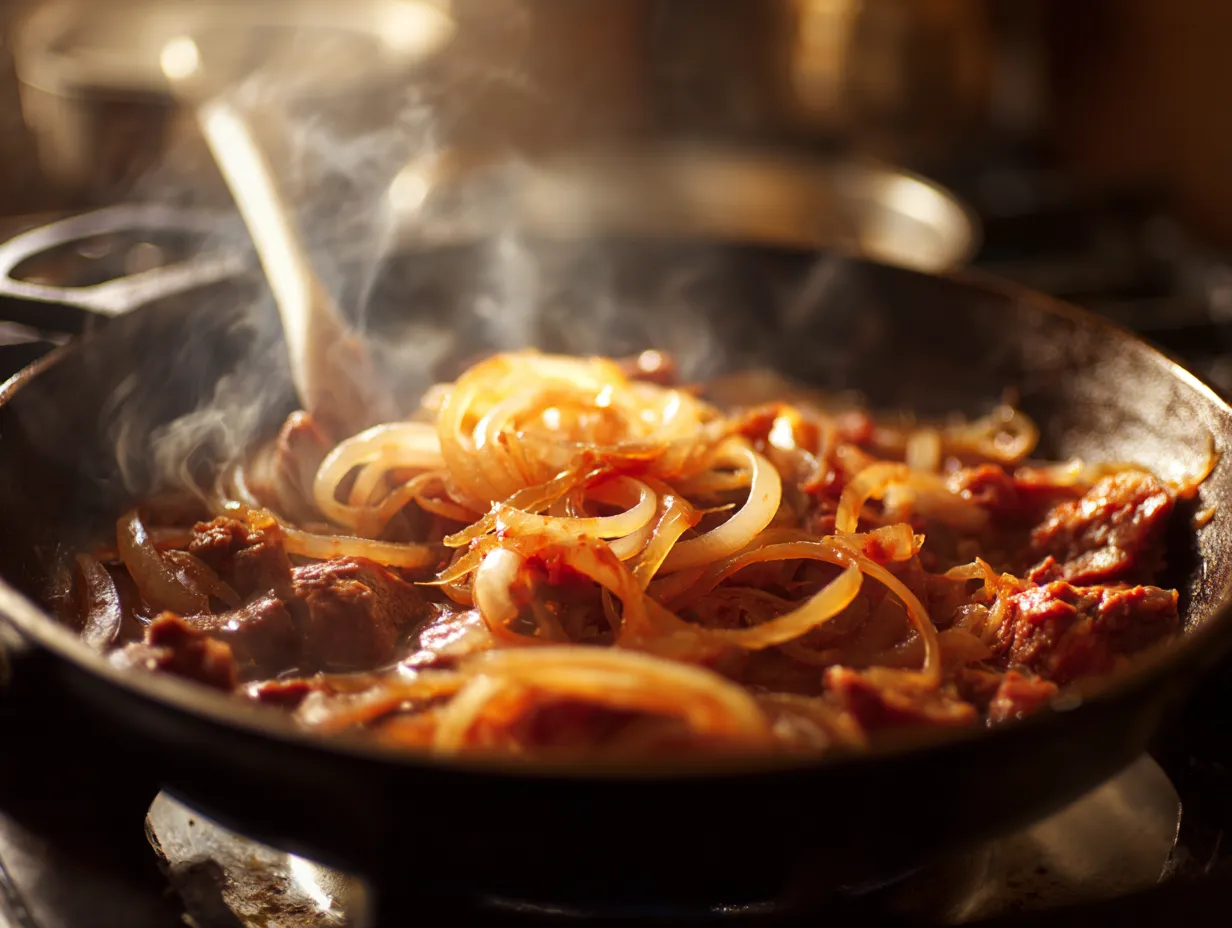
Preparing and Caramelizing the Onions
Start here. Always. Properly caramelized onions create the flavor backbone of this dish.
To do it right:
- Heat olive oil gently in your tajine or heavy pot
- Add sliced onions with a pinch of salt
- Cook low and slow, stirring occasionally
You’re not looking for browning you’re looking for soft, golden onions that smell sweet and rich. This step alone can take 25–30 minutes, and that time is well spent.
“Great tajine isn’t cooked it’s patiently built, one layer at a time.”
Building Layers of Flavor in the Tajine
Once the onions are ready, the rest flows naturally. Add garlic and spices, letting them bloom briefly before introducing the meat.
This order matters:
- Spices first, to release aroma
- Meat second, to seal in flavor
- Tomatoes last, to create the sauce
Stir gently. You want everything coated, not crowded. This is where Moroccan tajine technique shines each ingredient has space to express itself.
Slow-Cooking for Tender Meat
Now comes the easiest part: letting time do the work.
Cover the tajine and keep the heat low. Whether you’re using lamb or beef, slow cooking allows:
- Collagen to break down naturally
- Flavors to deepen without bitterness
- Sauce to thicken without reduction tricks
Check occasionally, but resist the urge to stir too often. Tajine cooking thrives on steady heat, not constant movement.
Final Seasoning and Resting Time
The final step is often overlooked and it makes a noticeable difference.
Before serving:
- Taste and adjust salt
- Add a final crack of black pepper if needed
- Let the tajine rest, covered, for 10 minutes
This short rest allows flavors to settle and the sauce to cling beautifully to the meat. The result? A dish that tastes intentional, balanced, and complete.
Serving Suggestions and Traditional Pairings
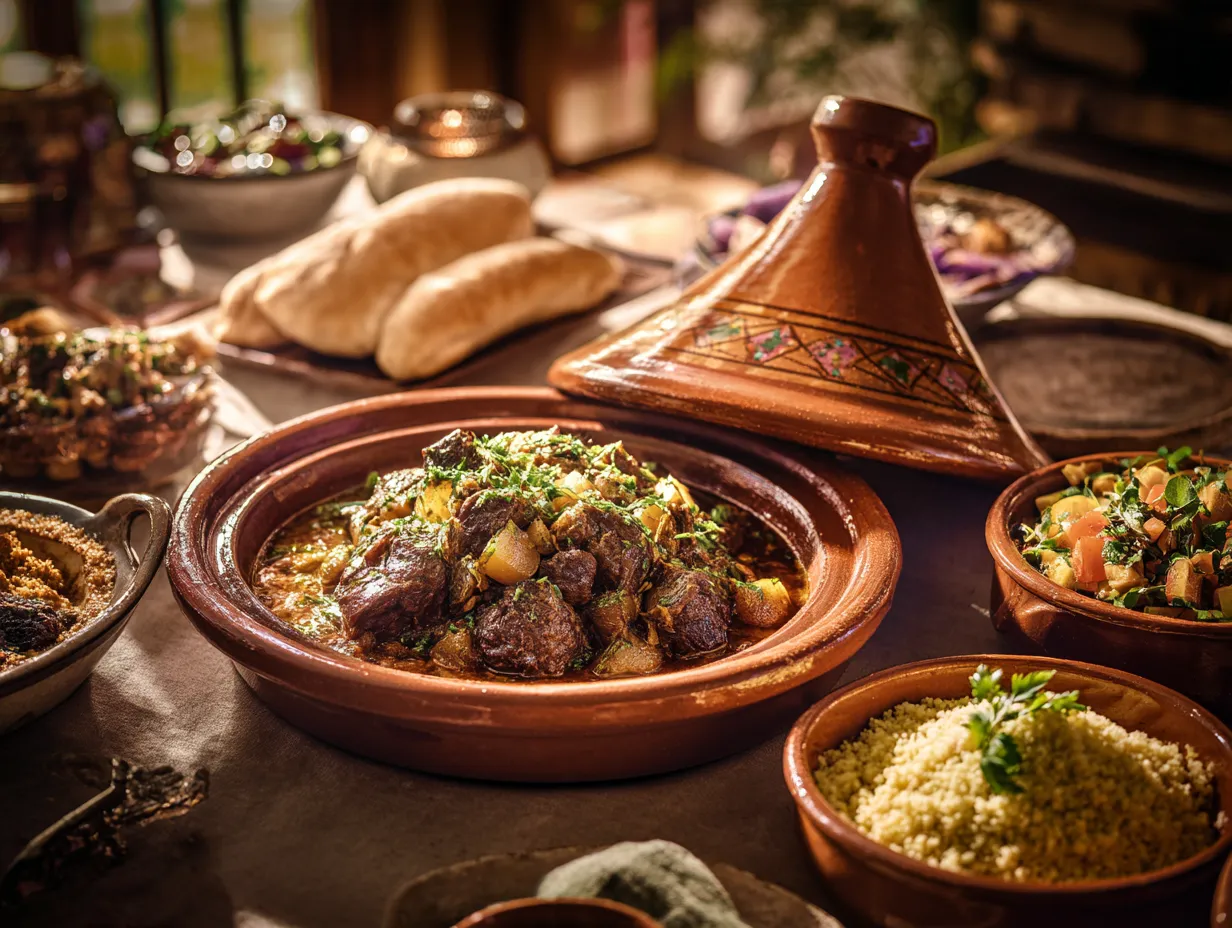
You’ve taken the time to slowly cook your Lamb or Beef Tajine with caramelized onions and tomatoes now let’s serve it in a way that truly honors the dish. Presentation and pairing aren’t afterthoughts in Moroccan cuisine; they’re part of the experience. The right accompaniments don’t compete with the tajine they quietly elevate it.
So how do you serve it like it’s meant to be enjoyed? Let’s break it down.
Best Bread to Serve with Tajine
In Morocco, tajine is rarely eaten with cutlery. Bread is the utensil, the scoop, and sometimes the star.
The best options include:
- Khobz (Moroccan round bread) – traditional, slightly chewy, perfect for soaking up sauce
- Crusty artisan bread – a practical alternative with a sturdy crumb
- Warm flatbread – great if you prefer something softer
What matters most is texture. You want bread that can handle a rich, tomato-based sauce without falling apart. If you’re hosting, warming the bread before serving instantly upgrades the meal.
Side Dishes That Complement the Flavors
Because this tajine is rich and slow-cooked, sides should bring freshness or contrast not heaviness.
Well-balanced pairings include:
- Simple couscous with olive oil and salt
- Moroccan carrot salad with cumin and citrus
- Fresh tomato and cucumber salad for brightness
These sides keep the focus on the tajine while adding color and variety to the table.
Garnishes and Finishing Touches
The final details matter more than you might think. A small garnish can enhance aroma, appearance, and even flavor perception.
Try finishing with:
- Fresh parsley or cilantro for a pop of green
- A light drizzle of olive oil for sheen
- Toasted sesame seeds for subtle texture
Serve the tajine directly in the dish if possible it retains heat and adds authenticity. That moment when the lid lifts and steam rises? That’s part of the magic.
Conclusion
Cooking a Moroccan tajine isn’t just about following a recipe it’s a journey through aroma, taste, and tradition. Every step, from caramelizing onions to slow-simmering the meat, is an opportunity to connect with the flavors of North Africa. Whether you choose lamb or beef, the result is a dish that’s comforting, visually stunning, and full of complexity.
Remember, Moroccan cooking celebrates intuition and patience. Don’t stress if your first attempt isn’t perfect each try brings you closer to mastering this timeless dish. And the best part? Sharing it with family or friends, warm bread in hand, creates an experience that’s just as memorable as the flavors on your plate.
Q&A
Q1: Can I make this tajine in a regular pot instead of a clay tajine?
Absolutely! While a traditional clay tajine enhances flavor and moisture, a heavy-bottomed pot or Dutch oven works equally well. Just keep the heat low and slow.
Q2: How long can I store leftover tajine?
Refrigerated, it lasts up to 3–4 days. The flavors actually deepen overnight, making leftovers even more enjoyable. Freeze portions for up to 2 months if needed.
Q3: Can I make this recipe vegetarian?
Yes! Replace lamb or beef with hearty vegetables like eggplant, carrots, and chickpeas. Keep the spice layering the same to retain authentic Moroccan flavor.
Q4: What’s the best way to adjust sweetness or acidity?
Caramelized onions provide natural sweetness. For more acidity, add a splash of lemon juice or extra tomatoes toward the end of cooking.