


Introduction to Vegetarian Moroccan Tagine
If you’re looking to explore the rich and diverse world of Moroccan cuisine, there’s no better place to start than with a Vegetarian Moroccan Tagine. This dish is not just a meal; it’s a celebration of fresh, seasonal vegetables, aromatic spices, and slow-cooked flavors that have been perfected for generations. Whether you’re a seasoned chef or a beginner, making this dish is a rewarding experience that will transport you straight to Morocco with every bite.
Table of Contents
Key Takeaways
- Authentic Flavors: A vegetarian tagine is a harmonious blend of spices like Ras el Hanout, cumin, and cinnamon, combined with fresh vegetables and chickpeas.
- Slow Cooking Magic: The key to a perfect tagine is slow cooking, which allows the flavors to meld together and produce a tender, flavorful dish.
- Health Benefits: Rich in vitamins, fiber, and antioxidants, the vegetarian tagine is as nourishing as it is delicious.
- Cultural Experience: Cooking and serving a tagine is about more than food; it’s about embracing Moroccan traditions and hospitality.
What Makes Vegetarian Moroccan Tagine So Special?
When you think of Moroccan cuisine, the vibrant flavors, aromatic spices, and rich textures immediately come to mind. But what sets a Vegetarian Moroccan Tagine apart? At its core, this dish is a celebration of fresh vegetables, slow-cooked to perfection, infused with spices that tell tales of Morocco’s culinary heritage.
A Symphony of Spices
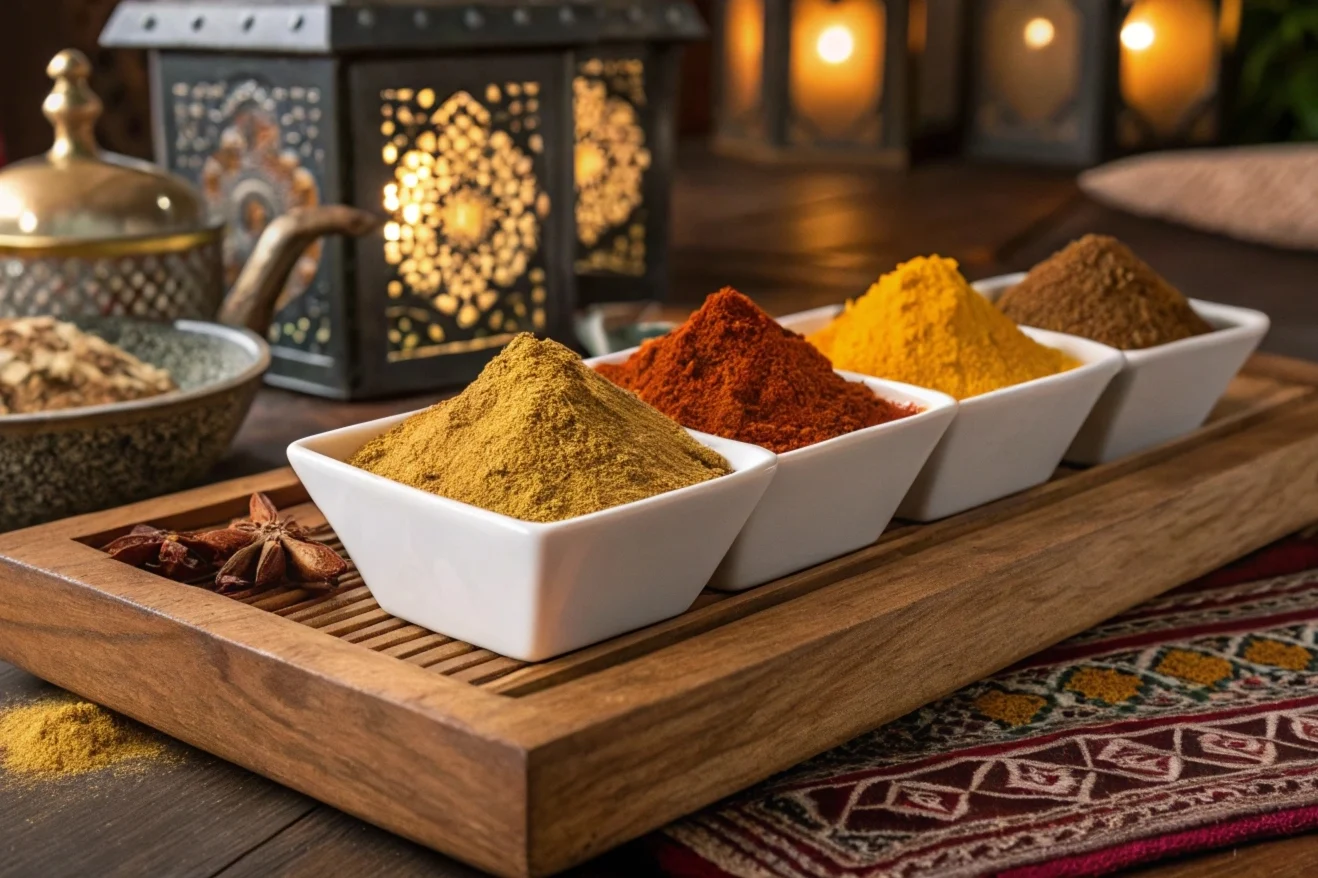
One of the defining elements of a vegetarian Moroccan tagine is its spices. Ras el Hanout, a traditional Moroccan spice blend, combines warm notes of cumin, turmeric, and cinnamon, creating an explosion of flavor in every bite.
- Cumin: Adds earthy depth to the dish.
- Turmeric: Provides vibrant color and subtle bitterness.
- Cinnamon: A surprising sweet warmth in a savory dish.
The Slow-Cooked Magic
Cooking in a traditional tagine pot allows vegetables to simmer slowly, preserving their nutrients while letting the flavors blend harmoniously. Ingredients like chickpeas, preserved lemons, and olives create layers of taste that make every spoonful a delight.
A Nutritious Delight
This dish isn’t just about flavor it’s also packed with health benefits. The combination of fresh vegetables, chickpeas, and spices ensures a meal that’s rich in fiber, vitamins, and antioxidants.
Whether you’re a seasoned chef or a home cook trying your hand at Moroccan cuisine for the first time, a vegetarian tagine is a must-try dish that’s both satisfying and nourishing.
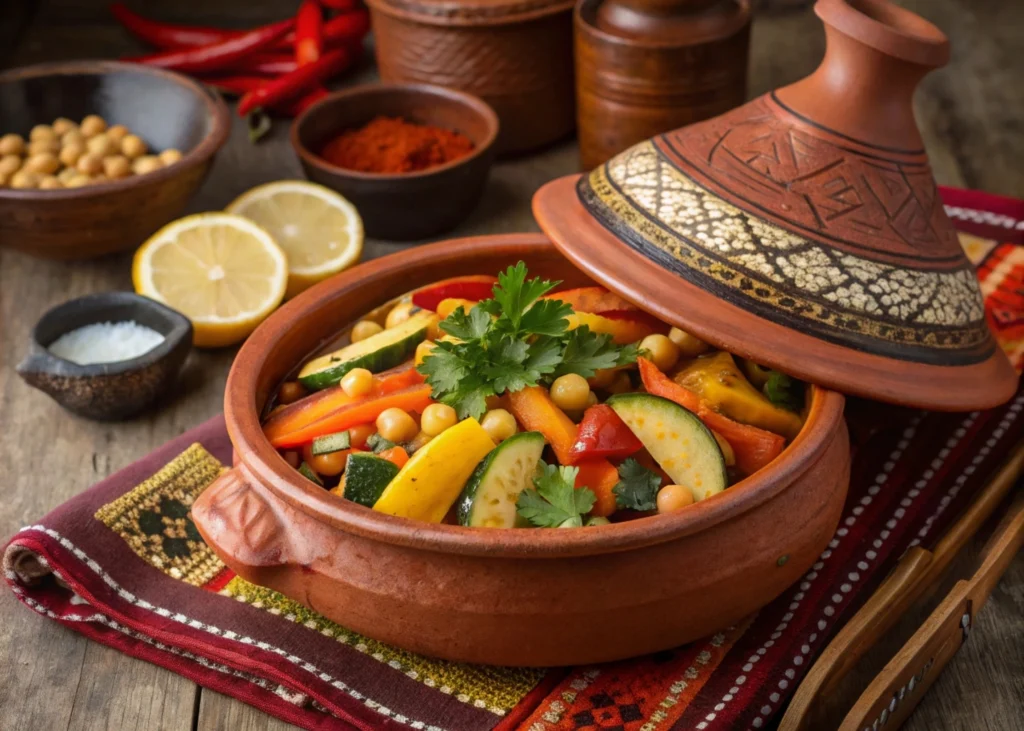
Key Ingredients and Their Role in a Vegetarian Moroccan Tagine
Essential Ingredients for an Authentic Vegetarian Moroccan Tagine
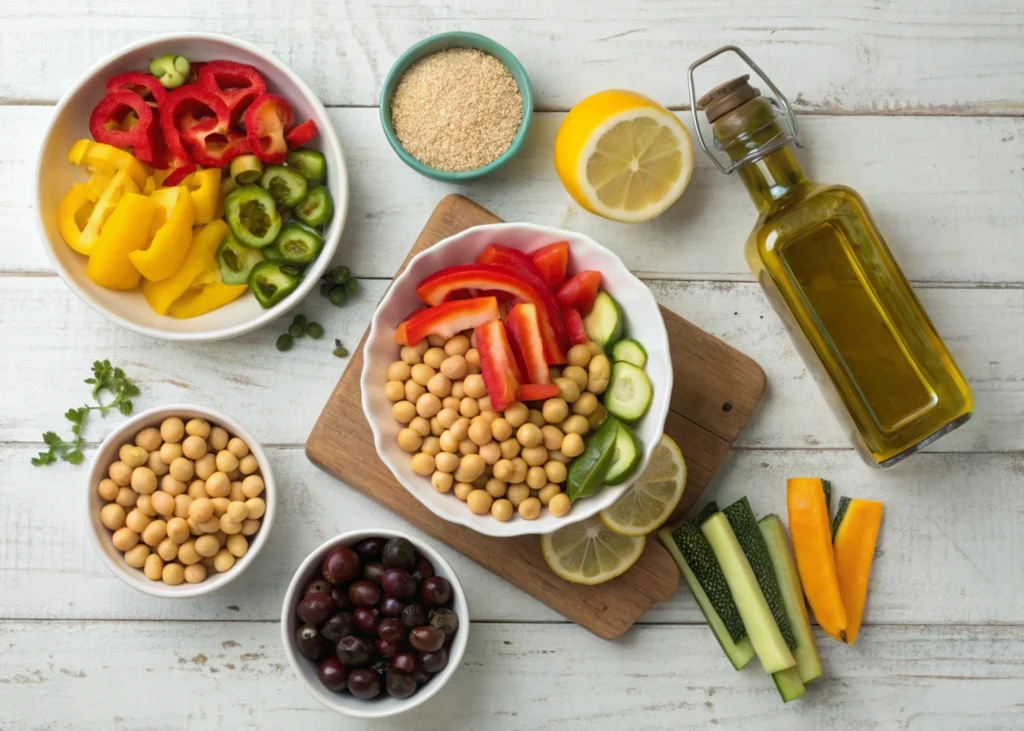
Creating an unforgettable Vegetarian Moroccan Tagine starts with choosing the right ingredients. Each component plays a unique role, contributing to the dish’s signature aroma, flavor, and texture. Let’s break down the key ingredients and their significance.
The Core Ingredients
At the heart of every Moroccan tagine are fresh vegetables and spices. These form the base of the dish and determine its overall character.
- Chickpeas: Provide protein and a hearty texture.
- Preserved Lemons: Add a tangy, citrusy kick.
- Olives: Offer a salty contrast to the sweetness of vegetables.
- Vegetables: Carrots, zucchini, bell peppers, and potatoes create a medley of flavors.
The Aromatic Spices
Spices are the soul of Moroccan cuisine. Here are the must-haves:
- Ras el Hanout: The king of Moroccan spice blends.
- Cumin: Adds warmth and depth.
- Paprika: Enhances color and mild heat.
- Cinnamon: Brings subtle sweetness.
Cooking Liquids
To ensure the ingredients cook evenly and remain moist, liquids play a crucial role:
- Vegetable Broth: Adds savory richness.
- Olive Oil: Enhances texture and richness.
Table: Ingredient Breakdown and Their Benefits
| Ingredient | Benefit |
|---|---|
| Chickpeas | Rich in protein and fiber. |
| Preserved Lemons | Adds tanginess and depth. |
| Olives | Provides a salty balance. |
| Ras el Hanout | Complex spice blend. |
| Vegetables | Packed with vitamins and fiber. |
| Vegetable Broth | Adds moisture and flavor. |
| Olive Oil | Enhances texture and aroma. |
Pro Tip: Always use fresh, organic vegetables and high-quality spices for the most authentic flavor.
Tips and Secrets for the Best Vegetarian Moroccan Tagine
Expert Tips to Elevate Your Vegetarian Moroccan Tagine
A truly exceptional Vegetarian Moroccan Tagine is not just about following a recipe it’s about embracing the art of Moroccan cooking. Here are some expert tips and secrets to help you master this iconic dish.
Use High-Quality Ingredients
- Always opt for fresh vegetables and premium spices.
- Use authentic preserved lemons and good-quality olive oil for depth of flavor.
Master the Layering Technique
- Start with harder vegetables like potatoes and carrots at the bottom.
- Softer vegetables like zucchini and bell peppers should sit on top.
- Chickpeas, olives, and preserved lemons are added last to infuse every layer with flavor.
Cook Slowly and Patiently
- The beauty of a Moroccan tagine lies in its slow cooking process.
- Keep the heat low to ensure even cooking and rich flavor infusion.
Garnish Before Serving
- Always finish your dish with fresh herbs like parsley or cilantro.
- A sprinkle of toasted almonds can add a delightful crunch.
“Cooking is an art, but Moroccan Tagine is poetry served on a plate.” – Traditional Moroccan Saying
Serving and Pairing Your Vegetarian Moroccan Tagine
How to Serve Your Vegetarian Moroccan Tagine for Maximum Enjoyment
Now that your Vegetarian Moroccan Tagine is ready, the fun part begins serving and enjoying this rich, flavorful dish. Moroccan cuisine is all about communal eating and sharing, so let’s talk about how to serve it up and pair it with sides to elevate the experience.
Serve with Traditional Sides
- Couscous: A light and fluffy base for the tagine. It soaks up the sauce beautifully, balancing the rich, spicy flavors.
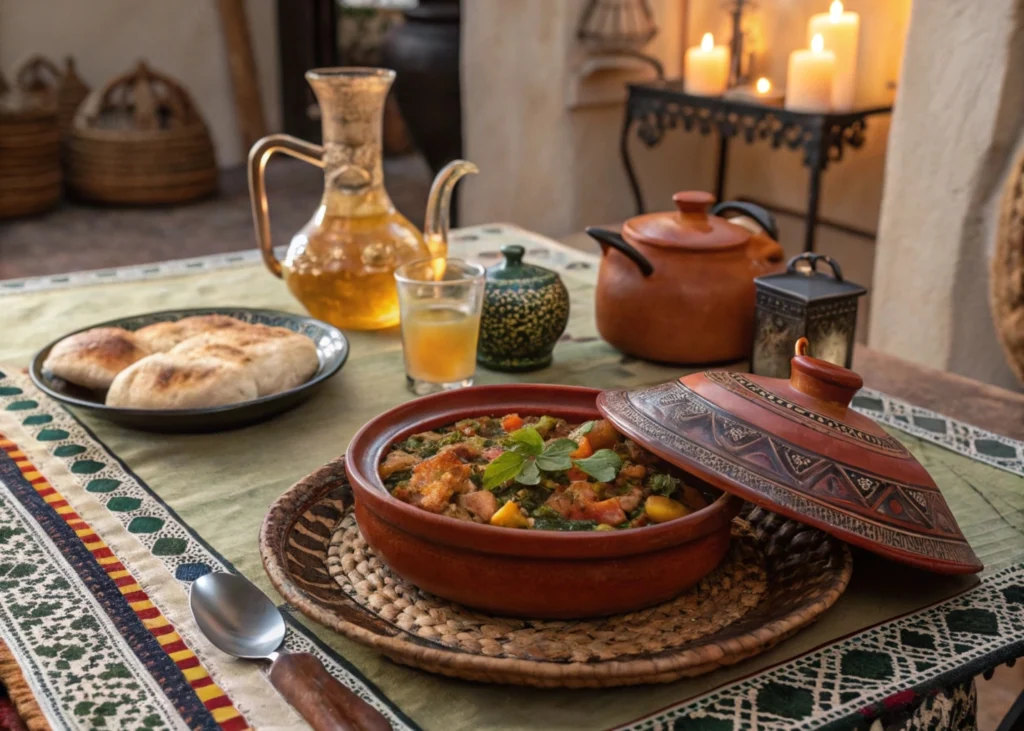
- Moroccan Bread (Khobz): Perfect for scooping up the tagine. Its soft texture complements the dish’s hearty vegetables.
- Rice: A more neutral alternative for those who prefer it over couscous.
Garnishing and Presentation
- Before serving, sprinkle freshly chopped parsley or cilantro on top of the tagine for a burst of color and freshness.
- Add a handful of toasted almonds for a crunchy texture.
- Serve the tagine in the traditional tagine pot, letting your guests enjoy the aroma before digging in.
Perfect Pairings to Complement the Dish
To round out your Moroccan meal, consider these drink pairings:
Fresh Juices: Try pomegranate or orange juice for a naturally sweet contrast.
Mint Tea: A classic Moroccan drink that’s sweet, refreshing, and cooling against the spices.
Citrusy White Wine: A crisp white wine, such as Sauvignon Blanc, balances the dish’s richness.
Tips for Perfecting Your Vegetarian Moroccan Tagine
To ensure your tagine turns out flawless, keep these tips in mind:
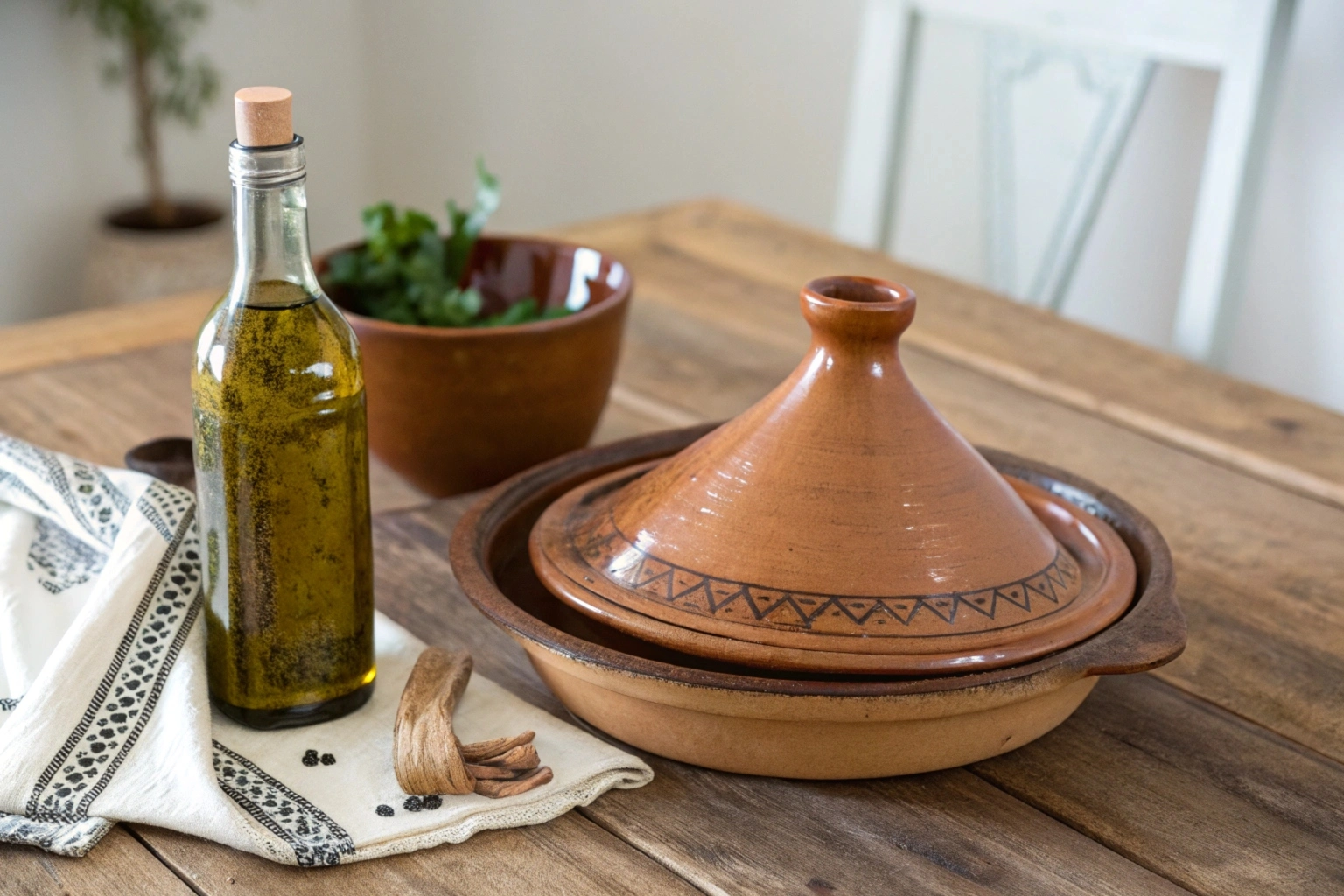
- Choose the Right Equipment: If you don’t have a traditional tagine pot, a Dutch oven or heavy skillet with a lid works as a great substitute.
- Don’t Rush the Cooking: The slow cooking process is essential for developing deep, layered flavors.
- Adjust Spices to Taste: Feel free to experiment with spice levels based on your preference.
Serving Suggestions
Tagine isn’t just a dish; it’s an experience. Serve it with complementary sides to elevate your meal:
- Bread Pairing: Moroccan bread (khobz) is perfect for scooping up every bit of the sauce.
- Grain Options: Fluffy couscous or quinoa pairs beautifully with the tagine’s rich flavors.
- Traditional Beverage: A pot of Moroccan mint tea completes the authentic dining experience.
Nutritional Information
| Nutrient | Per Serving | Health Benefits |
|---|---|---|
| Calories | ~250 kcal | Provides sustained energy. |
| Protein | 8g | Builds and repairs body tissues. |
| Dietary Fiber | 7g | Supports healthy digestion. |
| Healthy Fats | 10g | Promotes heart health. |
Conclusion – Why You Should Try Vegetarian Moroccan Tagine
A Vegetarian Moroccan Tagine is a fantastic way to experience Moroccan cuisine without the meat. This dish is full of flavor, nourishment, and history, making it perfect for any meal. Whether you’re hosting a dinner party or enjoying a quiet evening at home, this tagine will impress your guests and delight your taste buds.
Don’t be afraid to experiment with your ingredients and spices each tagine is a unique creation. The beauty of this dish is that it’s customizable to suit your preferences, making it a versatile addition to your culinary repertoire.
Q&A – Common Questions About Vegetarian Moroccan Tagine
Q1: Can I make a vegetarian tagine without a tagine pot?
Absolutely! While a traditional tagine pot is ideal, you can make this dish in a heavy-bottomed pot or Dutch oven. Just be sure to cook it slowly over low heat.
Q2: What other vegetables can I add to the tagine?
Feel free to experiment with vegetables like sweet potatoes, squash, or eggplant. Moroccan cuisine is known for being adaptable, so mix and match to your taste!
Q3: Can I prepare this dish in advance?
Yes, the flavors in a Vegetarian Moroccan Tagine deepen and improve when stored in the fridge for a day or two. Simply reheat it before serving.
Q4: What can I pair with a vegetarian Moroccan tagine?
Couscous, rice, or Moroccan bread (khobz) make perfect sides. For drinks, try mint tea or a crisp white wine.
Try this recipe today and discover why Moroccan tagine is a global favorite. Bon appétit or as they say in Morocco, b’saha!
