

Intro: A Dish That Warms More Than Your Stomach
Craving a dish that’s both nourishing and nostalgic?
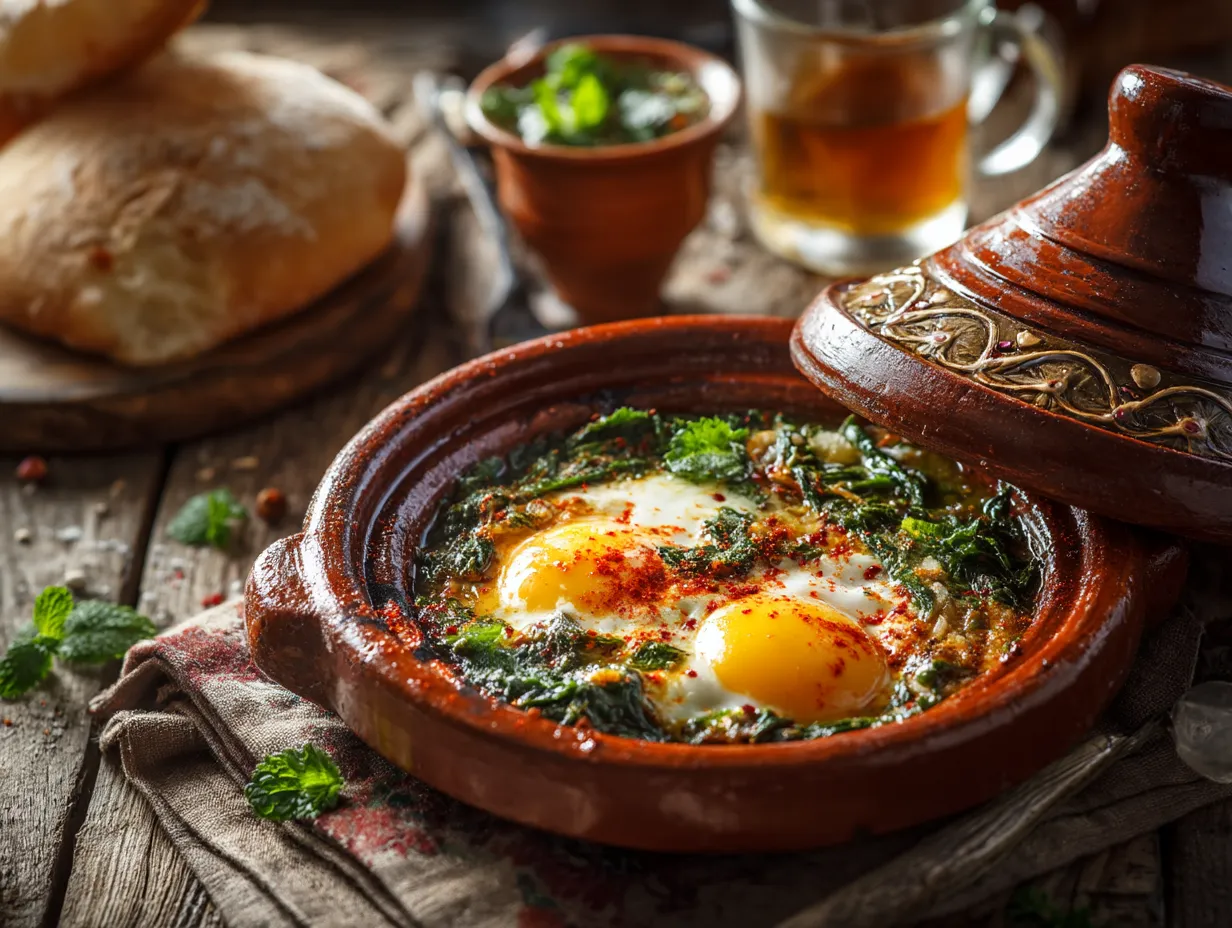
The Moroccan Spinach and Egg Tagine is more than just a recipe it’s a comforting embrace in edible form. Born in humble kitchens across Morocco, this dish brings together wilted spinach, warm spices, and velvety poached eggs, all gently cooked in a traditional clay pot known as a tagine.
What makes it magical isn’t just the ingredients it’s the experience: scooping it up with fresh khobz, sharing it around the table, and savoring the slow-cooked love in every bite.
If you’re new to Moroccan food or just looking for a new meatless main, this dish is a flavorful, healthful place to start.
Key Takeaways: Why You’ll Love This Tagine
Let’s quickly recap why this spinach and egg tagine deserves a spot in your meal rotation:
- Easy to make with everyday ingredients.
- Vegetarian and protein-packed – great for balanced diets.
- One-pot wonder – fewer dishes, more flavor.
- Authentic Moroccan taste without being too complex.
- Customizable with spices, toppings, or accompaniments.
- Great for breakfast, lunch, or dinner.
Whether you’re making it on a weeknight or for a cozy weekend brunch, this dish hits that sweet spot between hearty and wholesome.
Table of Contents
Introduction to Moroccan Spinach and Egg Tagine
Origins and Cultural Significance
When was the last time a meal transported you somewhere new with just one bite?
The Moroccan Spinach and Egg Tagine is more than a recipe it’s a story simmered in tradition, seasoned with spices, and served straight from the heart of North Africa. Often prepared in a traditional clay tagine pot, this dish is a comforting staple in Moroccan households, especially on cooler evenings when families gather around warm, shared plates.
Rooted in centuries of culinary heritage, this vegetarian Moroccan dish showcases a clever balance of simplicity and depth. Spinach wilts gently in fragrant olive oil, seasoned with earthy cumin and sweet paprika, while eggs are cracked in just before serving, their yolks gently poached in the aromatic base. It’s a one-pot marvel that captures the soul of Moroccan comfort food humble, hearty, and deeply satisfying.
Why It’s the Ultimate Comfort Food
Let’s be honest not all comfort foods are created equal. Some weigh you down, while others lift your spirits. This tagine does the latter. Here’s why:
- It’s rich in natural flavor, thanks to signature Moroccan spices.
- It’s wholesome and hearty, with iron-packed spinach and protein-rich eggs.
- It’s incredibly easy to make, requiring only a handful of pantry ingredients.
- It invites togetherness, perfect for sharing straight from the tagine with crusty Moroccan bread (khobz).
This isn’t just about feeding your body it’s about nourishing your senses. You don’t need to be a seasoned cook to pull it off, either. With a few fresh ingredients and a little patience, you’ll be serving up a dish that feels like home even if you’ve never been to Morocco.
Who This Recipe Is Perfect For
This tagine is for anyone who:
- Craves a flavorful vegetarian Moroccan recipe
- Wants to add a healthy, low-cost option to their weekly rotation
- Enjoys one-pot meals that minimize cleanup without sacrificing taste
- Loves cooking simple yet exotic dishes for guests or cozy nights in
Whether you’re new to Moroccan cuisine or a longtime fan, this recipe offers a warm invitation into the country’s rich food culture no passport required.
Ingredients Breakdown & Key Flavors
Core Ingredients (Spinach, Eggs, Spices)
What makes the Moroccan Spinach and Egg Tagine truly unforgettable?
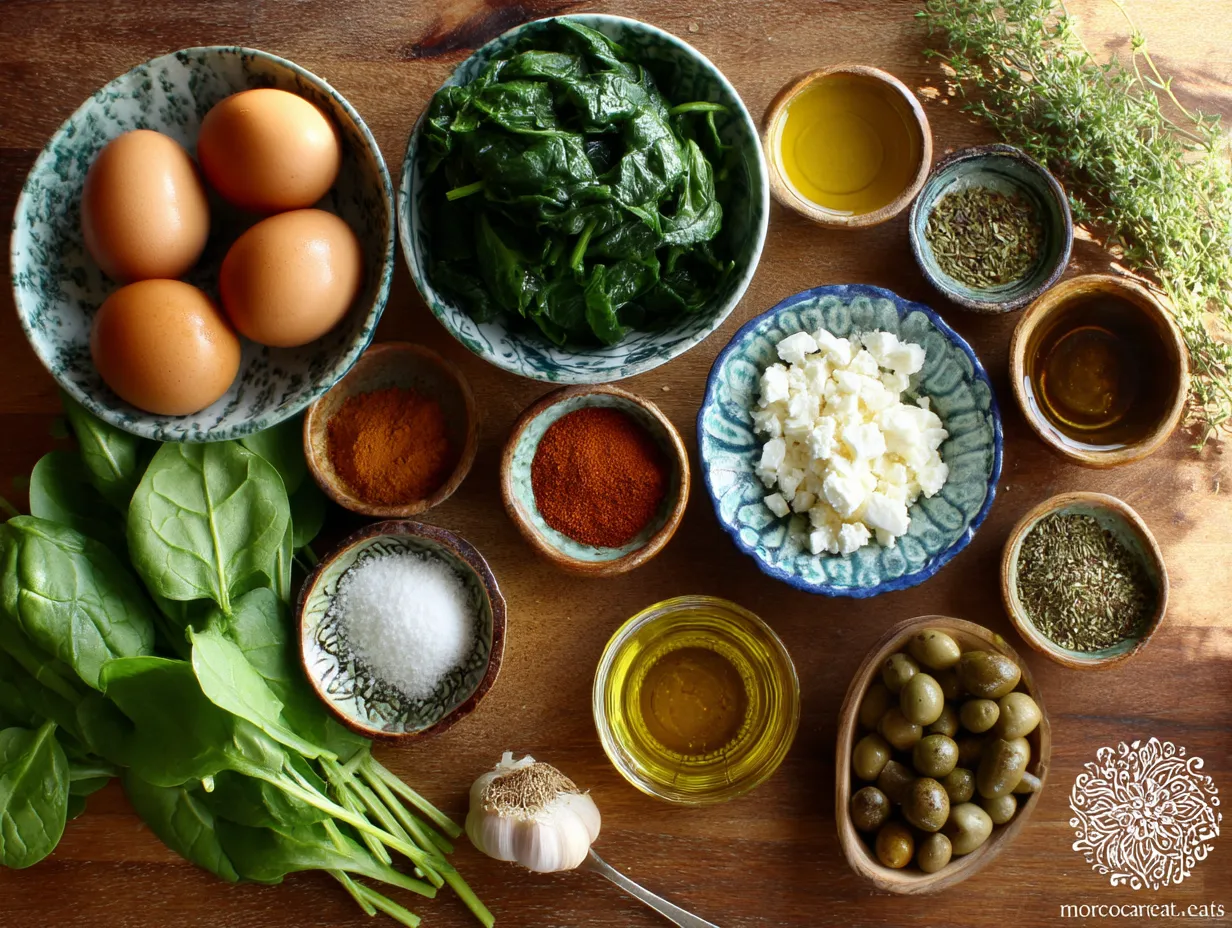
It’s the magic of simple, wholesome ingredients coming together in perfect harmony. Each element in this dish has a job to do from the silky texture of wilted spinach to the warm, earthy aroma of cumin and paprika. This isn’t just a list of ingredients; it’s a blueprint for flavor.
Let’s break down the essentials:
| Ingredient | Purpose in the Tagine |
|---|---|
| Fresh Spinach | The green base of the dish, offering color, texture, and nutrients. |
| Eggs | Cracked over the tagine for a creamy, poached finish that enriches the dish. |
| Olive Oil | The flavorful fat that softens the spinach and helps the spices bloom. |
| Garlic | Adds a pungent depth and fragrant edge that lingers. |
| Ground Cumin | Brings warmth and an earthy backbone to balance the greens. |
| Sweet Paprika | Offers subtle sweetness and a beautiful red hue. |
| Sea Salt & Black Pepper | Enhances the overall flavor without overpowering the natural ingredients. |
| Optional Chili Flakes | For those who love a subtle kick — entirely up to your taste. |
Traditional vs Modern Variations
Traditionally, this tagine is slow-cooked in a clay pot over a low flame, allowing flavors to meld gradually. However, today’s home cooks might use:
- A cast-iron skillet with a lid
- A Dutch oven
- Even a deep non-stick pan
The beauty of this recipe is that it doesn’t demand fancy tools. You can respect tradition and adapt to what you’ve got in your kitchen. If you’re feeling adventurous, try swapping spinach with Swiss chard or kale for a modern twist!
Moroccan Spinach and Egg Tagine Ingredients
| Ingredient | Quantity | Function |
|---|---|---|
| Fresh spinach | 400g (about 14 oz) | The star ingredient, wilted and seasoned to form the base. |
| Eggs | 4 | Added at the end to poach in the tagine, providing richness and protein. |
| Olive oil | 3 tbsp | For sautéing the base and enhancing flavor depth. |
| Garlic (minced) | 3–4 cloves | Brings pungency and classic Moroccan aromatics. |
| Ground cumin | 1 tsp | Offers earthy warmth that defines Moroccan spice profiles. |
| Sweet paprika | 1 tsp | Adds mild sweetness and vibrant red color. |
| Sea salt | To taste | Essential for balancing and enhancing all other flavors. |
| Black pepper | ½ tsp | Mild heat and balance. |
| Optional chili flakes | ¼ tsp (or to taste) | For those who love a bit of spice. |
| Preserved lemon (chopped)* | 1 tbsp (optional) | For tangy depth traditional and bold. |
| Crumbled feta or goat cheese* | As desired | Added at the end for a creamy, savory finish. |
| Fresh cilantro or parsley | A handful | To garnish with freshness and color. |
Optional Add-ins for Extra Depth
Want to give your tagine an edge? These optional ingredients can help customize the flavor:
- Preserved lemon – Adds tang and complexity (very Moroccan!)
- Chickpeas – Boosts protein and texture
- Crumbled feta or goat cheese – A creamy, salty addition post-cooking
- Fresh cilantro or parsley – For garnish and a burst of color
This tagine is forgiving, flexible, and full of soul. So whether you’re a minimalist or a flavor explorer, there’s room to make it yours.
Step-by-Step Cooking Instructions
Preparing the Tagine Base
Ready to bring your kitchen to life with rich Moroccan aromas?
Start with building a flavorful foundation. This base spinach sautéed in garlic, olive oil, and spices sets the tone for the entire dish. Don’t rush this step; let each ingredient do its part.
Here’s how to start:
- Heat 3 tbsp of olive oil in your tagine (or heavy skillet) over medium heat.
- Add minced garlic (3–4 cloves) and stir for about 30 seconds until fragrant.
- Toss in the spinach it may look like a lot at first, but it wilts down quickly. Stir to coat in oil and garlic.
- Sprinkle in 1 tsp ground cumin, 1 tsp sweet paprika, salt, and black pepper to taste.
- Stir occasionally and let the spinach reduce, cooking for 6–8 minutes until soft and infused with flavor.
You’ll know it’s ready when the spinach is tender, the spices smell toasty, and there’s minimal liquid in the pan.
Adding Eggs for Perfect Texture
This part transforms your dish from delicious to unforgettable.
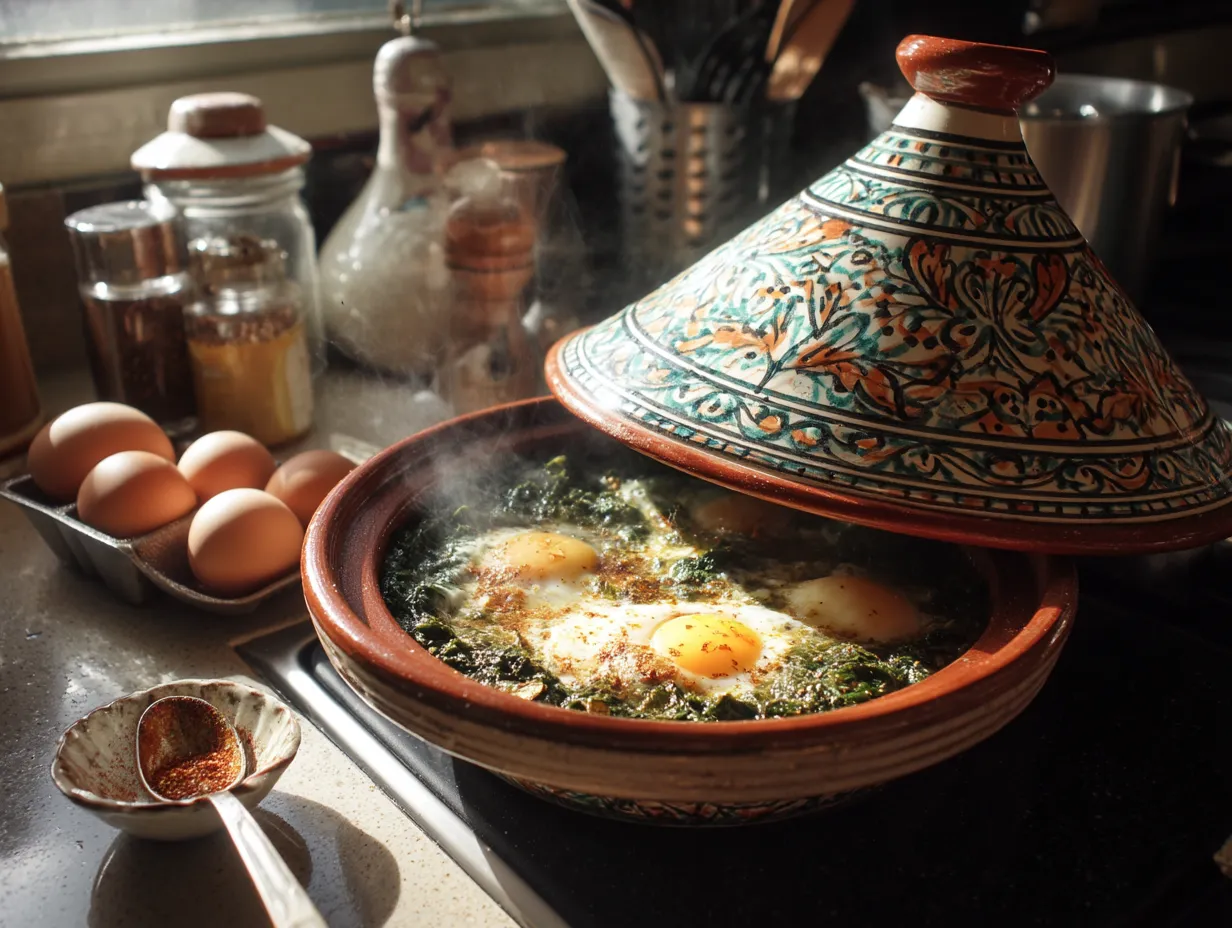
Once your base is cooked, make small wells in the spinach using the back of a spoon. Then:
- Crack one egg into each well (aim for 3–4 eggs).
- Cover the tagine or pan with a lid, reduce the heat, and let the eggs cook gently for 5–7 minutes.
- Like your yolks runny? Keep a close eye.
- Prefer them set? Let them go a bit longer.
If you’re using a traditional tagine, the conical lid will trap just the right amount of steam to poach the eggs perfectly. No lid? A simple baking sheet works too!
Tips for Cooking Without a Tagine Pot
No tagine? No problem.
You can still achieve authentic flavor and texture using tools you already have:
- Use a cast-iron skillet or non-stick sauté pan with a fitted lid.
- Or finish the eggs under a broiler for a slightly firmer texture.
- Want to go oven-style? Transfer the whole mixture into a baking dish and crack eggs on top before baking at 375°F (190°C) for 8–10 minutes.
👉 Pro Tip: Add a drizzle of olive oil over the eggs right before serving for a silky, glossy finish.
Serving Suggestions & Flavor Pairings
How to Serve Moroccan Spinach & Egg Tagine
You’ve simmered, seasoned, and poached to perfection now it’s time to serve your Moroccan masterpiece.
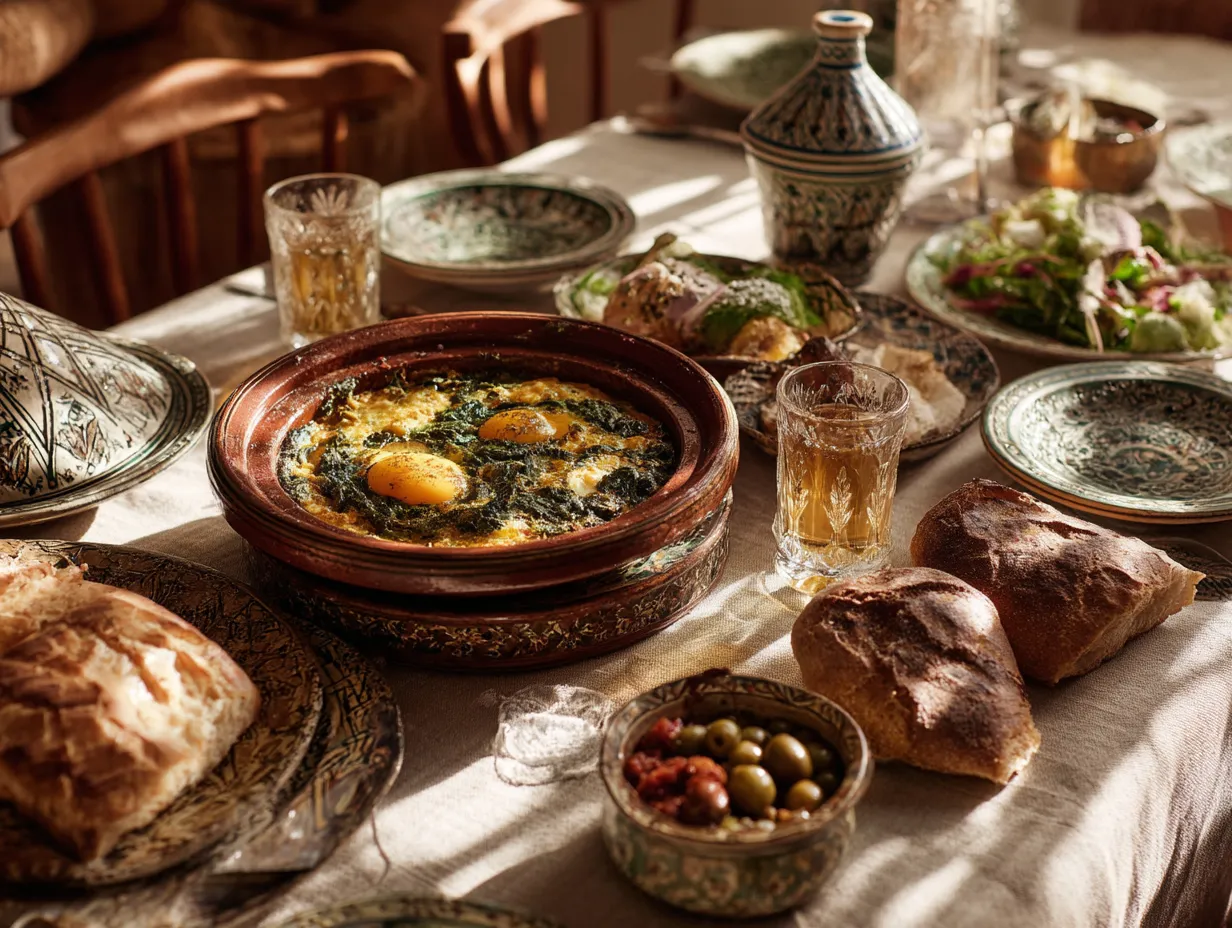
This dish shines brightest when it’s enjoyed the traditional way : straight from the tagine, still warm, with loved ones gathered around. You don’t need a formal setting just some good bread and even better company.
Here are a few authentic serving suggestions:
- With warm khobz (Moroccan bread): Use it to scoop the spinach and yolky eggs no cutlery needed.
- Pair it with msemen or batbout (Moroccan flatbreads) for a more indulgent, layered bite.
- Serve alongside mint tea: The cool sweetness of Moroccan tea beautifully balances the warmth of the tagine.
- Add a fresh tomato and cucumber salad drizzled with olive oil and lemon juice for a cooling contrast.
💬 “In Morocco, food is never just fuel it’s a celebration of flavor, family, and tradition shared around a single dish.” Moroccan Proverb
This is the kind of meal that asks you to slow down, savor every bite, and connect with the moment. Whether you’re serving it as a weeknight dinner, a brunch centerpiece, or as part of a mezze-style spread, the Moroccan spinach and egg tagine adapts effortlessly.
Suggested Pairings for a Complete Moroccan Meal
Want to turn your tagine into a complete Moroccan feast? Pair it with:
- Zaalouk (eggplant and tomato salad): Smoky, silky, and perfect for dipping.
- Harira (lentil and chickpea soup): A hearty starter that complements the simplicity of the tagine.
- Olives with preserved lemon and harissa: A bold, salty contrast to the mild spinach and eggs.
- Dates and almonds: Serve as a sweet finisher or snack on the side.
It’s all about balancing bold spices, earthy greens, and velvety eggs with contrasting textures and temperatures.
Make It Yours: Creative Twists
While traditional recipes hold their magic, don’t be afraid to add your own flair:
- Add a touch of harissa paste for heat and depth.
- Crumble some feta or goat cheese over the top right before serving.
- Finish with a drizzle of argan oil (the culinary kind!) for a rich, nutty note.
Small tweaks like these can take your tagine from authentic to uniquely yours without losing the soul of Moroccan cooking.
Health Benefits & Nutritional Value
Why This Tagine Is as Nourishing as It Is Delicious
Isn’t it amazing when comfort food is also genuinely good for you?
The Moroccan Spinach and Egg Tagine is a shining example of how traditional cuisine can be both soul-satisfying and health-conscious. With its fiber-rich greens, protein-packed eggs, and heart-healthy olive oil, this dish checks all the right boxes and tastes incredible doing it.
Let’s break down the health highlights that make this tagine a smart, flavorful choice:
Top Health Benefits
- Rich in Iron and Folate (from spinach):
Spinach is loaded with iron, essential for energy and blood health, and folate, which supports brain and heart function. - High-Quality Protein (from eggs):
Eggs deliver complete proteins, meaning they provide all nine essential amino acids your body needs to function at its best. - Anti-inflammatory Spices (like cumin and paprika):
These aren’t just for flavor cumin helps digestion and paprika is packed with antioxidants like Vitamin A. - Heart-Healthy Fats (from olive oil):
Moroccan cuisine leans heavily on extra virgin olive oil, which supports cardiovascular health and keeps inflammation in check. - Low in Carbs, Big on Fiber:
If you’re watching your carb intake or aiming to balance blood sugar levels, this tagine is a gentle, blood-sugar-friendly meal.
Nutritional Snapshot (Per Serving, Approximate)
| Nutrient | Amount |
|---|---|
| Calories | 220–260 kcal |
| Protein | 12–15g |
| Carbohydrates | 6–8g |
| Fat | 16–18g |
| Fiber | 3–4g |
| Vitamin A | 80% DV |
| Iron | 20% DV |
| Folate | 35% DV |
Note: Values vary depending on serving size and optional add-ins like cheese or preserved lemon.
Dietary Tips & Customization for All Lifestyles
Whether you’re vegetarian, gluten-free, or just trying to eat more whole foods, this tagine fits the bill. Here’s how to adapt it for your needs:
- Vegetarian-friendly by nature no need to swap anything.
- Gluten-free? Serve it with gluten-free flatbread or rice.
- Low dairy? Skip the cheese or use a plant-based version.
- Watching sodium? Use fresh lemon juice instead of preserved lemons and cut back on added salt.
This is slow food done right built on real ingredients, with big flavor and even bigger health perks.
Conclusion: Taste Tradition, One Spoonful at a Time
The beauty of Moroccan cuisine lies in its balance of flavor, texture, and tradition. This spinach and egg tagine embodies all three.
It invites you to slow down, cook with intention, and eat with joy. And isn’t that what comfort food is all about?
So the next time you’re wondering what to make that’s satisfying but simple, reach for that bunch of spinach, crack a few eggs, and bring a little Moroccan magic into your kitchen.
Q&A: Moroccan Spinach & Egg Tagine FAQs
Q: Can I use frozen spinach instead of fresh?
A: Absolutely. Just thaw and squeeze out excess water before cooking. It works great for busy nights!
Q: How do I store leftovers?
A: Store in an airtight container in the fridge for up to 2 days. Reheat gently in a pan or the microwave.
Q: Can I add other vegetables?
A: Sure! Finely chopped tomatoes, bell peppers, or even mushrooms can add extra texture and flavor.
Q: What bread should I serve it with?
A: Traditional Moroccan khobz is ideal, but any crusty bread or even pita will do the trick.