
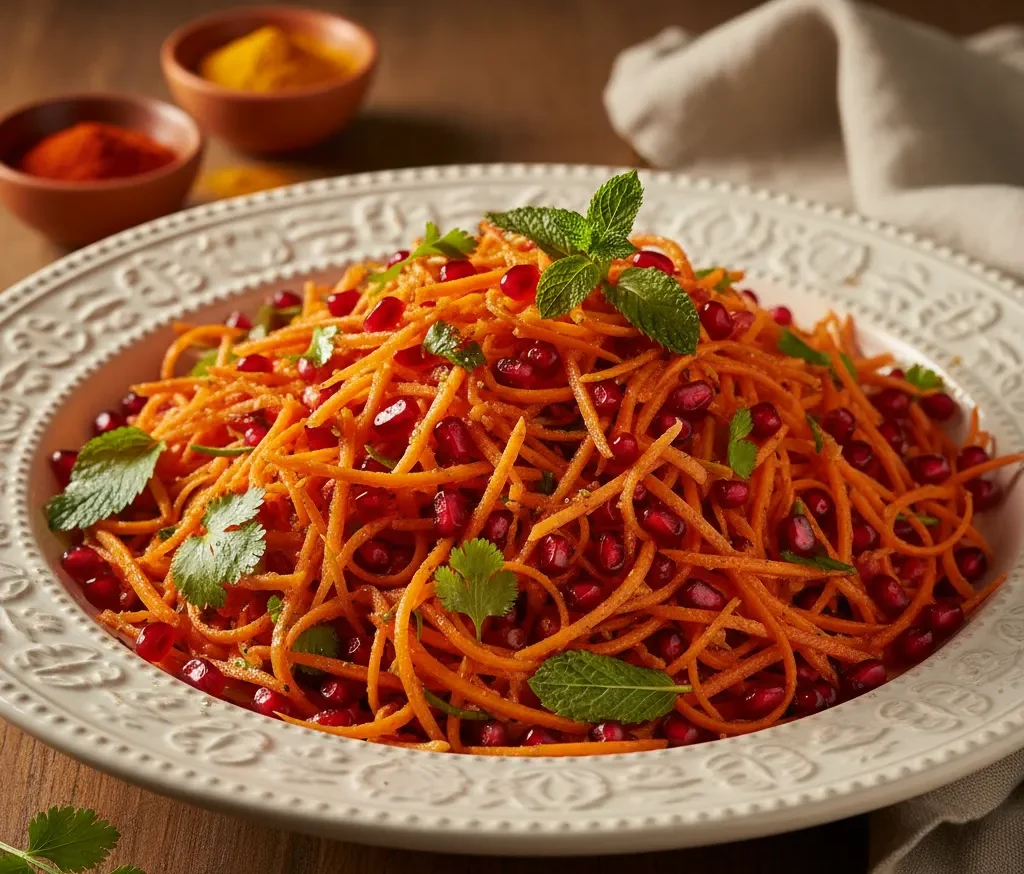
Introduction: Discover the Flavor of the Maghreb
Are you tired of the same old side salads? The kind that barely register on the palate? If so, prepare your taste buds for a genuine culinary adventure! We’re diving into the heart of Moroccan cuisine to uncover a dish that’s so vibrant, so balanced, and so surprisingly easy to make, it delivers a literal “Shocking Boost” to any meal. This isn’t your average kitchen recipe; this is a celebration of flavor rooted in North African tradition.
Welcome to our definitive guide to the Moroccan Spiced Carrot and Pomegranate Salad Recipe.
In the following steps, you’ll learn how humble carrots and bright pomegranates are transformed by a warm, cumin-infused vinaigrette into a healthy, crave-worthy salad. We’ll cover every detail, from choosing the right spices to clever prep hacks, ensuring your final result is a masterpiece of sweet, tart, and savory perfection. Get ready to swap out your tired greens for this refreshingly different and incredibly delicious quick side dish!
Key Takeaways: Your Blueprint for Success
If you’re looking for the essential steps to nail this spiced carrot recipe, here are the five most critical points to remember before you start cooking:
- Prioritize Freshness over Speed: While pre-shredded carrots work, grating your own will deliver better moisture and texture, making the Moroccan carrot salad significantly better.
- Don’t Skip the Cinnamon: That tiny pinch of cinnamon in the Moroccan Vinaigrette is the secret flavor booster that elevates the dish from a good salad to a great one. It provides essential warmth.
- Marination is Mandatory: Allow the shredded carrots to sit in the dressing for at least 30 minutes. This is the period of Infusion Time where they absorb the spices and soften perfectly.
- Keep the Pomegranate Separate: For the best visual appeal and crunch, always reserve the pomegranate arils, fresh mint, and toasted nuts until the absolute last minute before serving.
- Enjoy Guilt-Free: This entire dish is naturally vegan and gluten-free, making it a fantastic, inclusive, and healthy North African salad for any dietary need.
Table of Contents
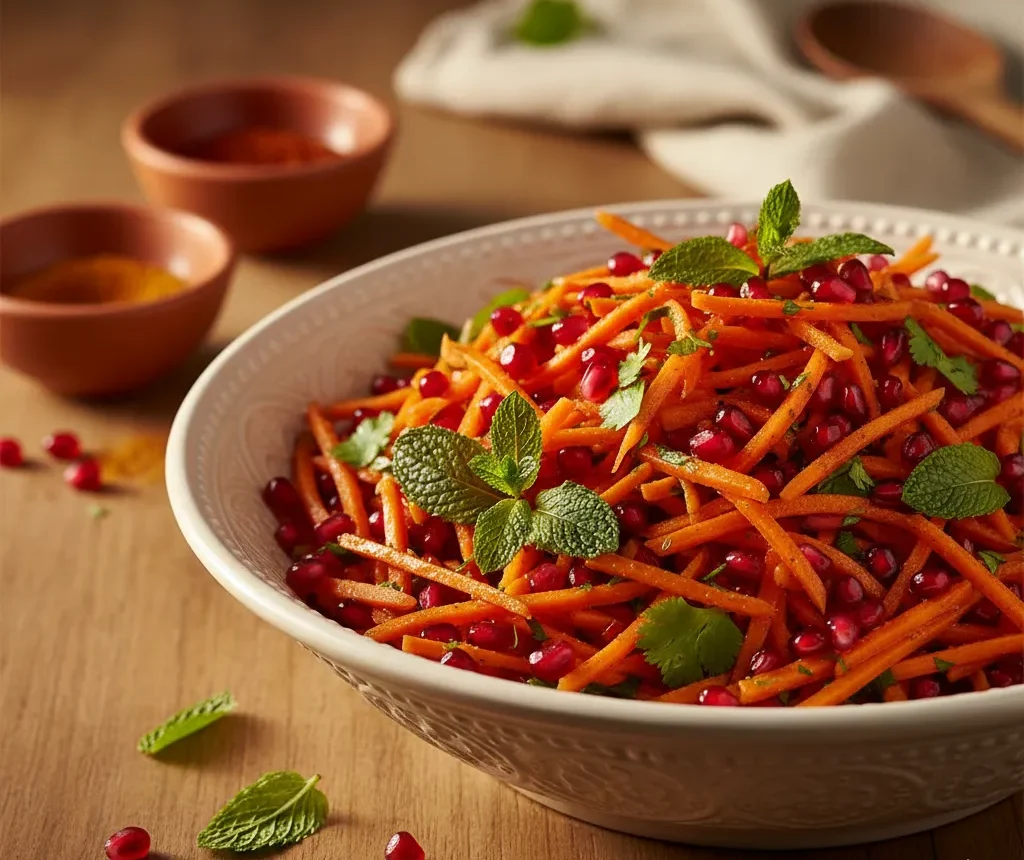
1. The Shocking Boost: Why This Salad Excels in Flavor & Health
Have you ever encountered a salad that genuinely surprises you? Not just with its vibrant colors, but with a flavor profile so dynamic it makes you pause and appreciate every single bite? If you’re nodding along, get ready, because our Moroccan Spiced Carrot and Pomegranate Salad is precisely that kind of culinary revelation. It’s not just a side dish; it’s a compelling main attraction that delivers a “shocking boost” to your palate and your well-being. But what makes this particular Moroccan carrot salad stand out in a sea of green leaves? Let’s dive into the delicious details.
1.1. The Unique Balance of Sweet Carrots and Tart Pomegranate
Imagine the earthy sweetness of fresh carrots, thinly shredded or grated, perfectly harmonizing with the bright, jewel-like bursts of tart pomegranate arils. This isn’t just a random pairing; it’s a deliberate dance of contrasting textures and tastes that creates an incredible symphony in your mouth.
- Sweetness Meets Zing: The natural sugars in the carrots are beautifully cut by the sharp, acidic notes of the pomegranate. This balance is key to preventing the salad from being overly sweet or too sour, making it incredibly refreshing.
- Textural Delight: From the satisfying crunch of the carrots to the juicy pop of each pomegranate seed, this salad offers an exciting textural journey that keeps things interesting with every forkful. We’re aiming for an experience, not just a meal!
- A Mediterranean Masterpiece: This combination isn’t new – it’s rooted in the wisdom of Moroccan cuisine and other Mediterranean traditions where fresh, seasonal ingredients are celebrated for their natural synergy.
1.2. Health Benefits: Carrots, Pomegranates, and Spice Antioxidants
Beyond its incredible taste, this healthy North African salad is a powerhouse of nutrition. Think of it as a delicious, edible shield for your body! Both carrots and pomegranates are nutritional superstars, and when combined with the right spices, their benefits are amplified.
- Carrots: More Than Meets the Eye: We all know carrots are good for vision thanks to beta-carotene, but they’re also packed with fiber, vitamin K1, potassium, and antioxidants. These components support everything from digestive health to bone strength.
- Pomegranates: The Ruby Red Elixir: These stunning fruits are celebrated for their high antioxidant content, especially punicalagins, which are potent anti-inflammatory compounds. They’re also a good source of vitamin C and K.
- Spices: Nature’s Little Helpers: The traditional Moroccan spices we’ll be using – like cumin and coriander – aren’t just for flavor. They bring their own array of health benefits, including anti-inflammatory and digestive properties. This isn’t just food; it’s a truly healthy side dish for any meal.
1.3. A Cumin-Infused Vinaigrette That Elevates Any Meal
Now, let’s talk about the real “shocking boost” that ties this salad together: the dressing. Forget bland, store-bought options. Our pomegranate salad dressing is a simple yet profoundly flavorful cumin-infused vinaigrette that transforms humble carrots and pomegranates into something extraordinary.
- The Magic of Cumin: Cumin is a defining spice in Moroccan cuisine, lending a warm, earthy, and slightly smoky depth that perfectly complements both the sweet and tart elements. It’s the secret ingredient that truly transports you!
- Beyond Basic Oil & Vinegar: While the base is classic, the addition of specific Moroccan spices creates a dressing that’s bright, aromatic, and surprisingly complex. It clings beautifully to the shredded carrots, ensuring every bite is bursting with flavor.
- Versatile Vinaigrette: This isn’t just for carrots! You might find yourself making extra of this unique vinaigrette to drizzle over grilled vegetables, roasted chicken, or even other grain salads. It truly elevates any meal it touches, making it more than just a quick side dish.
2. Gathering the Essential North African Spice Ingredients
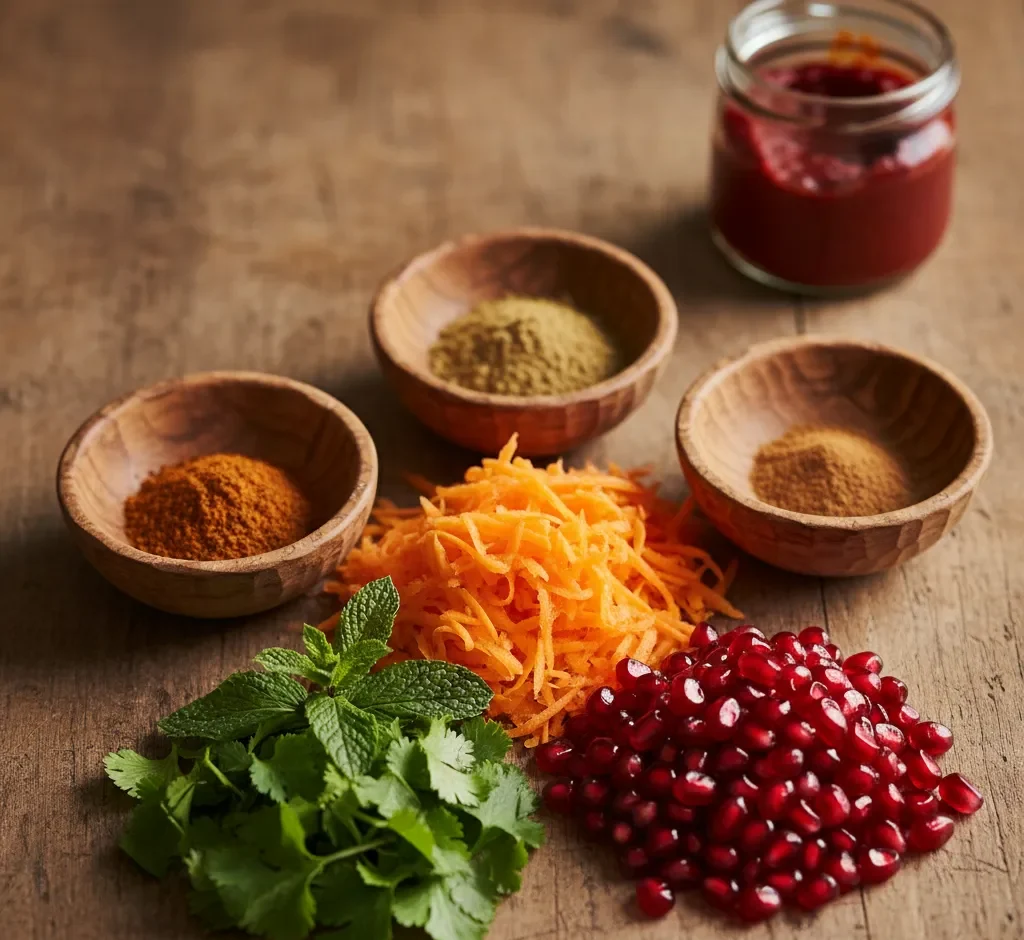
If Section 1 was about the “why,” this part is about the “how.” The secret to transforming a simple carrot and pomegranate mix into an unforgettable taste of North Africa lies entirely in the spice cupboard. Moroccan cuisine is defined by its deep, aromatic spice blends, and replicating that depth requires using high-quality, freshly ground ingredients. We aren’t just seasoning; we are building layers of flavor!
Ready to see what you need? Here is the essential list, followed by a breakdown of how each ingredient plays its role in the final flavor profile.
| Quantity | Ingredient |
| Salad Base | |
| 1 lb (approx. 5 large) | Carrots, shredded or grated |
| 1/2 cup | Pomegranate arils |
| 1/4 cup | Fresh Mint, chopped |
| 1/4 cup | Cilantro, chopped |
| Vinaigrette & Spices | |
| 1/4 cup | Extra Virgin Olive Oil (or a quality neutral oil) |
| 2 Tbsp | Lemon Juice (freshly squeezed is a must!) |
| 1 tsp | Ground Cumin |
| 1/2 tsp | Ground Coriander |
| Pinch | Ground Cinnamon |
| 1/4 tsp | Salt (or to taste) |
| Optional Pinch | Harissa Paste (for heat) |
2.1. The Cornerstone Spices: Cumin, Coriander, and a Hint of Cinnamon
These three spices are non-negotiable for achieving that authentic Moroccan flavor. They create the earthy, warm base that prevents the salad from feeling overly sweet or light.
- Cumin: The Soul: Think of Cumin as the heart of this salad’s dressing. It delivers a warm, nutty, and slightly smoky profile. For the best results, use ground cumin, but if you have whole seeds, toast them lightly and grind them yourself the difference in aroma is immense!
- Coriander: The Brightener: Ground Coriander offers a lovely citrusy, slightly sweet note. It partners beautifully with cumin, adding complexity without being heavy.
- Cinnamon: The Warmth: A small pinch of Cinnamon is enough. It provides an unexpected warmth that ties into the traditional savory spice blends of the region. Be careful not to use too much, or the flavor will become overpowering.
2.2. Optional Heat: Incorporating Harissa Paste for a Kick
While many classic Moroccan carrot salad recipes focus purely on warm spices, adding a touch of heat can provide a beautiful contrast to the sweet carrots and tart pomegranate. This is where Harissa paste comes in.
Harissa is a vibrant chili paste from North Africa, often made with peppers, garlic, and olive oil. If you enjoy a little kick:
- Start with just a small pinch (about 1/8 teaspoon) stirred directly into your oil and lemon juice mix.
- It introduces a complexity and a slight warmth that really highlights the sweetness of the carrots and the brightness of the herbs.
- If you don’t have harissa, a tiny dash of cayenne pepper can work in a pinch, but you’ll lose the depth of flavor harissa provides.
2.3. Fresh Herbs Power: The Crucial Role of Mint and Cilantro
The warm spices in the dressing need a counterpoint, and that’s the job of the fresh herbs. This salad relies heavily on the clean, cooling power of both fresh mint and cilantro.
- Mint for Refreshment: Mint leaves are essential for that refreshing finish. It cuts through the rich olive oil and warm spices, making the salad feel bright and perfect for warm weather.
- Cilantro for Savory Depth: Cilantro (or coriander leaves) adds an earthy, savory base that anchors the flavor. If you are one of those people who find cilantro soapy, you can certainly double down on the mint and skip the cilantro entirely!
2.4. Choosing the Best Oil for a Traditional Moroccan Vinaigrette
Every great Moroccan Vinaigrette needs a quality base. We recommend using a good quality Extra Virgin Olive Oil.
- Flavor Profile: Choose an oil that has a pleasant, mild fruitiness rather than one that is too peppery or strong, as you don’t want it to compete with the spices.
- Alternative: If you prefer a completely neutral base that lets the spices shine without any fruity notes from the olive, a grapeseed oil or light vegetable oil can be used, but olive oil maintains a more traditional character.
Step-by-Step: Crafting Your Perfect Spiced Carrot Base
Preparation is everything when making this Moroccan Spiced Carrot and Pomegranate Salad. Unlike a leafy green salad you toss right before serving, this dish benefits immensely from a bit of resting time. Mastering a few prep techniques ensures that your carrots soak up every drop of that rich, cumin-infused vinaigrette for maximum flavor.
3.1. Carrot Prep: To Grate, Shred, or Julienne?
The texture of your carrots is critical to the success of this quick side dish. We want the carrots to be fine enough to absorb the dressing quickly, but sturdy enough to maintain a pleasing crunch alongside the tart pomegranate arils.
- The Best Tool (Shredding): We recommend using the coarse side of a box grater or the shredding disk of a food processor. This creates perfect, uniform shreds that are ideal for soaking up the spices.
- The Fancy Option (Julienne): If you prefer a longer, crisper bite, you can julienne the carrots (cut them into thin matchsticks). This looks beautiful but takes longer and may require a slightly longer marination time.
- The Time Saver: If you’re truly short on time, pre-shredded carrots from the grocery store can work, but for that “shocking boost” flavor, freshly grated is always best!
Want to see the best way to get perfect shreds every time? Check out this helpful visual guide!
3.2. Making the Dressing: The Simple Vinaigrette Technique
Your flavorful Moroccan Vinaigrette comes together in minutes. This method ensures all the powerful spices are perfectly distributed before they ever touch the carrots.
- Combine Wet Ingredients: In a small bowl or jar, whisk together the Extra Virgin Olive Oil and the fresh lemon juice.
- Add the Spices: Now, add your cornerstone spices: the cumin, coriander, cinnamon, and salt. If using harissa paste for that optional kick, stir it in now.
- Emulsify: Vigorously whisk or shake the mixture for 30 seconds until it emulsifies meaning the oil and acid bind together slightly. This gives the dressing a slightly thicker texture that coats the carrots beautifully.
- Taste and Adjust: Give the dressing a quick taste. Does it need a bit more lemon for brightness? A tiny pinch more salt to enhance the spice? Don’t be afraid to adjust it to your personal preference!
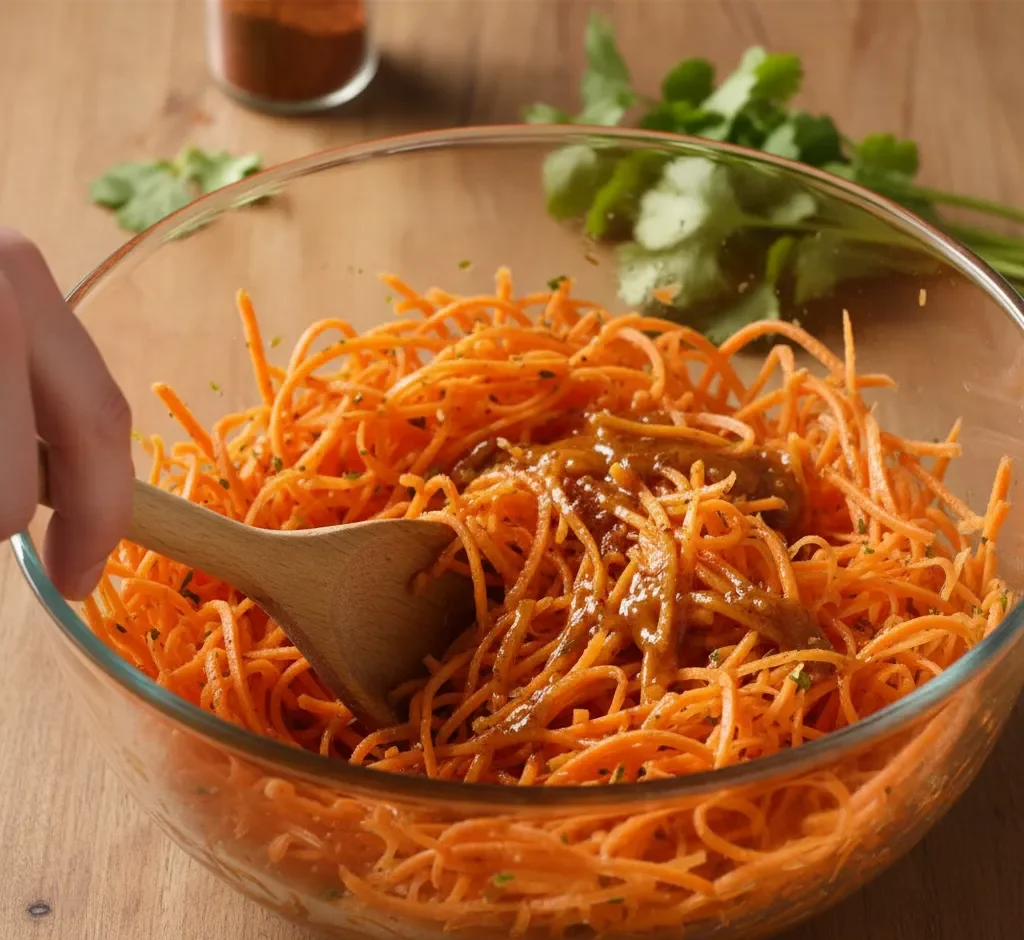
3.3. Infusion Time: Allowing the Carrots to Marinate for Max Flavor
This is the most crucial step that separates a good carrot salad from a great one. You must give the shredded carrots time to marinate in the spiced carrot recipe dressing.
- The Initial Toss: Place your prepped carrots in a large mixing bowl. Pour about three-quarters of the vinaigrette over them. Toss thoroughly, ensuring every shred is coated.
- The Rest Period: Cover the bowl and let the carrots rest in the refrigerator for at least 30 minutes, and ideally for up to 2 hours.
- The Transformation: During this time, the acidity from the lemon juice slightly softens the carrots, and they greedily soak up the warm, aromatic spices. This process is essential for releasing the full depth of flavor from the healthy North African salad. Just before serving, give the carrots one final toss, then proceed to the next section for finishing touches!
4. Presentation and Serving: Making It Crave-Worthy
As any great chef knows, the final layer of flavor and visual appeal is what turns a good recipe into a memorable experience. This section focuses on achieving the ideal contrast and texture to highlight that shocking boost of flavor we built in the previous steps.
4.1. The Pomegranate Pop: How to Seed Pomegranates Quickly
The glistening, ruby-red pomegranate arils are the visual star of this dish, providing the essential tartness and “pop” of texture. If you’ve ever avoided using pomegranates because of the messy seeding process, we have the ultimate secret for you!
- The Water Method (Less Mess): Slice the pomegranate in half. Submerge the halves in a bowl of cold water. Break the fruit apart underwater and gently rub the arils out of the membrane. They will sink to the bottom while the white pith floats. Simply skim the pith and drain the seeds!
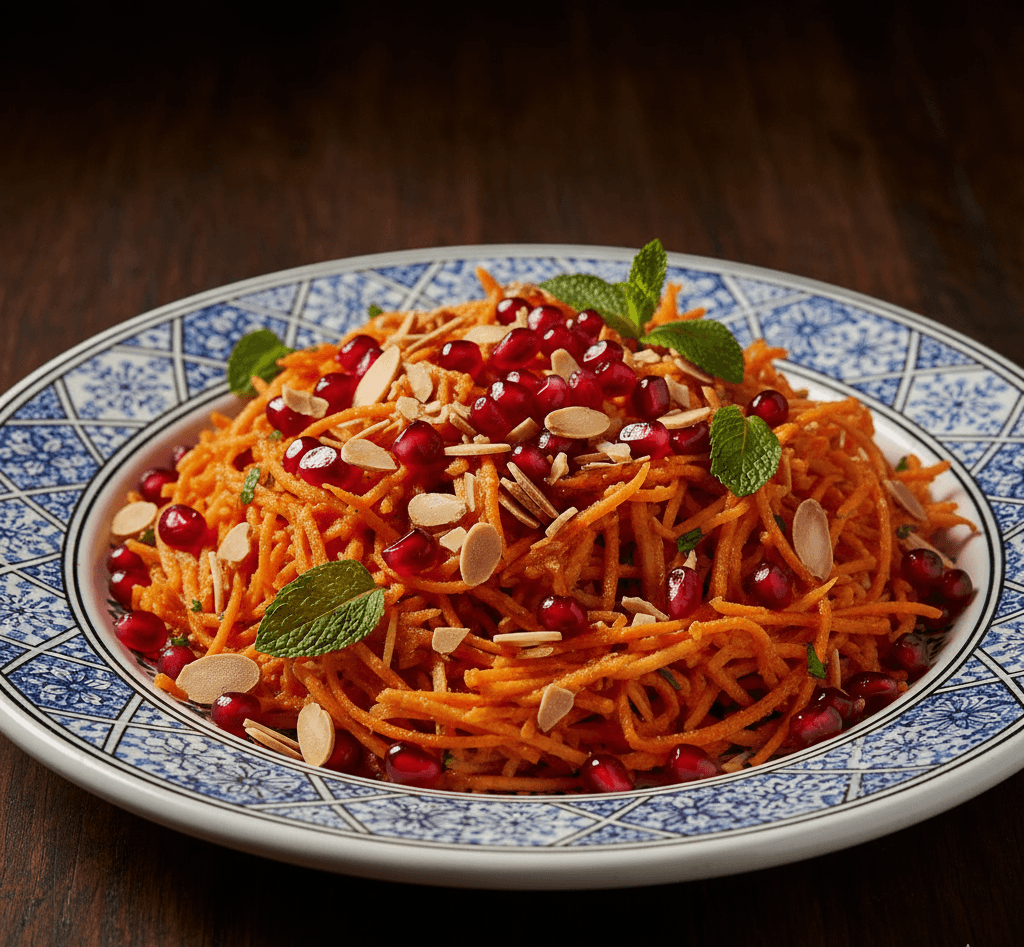
- Keep Them Separate: Wait until the very last minute to incorporate the arils. Stirring them in too early can cause their color to bleed into the carrots, dulling the presentation. The goal is for them to sit on top like edible jewels.
- Don’t Forget the Reserve Dressing: If you reserved some vinaigrette in Section 3, drizzle a little over the pomegranate salad dressing mixture just before plating to renew the shine and scent.
4.2. Garnish: Adding Crunch with Toasted Nuts (Almonds or Pistachios)
Texture contrast is paramount in modern salads, and a healthy crunch provides a fantastic counterpoint to the soft, marinated carrots. We recommend using slivered almonds or chopped pistachios.
- The Toasted Difference: Always toast your nuts! Dry-toasting them in a skillet for just a few minutes until fragrant releases their natural oils and deepens their nutty flavor, making the final salad infinitely better.
- The Flavor Match: Almonds are classically paired with Moroccan desserts and tagines, making them a natural choice. Pistachios offer a slightly brighter green color and a more buttery crunch. Choose whichever you prefer for your spiced carrot recipe.
- Final Sprinkle: Like the pomegranate, nuts should be added right before serving to maintain their crispness.
4.3. Ideal Pairings: Serving as a Side with Tagine or Grilled Chicken
One of the best things about this Moroccan carrot salad is its versatility. It’s light enough for lunch but sophisticated enough to accompany a dinner party centerpiece.
- Traditional Pairings: Serve this salad alongside a rich, slow-cooked lamb or vegetable tagine, or with simple grilled skewers. The brightness of the salad cuts beautifully through the richness of heavier main dishes.
- Modern Meals: This quick side dish is a perfect companion for grilled chicken, fish, or even served atop creamy hummus for a vibrant appetizer plate.
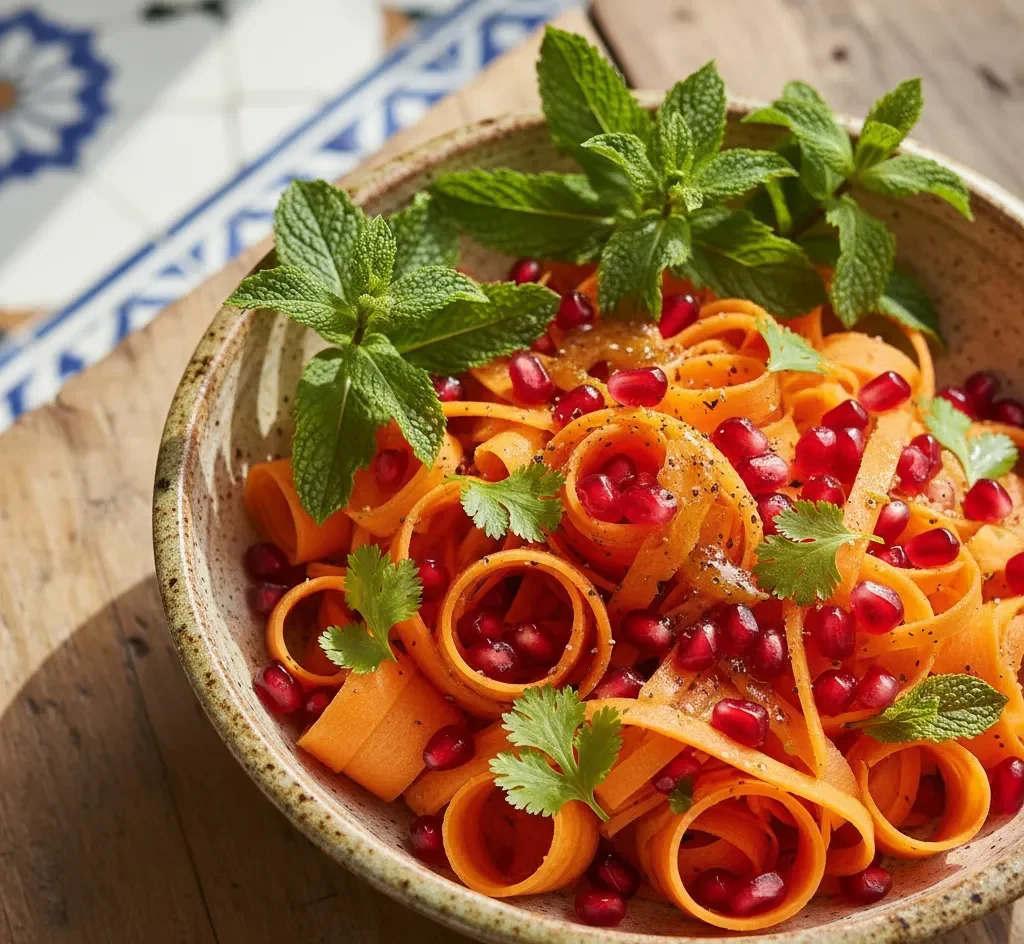
The presentation should be simple: serve the carrots piled high on a beautiful white or blue plate, ensuring the brightly colored pomegranate arils and fresh mint leaves are prominently displayed on top.
“The flavor is in the preparation, but the feast is in the presentation.”
5. Variations, Prep Hacks, and FAQs
Part of what makes this healthy side dish so popular is its flexibility. Life is busy, and sometimes you need a clever shortcut, while other times you might want to try a completely new texture. This section provides the key insider tips on maximizing the life of your spiced carrot recipe and answering the most common questions we receive.
5.1. Quick-Prep Hack: Using Pre-shredded Carrots for Speed
Can you really get the “shocking boost” flavor if you skip the grating step and use a bag of pre-shredded carrots? The answer is a qualified yes.
- The Trade-Off: While freshly shredded carrots offer superior texture and moisture, using pre-shredded carrots is a perfectly valid quick-prep hack when time is scarce. It makes this entire salad a true 10-minute recipe!
- The Important Step: If you use bagged carrots, they can sometimes be a little dry. To counteract this, toss them immediately with the dressing and allow them to marinate for a full 30 to 45 minutes. This ensures they soften slightly and absorb the powerful flavor of the cumin-infused vinaigrette.
- The Finishing Touch: Always add the fresh herbs and pomegranate arils right before serving to visually and texturally elevate the entire dish, masking any hint that you took a shortcut!
5.2. Make-Ahead & Storage Tips: Does the Salad Keep Well?
This salad is an excellent candidate for meal prep, making it a perfect make-ahead side dish for busy weeks.
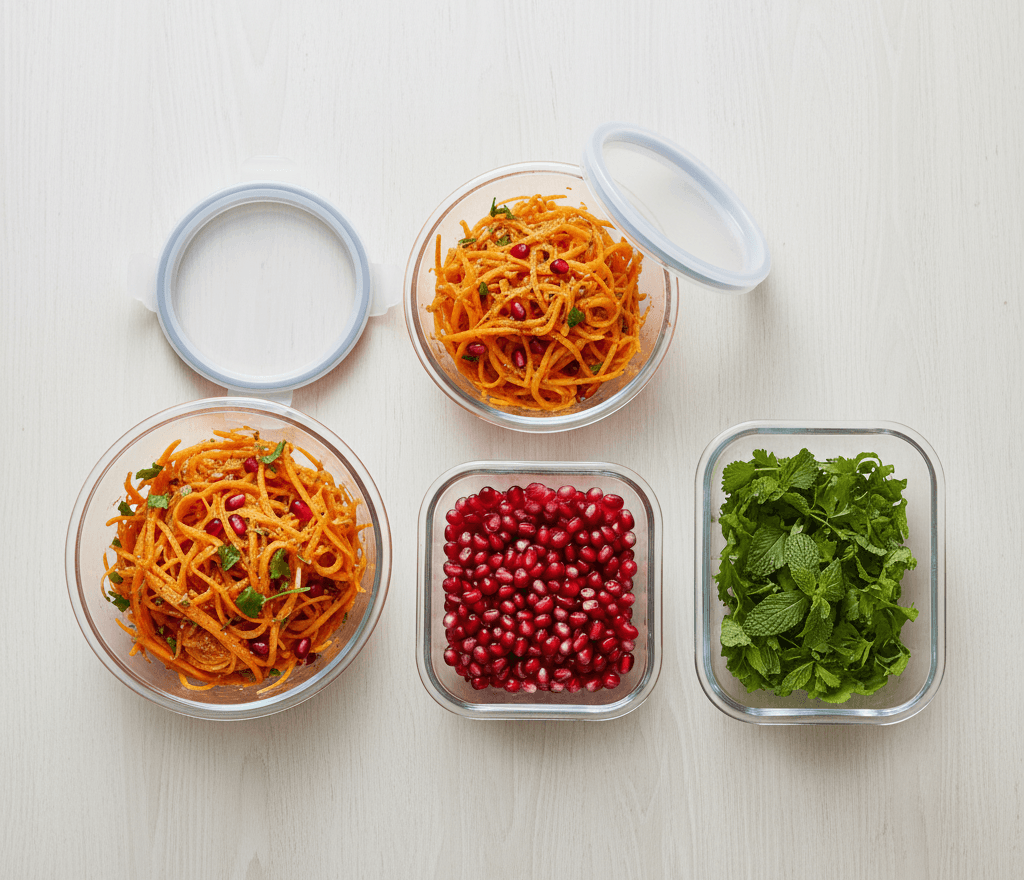
- Marinated Carrots (Best Option): You can easily prepare the shredded carrots and the full Moroccan Vinaigrette up to 2 days in advance. Store the dressed carrots (without the pomegranate or nuts) in an airtight container in the fridge. The flavor will actually deepen!
- The Final Assembly: The golden rule is simple: Do not add the fresh mint, cilantro, pomegranate, or toasted nuts until just 15 minutes before serving. These ingredients will wilt, bleed color, or lose their crunch if stored with the dressing.
- Storage After Serving: Leftovers will remain edible for 1 to 2 days, but the texture will soften significantly. Don’t expect the same satisfying crunch as day one, but the flavor will still be robust and delicious.
5.3. FAQ: Can I make this salad with Roasted Carrots instead?
This is a fantastic question that offers a wonderful variation on the classic cold salad.
- The Roasting Difference: Yes, you absolutely can! Roast large carrot coins or batons with a drizzle of olive oil, salt, and half the cumin until they are tender-crisp.
- Temperature Transition: Once roasted, let the carrots cool slightly (they don’t need to be fully chilled) before tossing them with the remaining Moroccan Vinaigrette and all the fresh herbs and pomegranate.
- The Result: The warm spices and lemon juice hit the warm carrots differently, intensifying the aroma and creating a soft, caramelized flavor profile that is truly unique and just as crave-worthy as the raw version!
5.4. FAQ: Is this recipe vegan and gluten-free?
Absolutely! This Moroccan Spiced Carrot and Pomegranate Salad Recipe is naturally accessible to many dietary needs:
- Vegan: The recipe uses only plant-based ingredients (carrots, spices, herbs, olive oil, lemon juice, pomegranate) and contains no meat, dairy, or animal products.
- Gluten-Free: All the ingredients listed are naturally gluten-free, making it a wonderful, safe option for those with gluten sensitivities or Celiac disease.
Conclusion: A New Staple for Your Table
We hope you’re feeling inspired to bring the vibrant flavors of the Maghreb into your own kitchen! The Moroccan Spiced Carrot and Pomegranate Salad is proof that a simple combination of ingredients, when treated with respect and the right spices, can achieve truly spectacular results. Whether you serve it alongside a hearty tagine or simply enjoy it as a refreshing, quick side dish for lunch, we are confident this recipe will quickly become a favorite staple.
Ready to explore more unexpected flavor pairings? Let us know in the comments if you’d like to see a variation using roasted beets or maybe a deeper dive into the health benefits of harissa paste! Until then, happy cooking!
Q&A: Addressing Common Reader Questions
Q: Why is the marination step so important for a raw salad?
A: Marination serves two key purposes in this spiced carrot recipe. First, the acidity from the lemon juice slightly softens the tough cellular walls of the raw carrot, making it more palatable and tender. Second, and more importantly, it allows the dried, warm spices (like cumin and coriander) to bloom and fully infuse their flavor into the carrots. Without this step, the dressing sits on top, and the flavor remains one-dimensional.
Q: Can I use dried cranberries or raisins instead of pomegranate?
A: You can certainly substitute them, but be aware that it significantly changes the flavor profile. Pomegranate offers a tart, sharp counterpoint to the sweet carrots, creating the essential balance. Dried fruits like cranberries and raisins are much sweeter and will make the salad taste heavier, shifting it away from the bright, refreshing profile of the classic Moroccan carrot salad. If you use dried fruit, ensure your dressing is extra tart to compensate.
Q: What is the best way to clean and chop the fresh mint and cilantro?
A: The secret to vibrant herbs is to wash them whole, then dry them thoroughly (a salad spinner works great!). Stack the leaves on top of each other, roll them tightly into a small cylinder (a technique called chiffonade for flat herbs), and slice across the roll. This gives you beautiful, uniform ribbons of fresh herbs that look great and release their maximum aroma when tossed into the final healthy side dish.