
Introduction
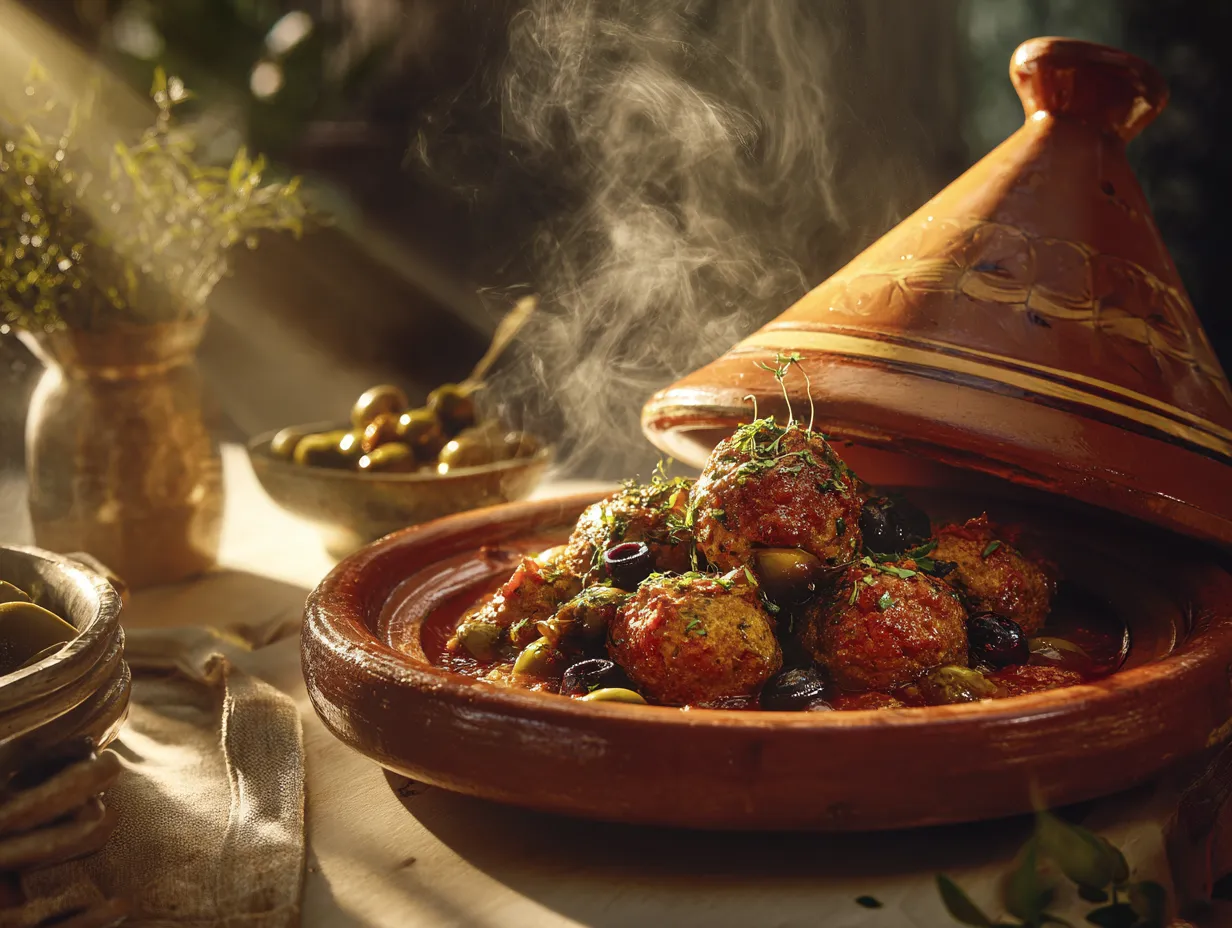
There’s something magical about gathering around a warm, fragrant dish that feels both comforting and exotic. That’s exactly what the salmon meatball tagine offers a balance of Moroccan tradition with a refreshing twist. Whether you’re a home cook eager to explore new flavors or someone looking for a wholesome one-pot meal, this recipe delivers layers of taste, aroma, and culture in every bite.
This isn’t just food. It’s an experience that connects people, sparks conversations, and invites creativity in your kitchen.
Key Takeaways
To help you remember the essentials of this dish, here’s a quick recap:
- Flavor fusion: Salmon pairs beautifully with Moroccan spices like Ras el Hanout, cumin, and paprika.
- Versatility: You can swap salmon for other proteins or plant-based options.
- Balance: Preserved lemon and olives add brightness that balances the richness of the meatballs.
- Serving styles: Pair with couscous, flatbreads, or fresh salads for a complete meal.
Table of Contents
What Makes a Tagine Unique?
Have you ever wondered why Moroccan dishes cooked in a tagine pot taste so rich and layered? The secret lies in the gentle, slow-cooking method. A tagine creates a sealed environment, allowing steam and spices to mingle until every bite feels like comfort on a plate. Unlike traditional stews, the flavors don’t just simmer they deepen, resulting in a meal that feels both rustic and luxurious.
Origins of Moroccan Tagine Dishes
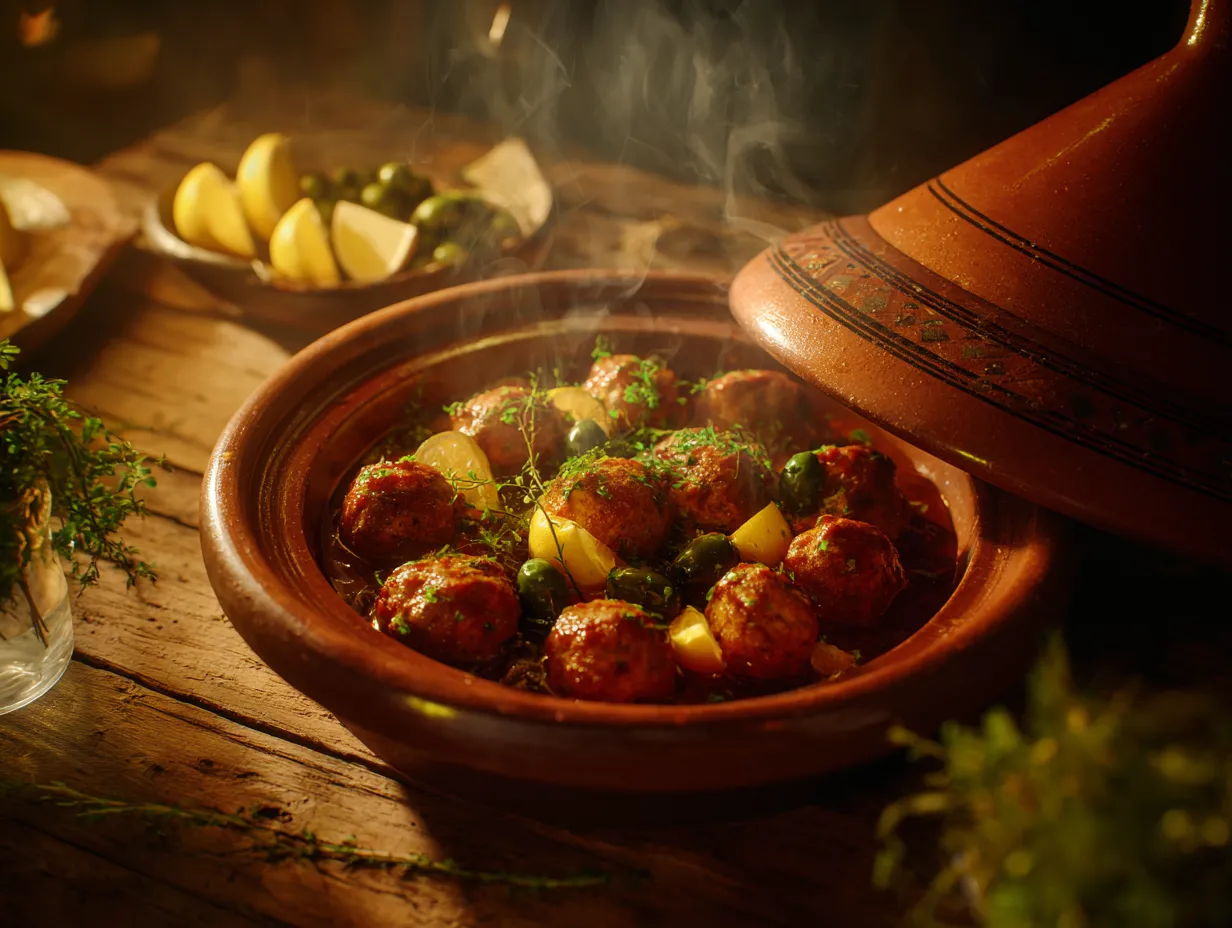
Tagines are more than just recipes they’re cultural stories simmering with history. Originating in North Africa, these dishes were designed for communal dining, bringing families together around one pot. Traditionally made with lamb, chicken, or vegetables, tagines symbolize balance: a harmony of sweet, savory, and spicy notes. Now, modern twists like the salmon meatball tagine show how adaptable this dish can be, merging Moroccan tradition with global tastes.
Why Salmon Works Beautifully in a Tagine
You might be asking yourself: why salmon, of all proteins? The answer is simple. Salmon’s natural richness pairs beautifully with spices like cumin, paprika, and Ras el Hanout, soaking up flavors while retaining its tender, flaky texture. Shaping salmon into meatballs makes the dish approachable, fun, and perfect for gatherings.
Consider this:
- Salmon offers a lighter, omega-3-rich alternative to heavier proteins.
- Meatballs absorb aromatic sauces evenly, ensuring every bite is flavorful.
- The pairing of salmon with preserved lemon and olives adds brightness that cuts through the richness.
If you’re looking for a recipe that feels comforting yet refreshing, the salmon meatball tagine may become your new go-to. And the best part? It’s versatile you can enjoy it with couscous, warm bread, or even on its own for a wholesome, one-pot dinner.
Key Ingredients for Salmon Meatball Tagine
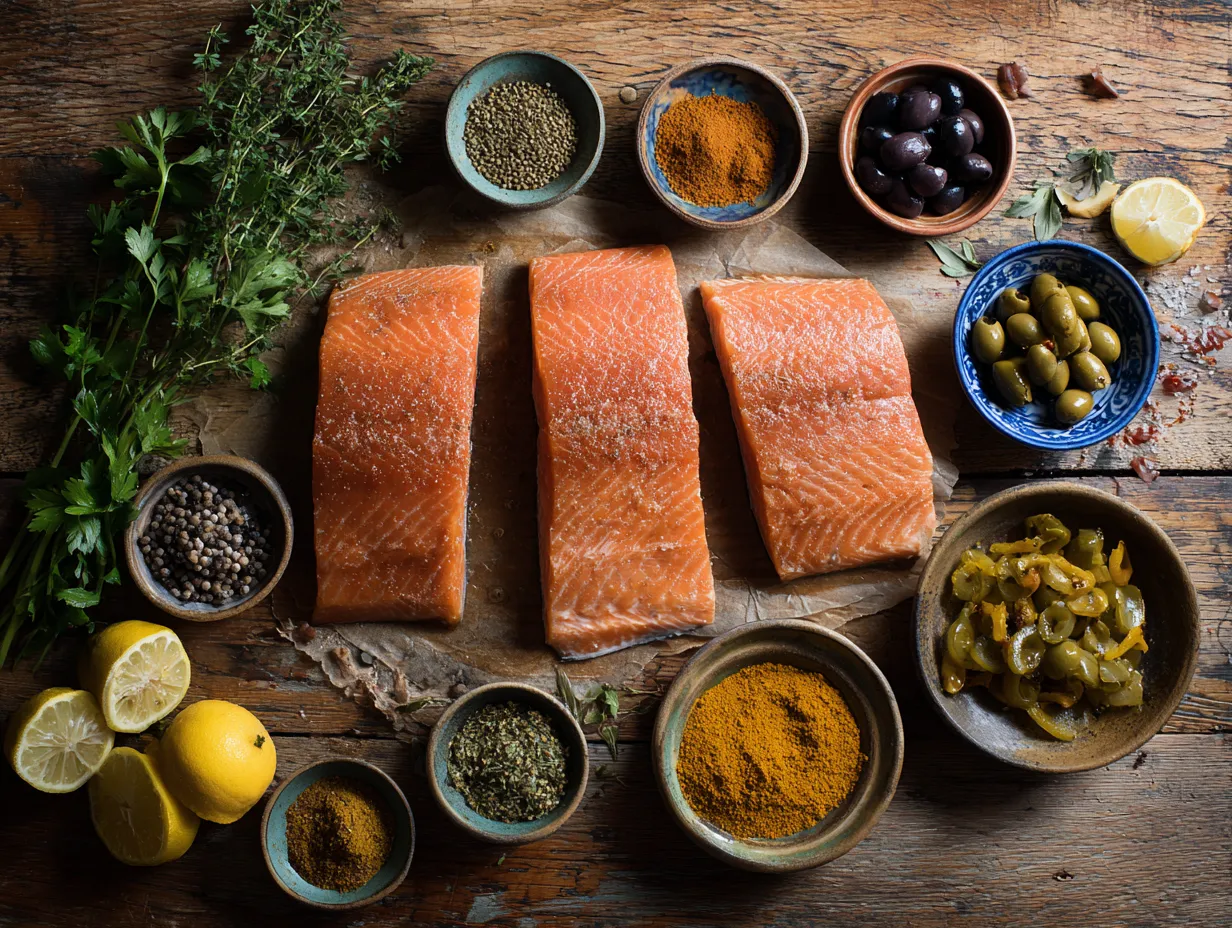
Creating a salmon meatball tagine isn’t just about mixing fish with spices it’s about layering flavors that tell a story. Each ingredient plays a role, from the smoky depth of paprika to the bright zing of preserved lemon. When combined, they create a dish that feels balanced, hearty, and deeply comforting.
So, what do you need to bring this recipe to life? Let’s break it down.
Fresh Salmon and Spice Blend
The star of the dish is, of course, salmon. Its natural richness pairs perfectly with bold spices. A traditional Moroccan spice blend like Ras el Hanout adds warmth and complexity, while cumin and paprika give earthiness and a gentle smoky kick. These spices don’t overwhelm the fish they enhance it.
Vegetables, Preserved Lemon, and Olives
What makes a tagine stand out is its unique blend of savory and tangy notes. Preserved lemon provides a citrusy punch, balancing the richness of the salmon meatballs. Green or black olives add a briny edge that deepens the overall flavor. Pair these with tomatoes, onions, and bell peppers, and you’ve built a flavorful foundation that’s both colorful and nutrient-packed.
Optional Additions: Harissa, Chickpeas, Herbs
If you like a bit of heat, a spoonful of harissa paste transforms the sauce into something bold and fiery. Chickpeas bring extra protein and texture, making the dish more filling. Finally, a sprinkle of fresh herbs think parsley or cilantro brightens everything before serving.
Ingredients Table
| Quantity | Ingredient |
|---|---|
| 500g | Fresh salmon fillets (skinless, boneless) |
| 2 tbsp | Ras el Hanout spice blend |
| 1 tsp | Ground cumin |
| 1 tsp | Smoked paprika |
| 2 | Medium onions, finely chopped |
| 3 | Ripe tomatoes, grated or blended |
| 1 | Red bell pepper, sliced |
| 1 | Preserved lemon, sliced thin |
| ½ cup | Green or black olives |
| 2 tbsp | Olive oil |
| 1 tbsp | Harissa paste (optional, for heat) |
| 1 cup | Cooked chickpeas (optional) |
| To garnish | Fresh parsley or cilantro |
With these ingredients at your fingertips, you’re not just preparing a meal you’re curating an experience. The combination of aromatic spices, citrus, and salmon creates a dish that’s hearty enough for family dinners yet elegant enough for guests.
Step-by-Step Cooking Process
Cooking a salmon meatball tagine may sound like a culinary adventure, but the process is surprisingly approachable. With the right steps, you can bring Moroccan flavors to your table without feeling overwhelmed. Think of this as a roadmap that guides you from raw ingredients to a rich, aromatic dish worth sharing.
Preparing Salmon Meatballs
Start by transforming your salmon into tender meatballs that hold flavor beautifully.
- Chop salmon fillets finely or pulse in a food processor.
- Mix with breadcrumbs, fresh herbs, and a dash of cumin or paprika.
- Shape into bite-sized meatballs, making sure they’re firm but not dense.
- Set aside while you prepare the base of the tagine.
These salmon meatballs don’t just add protein they soak up the sauce, making each bite irresistible.
Layering Flavors in the Tagine Pot
The heart of Moroccan cooking is building flavor step by step.
- Heat olive oil in your tagine (or a heavy-bottomed pot).
- Add onions and sauté until golden.
- Stir in spices like Ras el Hanout and paprika to release their aroma.
- Fold in tomatoes, bell peppers, preserved lemon, and olives.
This creates a savory-sweet foundation that balances perfectly with the salmon.
Slow Cooking for Rich Flavors
Patience is where the magic happens. Once your base is ready:
- Nestle the salmon meatballs gently into the sauce.
- Cover with the tagine lid and let everything simmer on low heat.
- Cook for 25–30 minutes, allowing flavors to meld without overcooking the fish.
- Garnish with fresh parsley or cilantro just before serving.
The result? A dish that feels luxurious yet comforting perfect for gatherings or a cozy family meal.
Serving Suggestions and Pairings
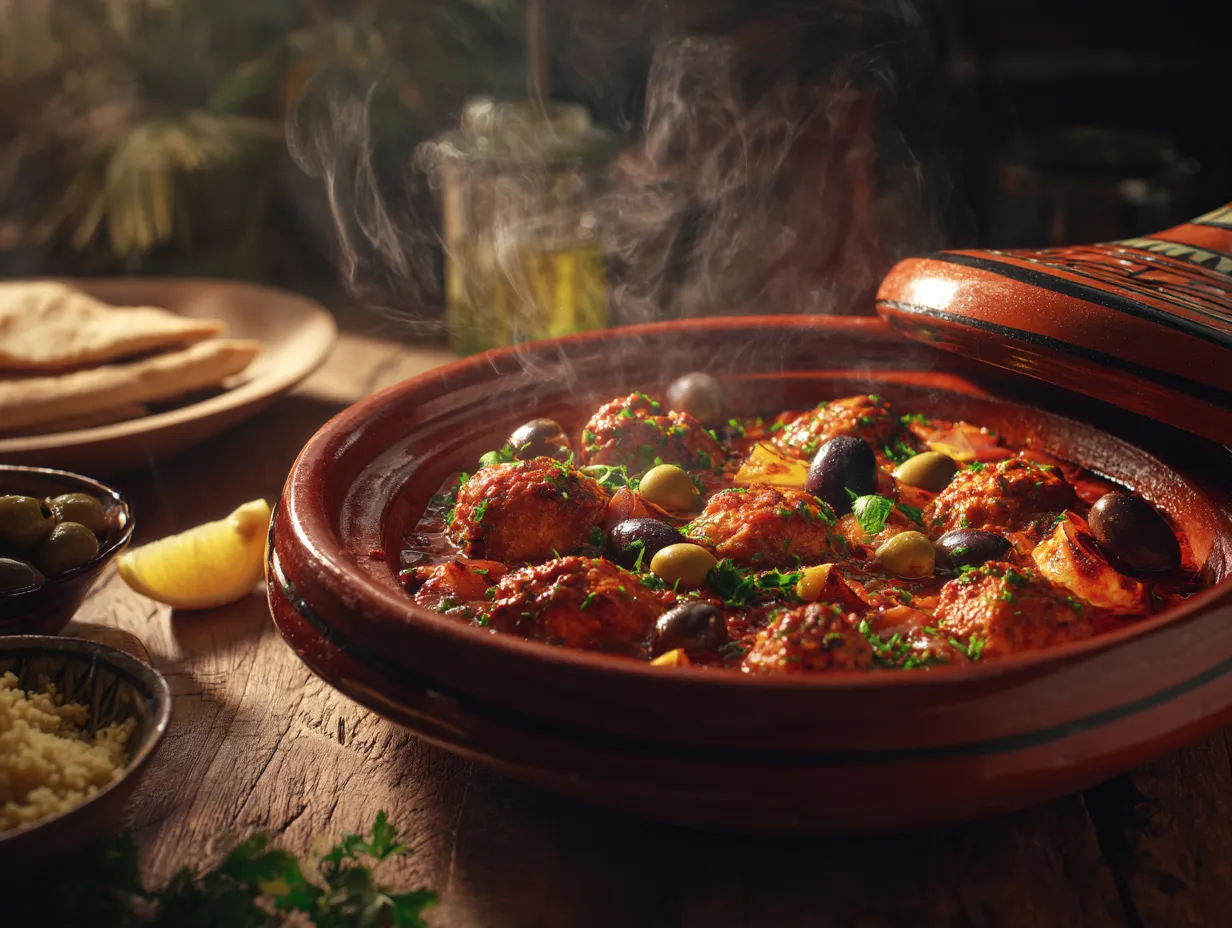
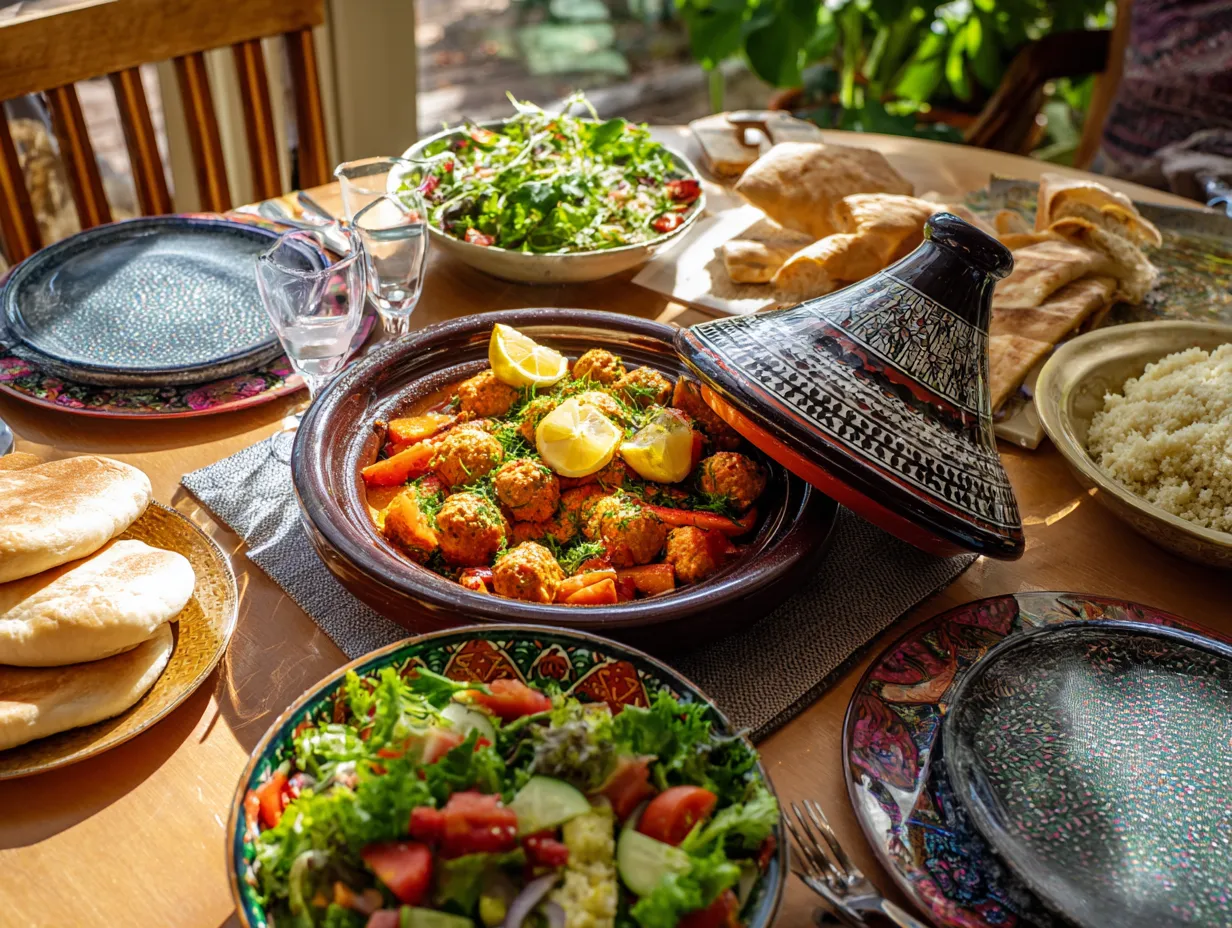
When it comes to enjoying your salmon meatball tagine, the way you serve it can make all the difference. Think of the dish as a canvas you can pair it with different sides to enhance its flavors, textures, and overall dining experience. Whether you’re planning a casual family dinner or hosting friends, these serving ideas will help you elevate the meal.
Couscous or Warm Flatbread
The most traditional pairing with tagine is fluffy couscous. Its light texture absorbs the rich tomato-based sauce, ensuring that no drop of flavor goes to waste. If you prefer something more rustic, try warm flatbreads. Tearing bread and dipping it straight into the tagine creates a cozy, communal feel.
Fresh Salads and Sides
Balance the richness of salmon meatballs with something crisp and refreshing. A simple cucumber and tomato salad, lightly dressed with olive oil and lemon juice, adds brightness. For something heartier, consider roasted root vegetables or a side of garlicky sautéed greens.
Garnishing with Herbs and Lemon
Never underestimate the finishing touch. A sprinkle of chopped parsley or cilantro adds freshness, while a squeeze of lemon juice just before serving enhances the flavors. These small details make the dish feel complete and restaurant-worthy.
“Great meals aren’t just about what’s in the pot they’re about how you share them at the table.”
Tips, Variations, and Storage
Cooking a salmon meatball tagine is rewarding, but a few thoughtful tweaks can take your dish from good to unforgettable. Whether you want to adjust spice levels, explore new ingredient pairings, or make the most of leftovers, these tips will help you adapt the recipe to your lifestyle.
Alternative Fish or Protein Options
Not a salmon fan? Don’t worry you can still enjoy this tagine.
- White fish like cod or haddock works beautifully for a lighter option.
- Chicken or turkey meatballs can be substituted for those who prefer poultry.
- Plant-based versions can be made with chickpeas, lentil balls, or tofu for a vegetarian twist.
This flexibility means you can make tagine your own without losing its Moroccan soul.
Spice Level Adjustments with Harissa
Everyone’s spice tolerance is different, and that’s the beauty of Moroccan cooking.
- For a milder version, reduce or omit harissa.
- For a bold kick, stir in an extra spoonful or serve harissa on the side for guests.
- If you love smoky heat, try adding a touch of chili flakes or smoked paprika.
It’s all about finding your personal balance of warmth and depth.
Storing and Reheating Leftovers
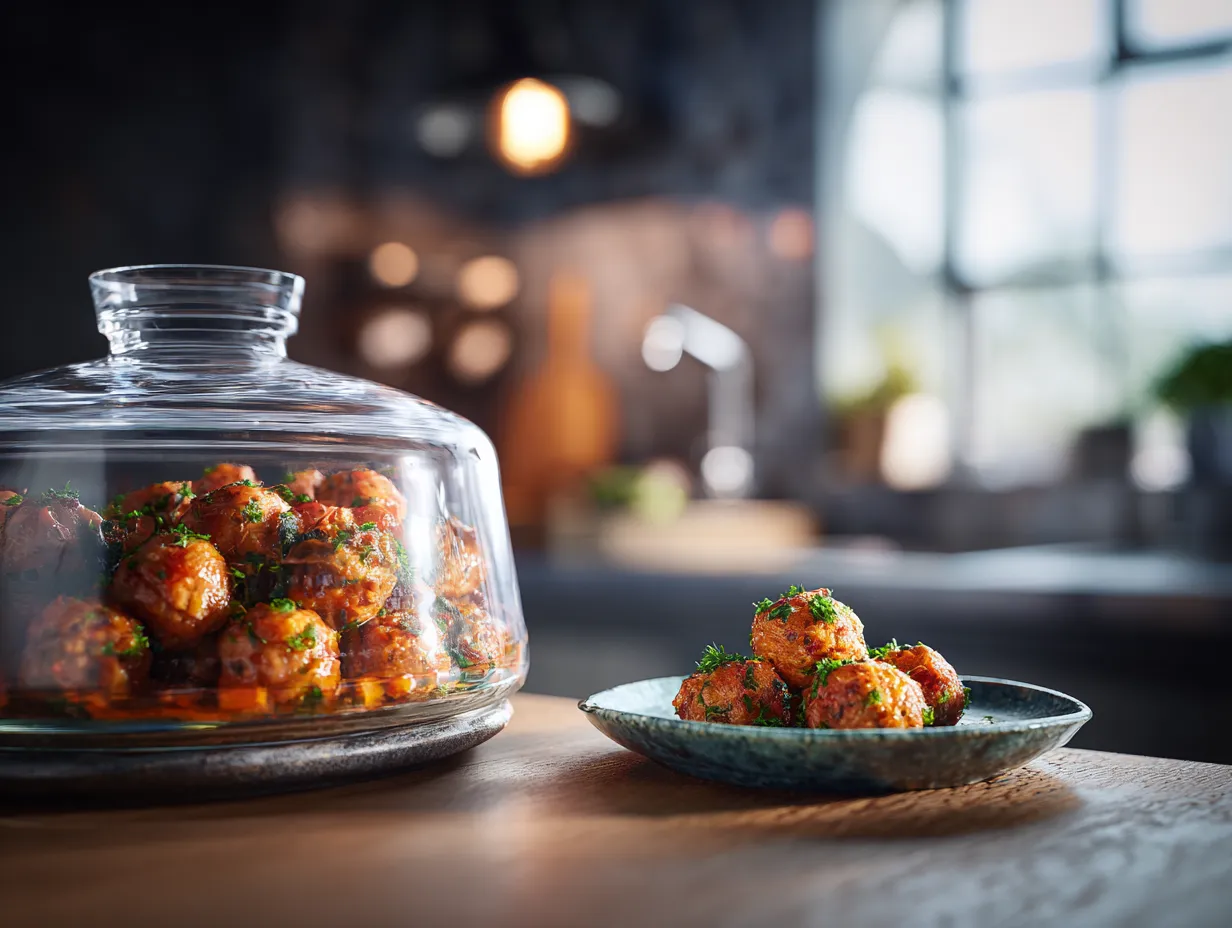
One of the best things about this dish is how well it keeps. In fact, many say it tastes even better the next day.
- Store cooled tagine in an airtight container in the fridge for up to 3 days.
- Reheat gently on the stove over low heat, adding a splash of water if the sauce thickens too much.
- Freeze portions (without couscous or bread) for up to 2 months and thaw overnight before reheating.
Having a batch ready means you can enjoy Moroccan comfort food anytime.
Conclusion
The beauty of the salmon meatball tagine lies in its ability to combine comfort with adventure. It’s a dish that feels familiar yet exciting, bringing Moroccan traditions to your table while leaving space for your personal touch.
If you’re ready to impress guests or simply treat yourself to something different, this recipe is your invitation to explore. Cooking is about discovery, and each step from shaping salmon meatballs to savoring the final dish is an opportunity to connect with flavors and stories that go far beyond the plate.
So why not make this weekend the perfect time to try it out?
Q&A Section
Q1: Can I make salmon meatball tagine without a traditional tagine pot?
Yes! A heavy-bottomed Dutch oven or deep skillet works just as well. The key is to keep the lid on while simmering to lock in steam and flavor.
Q2: What can I serve with salmon meatball tagine?
Classic couscous is the most traditional option, but flatbreads, rice, or even quinoa make excellent alternatives.
Q3: Can I prepare the meatballs ahead of time?
Absolutely. Shape them a day before, refrigerate, and cook when ready. This can save you time and let flavors meld.
Q4: How spicy is this dish?
It’s naturally aromatic with mild warmth. If you want more heat, add Harissa or chili flakes. For a gentle version, keep it spice-light and let the preserved lemon shine.
Q5: Is this dish freezer-friendly?
Yes. Store cooked tagine (without couscous) in airtight containers for up to two months. Thaw overnight and reheat gently before serving.