
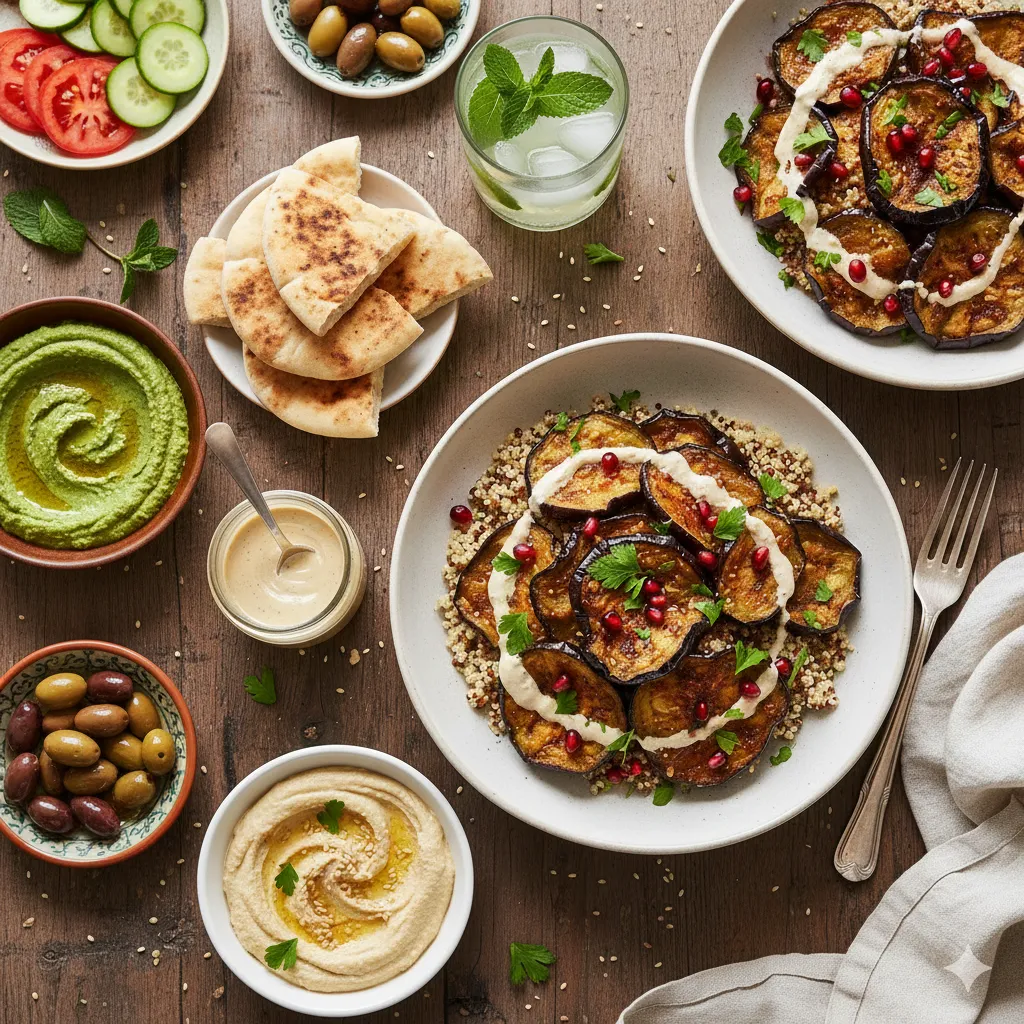
The Magic of Moroccan Flavors
Have you ever wondered why some salads feel like a full sensory experience while others just feel like… well, a bowl of cold vegetables? The secret usually lies in the spice cabinet. When we talk about Moroccan roasted eggplant salad topped with a creamy tahini drizzle, we aren’t just talking about health food; we are talking about a culinary tradition that balances heat, smoke, and earthiness in a way that feels like a warm hug for your palate.
The Role of Cumin and Smoked Paprika in Eggplant Seasoning
Eggplant is essentially a blank canvas, but it’s a thirsty one. To make it sing, we lean on the “big two” of Moroccan spice: cumin and smoked paprika.
- Cumin: This provides that deep, nutty base that grounds the dish. It’s what gives the eggplant its “savory” identity.
- Smoked Paprika: Unlike standard sweet paprika, the smoked variety adds a layer of “char” flavor even before the vegetable hits the oven.
When these two meet the natural juices of the eggplant, they form a spice-paste that seeps into every fiber, ensuring you don’t just taste the seasoning on the surface, but in every single bite.
Why Roasting Beats Frying for Texture and Health
We’ve all been there: you try to cook eggplant in a pan, and it drinks up olive oil like a sponge, ending up heavy and greasy. This is why roasting at a high temperature is your best friend. By using the oven, we achieve:
- Uniform Caramelization: The dry heat of the oven draws out moisture, concentrating the natural sugars.
- Structural Integrity: Instead of collapsing into a pile of oil, the eggplant cubes develop a thin, “crispy” skin that holds a custard-like interior.
- Lighter Macros: You get all the richness of the Mediterranean diet without the caloric density of deep-frying.
Balancing Smoky Flavors with Acidic Citrus
If the spices are the “bass note” of this dish, lemon juice is the “high note.” Why is this balance so critical? Because eggplant and tahini are both inherently rich and fatty. Without a sharp acidic element, the flavors can feel “flat.”
I always recommend a two-step citrus approach. Use a little lemon zest in the roasting phase to bake that aroma in, and then finish the assembled salad with a generous squeeze of fresh juice. That hit of acid acts as a flavor elevator, cutting through the creaminess of the tahini drizzle and making the smoky spices pop.
The Cultural Heritage of “Zaalouk-Inspired” Warm Salads
While this recipe is a modern take, it tips its hat to Zaalouk the iconic Moroccan cooked salad. Traditionally, Zaalouk involves mashing roasted eggplants and tomatoes together into a dip-like consistency.
In this version, we keep the eggplant in chunky, satisfying pieces to transform it from a side dish into a healthy sensation that can stand alone as a main. We are staying true to the soul of the Maghreb using fire, earth, and vine to create something that feels timeless yet perfectly suited for your modern grain bowl or dinner table.
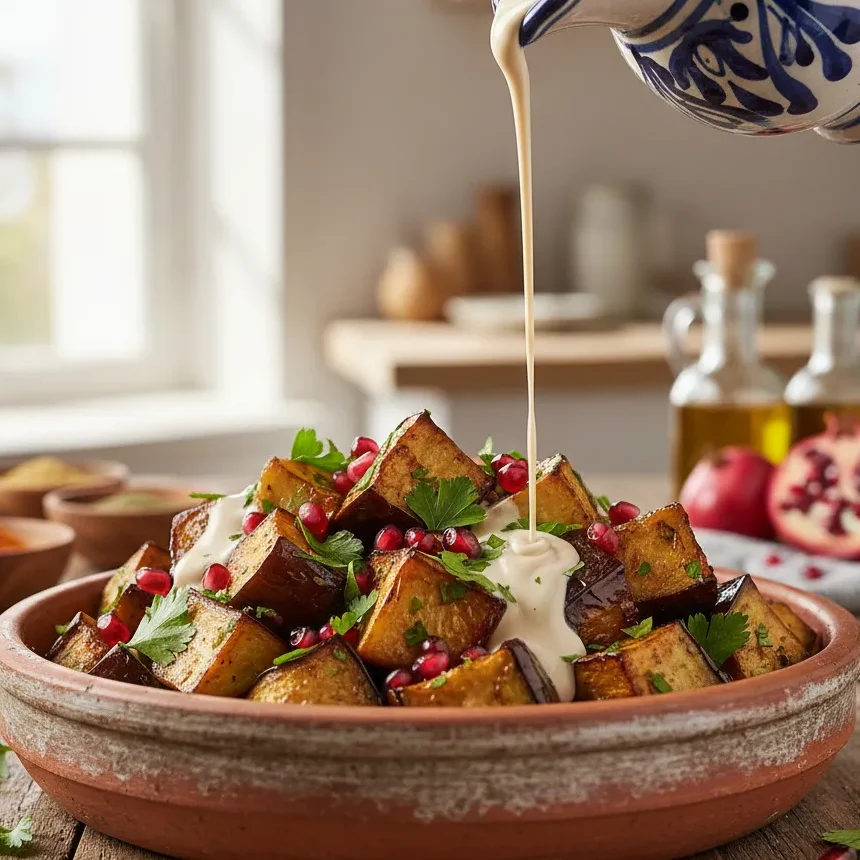
Essential Ingredients for the Perfect Char
Alright, so we’ve talked about the magic that happens when Moroccan spices meet roasted eggplant. But let’s be honest, even the best intentions can fall flat if you don’t start with the right foundation. Think of your ingredients as the building blocks; a strong house needs strong blocks, right? For our Moroccan roasted eggplant salad topped with a creamy tahini drizzle, selecting key ingredients isn’t just about flavor it’s about achieving that coveted perfect char and the ideal texture.
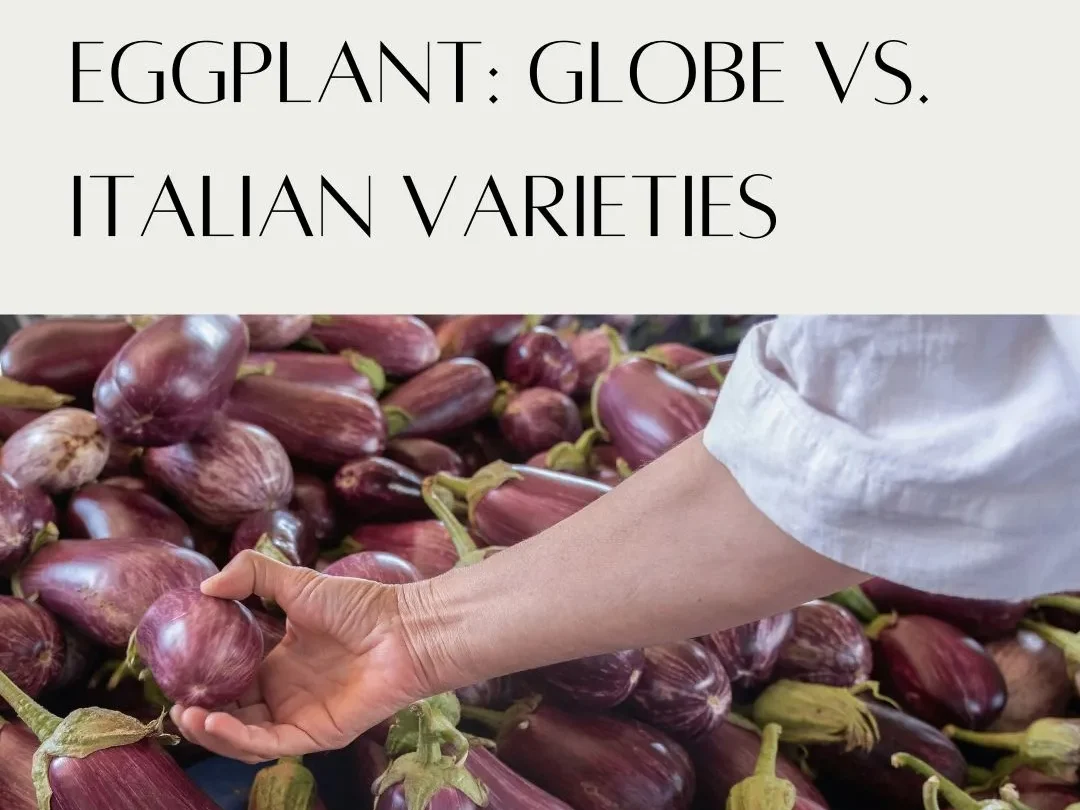
Choosing the Right Eggplant: Globe vs. Italian Varieties
This might sound like a minor detail, but the type of eggplant you choose actually makes a big difference in your final dish.
- Globe Eggplant (the big purple one): This is probably what comes to mind when you picture an eggplant. It’s robust, has a good “meaty” texture, and holds its shape well when roasted. If you want substantial cubes for your salad, this is your go-to.
- Italian Eggplant (longer, thinner): These tend to have thinner skins and a slightly sweeter, less bitter flesh. They’re fantastic if you’re aiming for a more delicate texture, perhaps for smaller, more elegant servings.
For a hearty roasted eggplant salad, I usually lean towards the Globe variety. It just gives you more to sink your teeth into!
High-Quality Olive Oil: The Secret to Golden Caramelization
This isn’t the time for your cheapest cooking oil. A good quality, extra-virgin olive oil is not just a carrier for flavor; it’s an ingredient in its own right. It helps your eggplant achieve that beautiful golden caramelization and adds a layer of fruity, peppery complexity.
Why is it so important?
- Heat Transfer: Olive oil helps conduct the oven’s heat evenly, ensuring every surface of the eggplant gets that lovely Maillard reaction (that’s the scientific term for browning and flavor development!).
- Flavor Infusion: Its inherent richness complements the spices, making the overall flavor profile deeper and more satisfying.
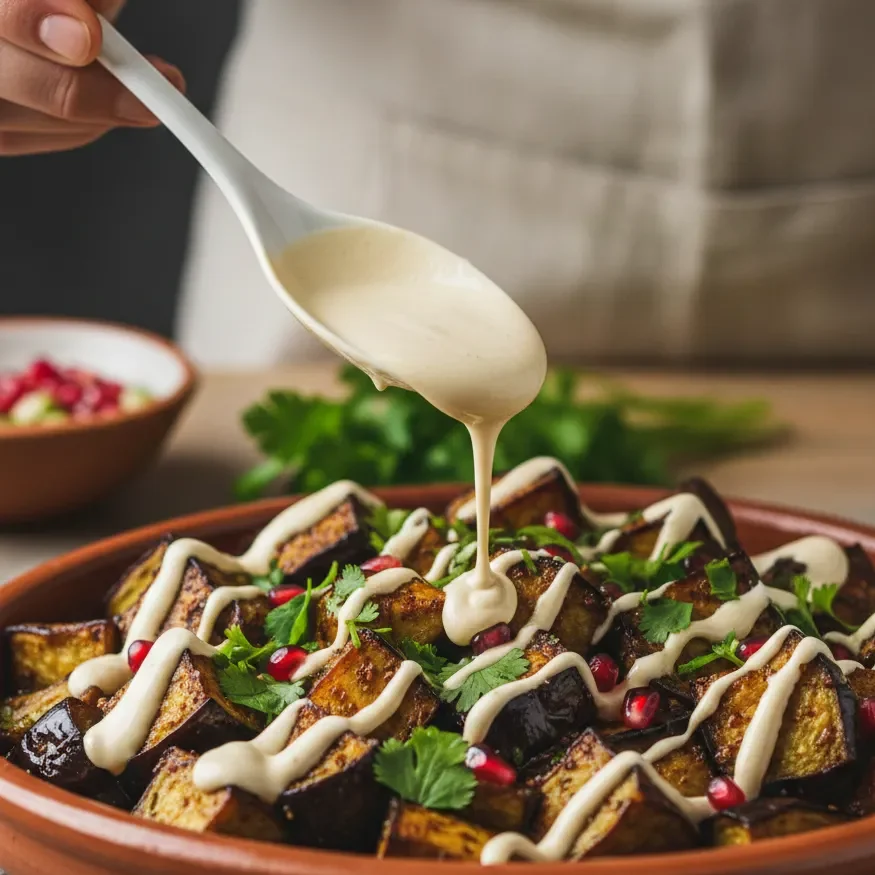
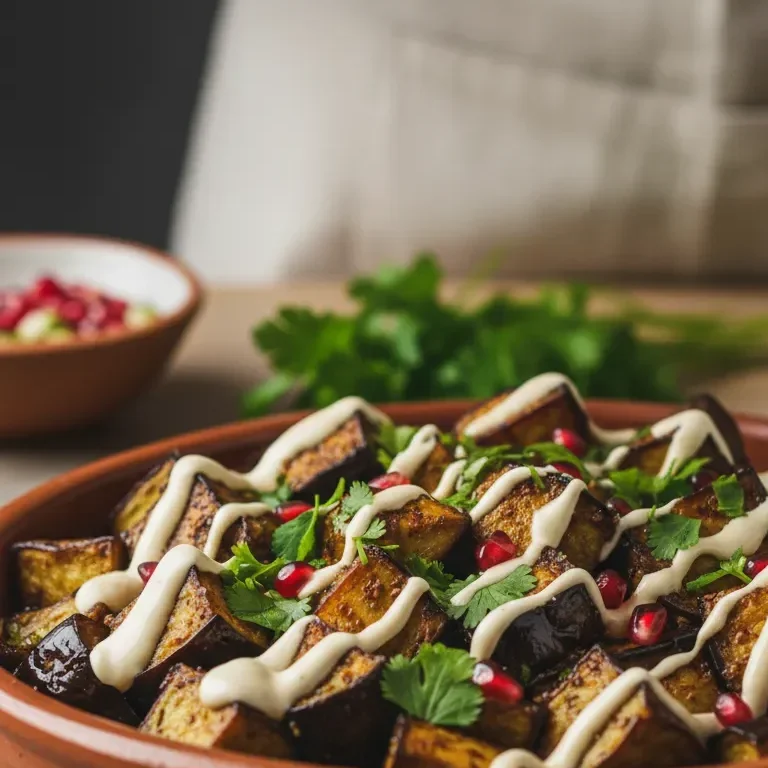
Fresh vs. Dried Herbs: When to Use Parsley and Cilantro
Here’s a common question: should you use fresh or dried herbs? For our Moroccan roasted eggplant salad, my advice is to always finish with fresh.
- Dried spices (like our cumin and smoked paprika) are fantastic for roasting because their flavors deepen with heat.
- Fresh herbs (think bright green parsley or fragrant cilantro) are for after the cooking process. They provide a vibrant pop of color and a fresh, aromatic lift that dried herbs simply can’t replicate. Trust me, that final sprinkle of fresh parsley or cilantro is non-negotiable for that authentic, healthy Moroccan touch!
The Crunch Factor: Adding Toasted Pine Nuts or Pepitas
Texture, texture, texture! A great salad isn’t just about soft, tender components. You need something to provide contrast. This is where a little crunch comes in.
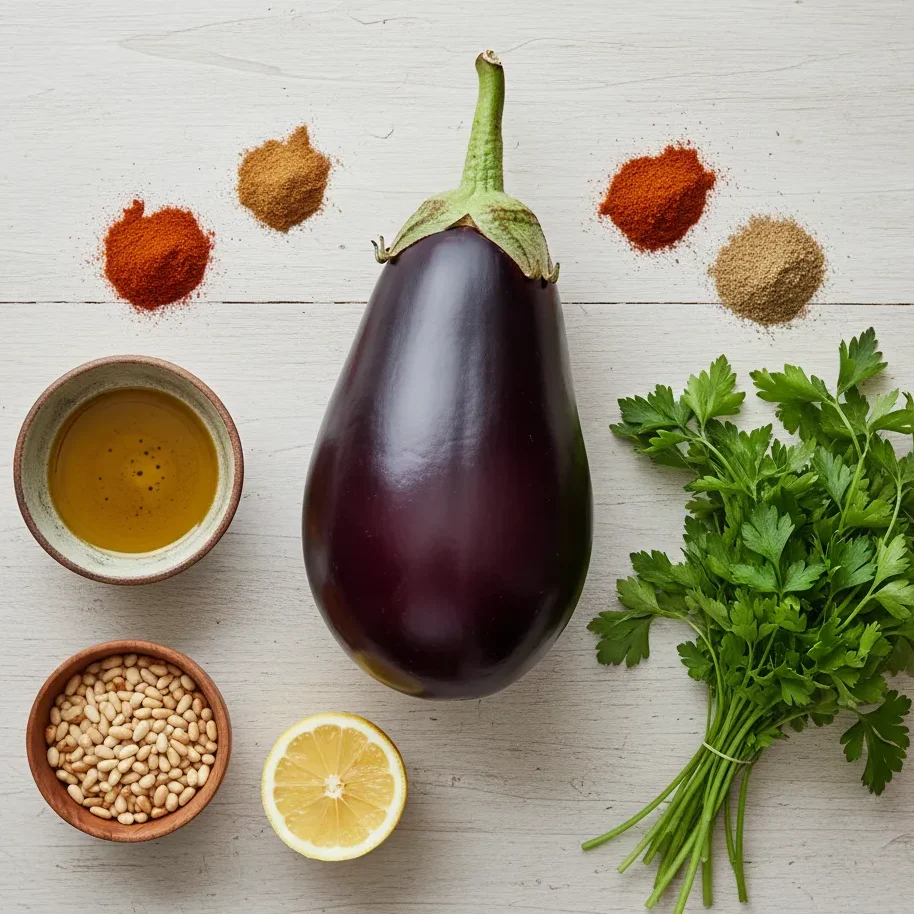
| Ingredient | Quantity (Approximate) | Purpose in this Section |
| Globe Eggplant | 1 large (approx. 500-600g) | Main salad component |
| Extra Virgin Olive Oil | 3-4 tablespoons | For roasting and flavor |
| Cumin (ground) | 1.5 teaspoons | Earthy spice base |
| Smoked Paprika | 1 teaspoon | Smoky flavor |
| Fresh Parsley/Cilantro | 1/4 cup, chopped | Garnish and freshness |
| Pine Nuts / Pepitas | 2 tablespoons | Crucial for crunch factor |
| Lemon (juice/zest) | 1 medium | Bright acidity |
| Tahini (for drizzle) | 1/4 cup | Creamy topping |
| Garlic (minced) | 1 clove | Flavor for tahini drizzle |
| Cold Water | 2-4 tablespoons | For tahini consistency |
| Salt & Black Pepper | To taste | Seasoning |
- Toasted Pine Nuts: These offer a buttery, slightly sweet crunch that really elevates the salad.
- Pepitas (Pumpkin Seeds): If you prefer a nut-free option or a more earthy flavor, pepitas are fantastic when lightly toasted.
A quick toast in a dry pan is all they need to bring out their best. Sprinkle them over your salad just before serving, and prepare for a delightful textural surprise!
Mastering the Creamy Tahini Drizzle
If the roasted eggplant is the heart of this dish, the tahini drizzle is undoubtedly its soul. There’s something almost scientific and entirely magical about how a jar of thick, sesame paste transforms into a pale, pourable silk with just a few simple additions. But have you ever ended up with a sauce that was too bitter or, worse, a clumped-up mess that refused to move? Don’t worry; we’ve all been there. Mastering this sauce is a rite of passage for any home cook, and once you get it right, you’ll want to put it on everything.
How to Avoid Bitter Tahini: Picking the Right Brand
Not all tahini is created equal. If yours tastes unpleasantly sharp or “off,” it’s likely not your technique it’s the jar. To ensure your Moroccan roasted eggplant salad remains a healthy sensation, look for these quality markers:
- Hulled Sesame Seeds: Seek out “hulled” tahini made from Ethiopian Humera seeds. These are naturally sweeter and produce a much smoother texture.
- The Single-Ingredient Rule: The back of the jar should say “100% roasted sesame seeds.” No palm oils, no preservatives, and no added salt.
- The Stir Test: If the oil has separated into a hard layer at the top, give it a vigorous whisk before measuring. If it feels like “spackle” at the bottom, it might be too old or over-roasted.
The “Emulsion Trick”: Balancing Lemon Juice and Cold Water
Here is where the magic happens. When you first add lemon juice to tahini, the mixture will “seize” and become thick and grainy. Many people stop here, thinking they’ve ruined it but you’re actually halfway to perfection!
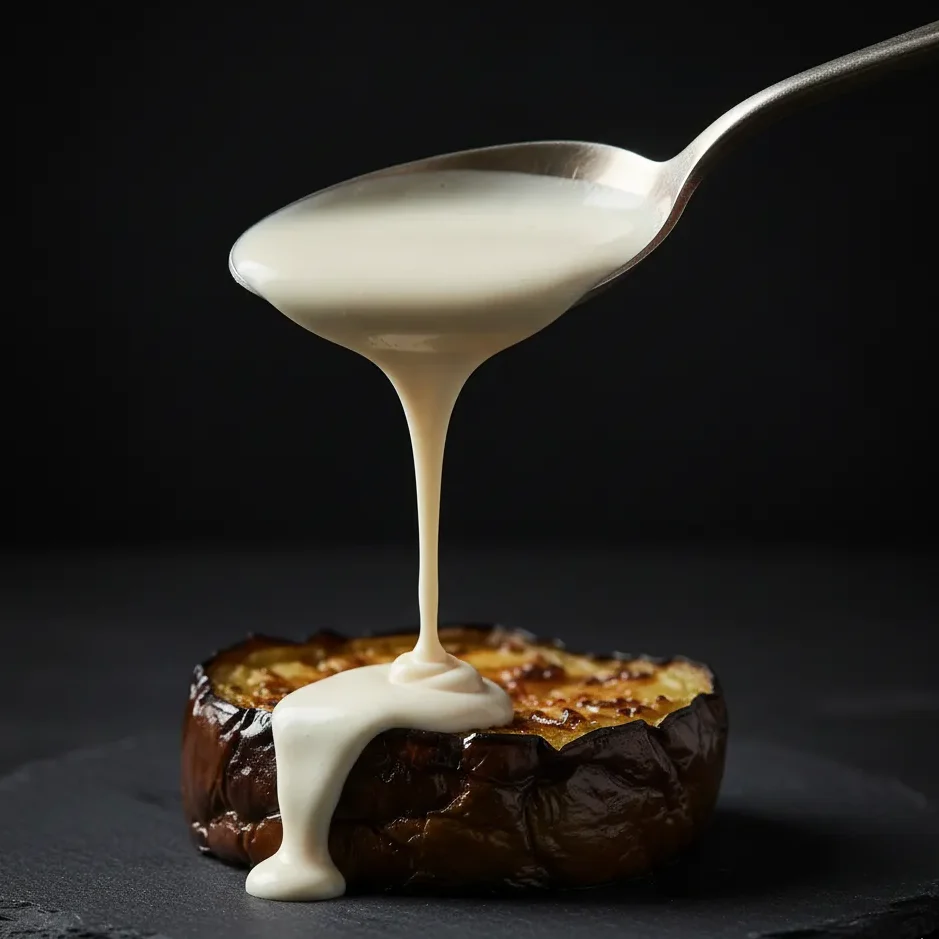
The trick is to use ice-cold water. By adding cold water one tablespoon at a time while whisking vigorously, you force the fat in the sesame seeds to emulsify. Watch as the color lightens from a dark tan to a beautiful ivory white. You’re looking for the consistency of heavy cream thick enough to coat a spoon, but thin enough to create those elegant “restaurant-style” streaks over your salad.
Infusing the Sauce: Garlic, Maple Syrup, or a Hint of Harissa
While a classic lemon-tahini mix is stunning, why not make it your own?
- For a Bite: Grate in a single clove of garlic (using a microplane for a smooth paste).
- For Balance: If your tahini is slightly bitter, a teaspoon of maple syrup or honey works wonders to round out the flavor.
- For Heat: A swirl of harissa paste adds a gorgeous pink hue and a creeping Moroccan heat that pairs perfectly with the smoky eggplant.
Watch: How to Make the Perfect Tahini Sauce
To see the emulsification trick in action and get that perfect pourable consistency, check out this helpful guide:
Step-by-Step Roasting Guide
Alright, we’ve picked our eggplant, gathered our spices, and mastered that silky tahini drizzle. Now comes the main event: roasting the eggplant itself! This is where the magic really happens, transforming humble raw vegetable into the star of our Moroccan roasted eggplant salad topped with a creamy tahini drizzle. Getting this step right is crucial, and honestly, it’s easier than you might think, especially when you know a few chef’s secrets to avoid that dreaded “soggy” texture.
Prepping the Eggplant: To Salt or Not to Salt?
This is a classic culinary debate, and for good reason. For years, salting eggplant was considered essential to draw out bitterness. But what’s the verdict today for your roasted eggplant salad?
- The Modern Eggplant: Most commercially grown eggplants today have been bred to be less bitter, so traditional salting isn’t always strictly necessary for flavor.
- The Moisture Factor: However, salting still serves a brilliant purpose: it draws out excess moisture. Less moisture means a better chance for your eggplant to brown beautifully rather than steam in the oven.
My Recommendation: A quick salt is always a good idea. Cut your eggplant into your desired cubes, toss them with a generous pinch of salt in a colander, and let them sit for about 20-30 minutes. You’ll be amazed at how much liquid drains out! Pat them thoroughly dry with a paper towel before tossing with oil and spices. This simple step makes a world of difference for that perfect char.
Oven Temperatures for the Perfect Maillard Reaction
For roasted eggplant, we’re not just “cooking” it; we’re aiming for a Maillard reaction. This is that beautiful chemical process that gives browned foods their complex, savory flavor. And for that, you need heat!
- High Heat is Key: Don’t be shy with your oven temperature. We’re looking for something around 200°C (400°F), or even a touch higher if your oven runs cool.
- Preheat Fully: Always give your oven plenty of time to preheat. A hot oven from the get-go ensures the eggplant hits that intense heat immediately, initiating browning rather than just warming up.
“The secret to perfectly roasted vegetables isn’t just about the temperature; it’s about respecting the science of browning.”
Arranging the Tray: Avoiding the “Crowded Pan” Steam Effect
This is arguably the most common mistake home cooks make when roasting anything, especially vegetables that release moisture like eggplant.
- Give Them Space! If you overcrowd your baking sheet, the eggplant pieces will essentially steam each other instead of roasting. This leads to mushy, pale, and utterly disappointing results.
- Single Layer, Please: Arrange your eggplant in a single layer with a little breathing room between each piece. If your eggplant fills more than one sheet, use two! It’s worth the extra pan to get that amazing texture.
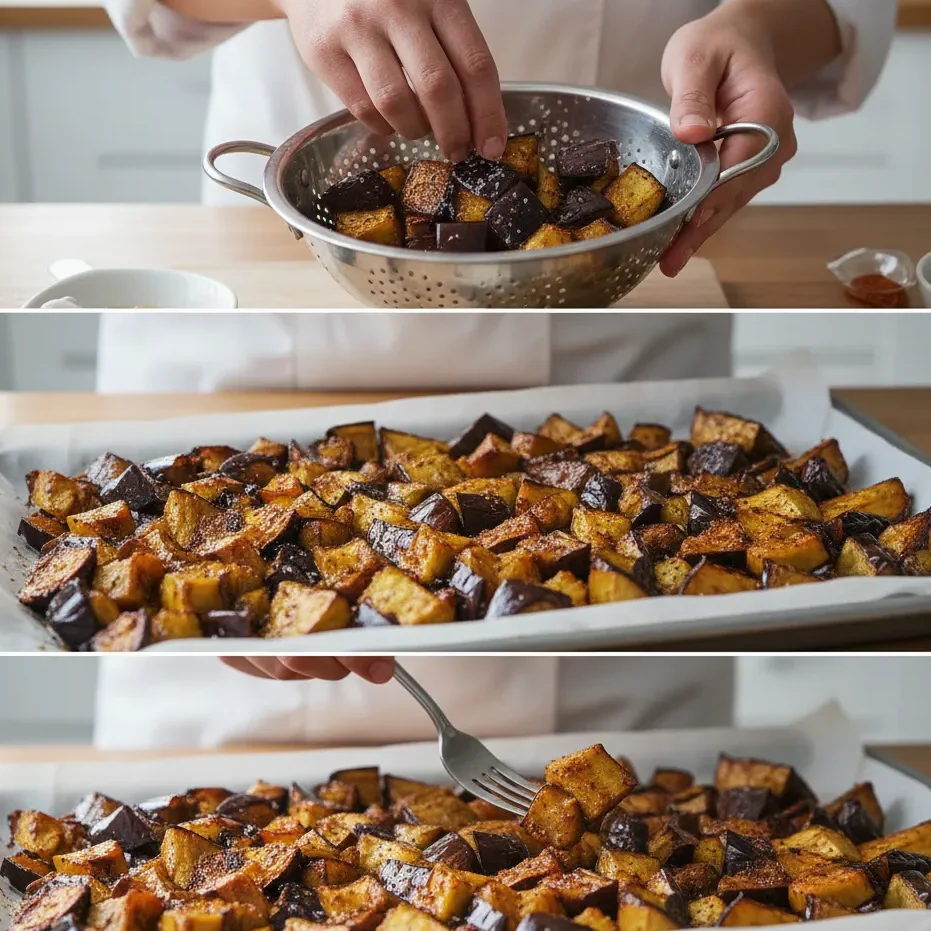
Timing the Roast for a “Melt-in-Your-Mouth” Interior
Once your eggplant is prepped, seasoned, and spread out, it’s time to roast.
- Initial Roast: Start with about 15-20 minutes.
- The Toss: After this time, give the eggplant a good stir or flip with a spatula. This ensures even browning on all sides.
- Final Roast: Continue roasting for another 10-15 minutes, or until the eggplant is deeply golden brown, tender, and slightly caramelized at the edges. You should be able to easily pierce it with a fork, and it should feel “melt-in-your-mouth” soft on the inside.
This precise timing ensures your smoky roasted aubergine is cooked through, with a beautiful char on the outside and a sweet, tender interior, making it the perfect base for your creamy tahini drizzle.
Nutritional Benefits & Serving Suggestions
So, we’ve mastered the char and perfected the pour. But did you know that this Moroccan roasted eggplant salad topped with a creamy tahini drizzle is doing as much for your body as it is for your taste buds? It’s rare to find a dish that feels this indulgent while being essentially a nutritional powerhouse. Whether you’re a long-time plant-based eater or just someone looking to sneak more vegetables into your week, this recipe is a total win.
Why Eggplant is a Fiber Powerhouse for Gut Health
Have you ever wondered why eggplant feels so filling? It’s not just the meaty texture; it’s the fiber. Eggplant is loaded with soluble fiber, which is like a spa day for your digestive system.
- Steady Energy: Fiber slows down the absorption of sugar, meaning you won’t get that mid-afternoon energy crash.
- Heart Health: The specific type of fiber in eggplants can actually help manage cholesterol levels.
- Antioxidant Boost: That beautiful purple skin isn’t just for show it contains nasunin, a powerful antioxidant that protects your brain cells from oxidative stress.
Healthy Fats: The Heart-Healthy Profile of Sesame and Olive Oil
In the world of nutrition, not all fats are created equal. By combining extra virgin olive oil with a tahini drizzle, you are creating a “brain-food” synergy. We’re talking about monounsaturated and polyunsaturated fats the kind your heart absolutely loves. These healthy fats aren’t just there for flavor; they actually help your body absorb the fat-soluble vitamins found in the rest of your meal.
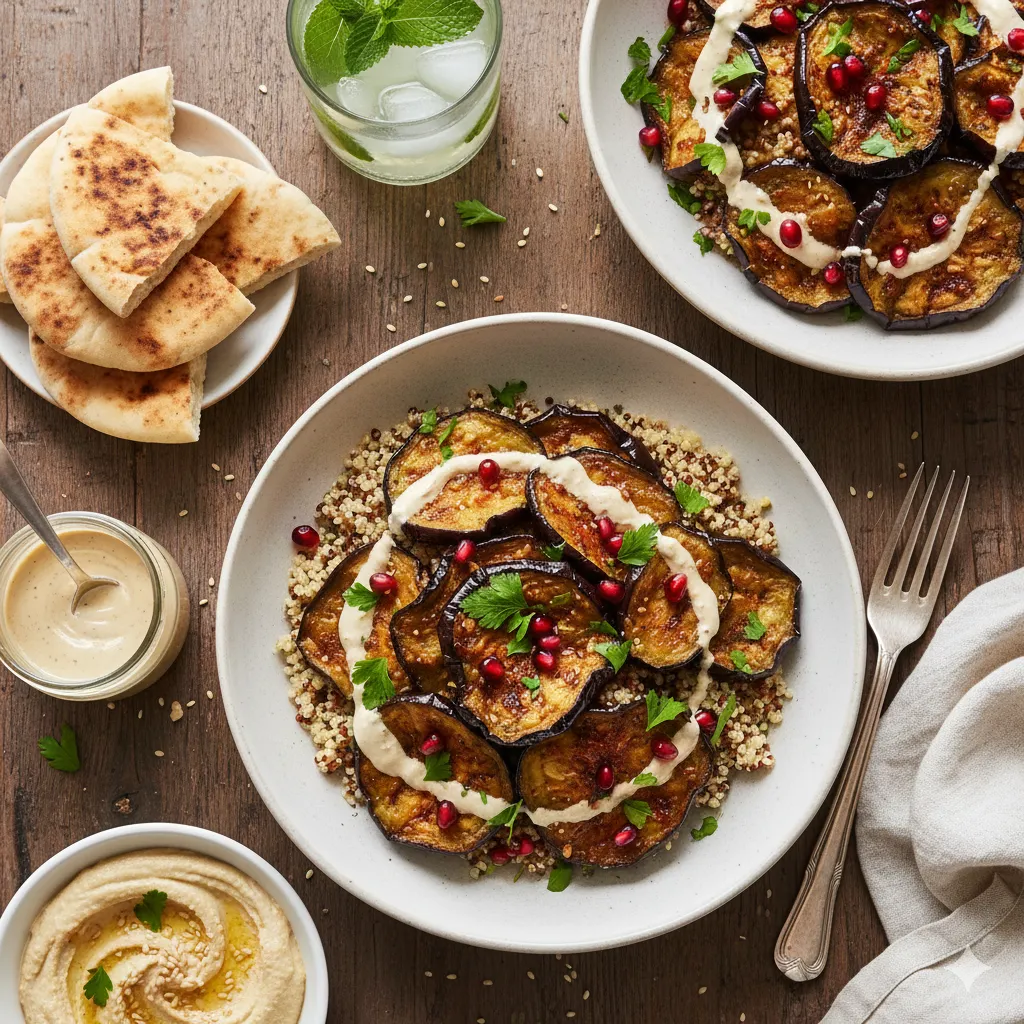
Pairing Ideas: Serving with Warm Pita or as a Grain Bowl Base
How should you serve this healthy sensation? The beauty of this salad is its incredible versatility. Here are my favorite ways to bring it to the table:
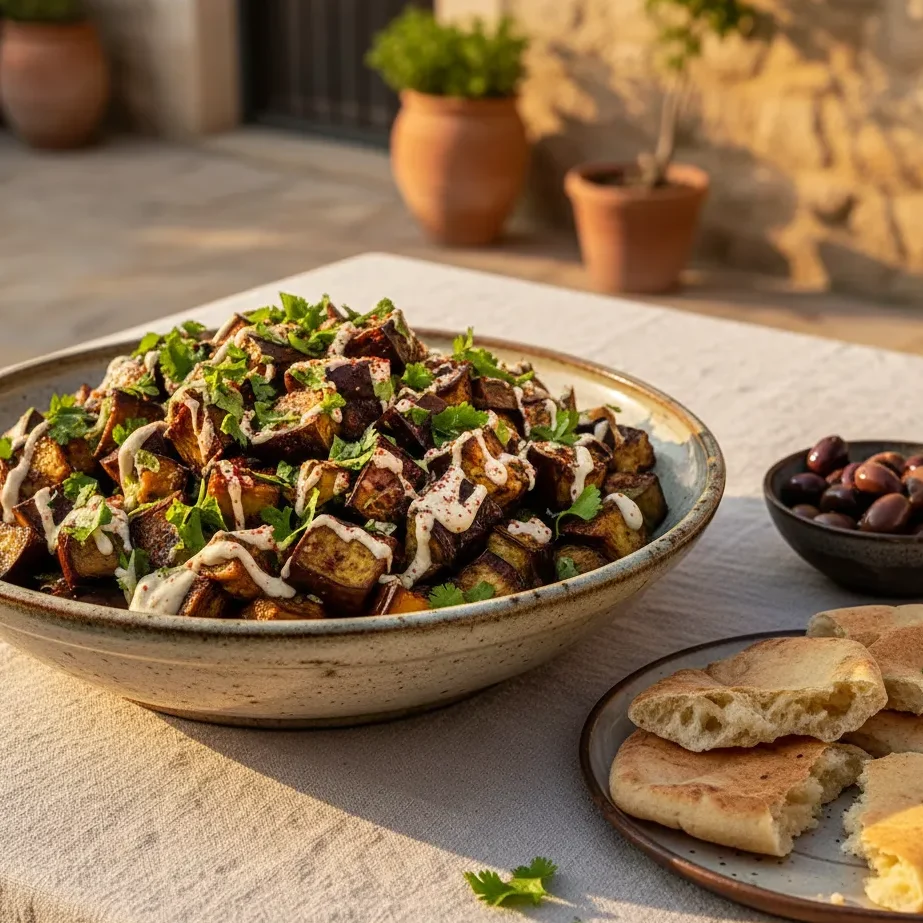
- The Classic Mezze: Serve it warm in a shallow bowl with a side of charred pita bread and a dollop of cooling Greek yogurt (or a vegan alternative).
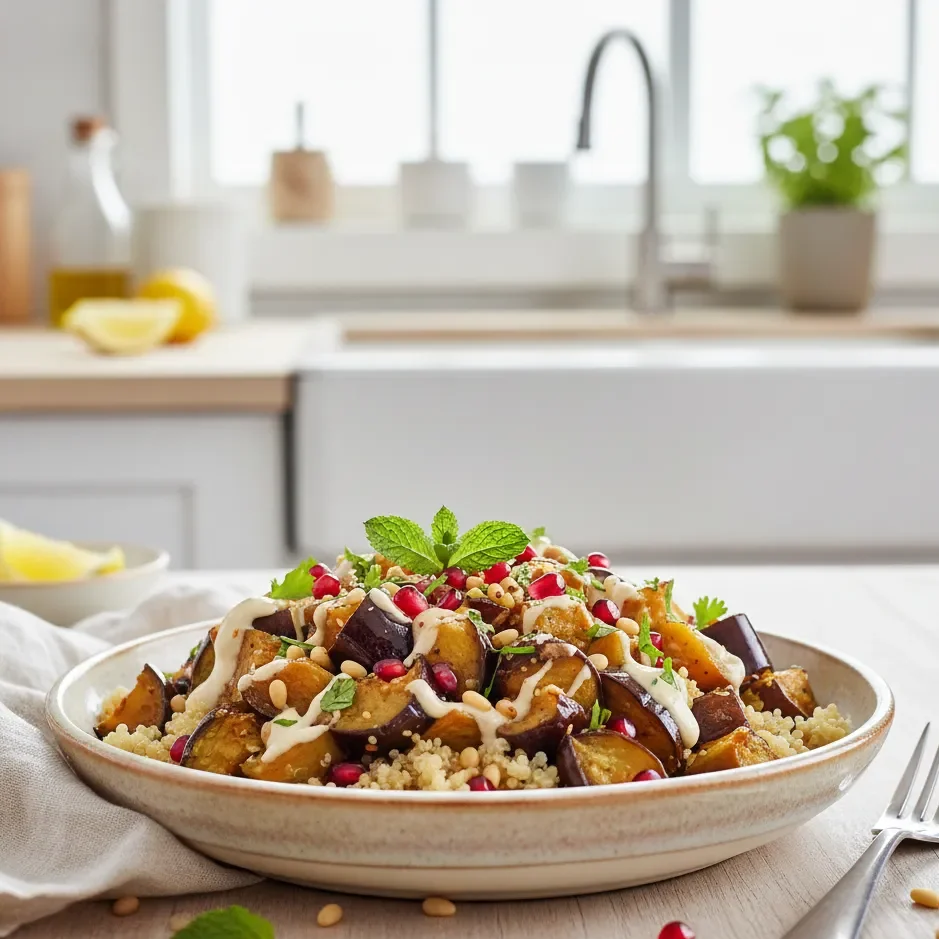
- The Power Bowl: Layer the roasted eggplant over a bed of fluffy quinoa or nutty farro. Add some chickpeas for extra protein, and you’ve got a meal-prep lunch that will be the envy of the office.
- The Elegant Side: Pair it with grilled lamb or roasted chicken. The smokiness of the eggplant perfectly complements charred meats.
Storage Tips: How to Reheat Without Losing the Texture
Let’s be real: leftovers happen. But nobody likes a soggy eggplant. If you have extra salad, store the eggplant and the tahini sauce in separate containers if possible.
- Avoid the Microwave: To keep that lovely texture, avoid the microwave if you can. It tends to make eggplant rubbery.
- The Skillet Method: Instead, toss the eggplant into a dry skillet over medium-high heat for 3–4 minutes. This will revive the charred edges and warm the center without losing the “bite.”
- Drizzle Last: Always wait until the eggplant is warm before adding your fresh tahini sauce and herbs.
Conclusion
To wrap things up, creating this Moroccan roasted eggplant salad topped with a creamy tahini drizzle is more than just following a recipe; it’s about embracing a lifestyle of bold flavors and vibrant health. By now, you’ve seen how a few simple techniques like high-heat roasting and a perfectly emulsified sauce can turn humble ingredients into a restaurant-quality meal.
I’ve found that the real beauty of this dish lies in its ability to surprise people. It’s hearty enough for a main, yet elegant enough for a dinner party side. Are you ready to fire up your oven and bring a taste of North Africa into your kitchen? I can’t wait for you to experience that first smoky, creamy bite!
Frequently Asked Questions
I know that even with a detailed guide, a few specific questions might pop up while you’re at the stove. Here are the most common things readers ask about mastering this healthy sensation:
- Can I make this salad ahead of time? Absolutely! While the eggplant is best served warm or at room temperature, you can roast the cubes up to a day in advance. Just remember to store the creamy tahini drizzle separately and only combine them right before serving to keep the textures distinct and fresh.
- What if I don’t have tahini? While tahini provides that authentic nutty base, you can substitute it with sunflower seed butter for a similar earthy vibe. If you’re not strictly vegan, a dollop of Greek yogurt thinned with lemon juice and a touch of cumin also works beautifully as a creamy alternative.
- Is the eggplant skin edible? Yes, and it’s highly encouraged! The skin holds much of the nutritional value and provides a wonderful textural contrast to the soft interior. As long as you’ve roasted it properly, the skin becomes tender and delicious.
- How do I make this a more filling meal? To turn this from a salad into a high-protein feast, I love adding roasted chickpeas, a handful of toasted walnuts, or serving it alongside a scoop of warm, spiced couscous.