
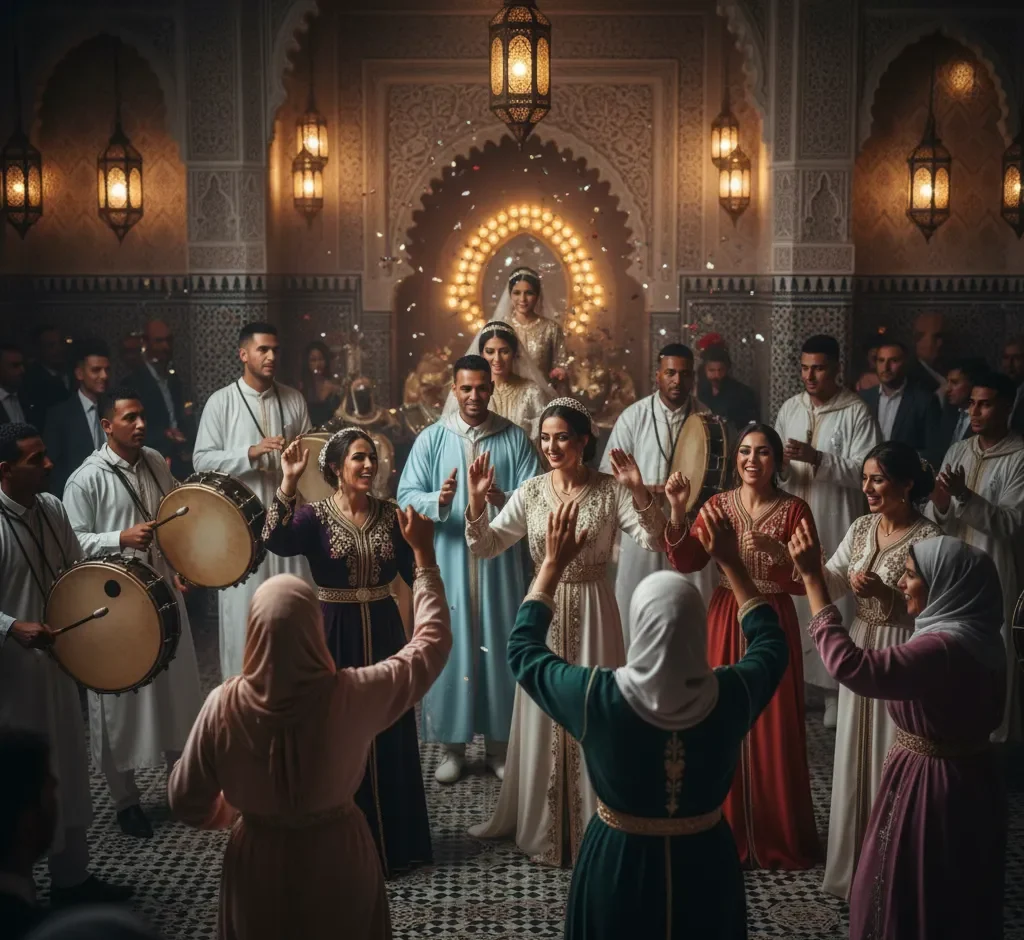
The Soul of the Celebration: Pre-Wedding Purification
Have you ever wondered why Moroccan weddings feel so deeply spiritual compared to the fast-paced ceremonies we often see today? It’s because the “joy” of a Moroccan wedding doesn’t actually start at the altar; it begins days earlier with a series of soulful, ancient rituals designed to cleanse the body and spirit.
Before the music starts and the guests arrive, the bride undergoes a transition from her old life to her new one. This isn’t just about aesthetics it’s about Baraka (blessings) and heritage. Let’s dive into the three most mesmerizing steps of this pre-wedding journey.
The Sacred Hammam: A Ritual of Beauty and Bonding
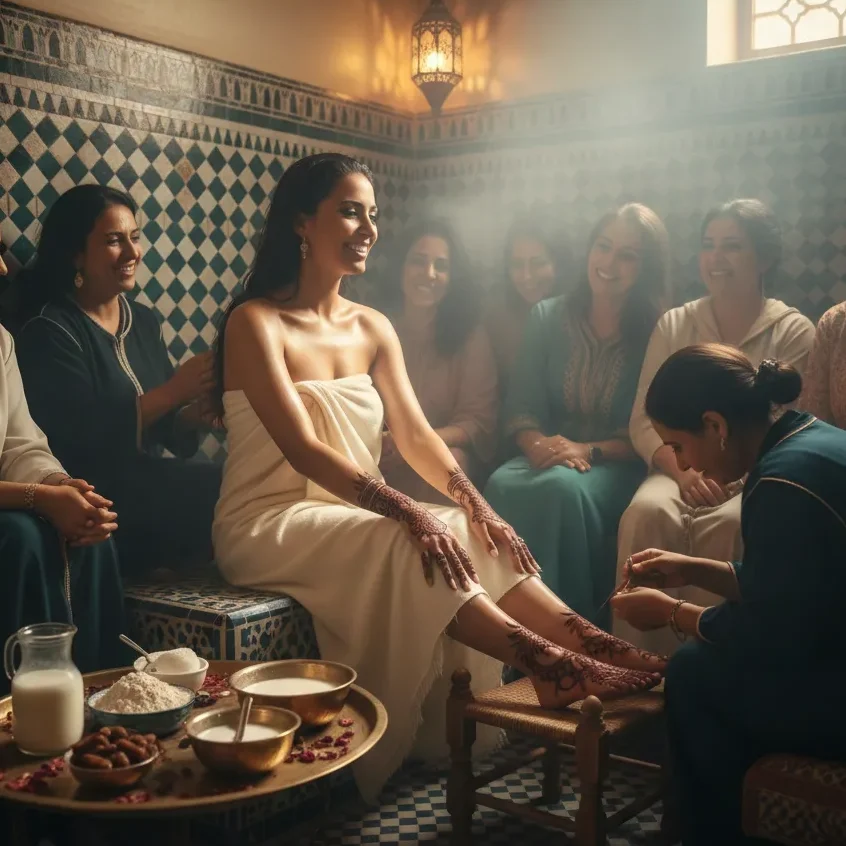
Imagine a sun-drenched stone room filled with the scent of eucalyptus and orange blossom. This is the Hammam, the traditional Moroccan steam bath where the bride’s journey officially starts. But don’t mistake this for a simple spa day!
- Purification: The bride is accompanied by her closest female relatives and friends. They use Beldi (black soap) and Ghassoul (atlas mountain clay) to physically cleanse, but the ritual is also symbolic of “washing away” the past.
- A Shared Experience: As the steam rises, so do the songs. Women sing traditional chants to celebrate the bride’s transition.
- Pro Tip: If you’re looking to recreate this glow at home, many modern Moroccan brides swear by a finishing rinse of pure rose water to lock in the “bridal light.”
The Henna Night: Protection and Artistic Blessings
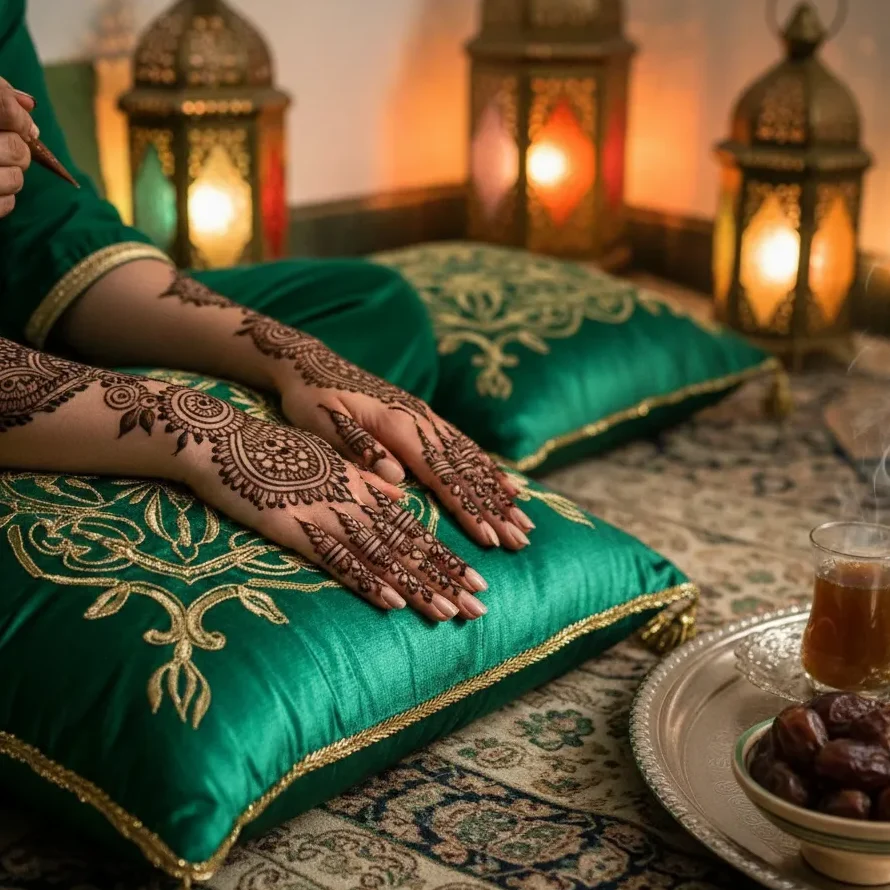
Perhaps the most visually stunning of all traditional marriage rituals is the Henna ceremony. Have you ever noticed the intricate, lace-like patterns on a bride’s hands and feet? That is the work of a Nekkasha, a professional henna artist.
In Moroccan culture, henna is much more than a temporary tattoo; it is a shield. The geometric and floral patterns are believed to protect the bride from the “evil eye” and invite fertility into the marriage.
- The Atmosphere: The room is usually draped in green (the color of paradise and life).
- The Intention: Each swirl and dot carries a meaning, often representing seeds, eyes, or hands to ward off negativity.
- The Bond: Guests often get a small “dot” of henna on their palms too, sharing in the bride’s good fortune.
Symbolic Offerings: The Exchange of Milk, Dates, and Sugar
Moroccan tradition is a language of symbols. During the early stages of the union, you will see a beautiful exchange involving three specific items: milk, dates, and sugar. Why these three? It’s a data-driven insight into Moroccan psychology sweetness and purity are the foundations of a successful life.
- Milk: Represents the purity of the couple’s intentions and a clean start.
- Dates: A staple of the Maghreb, symbolizing abundance and the “sweetness” of the journey ahead.
- Sugar: Often gifted in large cones (Oukia), it represents a wish for a life free of bitterness.
When the groom’s family brings these gifts, it isn’t just a gesture; it’s a legal and emotional promise of provision. It’s these small, quiet moments of Moroccan wedding joy that make the loud party later feel so earned.
Regal Fashion: The Bride’s Seven Stunning Transformations
If you thought the pre-wedding rituals were captivating, wait until you experience the main event! One of the most breathtaking aspects of Moroccan wedding joy is witnessing the bride’s multiple, spectacular outfit changes. This isn’t just about looking beautiful; it’s a profound cultural narrative told through luxurious fabrics, sparkling jewels, and centuries of tradition.
Have you ever seen a bride transform before your very eyes, embodying different historical eras and regional pride all in one night? That’s precisely what happens! Each change signifies a new chapter, a new blessing, and a nod to Morocco’s diverse heritage.
Role of the Neggafa: Curating the Royal Aesthetic
Behind every flawlessly transformed Moroccan bride is the Neggafa. Think of her as a blend of a celebrity stylist, a trusted confidante, and a cultural historian, all rolled into one indispensable person. Her expertise is critical to navigating the elaborate wardrobe changes.
- The Visionary: The Neggafa works with the bride for months, selecting the Moroccan caftan designs, fabrics, and accompanying jewelry.
- The Dresser: On the wedding night, she meticulously helps the bride change, ensuring every detail, from the draping of the fabric to the placement of the crown, is perfect.
- The Guardian of Tradition: Beyond styling, she ensures that each outfit adheres to traditional customs, explaining the significance of specific colors or embroidery patterns.
Regional Elegance: From the Lebsa Fasiya to Soussia Styles
The bride’s wardrobe is a vibrant tapestry, showcasing the rich regional diversity of Morocco. Each dress tells a story, originating from different cities and tribes across the kingdom. Here’s a glimpse into the traditional progression:
| Outfit Name | Origin/Significance | Key Features |
| Lebsa Fasiya | Fez (Fas) – Imperial City | Heavily embroidered, often in gold, with a large, elaborate crown (Taj). |
| Lebsa Rbatia | Rabat – Capital City | Elegant and refined, often featuring intricate pearl work and softer drapes. |
| Soussia / Amazigh | Souss-Massa Region (Berber) | Vibrant colors, rich silver jewelry, and headscarves, celebrating Amazigh heritage. |
| Sahraouia | Moroccan Sahara | Loose, flowing drapes (Melfa) in rich blues or purples, designed for desert elegance. |
| Mejdoub | General Moroccan Traditional | A classic gold-embroidered caftan, symbolizing enduring beauty. |
| Modern/European Gown | Contemporary Influence (often white) | The “grand finale” dress, typically a white Western-style wedding gown. |
The White Takchita: Merging Modernity with Heritage
While the journey through regional styles is central, many brides culminate their “regal fashion” display with a stunning white Takchita. This isn’t necessarily a Western wedding dress, but a beautifully embellished Moroccan gown in white or off-white.
- Symbol of Purity: White traditionally represents purity and new beginnings.
- Modern Twist: It’s a lovely way to blend deep-rooted heritage with a touch of contemporary elegance, making the wedding uniquely theirs.
- Personalization: Some brides opt for a completely Western white dress here, while others choose a white Moroccan design, showcasing their individual style.
Intricate Gold Jewelry and the “Taj” (Crown)
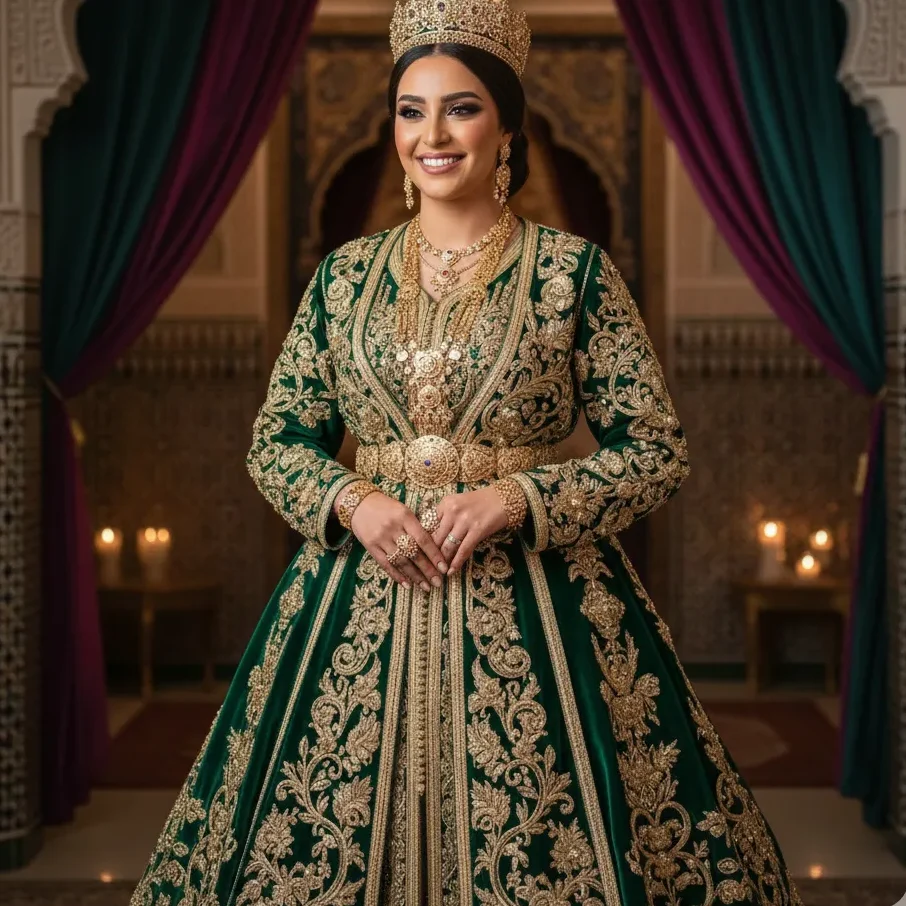
No royal transformation is complete without the jewels! Moroccan brides adorn themselves with breathtaking gold jewelry, often inherited or specially crafted. The pièce de résistance is the Taj, or crown.
- Symbolic Weight: The crown is not just an accessory; it symbolizes the bride’s status as the “queen” of the night and the head of her new household.
- Layered Beauty: Expect to see multiple necklaces, ornate earrings, and heavy bracelets that shimmer with every movement, catching the light as she floats past on the Amariya.
Ready to be captivated by the grand entrance itself? Let’s move on to explore the spectacle of the Amariya procession!
The Grand Entrance: A Mesmerizing Spectacle of Joy
Have you ever seen a wedding where the bride and groom don’t just walk into the room, but actually float above it? If you’ve never witnessed a Moroccan grand entrance, prepare to have your breath taken away. This is the moment where the energy shifts from a polite gathering to an absolute explosion of Moroccan wedding joy.
It’s not just a walk-down; it’s a royal procession that honors the couple as the king and queen of the night. Can you imagine the thrill of being carried on the shoulders of your community while hundreds of people cheer for your happiness?
The Amariya Procession: Floating Above the Crowd
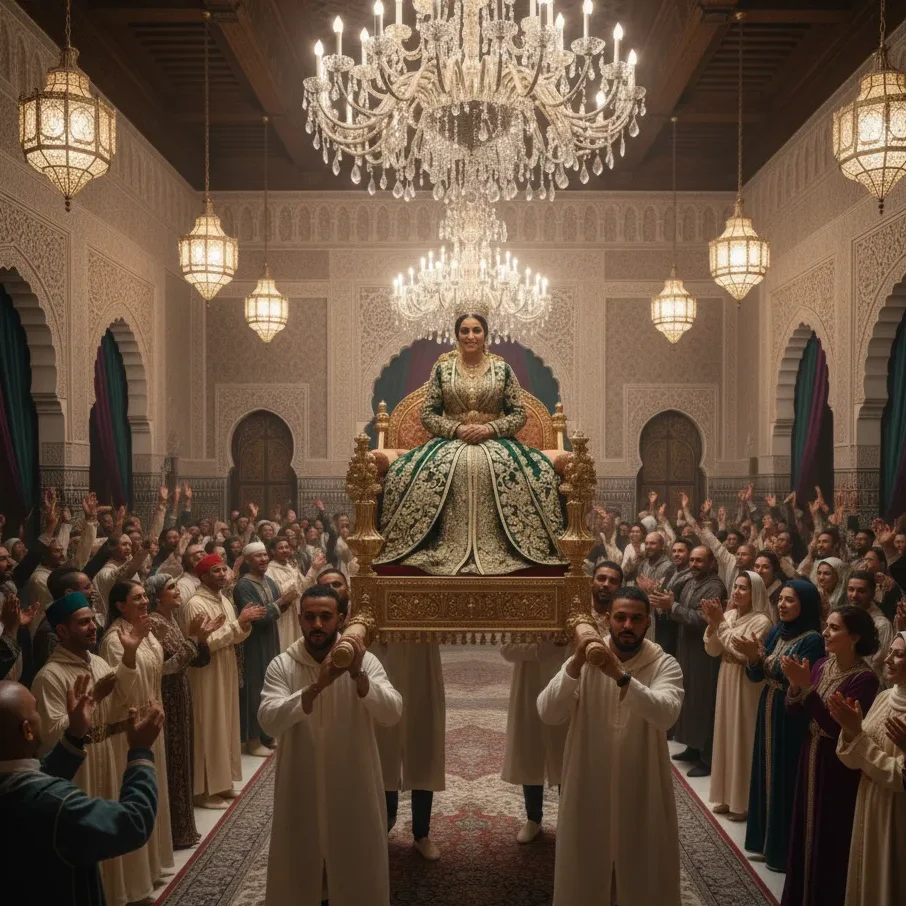
The centerpiece of this spectacle is the Amariya. This is an ornate, roofed wooden throne, typically plated in silver or gold, designed to carry the bride (and later the groom) through the ballroom.
- The Ascent: Four men, usually dressed in traditional white Jabador or Gandoura, lift the throne into the air.
- The Symbolism: Being elevated isn’t just for show; it symbolizes the couple being placed above worldly worries as they embark on their new life together.
- The Interaction: As they are paraded around the room, the couple waves to their guests, acknowledging the love and support of their extended family.
Rhythms of the North: Dakka Marrakchia and Gnawa Music
You’ll hear the entrance before you see it. The air becomes electric with the sound of Dakka Marrakchia, a traditional form of percussion and chanting that originated in Marrakech.
- The Beat: Large frame drums (Tarija) and heavy brass castanets (Krakebs) create a polyrhythmic sound that is impossible not to dance to.
- The Chant: The performers often engage in call-and-response singing, praising the Prophet and offering prayers for the couple’s prosperity.
- The Energy: It’s a raw, powerful sound that connects the modern celebration to Morocco’s deep African and Arab roots.
The Zaghrouta: The Sound of Shared Community Happiness
If there is one sound that defines a Moroccan celebration, it is the Zaghrouta (the high-pitched ululation made by the women).
Have you ever felt a sound vibrate in your chest? That’s the effect of dozens of women performing the zaghrouta in unison. It is a piercing, melodic cry of pure joy. It serves as a public “seal of approval,” announcing to the world that this union is blessed and celebrated by the community. It’s the ultimate vocal punctuation mark for every major moment of the night!
Experience the Magic in Motion
To truly understand the energy of this moment, watch this traditional grand entrance featuring the Amariya and Dakka Marrakchia:
A Culinary Odyssey: Feasting in Traditional Moroccan Style
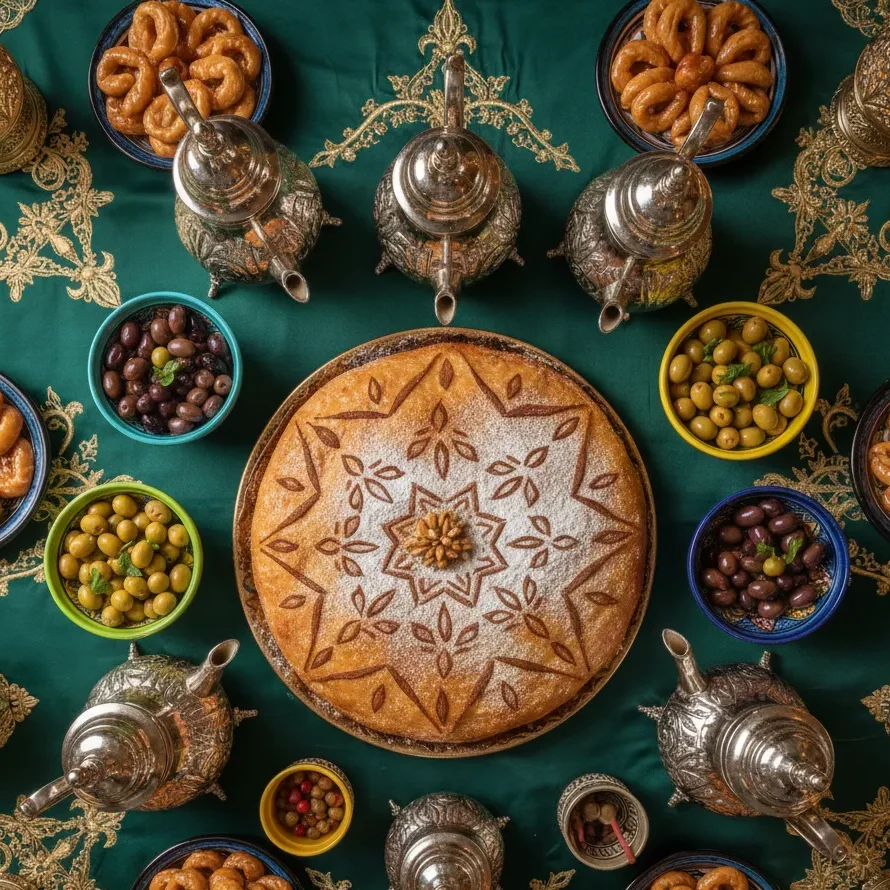
If there is one thing you should bring to a Moroccan wedding, it is a healthy appetite! In our culture, food is the ultimate love language. It’s not just about nourishment; it is a grand display of hospitality, or Karam, that honors the guests and the new union.
Have you ever sat at a table where the dishes seem to never end, each one more fragrant than the last? A Moroccan wedding feast is a carefully orchestrated marathon of flavors, blending sweet, savory, and spicy in a way that feels like a celebration for your taste buds.
The Welcome Ritual: Mint Tea and Hand-Crafted Pastries
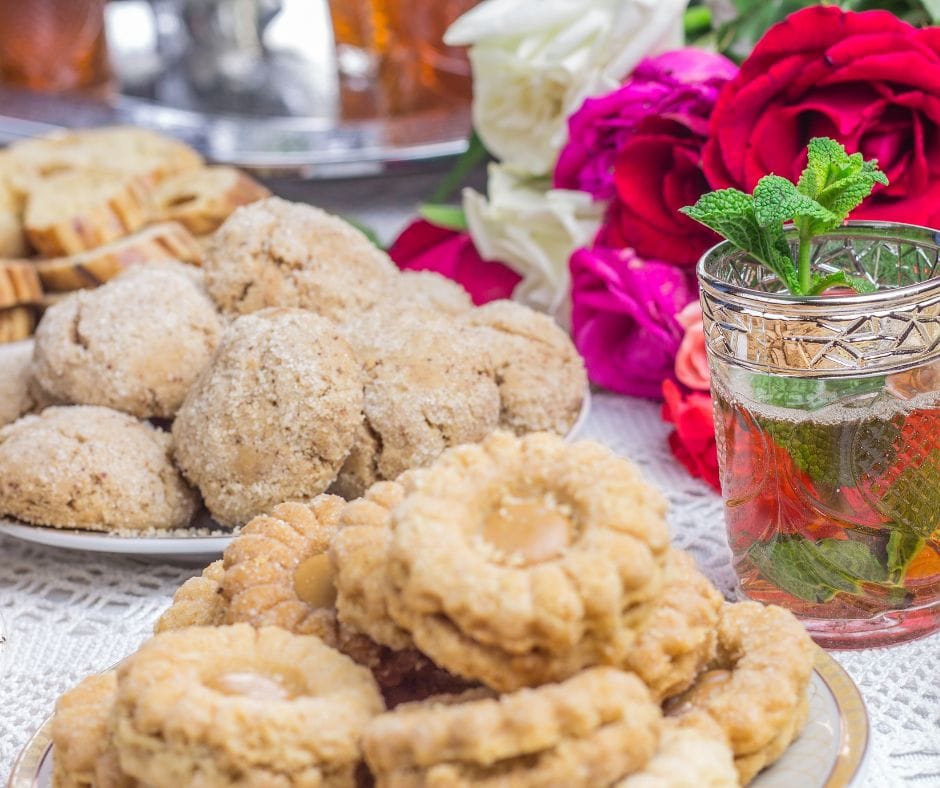
The festivities don’t start with a heavy meal, but with a gentle, sophisticated welcome. As you settle into the ornate ballroom, you are greeted with the “Moroccan Whiskey” fresh, steaming mint tea poured from a height to create a perfect foam.
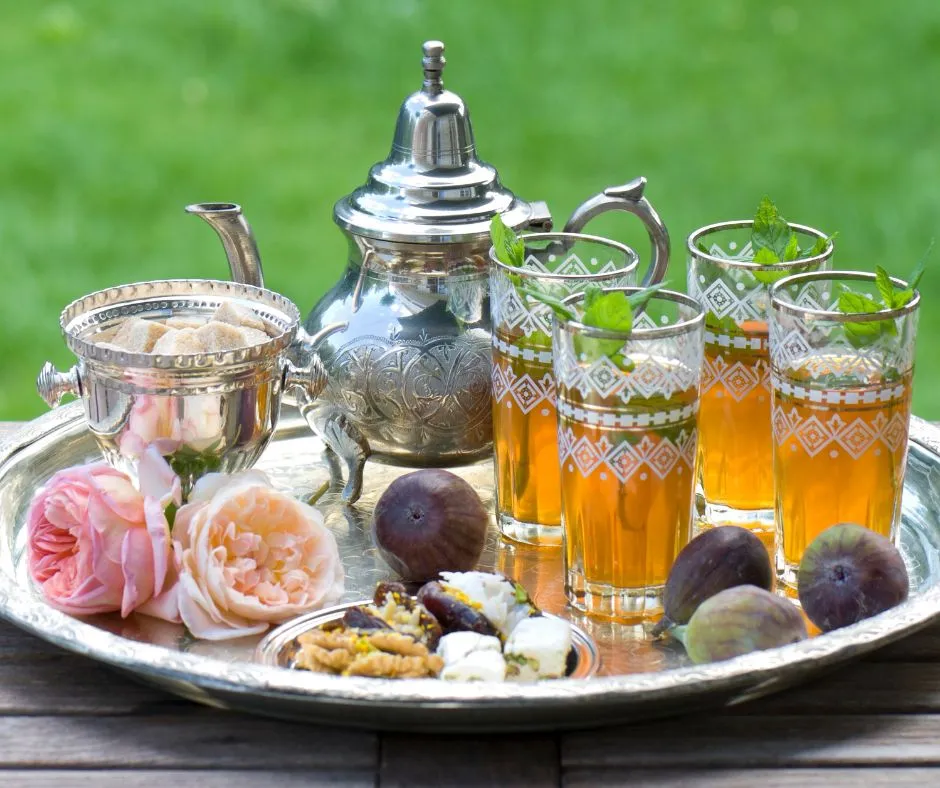
- The Pour: Watching the server pour tea is a performance in itself, symbolizing respect and welcome.
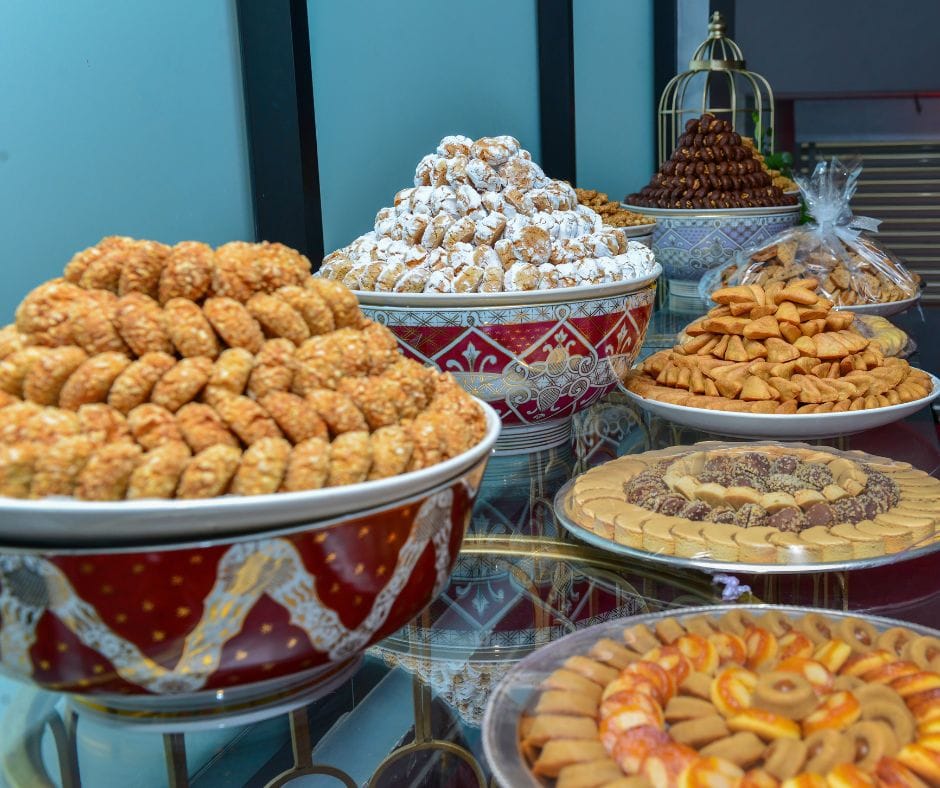
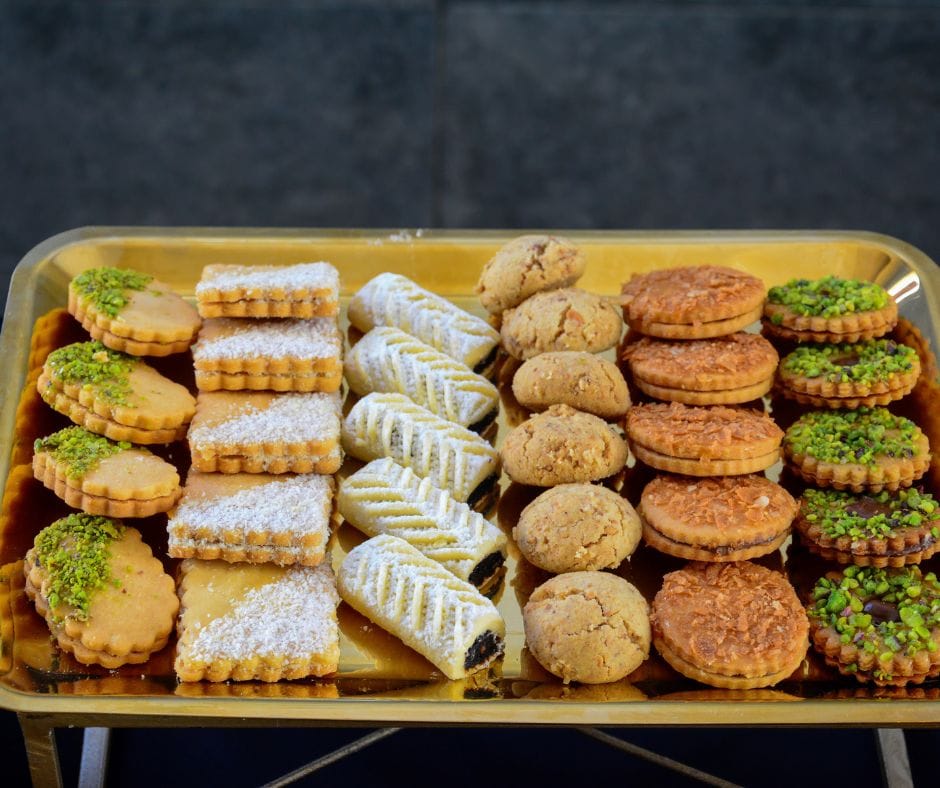
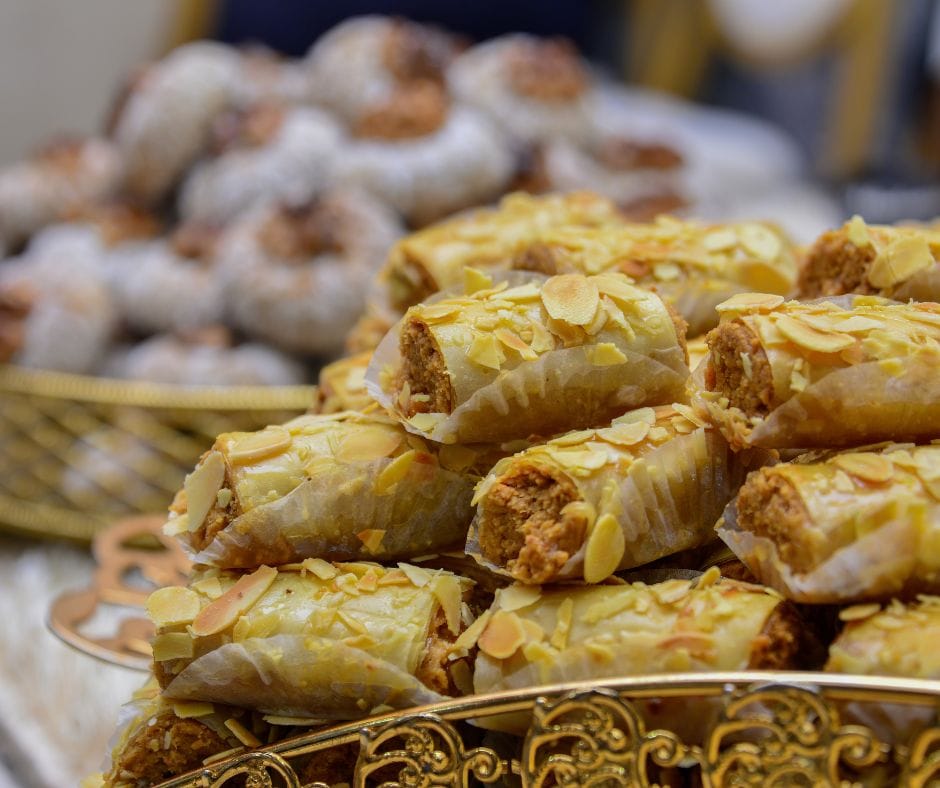
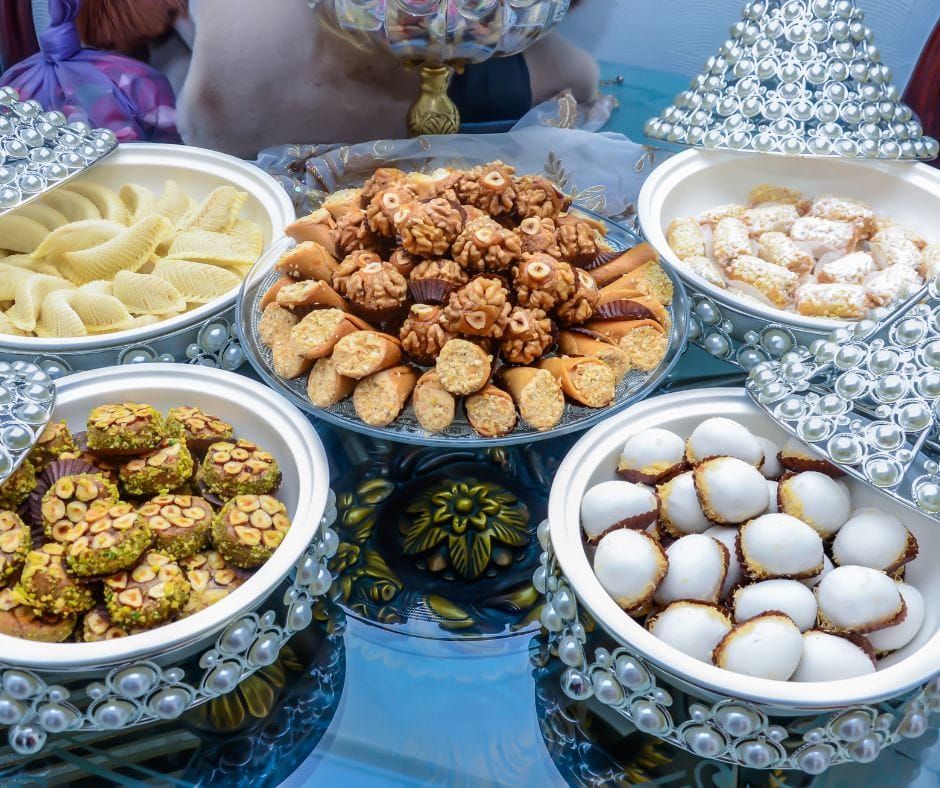
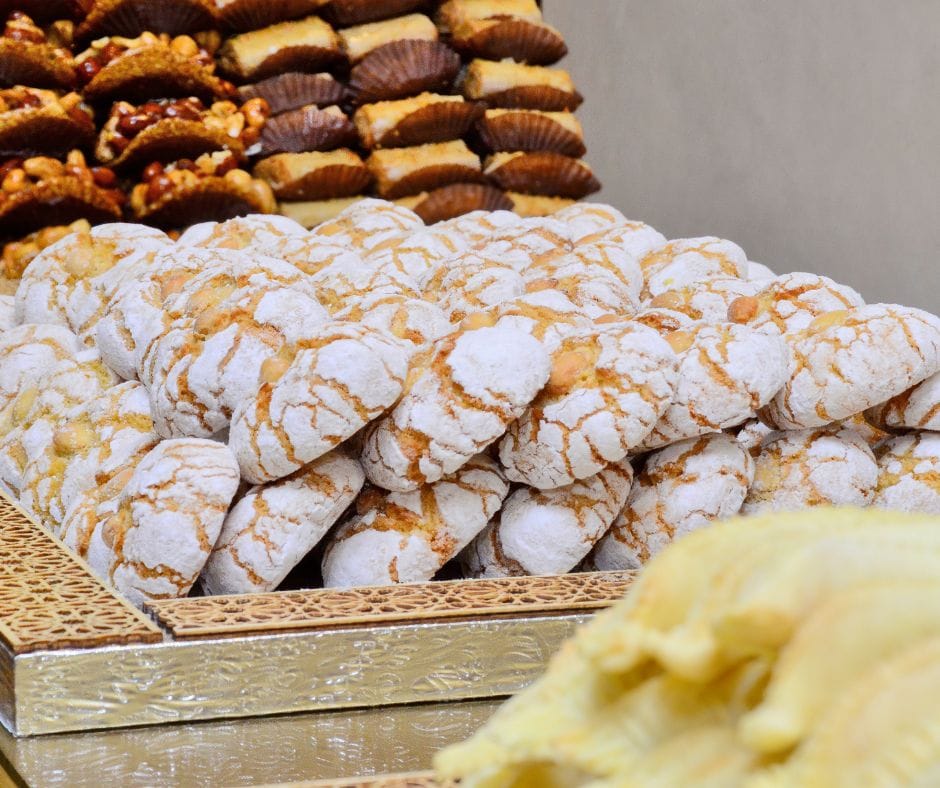
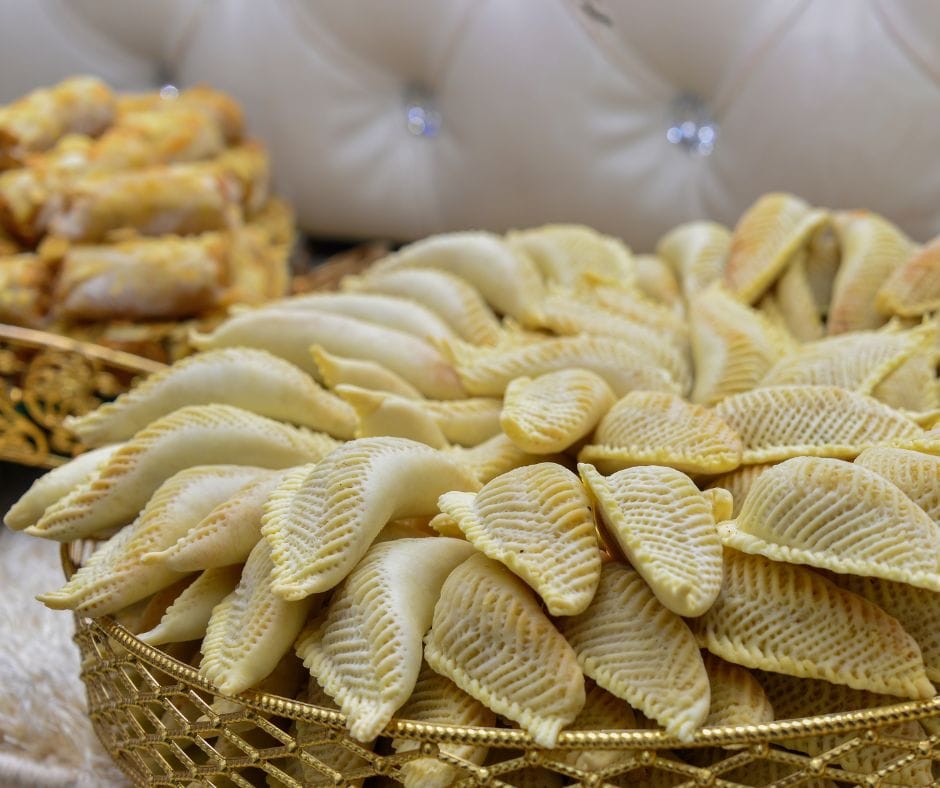
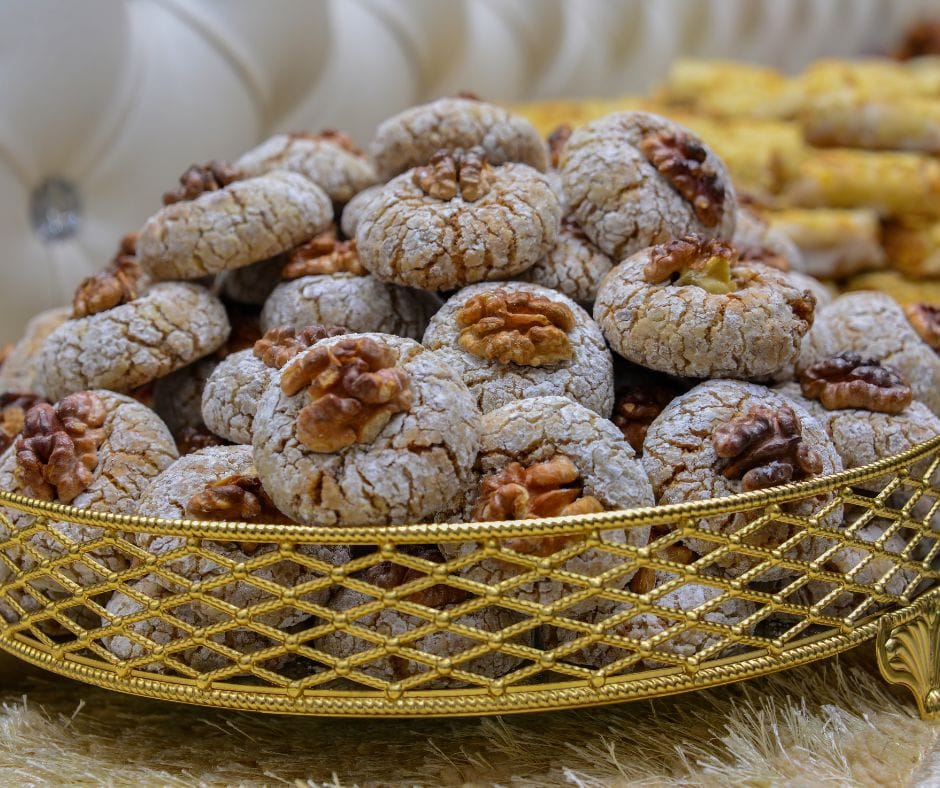
- The Sweets: Accompanying the tea are trays of delicate Moroccan pastries. You’ll find Kaab el Ghazal (Gazelle Horns) filled with almond paste and orange blossom water, and Briouats, crispy triangles of honey-soaked heaven.
- The Symbolism: Often, you’ll also be offered a date stuffed with walnuts and a small glass of milk a traditional gesture representing a “sweet and pure” start to the evening.
Savory Masterpieces: Pigeon Pastilla and Slow-Roasted Mechoui
Once the music reaches a crescendo, the main banquet begins. This is where the culinary artistry of the Maghreb truly shines. Typically, a Moroccan wedding feast features two or three “star” dishes served communally.
- Pigeon or Chicken Pastilla: This is the ultimate “wow” dish. It’s a flaky, phyllo-dough pie that hides a savory saffron meat filling, topped unexpectedly with a dusting of powdered sugar and cinnamon. It’s a sweet-and-savory miracle.
- Mechoui: You haven’t truly experienced a feast until you’ve tasted Mechoui. This is whole lamb, slow-roasted for hours until the meat literally falls off the bone. It’s seasoned simply with cumin and salt, letting the quality of the meat speak for itself.
- The Tagine: Often, a third course of lamb or chicken tagine with prunes, toasted almonds, and boiled eggs is served, representing fertility and abundance.
Dessert Traditions: Seasonal Fruit Towers and Almond Sweets
Just when you think you can’t eat another bite, the dessert arrives. In Morocco, we prefer to end on a fresh note.
- Fruit Pyramids: Huge platters of seasonal fruits melon, grapes, and oranges are often carved and stacked into impressive towers.
- The Final Sweet: To close the “Culinary Odyssey,” more tea is served with a variety of almond-based cookies, ensuring guests leave with a literal sweet taste in their mouths.
“In Morocco, we don’t just feed the body; we feed the soul. A guest at our table is a blessing from God, and the wedding feast is the highest form of that blessing.” — Traditional Moroccan Proverb
Essential Etiquette for Guests Attending the Festivities
So, you’ve secured an invitation to a traditional celebration! Are you feeling a mix of excitement and perhaps a little “culture shock” anxiety? Don’t worry being a guest at a Moroccan wedding is a deeply rewarding experience, provided you know the unspoken rules of the ballroom.
In Morocco, the guests are considered part of the family for the night. This means the hospitality will be overwhelming, but your presence also carries a responsibility to contribute to the Moroccan wedding joy. Let’s walk through the essentials so you can navigate the evening with the grace of a local.
What to Wear: Navigating the Dress Code with Respect
One of the most frequent questions I get is: “Do I have to wear traditional clothes?” The short answer is no, but you’ll certainly have more fun if you do!
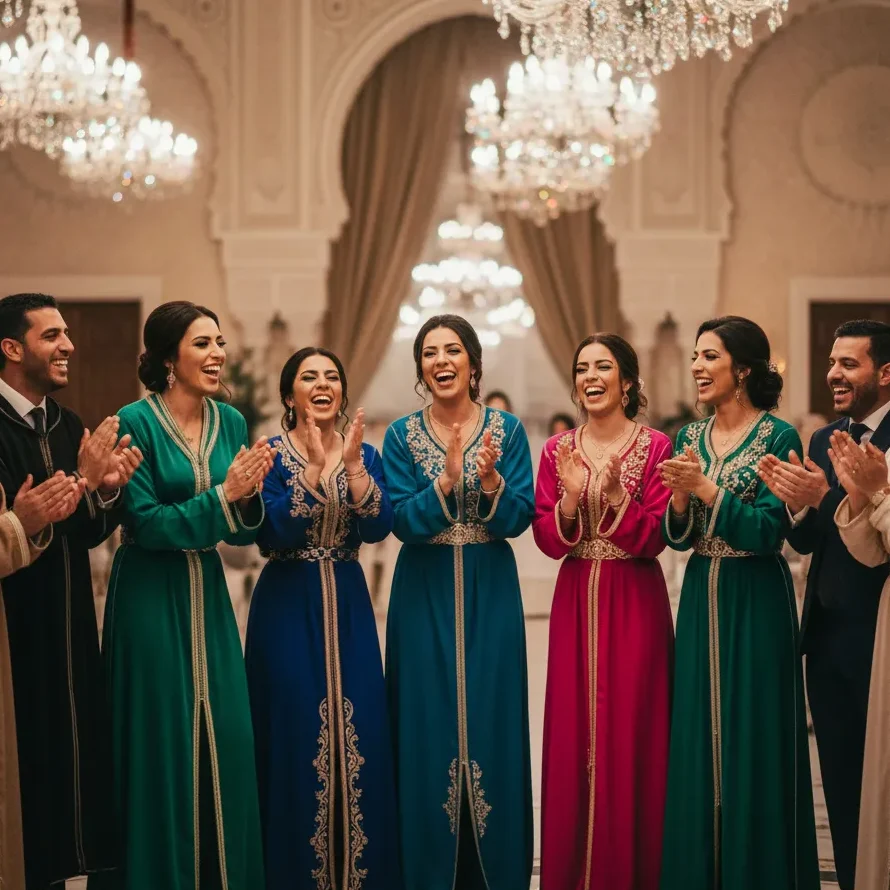
- The Caftan Advantage: For women, wearing a Moroccan caftan or a Takchita is the ultimate sign of respect. These are long, flowing, and incredibly elegant. If you choose Western wear, ensure it is formal and modest (avoid anything too short or revealing).
- Suit Up: For men, a sharp suit is standard, though some might opt for a traditional Jabador.
- Color Palette: Unlike some cultures, there are no “forbidden” colors like white or red. Feel free to embrace vibrant jewel tones you’ll fit right in with the kaleidoscopic decor!
Gift Giving Customs: What to Bring for the Happy Couple
Are you wondering if you should carry a giant blender into the wedding hall? In modern Moroccan culture, the approach to gifting has shifted toward practicality.
- The “Enveloppe”: Today, most guests provide a monetary gift in a discreet, beautiful envelope. This helps the couple cover the costs of their elaborate multi-day celebration or start their new life together.
- Traditional Gifts: In more conservative or rural settings, gifts like sugar cones or fine fabrics are still common, but for a city wedding, an envelope is your safest and most appreciated bet.
- The Hand-Off: You usually present your gift to the couple’s parents or a designated family member near the entrance, rather than handing it to the bride while she’s on her Amariya.
Timing the Night: Why Moroccan Weddings Peak at Midnight
If the invitation says 8:00 PM, don’t expect to see the bride until at least 10:00 PM! Moroccan weddings are famous for their late starts and even later finishes.
- Pace Yourself: The “main” dinner is often served around midnight or 1:00 AM. If you eat a full meal at 6:00 PM before arriving, you might struggle to finish that delicious Pigeon Pastilla later!
- The Endurance Test: It is perfectly normal for the party to continue until the first light of dawn. If you leave before 2:00 AM, you’ll miss some of the most emotional rituals.
Embracing the Dance: Participating in the Communal Joy
Have you ever felt shy on a dance floor? At a Moroccan wedding, that shyness will disappear quickly. The music from Dakka Marrakchia to modern Chaab is designed to get everyone moving.
- The Circle: You’ll often see guests forming circles around the couple. Don’t be afraid to join in! You don’t need to be a professional; just clap to the beat and follow the rhythm of the people around you.
- The Connection: Dancing isn’t just about the music; it’s about showing the couple that you are truly happy for them. Your energy is the best gift you can give.
Conclusion: A Lifetime of Memories in a Single Night
As the sun begins to rise and the last echoes of the Dakka Marrakchia fade, you realize that a Moroccan wedding is so much more than a party. It is a living, breathing masterpiece of cultural preservation. From the sacred silence of the Hammam to the triumphant height of the Amariya, every moment is intentional, every ritual is a blessing, and every guest is a witness to a new legacy.
Experiencing Moroccan wedding joy is an invitation to step into a world where history and modernity dance together in perfect harmony. Whether you are planning your own celebration or attending as a guest, remember that the “magic” lies in the details the scent of orange blossom, the weight of the gold Taj, and the shared sweetness of a date. It’s a mesmerizing journey that stays with you long after the last pastry has been eaten.
Frequently Asked Questions (Q&A)
Q: How many days does a traditional Moroccan wedding actually last? A: While modern city weddings are often condensed into one long night preceded by a henna day, a truly traditional celebration can last three to seven days, including separate days for the bath ritual, the henna ceremony, and various family feasts.
Q: Is it okay for non-Moroccans to wear a Caftan? A: Absolutely! In fact, Moroccans take great pride in seeing international guests embrace their heritage. Wearing a Moroccan caftan is seen as a gesture of deep respect and appreciation for the culture.
Q: What should I do if I am invited but cannot stay until 5:00 AM? A: While it is best to stay for the main dinner (usually served after midnight), it is acceptable to slip away afterward. Just ensure you have greeted the couple or their parents before departing to show your gratitude.
Q: Is alcohol served at Moroccan weddings? A: Most traditional Moroccan weddings are “dry” out of respect for Islamic customs. Instead, you will find an endless supply of premium mint tea, fresh fruit juices, and sophisticated mocktails that keep the energy high all night long.
Q: Can I take photos during the ceremony? A: Generally, yes! However, always be mindful of the bride’s privacy during more intimate moments like the Henna ritual. When in doubt, follow the lead of the Neggafa or the official photographers.