
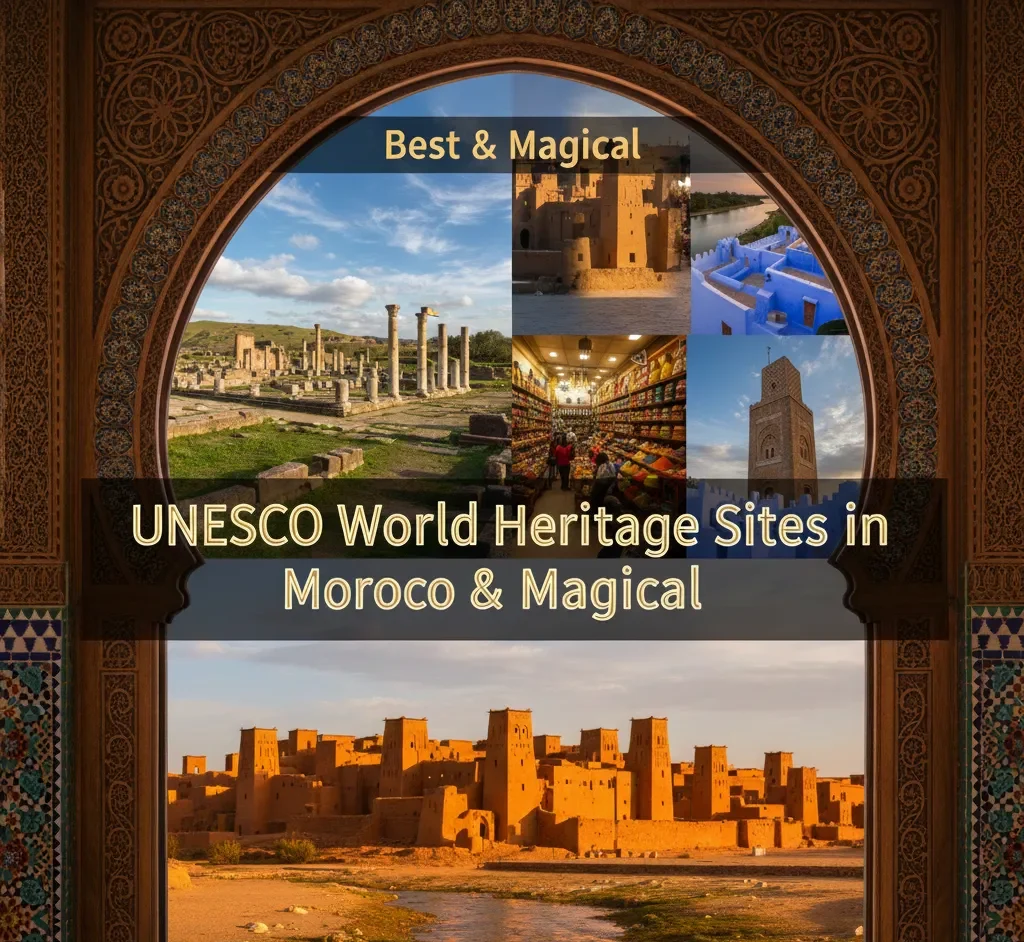
Unveiling Morocco’s Timeless Treasures
Have you ever wanted to step into a real-life time machine? One moment you are sipping mint tea in a bustling modern café, and the next, you are walking through Roman ruins that have stood silent for millennia. That is exactly what exploring the UNESCO World Heritage Sites in Morocco feels like.
It’s not just about checking locations off a bucket list; it’s about immersing yourself in a narrative that spans centuries. Morocco isn’t just a destination; it is a textured tapestry woven from Berber, Arab, African, and European threads. Whether you are a history buff or just a traveler seeking beauty, these sites offer a window into the soul of North Africa.
A Land of Living History
Morocco is unique because its history isn’t locked away behind glass cases in a museum it is lived in, walked upon, and prayed within. When we talk about Moroccan cultural heritage tourism, we are talking about a continuity of life that is rare in the modern world.
From the indigenous Amazigh (Berber) roots to the arrival of Islam and the subsequent dynasties (Almoravids, Almohads, Marinids, and Alaouites), every era has left a physical mark on the landscape.
- The Fusion: You’ll see Roman columns repurposed in Islamic mosques.
- The Architecture: You’ll witness the shift from austere mud-brick Kasbahs to the intricate geometric tile work (zellige) of the Imperial cities.
- The Influence: You’ll feel the echoes of Andalusia in the northern cities and the pulse of sub-Saharan trade routes in the south.
This layering of civilizations creates a richness that few other countries can claim. It’s a place where the past is constantly in dialogue with the present.
Why Visit These UNESCO Gems?
So, why should you prioritize these specific nine locations? Because they represent the “best of the best” of human creativity and natural interaction in the region. Visiting these sites guarantees you are seeing places of “outstanding universal value.”
But let’s get emotional for a second. There is a specific magic here.
- Connection: Standing in the historic medinas, you connect with the artisans who have been hammering copper or tanning leather in the exact same spot for 500 years.
- Perspective: Walking the empty streets of Volubilis at sunset gives you a profound sense of how empires rise and fall.
- Awe: Seeing the earthen clay architecture of Ait-Ben-Haddou against a blue sky is a visual experience that photos simply cannot capture fully.
These aren’t just tourist traps; they are time capsules that allow you to touch the fabric of history.
Overview of the 9 Wonders
Before we dive deep into the labyrinths and fortresses in the upcoming sections, let’s get a birds-eye view of what awaits you. Morocco currently boasts nine properties inscribed on the World Heritage List.
Here is your checklist for the ultimate Morocco travel itinerary history:
- Archaeological Site of Volubilis: The Roman outpost.
- Historic City of Meknes: The 17th-century capital.
- Ksar of Ait-Ben-Haddou: The iconic pre-Saharan habitat.
- Medina of Essaouira (formerly Mogador): The fortified seaport.
- Medina of Fez: The spiritual and intellectual capital.
- Medina of Marrakech: The vibrant heart of the south.
- Medina of Tétouan (formerly Titawin): The Andalusian link.
- Portuguese City of Mazagan (El Jadida): The example of interchange of influences.
- Rabat, Modern Capital and Historic City: The shared heritage.
Ready to explore these legends one by one? Let’s start with the mysterious and magnificent Imperial Medinas.
The Imperial Medinas: Labyrinths of Legend
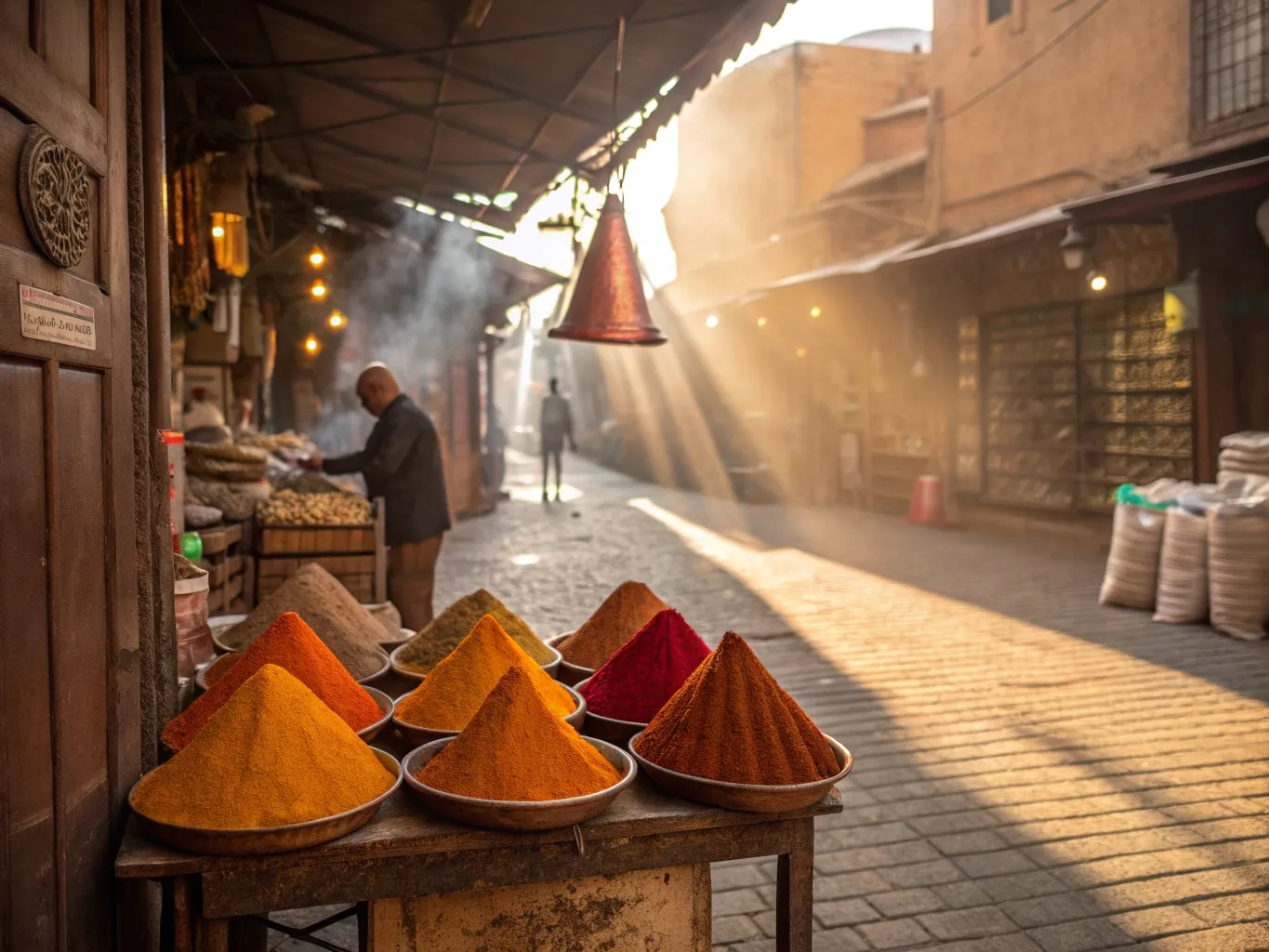
If there is one experience that defines travel in North Africa, it is getting happily lost in a medina. But these aren’t just old neighborhoods; they are the beating hearts of the Moroccan imperial cities.
When you step through the massive gates (known as Bab), the noise of modern traffic fades, replaced by the sound of footsteps, braying donkeys, and the rhythmic tapping of artisans. These four cities Fez, Marrakech, Meknes, and Rabat served as the capitals of ancient dynasties, and their medinas are remarkably preserved time capsules.
Ready to navigate the labyrinth? Let’s break down these urban wonders.
Medina of Fez: The Spiritual Soul
Fez el-Bali is not just a city; it is a sensory explosion. As the world’s largest car-free urban zone, it forces you to slow down.
- The Vibe: Imagine 9,000 narrow alleyways where the only transport is a mule or a handcart. It feels medieval because, in many ways, it still is.
- The Highlight: You cannot talk about Fez without mentioning the Al-Qarawiyyin University. Founded in 859 AD by a woman, Fatima al-Fihri, it is the oldest existing, continually operating educational institution in the world.
- The Scent: Follow your nose (and the sprig of mint given to you by guides) to the Chouara Tanneries. Watching men dye leather in stone vessels filled with vibrant liquids is a sight you will never forget.
Medina of Marrakech: The Red City’s Heartbeat
If Fez is the spiritual soul, Marrakech is the charismatic showman. The Medina of Marrakech is famous for its ochre-colored walls and the unbridled energy of the Jemaa el-Fnaa square.
Is it chaotic? Absolutely. Is it magical? Without a doubt.
- By Day: It’s a market of snake charmers and juice vendors.
- By Night: It transforms into the world’s largest open-air dining room filled with smoke, drums, and storytellers.This is where the concept of “intangible heritage” comes alive the culture here isn’t just in the buildings, but in the oral traditions kept alive in the square. Don’t miss the architectural splendor of the Bahia Palace or the Saadian Tombs, hidden away for centuries.
Historic City of Meknes: The Versailles of Morocco
Often overshadowed by its neighbor Fez, Meknes offers a grander, calmer experience. Founded by the warrior sultan Moulay Ismail, this city was built to impress.
- Why go? The sheer scale is mind-blowing. The city is surrounded by 40 kilometers of defensive walls.
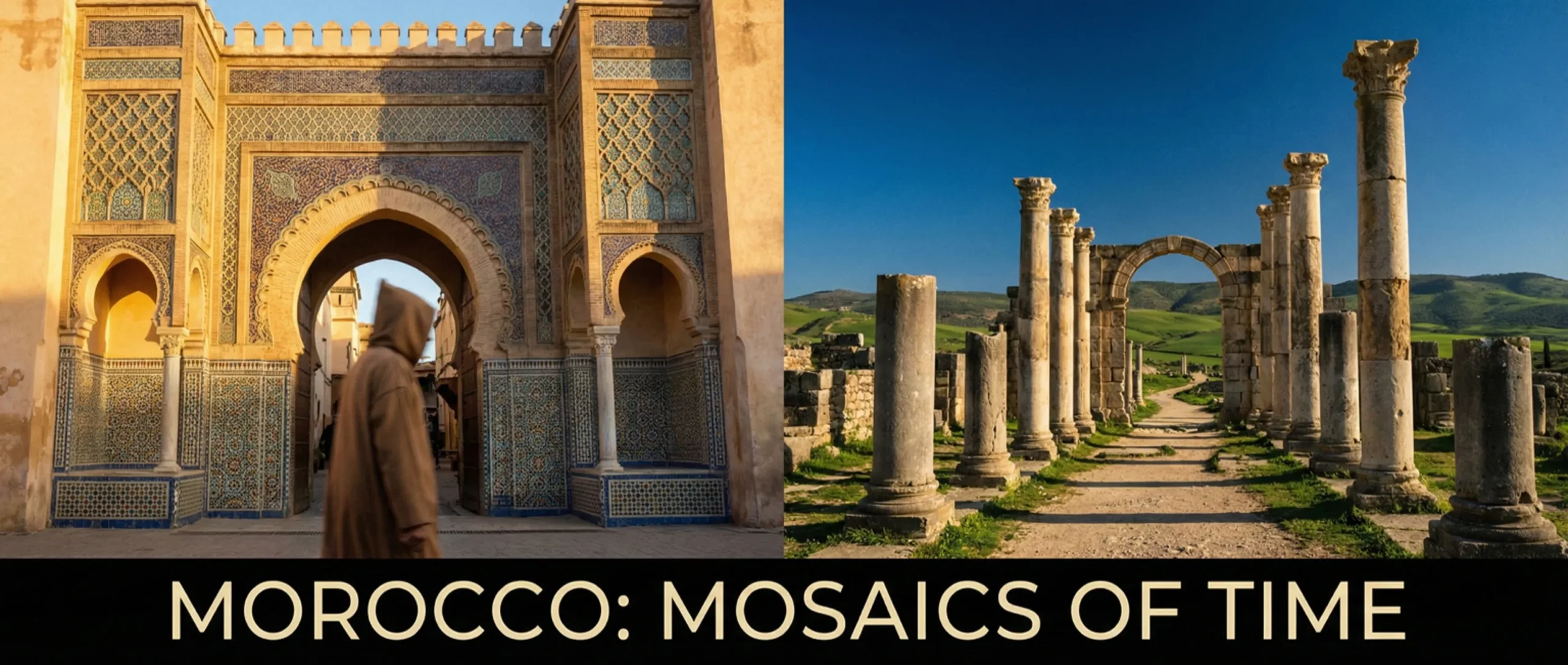
- The Gate: Bab Mansour is widely considered one of the finest gates in North Africa. Its intricate Zellige tile work and massive marble columns (stolen from Roman Volubilis!) tell a story of power and opulence.Meknes feels more relaxed, allowing you to appreciate the Imperial city architecture without the intense hustle of Marrakech.
Rabat: A Modern Capital with Ancient Roots
Rabat is unique among the four. It is the current capital, and its UNESCO listing interestingly covers both the “Modern Capital” built by the French and the “Historic City.”
- The Contrast: You can walk wide, palm-lined boulevards that feel European, then cross a street and enter the Kasbah of the Udayas.
- The View: Inside the Kasbah, the walls are painted blue and white (reminiscent of Chefchaouen), leading to a stunning view over the Bou Regreg river and the Atlantic Ocean.
- The Icon: The Hassan Tower, an ambitious but unfinished minaret from the 12th century, stands as a hauntingly beautiful reminder of the Almohad dynasty’s dreams.
Recipe for a Perfect Medina Expedition
To truly enjoy these sites without getting overwhelmed, you need the right preparation. Think of this as your “survival kit” for the labyrinth.
| Quantity | Ingredient (The Essentials) |
| 1 Pair | Sturdy Walking Shoes (The cobblestones are uneven and slippery) |
| 500 MAD | Small Cash (Dirhams) (Most artisans and street food vendors do not take cards) |
| 1 Dollop | Patience (Getting lost is part of the process; embrace the detour) |
| 2 Liters | Water (The heat in the medina alleyways can be deceptive) |
| 1 Full Charge | Camera/Phone Battery (The colors and textures are endless) |
| 1 Local | Certified Guide (Essential for navigating Fez without stress) |
Coastal Charms: Fortresses of the Atlantic
After the intense sensory experience of the imperial interiors, the Atlantic coast offers a refreshing, salty breeze and a completely different chapter of Morocco’s history. Here, the UNESCO sites aren’t just about Moroccan dynasties; they are about the fascinating and sometimes clash-filled interchange with Europe.
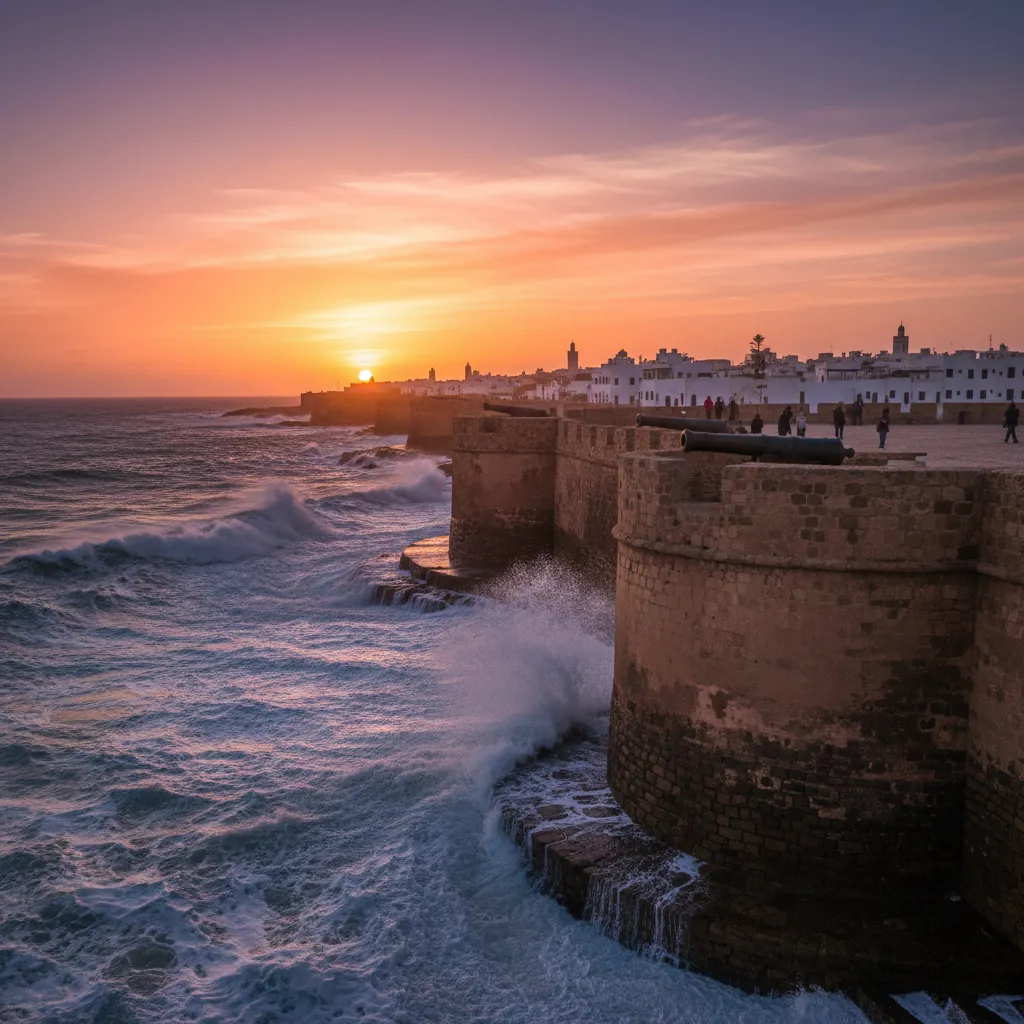
Imagine fortified stone walls meeting the crashing waves of the ocean, seagulls swirling overhead, and the bright white and blue of a coastal town reflecting the sun. It feels less like the Sahara and more like a Mediterranean dream with a distinctly North African soul.
Let’s explore these three coastal jewels that blend military might with laid-back charm.
Medina of Essaouira: The Windy City of Arts
If you are looking for a place to exhale, Essaouira (formerly known as Mogador) is it. This city has a vibe so relaxed it’s practically horizontal.
- The Architecture: Unlike the chaotic, winding streets of Fez, Essaouira’s medina was designed in the 18th century by a French architect. The result? Wide, straight streets in a grid pattern that are incredibly easy to navigate. The fusion of European military architecture with North African culture is seamless.
- The Atmosphere: It’s a haven for artists, musicians (especially Gnaoua music), and windsurfers drawn by the constant “Alizee” trade winds. You will find art galleries tucked between spice shops and fishermen mending nets at the port.
Wait, have I seen this place before? If you are a “Game of Thrones” fan, the answer is yes! Essaouira served as the filming location for the city of Astapor in Season 3. The imposing seaside ramparts, Skala de la Ville, are where Daenerys Targaryen met her Unsullied army. Standing on those cannons looking out at the sea, you can almost hear the dragons.
Portuguese City of Mazagan (El Jadida)
Further up the coast lies a site that feels like a secret. For over two centuries, this was a Portuguese possession known as Mazagan.
- The Fortress: The city is built as a star-shaped fortress, a prime example of Renaissance military design meant to withstand the new technology of firearms. Walking the ramparts gives you incredible views of the ocean and the city.
- The Hidden Gem: The absolute highlight is the Portuguese Cistern. Originally a warehouse, it was converted into a water reservoir. Today, it’s a hauntingly beautiful cavern of gothic vaulted ceilings and pillars, with a single shaft of light piercing from above, reflecting on the shallow layer of water on the floor. It’s a photographer’s dream.
Medina of Tétouan: The White Dove
In the far north, near the Mediterranean, sits Tétouan. Its nickname, “The White Dove,” comes from its gleaming white buildings clustered on the hillside.
- The Connection: This medina has the strongest Andalusian influence in all of Morocco. After the Reconquista in Spain, refugees (both Muslim and Jewish) settled here, bringing their art, architecture, and culture.
- The Craftsmanship: You’ll see it in the detailed wrought-iron balconies, the distinct style of the tile work, and the overall layout of the town. It is considered the most complete and untouched medina in the country, offering a deeply authentic glimpse into a shared Hispano-Moorish past.
Curious to see these locations in action? Check out this short video showcasing the stunning Portuguese Cistern in El Jadida, which we mentioned above. It perfectly captures the eerie beauty of this hidden UNESCO gem. Watch: The Haunting Beauty of El Jadida’s Cistern
Ancient Ruins and Desert Gateways
We have explored the bustling medinas and walked the windy coastal ramparts. Now, it is time to leave the noise of the cities behind and venture into the silence of the past. This is where the landscape shifts dramatically, trading ocean breezes for olive groves and the dry heat of the pre-Sahara.
In this section, we are visiting two sites that couldn’t be more different from each other one built from stone by an empire across the sea, and the other molded from the very earth of Morocco itself.
Archaeological Site of Volubilis: Roman Glory
Did you know that the Roman Empire stretched all the way to West Africa? If you need proof, look no further than Volubilis. Located near Meknes, this isn’t just a pile of rocks; it is the best-preserved archaeological site in Morocco.
Walking through these ruins is a surreal experience. You are surrounded by rolling green hills and olive trees, yet you are standing on a Decumanus Maximus (main street) that looks like it belongs in Italy.
- The Mosaics: This is the real showstopper. Unlike many European sites where mosaics were removed for museums, here they remain in situ. You can look down and see intricate depictions of Diana bathing or Hercules performing his labors, still vibrant after 2,000 years.
- The Scale: From the Triumphal Arch to the Capitoline Temple, the sheer size of the structures reminds you of the power Rome held over this fertile region.
It is a place for quiet reflection. As you wander, you can almost hear the echoes of the chariots that once raced down these stone paths.
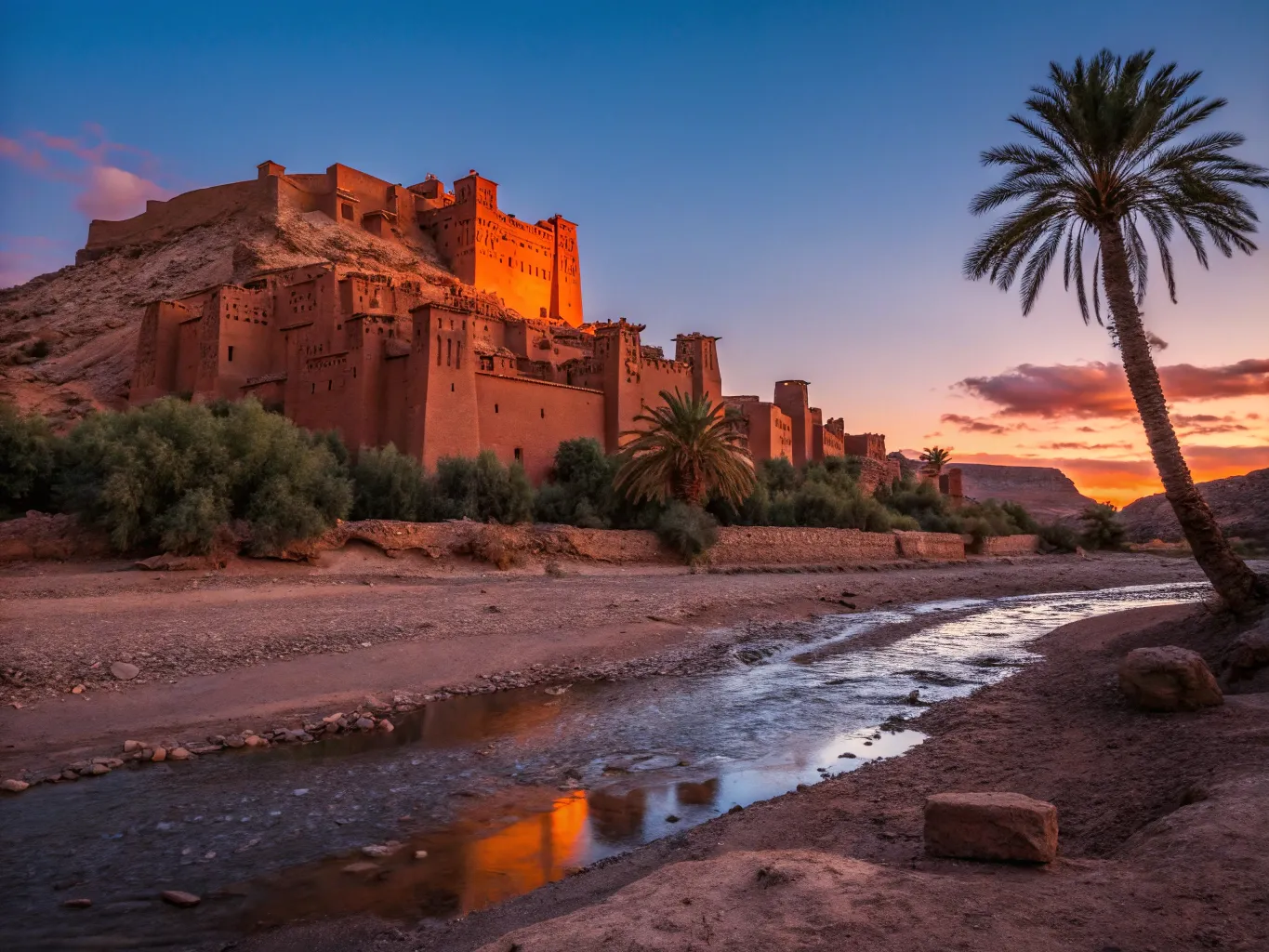
Ksar of Ait-Ben-Haddou: The Clay Castle
Traveling south, crossing the High Atlas Mountains, we arrive at a place that defies logic. Rising out of the valley like a mirage is the Ksar of Ait-Ben-Haddou.
This is the ultimate example of Moroccan earthen architecture. It isn’t a single castle, but a ksar a fortified tribal village composed of Kasbahs crowded together within defensive walls.
- A Hollywood Star: Does this place look familiar? It should. It has starred in Gladiator, Lawrence of Arabia, and Game of Thrones (as Yunkai). It is the go-to location for directors needing a biblical or ancient backdrop.
- The Engineering: What makes it a UNESCO site isn’t just its beauty, but its construction. It is built entirely of rammed earth and clay bricks. It is a masterpiece of pre-Saharan habitat adaptation, designed to keep inhabitants cool in the scorching summer and warm in the biting winter.
The Fragility of Earthen Architecture
While Volubilis has stood the test of time because of stone, Ait-Ben-Haddou faces a different battle. Mud brick is organic; it lives and breathes, but it also melts under rain and crumbles in the wind.
“We are not just looking at buildings here; we are looking at a constant cycle of decay and rebirth. Every layer of clay added by a restoration worker is a handshake with the ancestors who built the first wall.”
This fragility is exactly why sustainable tourism is critical here. When you visit, your presence (and your guide fees) helps fund the constant maintenance required to keep these “sandcastles” standing for the next generation. It is a reminder that heritage isn’t permanent unless we fight to protect it.
Planning Your Magical Heritage Tour
Okay, we have traveled through time, from Roman ruins to coastal forts and bustling medinas. By now, your imagination is likely running wild, and you are itching to book a flight. But how do you turn this dream itinerary into a reality?
Morocco is an incredibly rewarding country to travel in, but a little bit of logistical planning goes a long way to ensure your trip is smooth and stress-free. Here are some insider tips on how to best explore these UNESCO wonders.
Best Time to Explore History
Timing is everything. While Morocco is a year-round destination, you don’t want to be walking through the exposed ruins of Volubilis under the scorching July sun, nor do you want to navigate the slippery cobblestones of Fez during a January downpour.
- The Golden Seasons: The sweet spots are spring (March to May) and autumn (September to November).
- Why? The weather is pleasantly warm, perfect for hours of walking. In spring, the hills around sites like Volubilis are lush and green, covered in wildflowers, making for incredible photos.
- Summer Warning: If you must travel in summer (June-August), plan to visit outdoor sites very early in the morning and stick to the coastal cities like Essaouira or Rabat during the heat of the day.
Getting Around: Trains vs. Private Tours
Morocco has an excellent transportation network, but some sites are easier to reach than others.
- The Train is Your Friend: For the Imperial cities, the train system (ONCF) is fantastic. It’s affordable, reliable, and comfortable. You can easily connect between Marrakech, Casablanca, Rabat, Meknes, and Fez. There is even a high-speed train (Al Boraq) connecting Tangier to Casablanca, stopping in Rabat.
- When You Need a Driver: For sites off the main rail line, like Ait-Ben-Haddou (across the mountains) or Volubilis (a short drive from Meknes or Fez), public transport gets tricky. Here, hiring a private driver or joining a small group tour is often the best use of your time. It removes the stress of navigation and allows you to relax and enjoy the stunning landscapes.
Respectful Travel Guidelines
When you visit these sites, remember that many are still active centers of life and faith. You are entering living communities, not just tourist attractions.
- Dress Modestly: This is especially important within the medinas. Covering your shoulders and knees shows respect for local culture and will lead to more positive interactions.
- Ask First: The people in the medinas are incredibly photogenic, but they are not props. Always ask for permission before taking a close-up photo of an artisan or shopkeeper. A smile and a nod go a long way.
- Support Local: Hire official, certified guides for medina tours. Not only does this support the local economy, but it also saves you from getting hopelessly lost and ensures you get accurate historical information.
Conclusion: Your Adventure Awaits
We have covered 2,000 years of history across nine incredible locations. From the spiritual depths of Fez to the cinematic grandeur of Ait-Ben-Haddou, Morocco’s UNESCO World Heritage Sites offer a journey like no other. These aren’t just places you see; they are places you feel.
So, what are you waiting for? The magic of Morocco is calling. Pack your bags, bring your sense of wonder, and get ready for an unforgettable adventure into the past.
Final Thoughts: A Journey Beyond the Guidebook
We have traversed the map from the wind-swept ramparts of Essaouira to the silence of the Roman ruins at Volubilis. Visiting the UNESCO World Heritage Sites in Morocco is more than just a sightseeing tour; it is an education in resilience, artistry, and the layering of human history.
Whether you are drawn to the chaotic magic of the medinas or the solitude of the desert kasbahs, these nine sites offer a travel experience that is authentically and unapologetically Moroccan. You will leave with more than just photos; you will leave with the scent of cedar wood in your memory, the taste of mint tea on your tongue, and a deeper understanding of a kingdom that has stood at the crossroads of the world for centuries.
The only question left is: When does your flight depart?
Frequently Asked Questions (Q&A)
To help you finalize your plans, here are the answers to the most common questions travelers ask about exploring Morocco’s heritage.
How many UNESCO World Heritage Sites are there in Morocco?
Currently, there are nine official sites inscribed on the World Heritage List. These include the Medinas of Fez, Marrakech, Tétouan, and Essaouira; the Historic City of Meknes; the Archaeological Site of Volubilis; the Portuguese City of Mazagan (El Jadida); the Ksar of Ait-Ben-Haddou; and the modern/historic blend of Rabat. Morocco also has a “Tentative List” of other sites waiting for nomination!
Which is the “best” UNESCO site to visit in Morocco?
If you only have time for one, it depends on what you love.
- For pure atmosphere: Choose the Medina of Fez. It is the most intense, authentic, and historically rich experience.
- For visual drama: Choose the Ksar of Ait-Ben-Haddou. It is visually stunning and unlike anything in Europe.
- For relaxation: Choose the Medina of Essaouira. It offers history without the hustle.
Is it safe to visit these historical sites?
Yes, it is generally very safe. Morocco relies heavily on tourism, and these sites are well-policed (often by a dedicated “Brigade Touristique”). However, in crowded medinas like Marrakech and Fez, pickpocketing can happen. Always keep your valuables secure and be firm but polite with street vendors.
How many days do I need to see all 9 sites?
To see all nine sites comfortably without rushing, you would need a 14-day itinerary. The sites are spread out—from Tétouan in the far north to Ait-Ben-Haddou in the south. If you have only one week, it is best to focus on the “Imperial Cities” loop (Rabat, Meknes, Volubilis, Fez) or the South (Marrakech, Ait-Ben-Haddou, Essaouira).
Are the medinas wheelchair accessible?
To be honest, it is challenging. The ancient medinas (especially Fez and Tétouan) are full of steps, uneven cobblestones, and steep inclines. While newer parts of cities like Rabat and Marrakech are accessible, the deep interiors of the old medinas are difficult to navigate with mobility issues. Hiring a private driver and specialized guide is highly recommended in this case.