
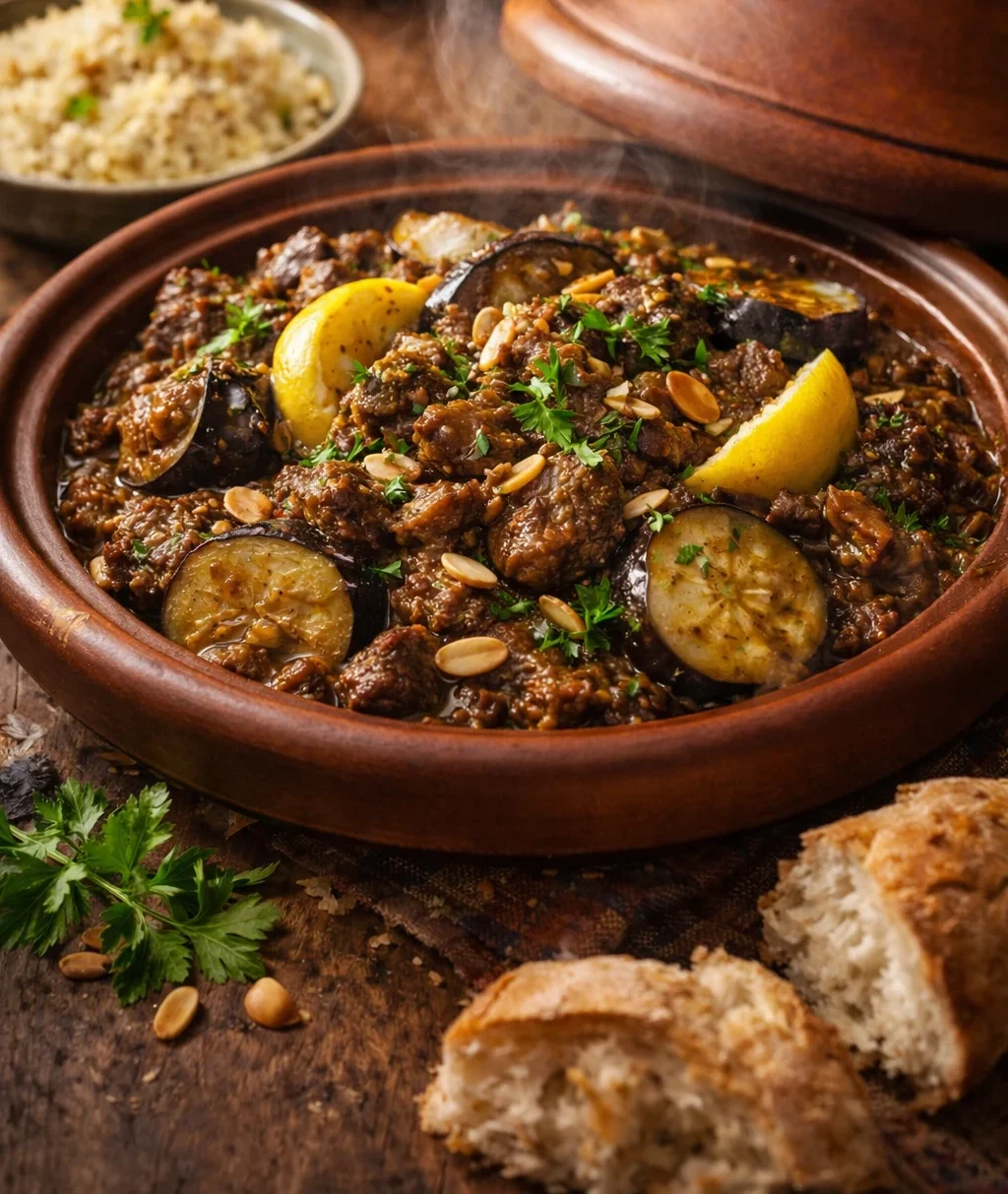
What Makes a Traditional Moroccan Tagine Special
If you’ve ever wondered why a tagine tastes so deeply comforting yet layered with flavor, you’re not alone. This iconic Moroccan dish isn’t just about ingredients it’s about technique, culture, and patience. Let’s unpack what truly sets a traditional tajine apart and why it works so beautifully with beef and eggplants.
Key Takeaways
Before we wrap up, let’s pause and highlight the essential points that will help you master a beef and eggplant tajine every time. Think of this as your quick-reference guide to getting the flavors, textures, and presentation just right.
- Choose the right beef cut: Chuck, shin, or short ribs slow-cook beautifully and stay tender.
- Eggplants matter: Firm, medium-sized aubergines absorb sauce without turning mushy.
- Layer flavors: Onions, garlic, spices, and beef should be added strategically to deepen taste.
- Cook low and slow: Patience is the secret to tender beef and silky eggplants.
- Spice balance: Use warm Moroccan spices like cumin, paprika, and ginger thoughtfully for harmony.
- Serving counts: Garnishes, preserved lemons, couscous, or crusty bread elevate the dish.
- Avoid common mistakes: Don’t overcrowd the pot, skip browning, or rush simmering.
These principles ensure that every Moroccan beef tajine you make is not only delicious but also memorable.
Table of Contents
Table of Contents
Origins of Tajine in Moroccan Cuisine
The tajine has its roots in Moroccan cuisine, shaped by Berber traditions and centuries of spice trade across North Africa. Originally designed for practical, low-heat cooking, the tajine evolved into a culinary symbol of hospitality and sharing.
What makes this fascinating for home cooks like us is how timeless the method is:
- One pot
- Simple ingredients
- Maximum flavor development
The conical tagine pot (yes, the dish and the vessel share the same name) traps steam, allowing flavors to circulate and intensify rather than escape. That’s why a beef tajine feels rich without being heavy nothing is rushed.
Why Slow Cooking Transforms Beef and Eggplants
Here’s a question worth asking: Why does slow cooking matter so much in a tajine?
The answer lies in texture and balance.
Slow cooking allows:
- Beef to become fork-tender without drying out
- Eggplants (aubergines) to absorb spices while keeping their silky texture
- Flavors to merge gradually, not compete
In a tajine with beef and eggplants, this method prevents bitterness in the aubergines and enhances the natural savoriness of the meat. From a data-driven cooking perspective, low-and-slow heat reduces moisture loss and improves collagen breakdown exactly what tougher cuts of beef need.
The Role of Spices in North African Dishes
Spices are the soul of a tajine, but not in the way many people expect. Moroccan cooking isn’t about heat it’s about harmony.
Key spice principles include:
- Using warm spices (like cumin and paprika) for depth
- Layering spices early to bloom their aroma in olive oil
- Letting spices support ingredients, not overpower them
This is where a Moroccan beef tajine stands apart from a standard stew. The spices don’t shout they whisper, evolve, and linger. When paired with eggplants, they create a naturally rich, almost buttery mouthfeel without added fats.
👉 Tip for curious cooks: If you enjoy this spice balance, you might also love other slow-cooked North African dishes exploring them can sharpen your intuition for spice pairing and timing.
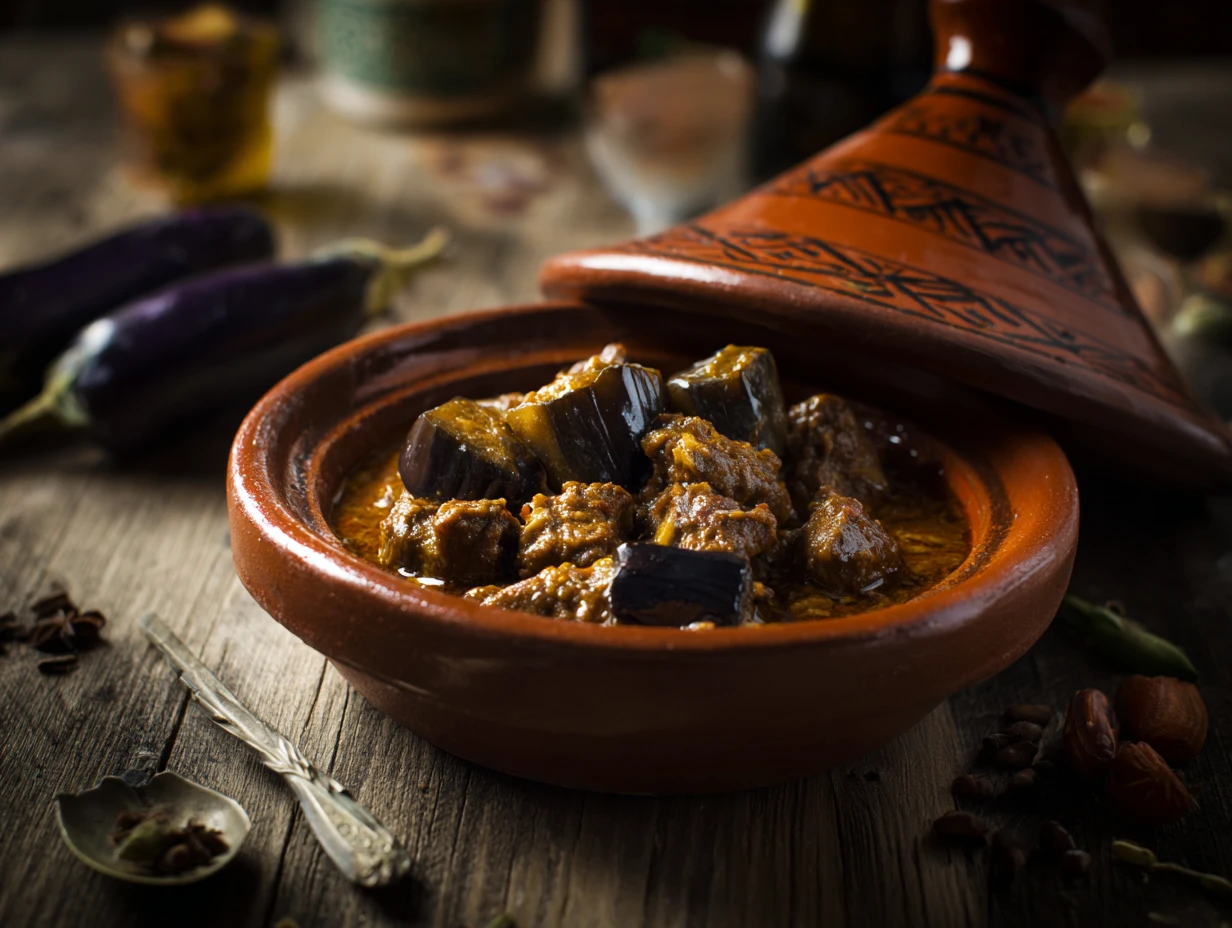
Key Ingredients for Beef and Eggplant Tajine
A truly memorable tajine starts long before the pot hits the heat. It begins with smart ingredient choices. If you’ve ever asked yourself why some beef tajines taste deeply rich while others fall flat, the answer is usually hiding in the ingredient list. Let’s walk through what matters most and why.
Choosing the Best Cut of Beef
Not all beef behaves the same in slow-cooked dishes, and a beef tajine is a perfect example. You want a cut that loves time, breaks down slowly, and rewards patience.
The best options include:
- Beef chuck – rich in connective tissue, ideal for slow cooking
- Beef shin – deeply flavorful and incredibly tender when cooked low and slow
- Short ribs (boneless) – luxurious texture and natural depth
These cuts release collagen as they cook, creating that signature velvety sauce a Moroccan beef tajine is known for. Lean cuts may seem appealing, but they tend to dry out and work against the dish’s comforting nature.
Eggplants vs Aubergines – What Works Best?
Eggplants (or aubergines, depending on where you are) play a quiet but powerful role in a tajine with beef and eggplants. Their ability to absorb spices and sauce makes them the perfect partner for slow-braised meat.
For best results:
- Choose firm, glossy eggplants with no soft spots
- Medium-sized varieties balance flavor and texture
- Salting is optional, but lightly roasting beforehand adds depth
As they cook, eggplants soak up the aromatic sauce while maintaining structure adding body without heaviness. It’s one of the reasons this dish feels indulgent yet balanced.
Essential Moroccan Spices and Aromatics
Spices are where personality enters the tajine. Rather than overwhelming heat, Moroccan cooking relies on warm, rounded flavors that build gradually.
Core aromatics you’ll want on hand:
- Cumin for earthiness
- Paprika for warmth and color
- Ginger for gentle brightness
- Garlic and onion as the flavor base
When used thoughtfully, these spices transform simple ingredients into a cohesive, slow-cooked masterpiece. The key is restraint each spice should support the beef and eggplants, not compete with them.
Ingredient Table (Serves 4)
| Ingredient | Quantity |
|---|---|
| Beef chuck, cubed | 800 g |
| Eggplants (aubergines) | 2 medium |
| Onion, finely sliced | 1 large |
| Garlic cloves, minced | 3 |
| Olive oil | 3 tbsp |
| Ground cumin | 1 tsp |
| Paprika | 1½ tsp |
| Ground ginger | 1 tsp |
| Tomato purée | 2 tbsp |
| Water or light stock | 250 ml |
| Salt | To taste |
| Fresh herbs (optional) | For garnish |
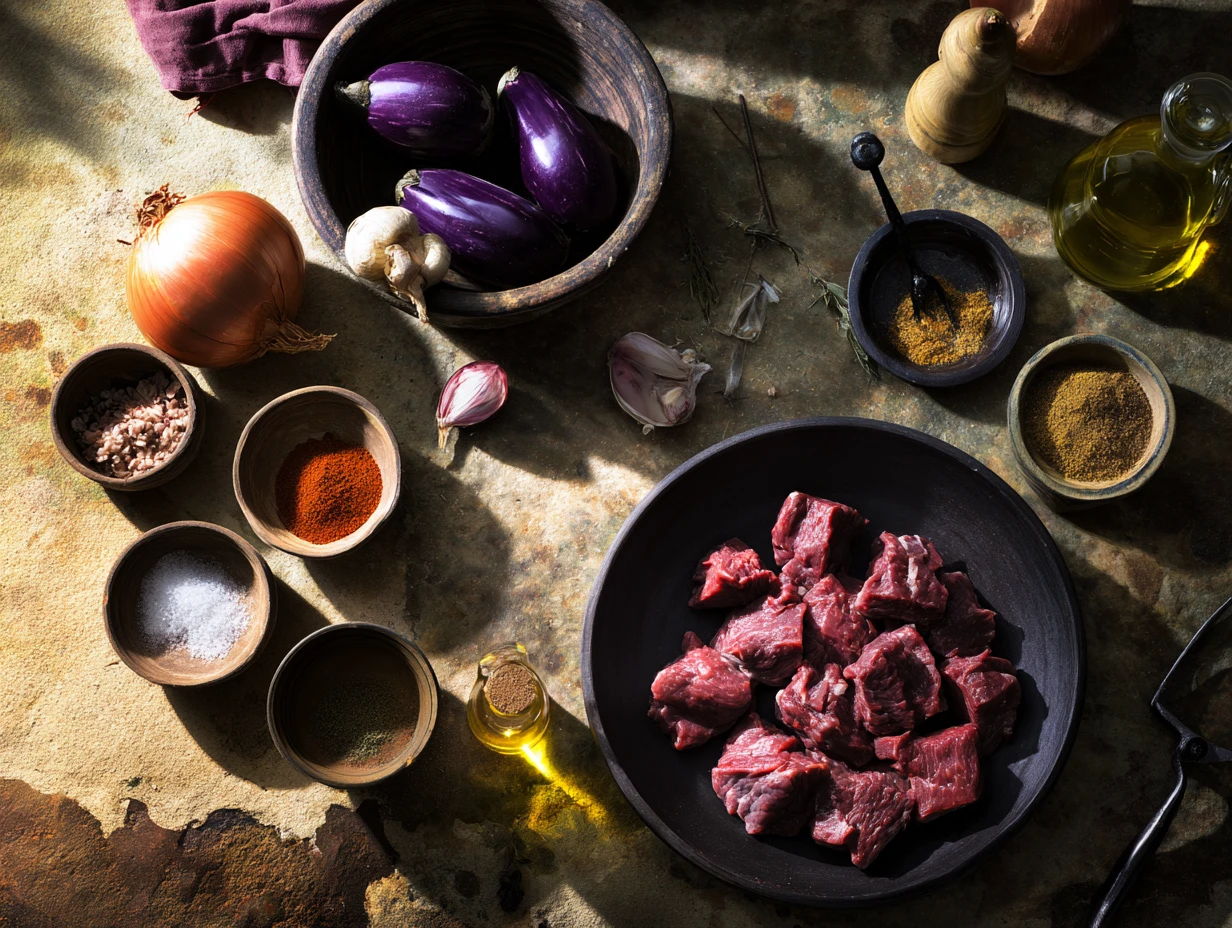
How to Prepare a Hearty Beef and Eggplant Tajine
Now comes the part where everything comes together. Cooking a tajine isn’t complicated, but it is intentional. If you’ve ever felt unsure about timing, layering, or heat control, you’re not alone. The good news? Once you understand the logic behind the process, preparing a tajine with beef and eggplants becomes intuitive and deeply satisfying.
Preparing Ingredients the Right Way
Before heat ever touches the pot, preparation sets the tone for success. Think of this stage as building a strong foundation.
Here’s how to get it right:
- Pat the beef dry to encourage browning rather than steaming
- Cut beef into even chunks so it cooks uniformly
- Slice eggplants generously, not too thin, to prevent them from dissolving
- Measure spices in advance to keep the cooking flow smooth
This small upfront effort pays off with better texture and cleaner flavors throughout the beef tajine.
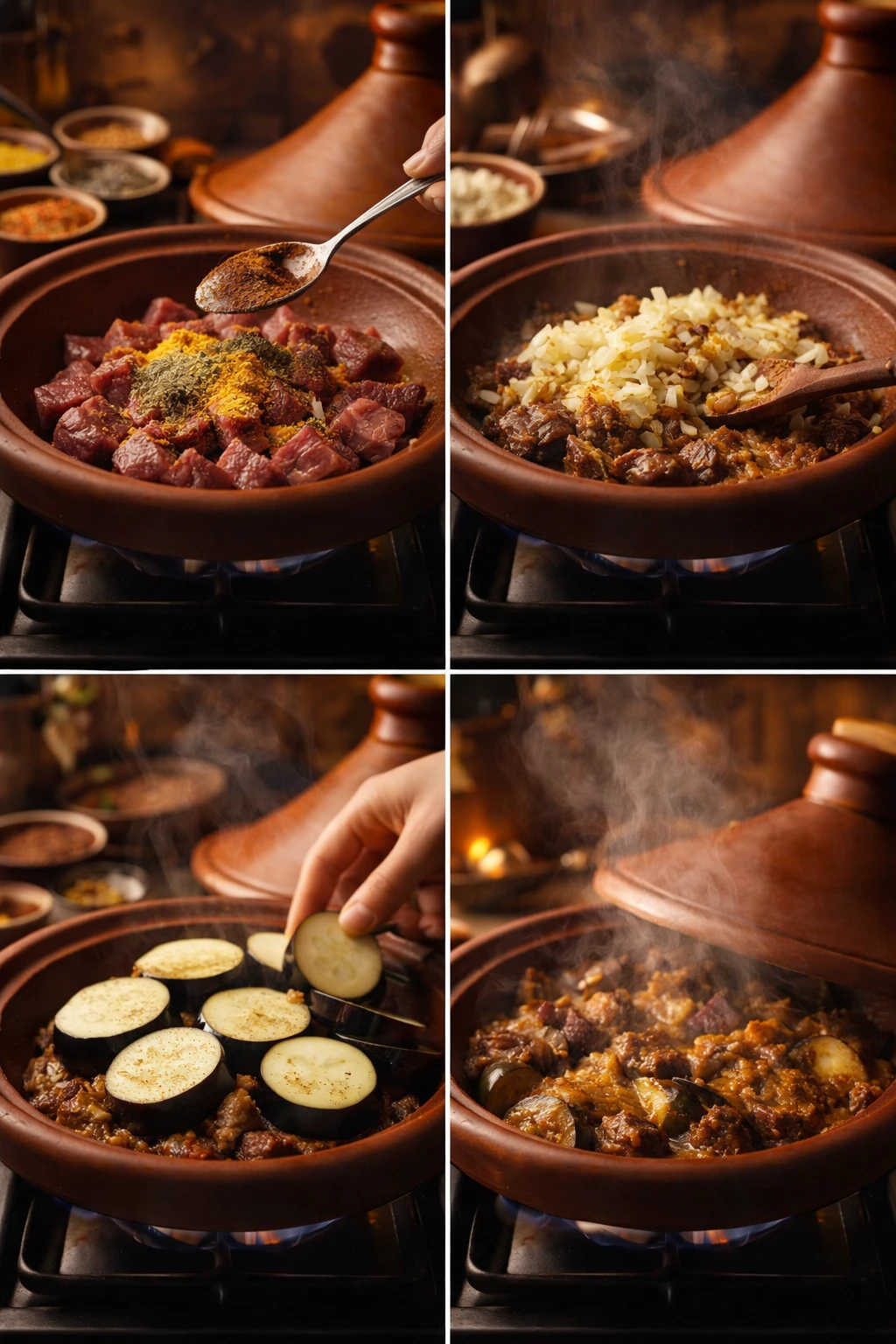
Layering Flavors in a Tajine Pot
One of the most misunderstood aspects of Moroccan cooking is layering. A traditional Moroccan beef tajine isn’t stirred constantly like a stew it’s built in stages.
A proven layering approach:
- Start with olive oil, onions, and garlic to form a fragrant base
- Add beef and spices, allowing them to bloom together
- Gently nestle eggplants on top, where they’ll absorb steam and sauce
- Finish with liquid just until it reaches not covers the ingredients
This method encourages natural basting inside the tagine pot, letting flavors circulate and intensify without agitation.
Cooking Times for Tender Beef
Patience is the secret ingredient here. A slow-cooked tajine rewards restraint far more than urgency.
General timing guidelines:
- Low heat for 1½ to 2 hours
- Minimal lifting of the lid (steam is flavor!)
- Occasional checks to ensure gentle simmering
You’ll know it’s ready when the beef yields effortlessly and the sauce thickens naturally. No shortcuts just trust the process.
Tips for Stovetop vs Oven Cooking
No tagine pot? No problem. While traditional clay vessels are wonderful, the technique adapts well.
- Stovetop: Ideal for clay tagines; use a heat diffuser and keep heat low
- Oven: Excellent for even heat; cook covered at 160–170°C (320–340°F)
Both methods deliver excellent results as long as you respect low, steady heat. The goal is consistency, not speed.
Serving Suggestions and Flavor Pairings
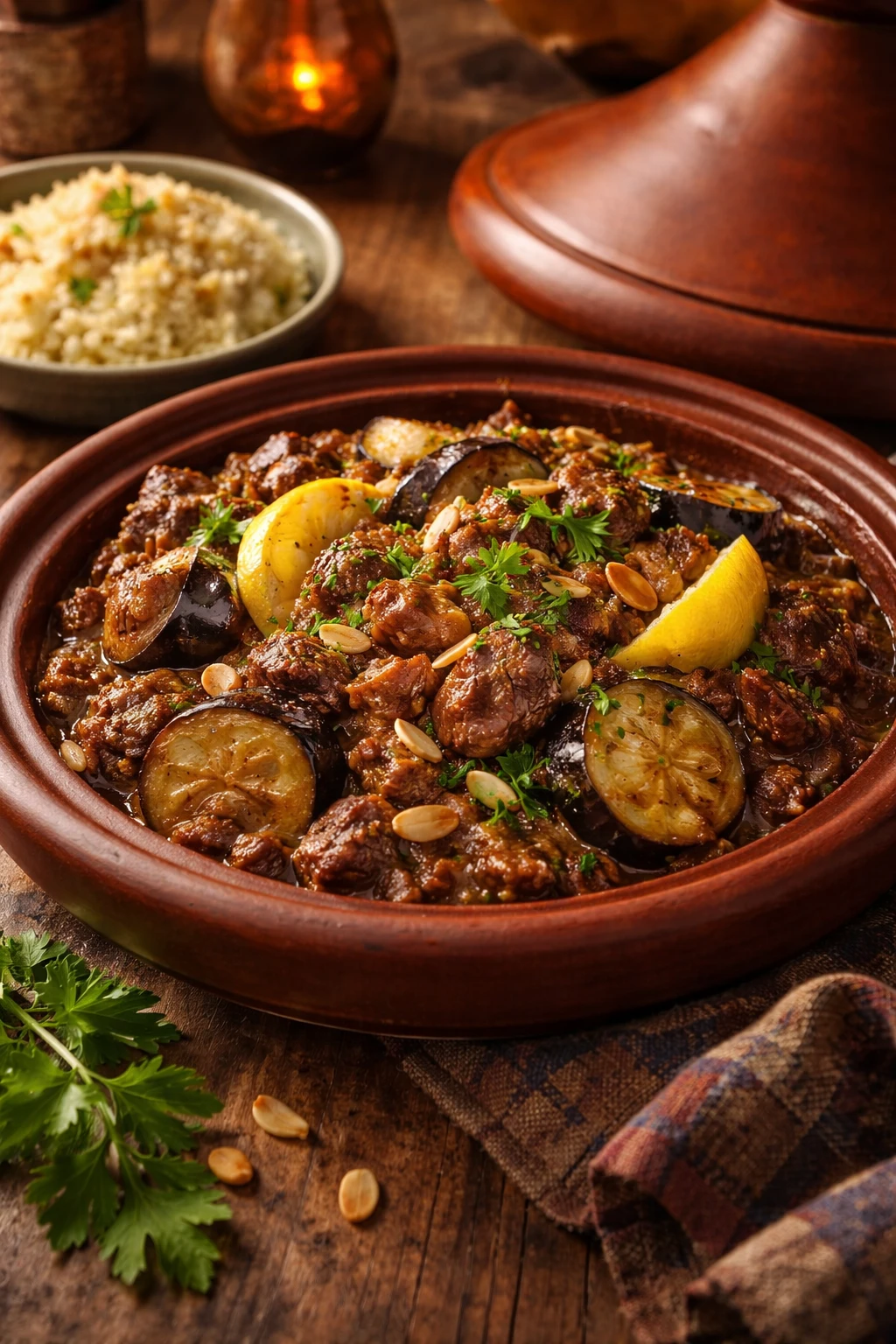
Once your beef and eggplant tajine is perfectly cooked, the magic isn’t over it’s time to serve it in a way that elevates every bite. Presentation, sides, and garnishes not only enhance flavor but also create a memorable dining experience. Have you ever noticed how a simple sprinkle of fresh herbs or a perfectly paired side can transform a dish? That’s exactly the secret with Moroccan tajines.
Best Sides to Serve with Tajine
A Moroccan beef tajine is hearty on its own, but pairing it thoughtfully can create a full meal that sings:
- Couscous: The classic companion; its light, fluffy texture absorbs the rich sauce perfectly.
- Crusty bread: Ideal for scooping up every last bit of the aromatic sauce.
- Roasted vegetables: Carrots, zucchini, or bell peppers add extra layers of flavor and color.
These sides don’t just complement they interact with the tajine, creating a balance between tender meat, silky eggplants, and aromatic sauce.
Traditional Moroccan Accompaniments
Moroccan cuisine is all about layering textures and flavors beyond the main dish. Consider:
- Preserved lemons: Their citrusy tang brightens rich, slow-cooked beef.
- Green olives: A briny contrast that enhances complexity.
- Fresh herbs: Parsley or coriander not only look beautiful but lift the entire dish with a fresh aroma.
These small touches can transform your home-cooked tajine into a restaurant-quality experience.
Garnishes that Enhance Aroma and Taste
Never underestimate garnishes they’re the final flourish:
- A drizzle of olive oil before serving adds silkiness.
- A sprinkle of toasted almonds or pine nuts introduces a satisfying crunch.
- Light dusting of paprika or smoked cumin reinforces the warm spice profile.
“The beauty of a tajine is that it tells a story in every layer: spice, meat, vegetable, and love.” – Moroccan Chef Inspired
The quote reminds us that cooking a beef and eggplant tajine isn’t just following a recipe; it’s about creating memories around the table.
Conclusion
Cooking a hearty beef and eggplant tajine is more than a recipe it’s an experience that combines tradition, aroma, and satisfaction. By selecting the right ingredients, layering flavors thoughtfully, and practicing patience, you’re able to bring the essence of Moroccan cuisine into your home kitchen.
Whether you’re serving it for a cozy family dinner or impressing guests with a centerpiece dish, this tajine delivers rich, comforting flavors that linger long after the last bite. Remember, every layer of spice, every tender chunk of beef, and every silky aubergine tells a story and now, it’s yours to create.
Q&A
Q1: Can I make this tajine without a traditional tagine pot?
Absolutely! A heavy-bottomed Dutch oven or oven-safe casserole works perfectly. Just maintain low, even heat to mimic the slow-cooking effect of a clay tagine.
Q2: How do I prevent eggplants from becoming mushy?
Choose firm, medium-sized eggplants, slice them evenly, and nestle them on top of the beef rather than stirring aggressively. They’ll absorb flavor while retaining structure.
Q3: Can this recipe be made ahead of time?
Yes! Tajines often taste even better the next day as the flavors continue to meld. Store in an airtight container in the fridge and reheat gently on low heat.
Q4: What are some creative variations?
You can experiment with:
- Adding preserved lemons and olives for a tangy twist
- Using lamb instead of beef for richer flavor
- Mixing in root vegetables like carrots or parsnips for extra depth
Q5: Can I adjust the spice level?
Definitely! Moroccan spices are flexible reduce paprika or ginger for milder flavors, or add a pinch of chili flakes for heat.