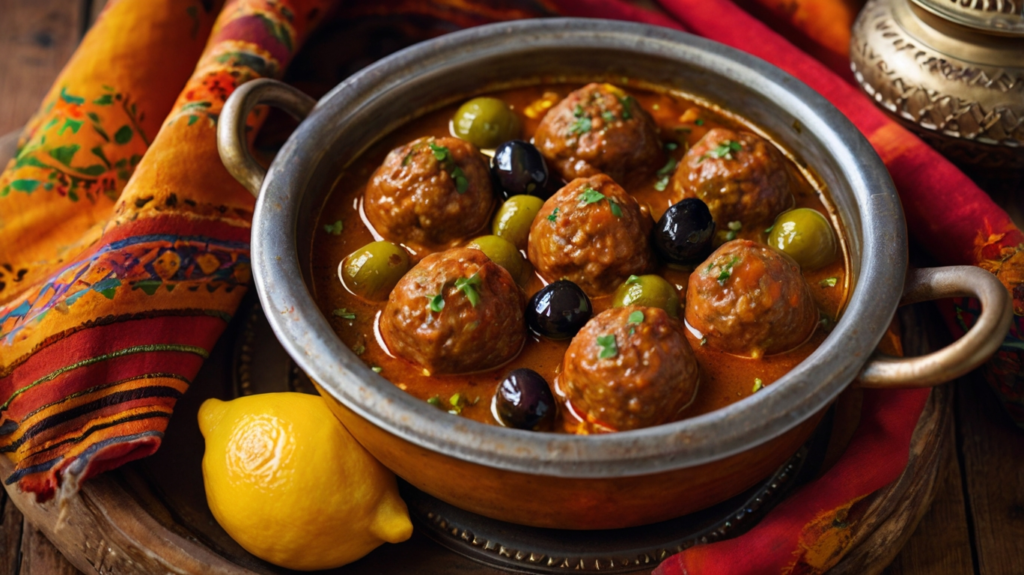

Introduction to Moroccan Tagine Cooking
If you’ve ever experienced the savory depth of Moroccan cuisine, you’ve probably encountered tagine – a fragrant, slow-cooked dish that’s rich with complex flavors. One of the most cherished Moroccan meals, a tagine can transport you straight to the vibrant streets of Marrakech with every bite. But have you ever wondered what makes tagine so special? Is it the combination of spices, the unique cooking method, or the deliciously tender ingredients that simmer in a traditional tagine pot?
In this post, we’re going to dive into the world of Moroccan tagine cooking and explore the star of the show: the Lemon and Olive Meatball Tagine Recipe. This dish perfectly marries the zesty freshness of lemons with the earthy richness of olives and the comfort of savory meatballs, creating a meal that’s not just food it’s an experience.
Table of Contents
What is a Tagine and How Does it Work?
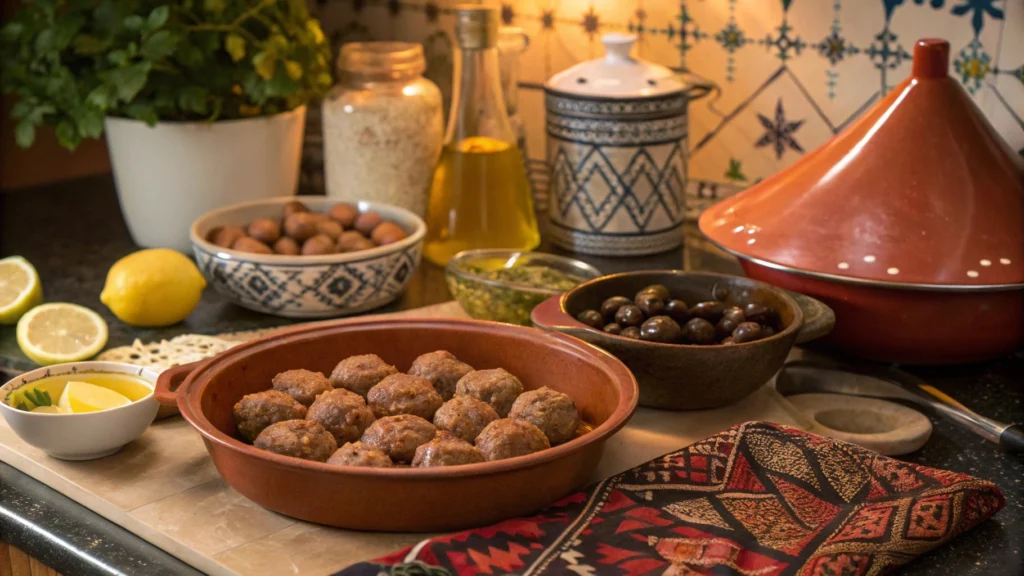
A tagine is both a dish and the clay pot it’s cooked in. The pot has a distinctive cone-shaped lid that allows steam to circulate, locking in moisture and infusing the ingredients with incredible flavor. This gentle, slow-cooking process results in tender meatballs and vegetables, bathed in a delicious sauce that’s rich with Moroccan spices like cumin, cinnamon, and turmeric. It’s the kind of cooking that takes time but rewards you with unmatched taste.
But tagine cooking isn’t just about the pot it’s about the layers of flavors. Each ingredient, from the meatballs to the olives, plays a vital role in building a complex, satisfying dish. The tangy lemon adds a fresh burst, while the olives bring an earthy, briny note that balances the richness of the meat.
History and Importance of Tagine in Moroccan Cuisine
Tagine has a deep historical significance in Morocco. Originating in North Africa, it reflects the country’s diverse cultural influences, from Berber to Arab to Mediterranean. It’s more than just a meal; it’s a symbol of Moroccan hospitality. Traditionally, families gather around a large tagine pot, sharing food in a communal way. The slow-cooked nature of tagine also makes it a perfect dish for large gatherings, where everyone can enjoy a flavorful, hearty meal together.
In Morocco, each region has its own twist on tagine, incorporating local ingredients and techniques. From seafood tagines along the coast to lamb tagines in the mountains, the variations are endless, but they all share the same core principles: bold flavors, slow cooking, and a love of bringing people together through food.
Why Lemon and Olive Flavor Combinations Work
The marriage of lemon and olives is a common theme in Moroccan cuisine. Why? Because the acidity of the lemon complements the saltiness of the olives, balancing each other perfectly. In the case of our Lemon and Olive Meatball Tagine, this combination creates a sauce that is tangy, savory, and just the right amount of briny. As the meatballs simmer, they absorb the flavors, becoming tender and flavorful. Together, they form a delightful contrast that keeps each bite interesting.
This dynamic duo of lemon and olive not only elevates the taste but also reflects the Mediterranean and North African influences that shape Moroccan food. These ingredients are easy to find and yet so versatile, allowing home cooks to recreate this authentic tagine experience right in their own kitchens.
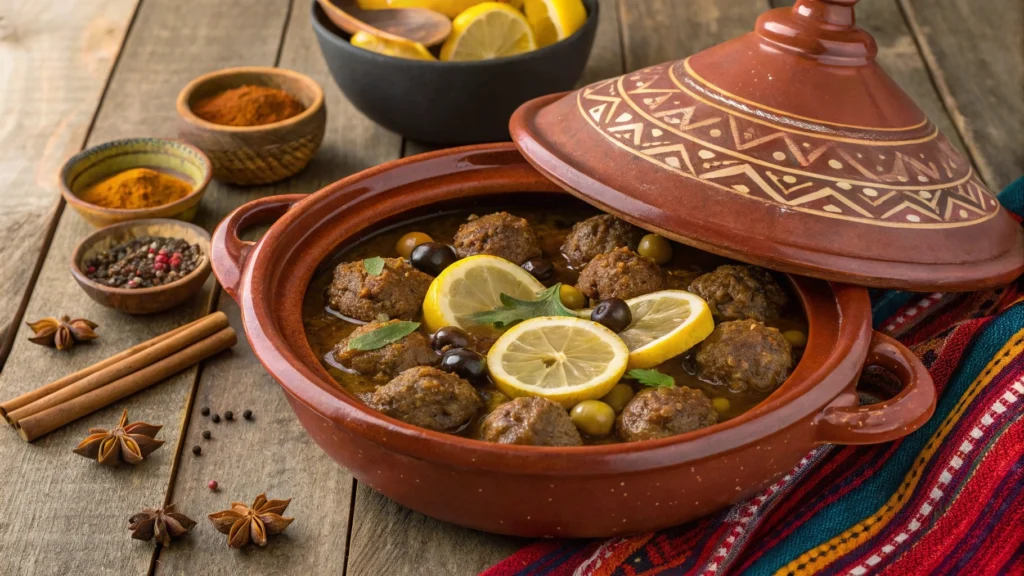
The 7 Essential Ingredients for the Perfect Lemon and Olive Meatball Tagine
Creating the perfect Lemon and Olive Meatball Tagine isn’t as complicated as it may sound. With just seven key ingredients, you can make an authentic and flavorful Moroccan dish that will wow your taste buds. Let’s break down these essential ingredients, so you can start preparing your own tagine in no time.
Meatballs: Beef, Lamb, or Chicken?
In Moroccan tagine recipes, meatballs are often made from either ground beef or lamb, each offering a distinct flavor profile. Beef is a bit milder and pairs well with the tangy lemon and briny olives, while lamb offers a rich, earthy flavor that’s commonly used in traditional Moroccan dishes. You can also use ground chicken for a lighter option.
Whichever meat you choose, ensure that you season the meatballs well with spices like cumin, paprika, and garlic, as these will help the meat absorb the deep flavors of the tagine sauce.
The Role of Lemon and Olives in Tagine
As we’ve already touched on, the combination of lemon and olives is key to the success of this dish. Lemons whether fresh or preserved add acidity and freshness, which cut through the richness of the meatballs and the sauce. On the other hand, olives contribute a salty, briny note that balances the tanginess of the lemon, creating a harmony of flavors.
When choosing olives for your tagine, opt for green olives for a slightly bitter, robust taste, or Kalamata olives for a deeper, fruity flavor.
Using Fresh vs. Preserved Lemons in Your Recipe
In Moroccan cuisine, preserved lemons are often used to bring a unique depth of flavor to dishes. Preserved lemons are made by pickling whole lemons in salt and their own juice. They offer a tangy, almost fermented flavor that’s unmistakably Moroccan. If you can’t find preserved lemons, fresh lemons will work just fine, but consider adding a pinch of salt to mimic the preserved version’s salty, tart taste.
Key Moroccan Spices for Flavorful Meatballs
Moroccan cooking is known for its complex and aromatic spices. Some of the key spices you’ll want to include in your meatballs are:
- Cumin: Earthy and slightly nutty, it adds depth.
- Paprika: Sweet and smoky, it enhances the overall flavor.
- Cinnamon: A warm, sweet spice that gives the tagine a comforting note.
- Turmeric: For color and a mild, peppery flavor. These spices not only season the meatballs but also contribute to the rich sauce that will be absorbed into the meat.
| Ingredient | Quantity |
|---|---|
| Ground beef or lamb | 1 lb (450g) |
| Onion (finely chopped) | 1 medium |
| Garlic cloves (minced) | 3-4 cloves |
| Fresh cilantro (chopped) | 1/4 cup |
| Fresh parsley (chopped) | 1/4 cup |
| Ground cumin | 1 tsp |
| Ground paprika | 1 tsp |
| Ground cinnamon | 1/2 tsp |
| Ground turmeric | 1/2 tsp |
| Salt | 1 tsp |
| Black pepper | 1/2 tsp |
| Olive oil | 2 tbsp |
| Preserved lemons (sliced) | 2-3 slices |
| Green olives (pitted) | 1/2 cup |
| Chicken broth (or water) | 1 cup |
| Carrot (optional, sliced) | 1 medium |
| Bell pepper (optional, chopped) | 1 medium |
This ingredient list ensures a rich, flavorful, and aromatic tagine. Adjust the quantities as needed depending on your serving size and preferences!
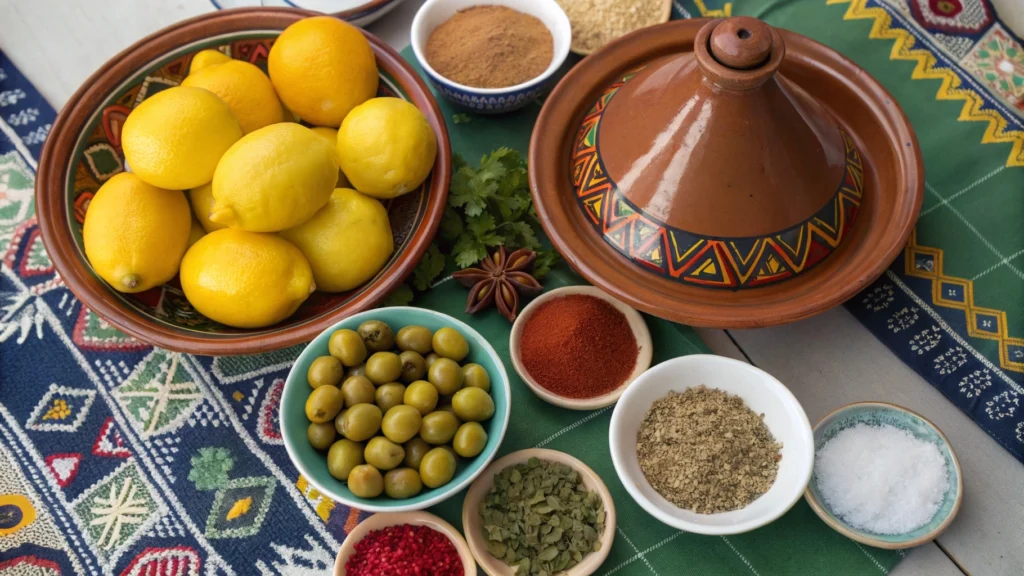
Step-by-Step Guide to Making Lemon and Olive Meatball Tagine
Now that you have your ingredients ready, it’s time to bring everything together to make this incredible Lemon and Olive Meatball Tagine. Don’t worry if you’re new to tagine cooking this recipe is straightforward and will guide you through each step. Whether you’re using a traditional tagine pot or a heavy-bottomed Dutch oven, the process is simple and satisfying.
Preparing the Meatballs: Tips for Juicy and Tender Results
The first step in creating this tagine is making the meatballs. Start by mixing your ground meat with the essential spices cumin, paprika, cinnamon, and turmeric. Add finely chopped onions, garlic, and fresh herbs like parsley and cilantro for added flavor. Don’t forget to season generously with salt and pepper.
To form the meatballs, wet your hands to prevent the mixture from sticking, and roll them into small, bite-sized balls. Aim for uniform size so they cook evenly in the tagine.
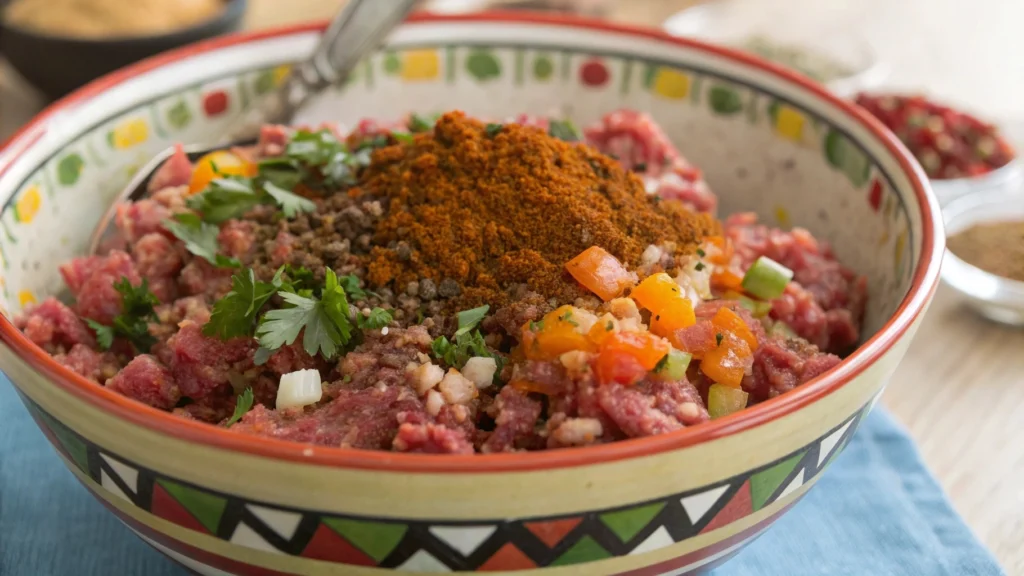
Building the Tagine: Layering the Ingredients for the Best Flavor
Once your meatballs are ready, it’s time to layer them in the tagine or Dutch oven. Start by heating some olive oil in the pot and browning the meatballs on all sides to lock in flavor. Once they’re golden, remove them and set aside.
Next, add a bit more oil to the pot and sauté onions, garlic, and your choice of fresh vegetables, such as carrots or bell peppers. After that, return the meatballs to the pot and add your olives, fresh or preserved lemons, and any remaining spices. Pour in some chicken broth or water to create a rich sauce that will cook the meatballs through.
Cooking Time: How Long Should a Tagine Simmer?
The magic of tagine cooking lies in the slow simmer. Once your ingredients are in place, cover the tagine and let it cook over low heat for 45 minutes to an hour, depending on the size of the meatballs. The slow cooking process allows the flavors to meld and ensures that the meatballs are perfectly tender and infused with the rich sauce.
Don’t be tempted to rush it this is where the flavors develop. If you’re using a traditional clay tagine pot, be sure to monitor the heat carefully to avoid cracking.
Serving Suggestions: Pairing Your Lemon and Olive Meatball Tagine
Now that your Lemon and Olive Meatball Tagine is cooked to perfection, it’s time to think about how to serve it. Moroccan tagines are typically served with hearty sides that complement the richness of the dish. Whether you’re hosting a dinner party or enjoying a meal with your family, the right accompaniments can elevate the experience.
Traditional Moroccan Sides to Serve with Tagine
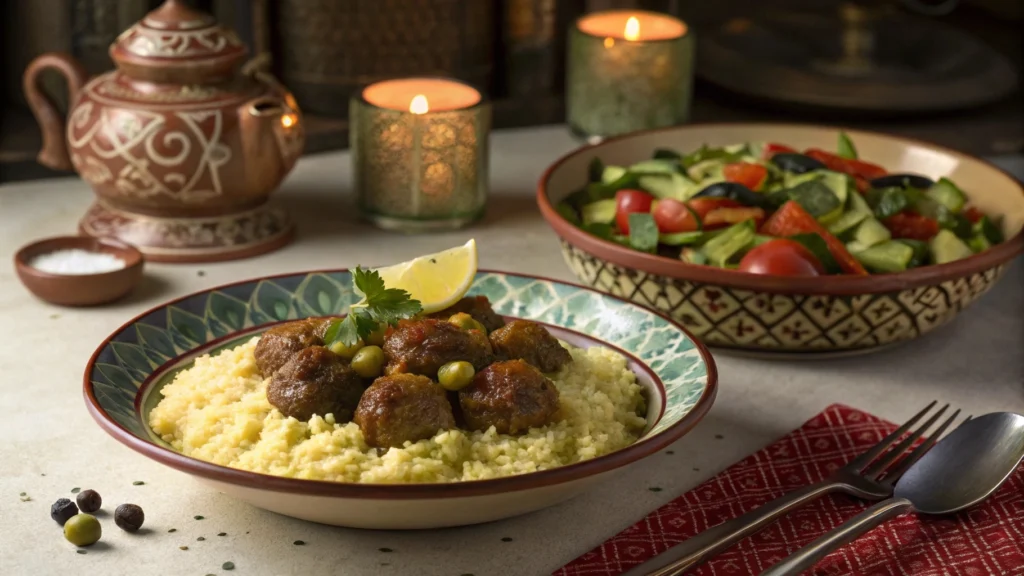
Traditionally, Moroccan tagines are paired with couscous a fluffy, steamed grain that soaks up the flavorful sauce from the tagine. The light texture of couscous balances the rich, savory meatballs, creating a harmonious meal.
Other side options include:
- Moroccan flatbread: Perfect for scooping up the sauce.
- Salads: A fresh, tangy cucumber and tomato salad adds a refreshing contrast.
- Roasted vegetables: Carrots, zucchini, and eggplant are great options to round out the meal.
Best Wines or Drinks to Pair with Your Tagine
Pairing drinks with your tagine is all about balancing the flavors. A light white wine such as Sauvignon Blanc or a fruity Rosé will work wonderfully with the tangy lemon and olives. If you prefer non-alcoholic beverages, Moroccan mint tea is a classic choice. It’s fragrant and slightly sweet, which complements the spices in the tagine.
Conclusion: Why This Lemon and Olive Meatball Tagine is a Must-Try
If you’re looking to bring a taste of Morocco into your kitchen, this Lemon and Olive Meatball Tagine is the perfect dish to start with. It’s an easy, flavorful way to experience the complex spices, fresh ingredients, and rich traditions that make Moroccan cuisine so special.
A Taste of Moroccan Comfort in Every Bite
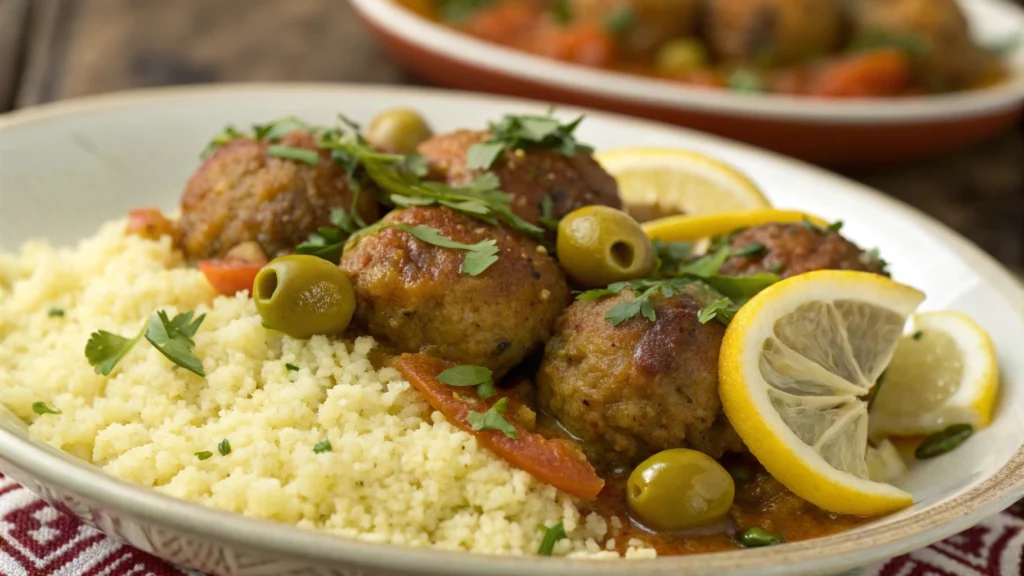
Each bite of this dish is a journey. The tender meatballs, tangy lemon, briny olives, and aromatic spices combine to create a truly comforting meal. It’s not just food it’s an experience, one that brings the warmth of Moroccan culture to your home.
Tips for Making Your Tagine Even More Authentic
While this recipe is already packed with authenticity, you can always adjust it to suit your taste. For a richer flavor, try adding preserved lemons or experimenting with different olive varieties. If you prefer a spicier dish, add a dash of harissa or chili flakes to your tagine for an extra kick.
Moroccan cuisine is all about balance, so don’t be afraid to experiment with the ingredients and spices to make this tagine truly your own.
Q&A Section: Lemon and Olive Meatball Tagine Recipe
Q1: Can I use chicken instead of beef or lamb for the meatballs?
A: Yes! You can substitute ground chicken or even turkey for a lighter version. Just be mindful that chicken tends to be leaner, so adding a bit of olive oil or an extra egg can help maintain moisture in the meatballs.
Q2: Do I need a traditional tagine pot to make this dish?
A: Not at all! While a tagine pot enhances the slow-cooked flavors, you can easily prepare this dish in a deep skillet or a Dutch oven with a lid. The key is slow simmering to allow the flavors to develop.
Q3: What can I use if I don’t have preserved lemons?
A: If preserved lemons are unavailable, use fresh lemon zest and a bit of lemon juice for a similar tangy flavor. However, the unique depth of preserved lemons adds authenticity to the dish.
Q4: Can I make this tagine ahead of time?
A: Absolutely! This dish actually tastes better the next day as the flavors continue to meld. Store it in an airtight container in the fridge for up to 3 days and reheat gently before serving.
Q5: Are there any vegetarian alternatives for this recipe?
A: Yes! You can replace the meatballs with chickpeas, lentils, or even plant-based meat alternatives while keeping the same spice blend and sauce for an authentic Moroccan taste.