
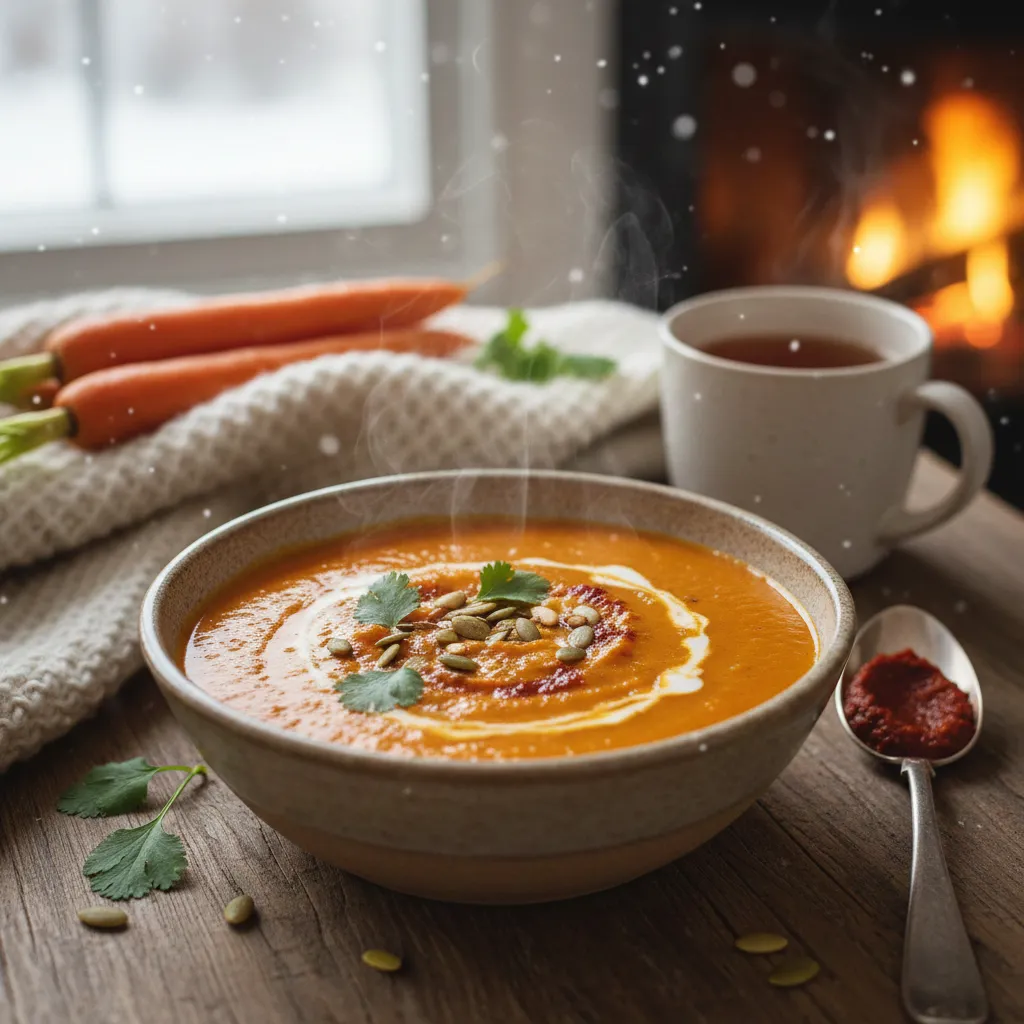
Bringing It All Together: Your Soul-Warming Soup Journey
We’ve journeyed from selecting the perfect harissa to mastering the blend, and now you hold the power to create a truly exceptional Spicy Carrot and Ginger Soup With Harissa. This isn’t just a recipe; it’s an invitation to elevate your winter cooking, to embrace bold flavors, and to find comfort in every nutritious spoonful. Are you ready to make this your new go-to?
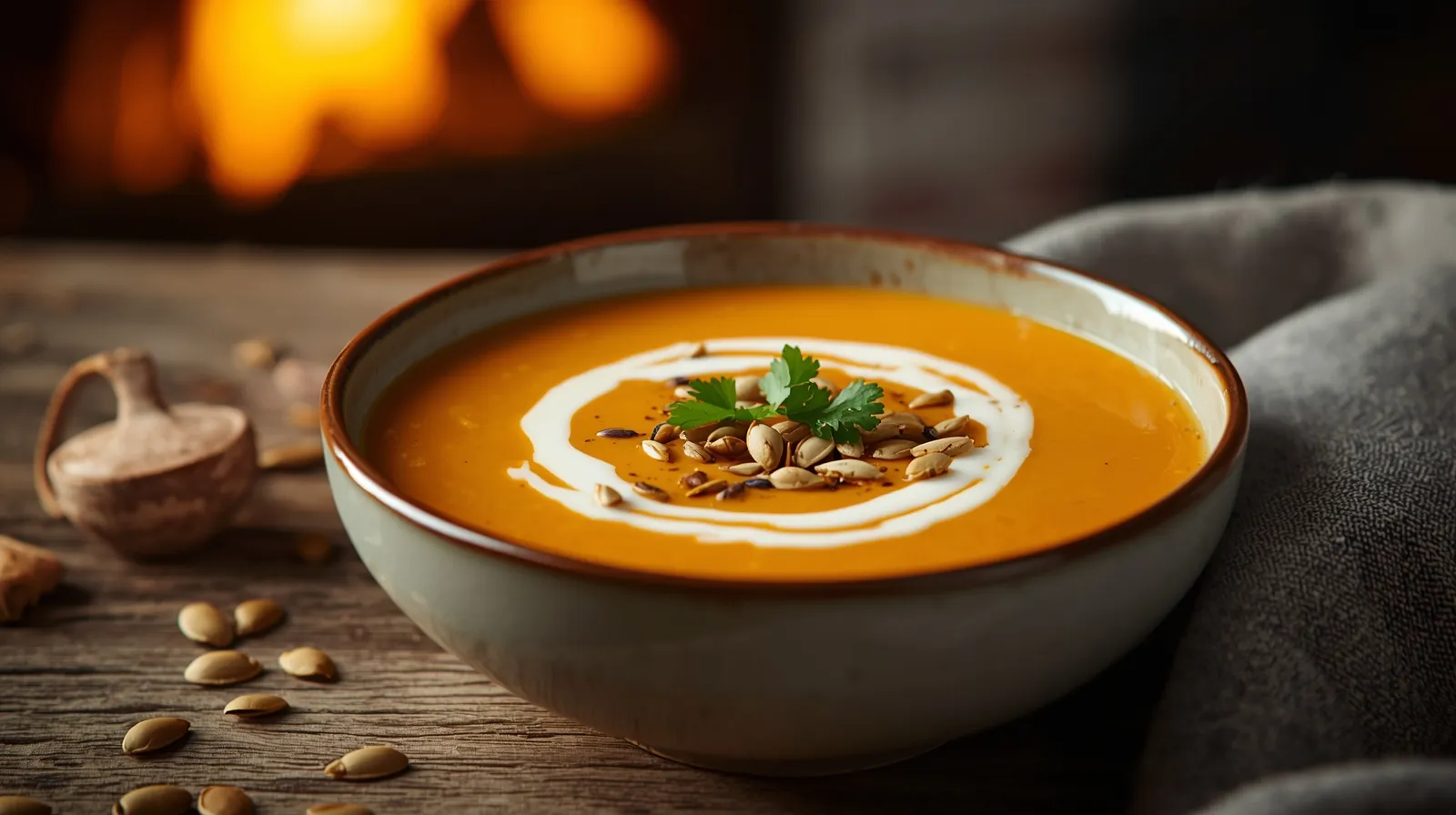
Key Takeaways for Your Kitchen
Before you head to the kitchen, let’s quickly recap the essential insights that will make your soup truly sing:
- Freshness Matters: Always opt for fresh ginger root for that vibrant, immune-boosting punch.
- Harissa is Your Friend: Don’t be shy with harissa paste, but understand its nuances (smoky vs. rose) and adjust to your desired Scoville scale level.
- The Power of the Simmer: Patience during the simmering phase ensures perfectly tender carrots and a silky smooth finish.
- Embrace the Immersion Blender: It’s the secret to achieving that coveted creamy texture without extra fuss.
- Customize Your Comfort: From cooling toppings to varying spice levels, this healthy winter meal prep star is incredibly adaptable.
Why You’ll Love This Spicy Harissa Carrot Soup
When we think of “comfort,” we often think of heavy creams or starches. But what if comfort could be light, zesty, and actually make you feel better after the bowl is empty? This soup hits that elusive “sweet spot” (pun intended). It’s a healthy winter meal prep staple that bridges the gap between a light lunch and a sophisticated dinner starter.
The Perfect Balance of Sweet and Heat
The magic here lies in the chemistry between the ingredients. Carrots are naturally packed with sugars that caramelize beautifully when sautéed. When you introduce the “kick” of a spicy root vegetable soup, those sugars act as a natural buffer.
- The Result: A slow-build heat that glows rather than burns.
- The Nuance: The harissa adds a smoky, fermented depth that plain chili flakes simply can’t match.
Nutritious and Immune-Boosting Ingredients
In an era where we are all looking for functional foods, this recipe is a goldmine. We aren’t just adding flavor; we’re adding a therapeutic dose of wellness.
- Fresh Ginger Root: Known for its anti-inflammatory properties and its ability to aid digestion.
- Vitamin A Rich Carrots: A massive boost for your skin and eye health.
- Turmeric: Often found in harissa blends, it works in tandem with the ginger to support your immune system during flu season.
A Quick One-Pot Weeknight Wonder
Let’s be honest: no one wants a mountain of dishes on a Tuesday night. I designed this as a one-pot dinner because your time is valuable. From the moment you slice your first carrot to the final whirl of the immersion blender, you’re looking at under 45 minutes of total time. It’s the ultimate “set it and forget it” meal that yields professional, restaurant-quality results with minimal effort.
Chef’s Note: If you’re looking to expand your plant-based repertoire, why not check out our guide on Mastering Roasted Aromatics to take your soup bases to the next level?
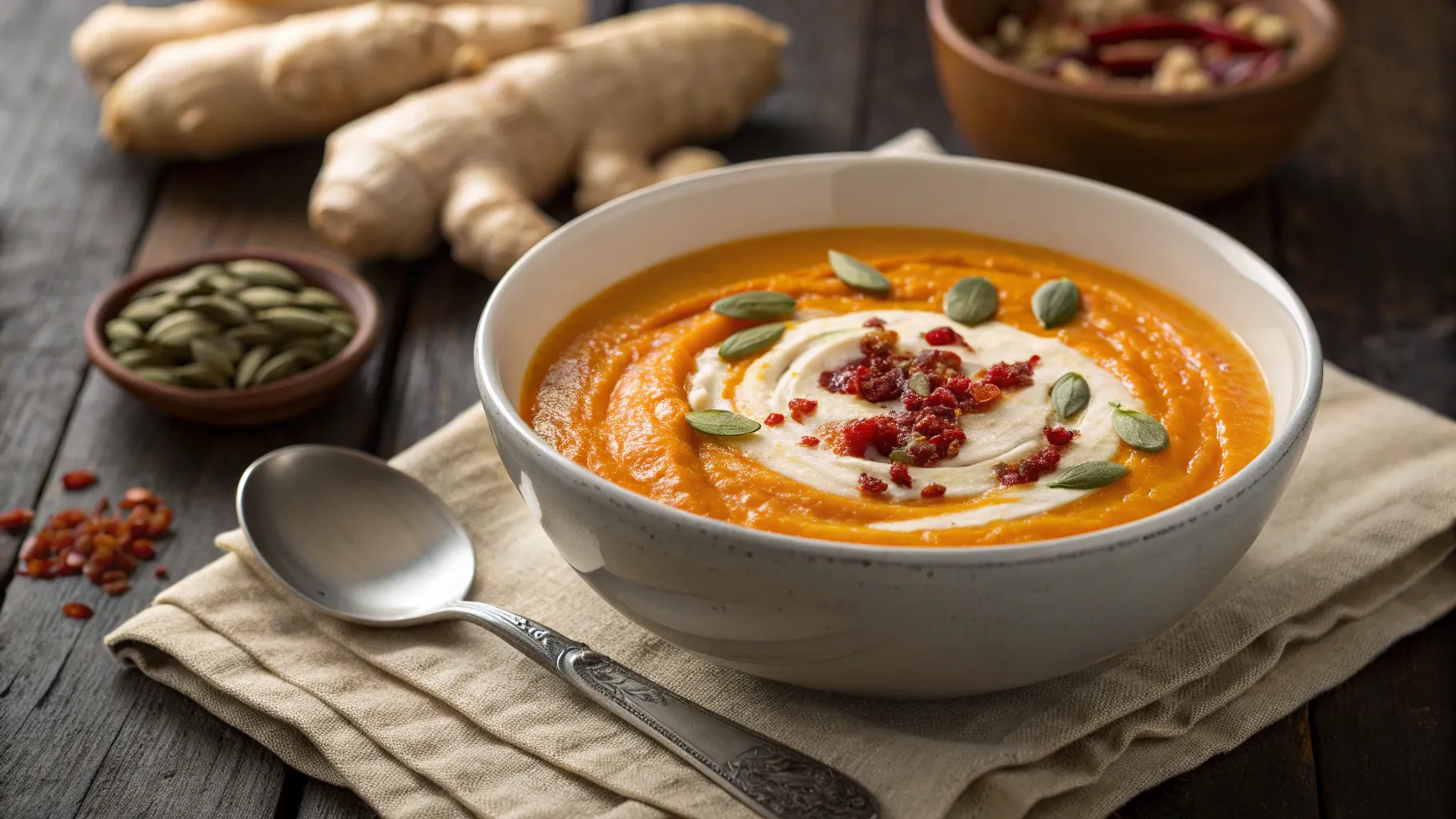
Key Ingredients for Maximum Flavor
Every great recipe starts with great ingredients, right? And for our Spicy Carrot and Ginger Soup with Harissa, choosing wisely is paramount to achieving that truly bold, comforting winter soup experience. Think of your pantry as your personal flavor laboratory; the quality of what goes in directly impacts the deliciousness that comes out.
Choosing the Right Harissa Paste
This is where many home cooks might pause. “Harissa? Isn’t it all the same?” Absolutely not! Harissa paste is a North African chili paste that’s incredibly versatile, but its flavor profile can vary significantly. Some are smoky, some are bright, and some even have floral notes from rose petals (hello, rose harissa!).
- Smoky Harissa: Often made with smoked chili peppers, it brings a deeper, more robust heat that pairs wonderfully with the earthiness of carrots. This is my go-to for a truly “soul-warming” effect.
- Rose Harissa: Offers a more aromatic, slightly milder heat with subtle floral undertones. If you’re new to harissa or prefer a less intense spice, this can be a fantastic starting point.
Pro Tip: Look for harissa in tubes or small jars in the international aisle of your grocery store. Brands like Mina or Trader Joe’s often carry excellent versions.
The Role of Fresh vs. Powdered Ginger
If there’s one ingredient you absolutely must use fresh in this recipe, it’s ginger. While powdered ginger has its place in baking, it simply can’t replicate the zesty, pungent, and slightly peppery punch of fresh ginger root.
- Fresh Ginger: Provides a bright, stimulating warmth that awakens the palate and truly complements the carrots. It’s a key player in the soup’s immune-boosting profile.
- Powdered Ginger: Tends to be flatter and lacks the vibrant aromatic compounds that make fresh ginger so special.
Trust me on this one: a little extra effort with a grater or a microplane will elevate your soup from good to absolutely unforgettable.
Vegetable Broth vs. Coconut Milk
The liquid base of your soup is critical for both flavor and creamy texture. You have excellent options, and your choice can subtly shift the final character of your soup.
- High-Quality Vegetable Broth: Provides a clean, savory foundation that allows the natural flavors of the carrots, ginger, and harissa to shine. It keeps the soup lighter and more focused on the vegetable essence.
- Full-Fat Coconut Milk: If you’re aiming for a richer, more decadent, and truly vegan carrot ginger soup, full-fat coconut milk is your secret weapon. It adds an incredible velvety texture and a subtle sweetness that plays beautifully with the spice, without overpowering the dish. This is especially good if you want to tame the harissa’s heat just a touch.
For this “Soul-Warming” version, I often lean towards a mix or use coconut milk for that extra layer of indulgence.
Essential Ingredients List
Here’s a quick overview of what you’ll need to gather before you start cooking:
| Quantity | Ingredient |
| 1 tbsp | Olive Oil |
| 1 large | Yellow Onion |
| 3 cloves | Garlic |
| 1 tbsp | Fresh Ginger |
| 1 tsp | Ground Cumin |
| 1/2 tsp | Ground Coriander |
| 2 lbs | Carrots |
| 4 cups | Vegetable Broth |
| 1/2 cup | Full-Fat Coconut Milk |
| 2-3 tbsp | Harissa Paste |
| 1/2 tsp | Salt |
| 1/4 tsp | Black Pepper |
| Fresh Cilantro | For garnish |
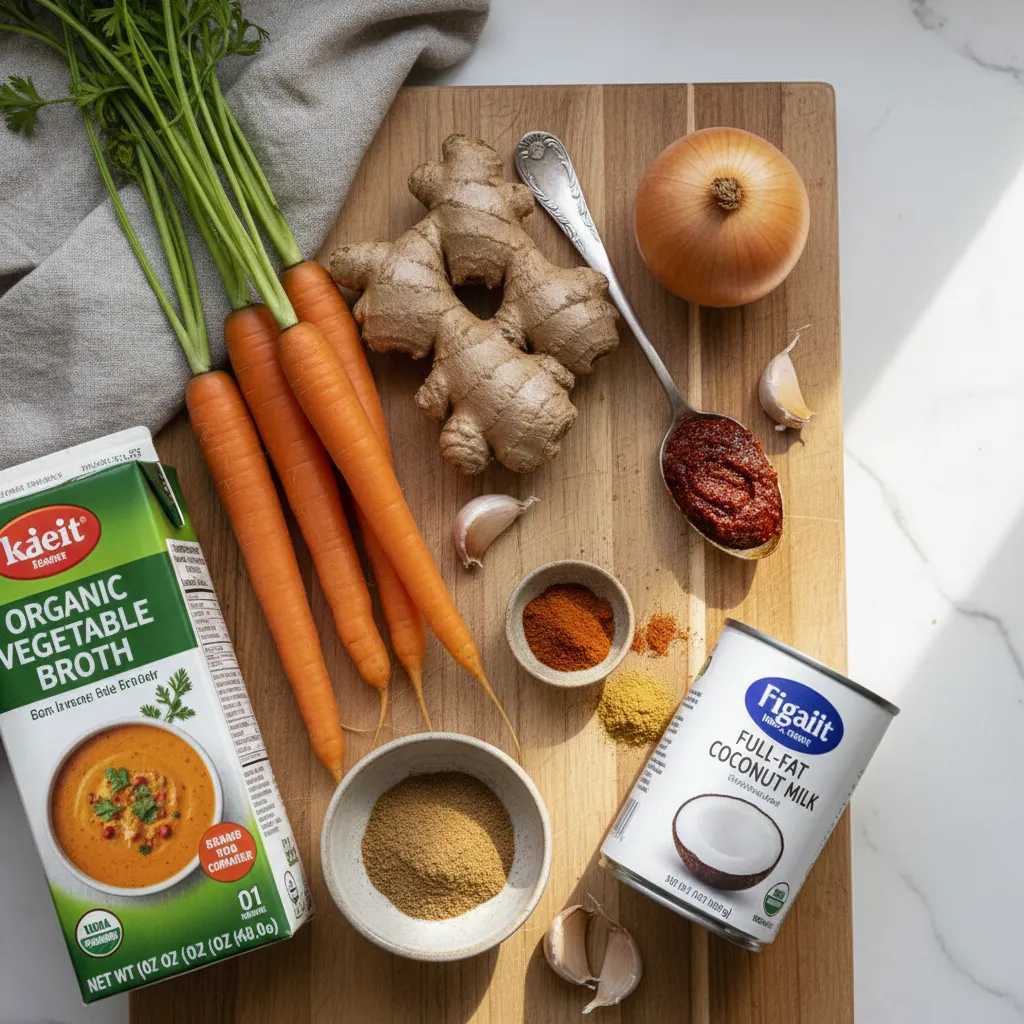
Step-by-Step Cooking Instructions
Now that your counter is stocked with vibrant produce and aromatic spices, it’s time to transform them into a masterpiece. Have you ever wondered why restaurant soups have that extra “something” you can’t quite replicate at home? Usually, it’s all about the order of operations. Let’s walk through how to build those layers of flavor properly so your spicy carrot and ginger soup with harissa recipe turns out perfect every single time.
Sautéing the Aromatics and Base
The foundation of any great one-pot dinner starts with “sweating” your aromatics. This isn’t just about cooking them; it’s about drawing out their natural oils.
- Heat the Oil: Start with a heavy-bottomed pot over medium heat.
- Soften the Onions: Add your diced onions and sauté until translucent. You aren’t looking for a deep brown char here just a soft, sweet base.
- Bloom the Spices: Add your minced garlic, fresh ginger, and harissa paste. By stirring these in the hot oil for about 60 seconds, you “bloom” the spices, releasing a fragrance that will fill your entire kitchen. This step is crucial for achieving that bold, comforting winter soup profile.
Simmering the Carrots to Perfection
Once your aromatics are fragrant, it’s time for the star of the show. Add your chopped carrots and stir them well to coat them in that spicy harissa oil.
- Deglaze: Pour in your vegetable broth, making sure to scrape up any bits stuck to the bottom of the pot that’s where the concentrated flavor lives!
- The Simmer: Bring the mixture to a gentle boil, then reduce the heat. Cover the pot and let it simmer for about 20 to 25 minutes.
- The Test: You’ll know it’s ready when a fork slides into a carrot chunk with absolutely no resistance. Remember, undercooked carrots lead to a grainy soup, so patience is key for a creamy texture.
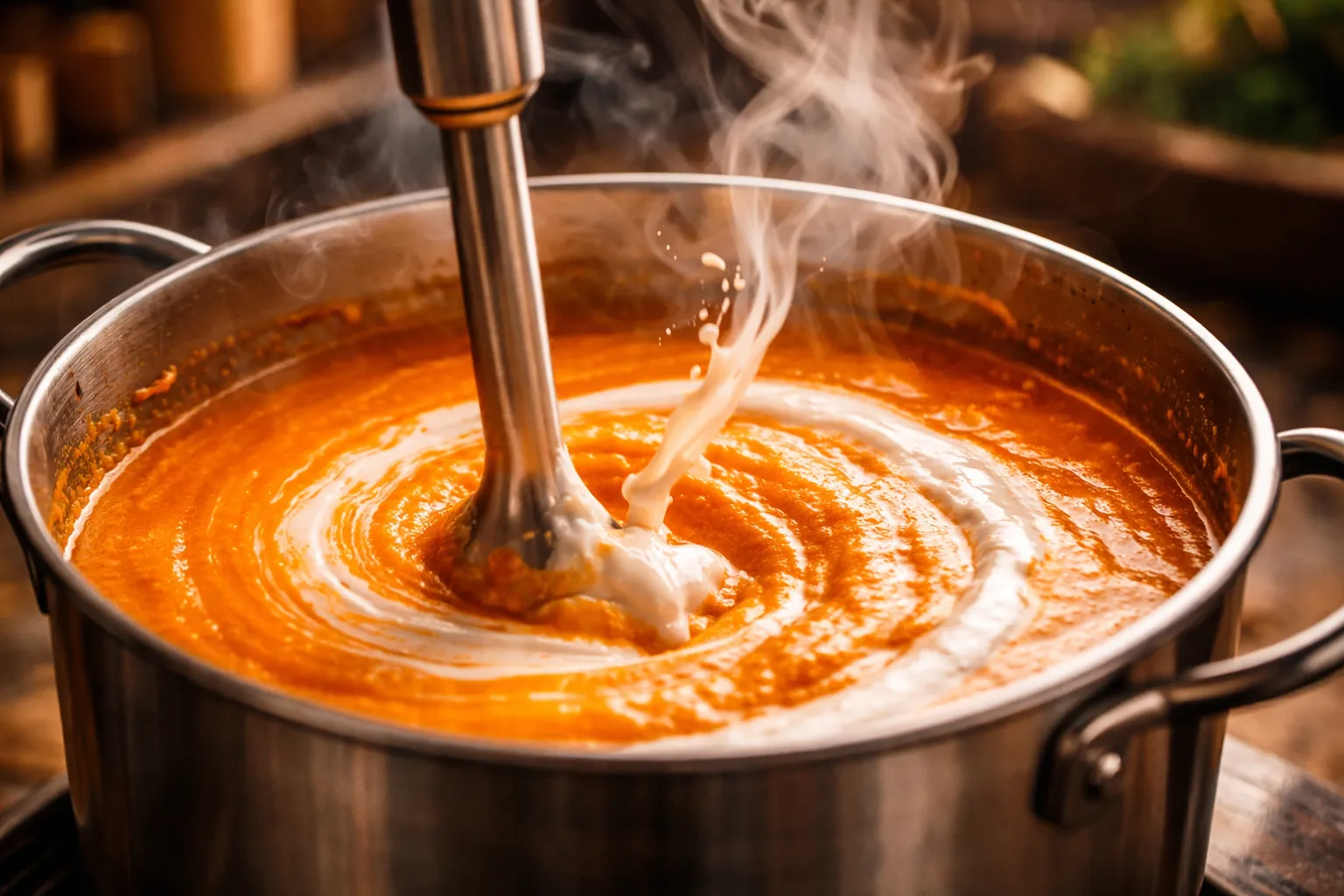
Mastering the Immersion Blender Technique
This is where the magic happens! To get that professional, velvety finish, an immersion blender is your best friend.
If you’re using a stand blender, please be careful blending hot liquids can be dangerous. Work in small batches and leave the lid slightly ajar to let steam escape. If you’re using a hand blender, keep the blade fully submerged to avoid splattering your kitchen in bright orange! Blend until the soup is completely smooth. If you chose to include coconut milk for a more vegan carrot ginger soup vibe, pour it in now and give it one final whirl to emulsify.
Visual Learner? If you want to see the exact consistency you should be aiming for, check out this helpful technique video :
Pro Tips for Customizing Your Heat Level
Let’s talk about the elephant in the room: spice tolerance. We’ve all been there you follow a recipe’s “two tablespoons” suggestion only to find your mouth on fire, or conversely, you’re left wishing for a bit more “oomph.” Since harissa brands vary wildly on the Scoville scale, mastering the heat in your spicy carrot and ginger soup with harissa recipe is an art form. How do you find that perfect glow without overdoing it?
Taming the Fire with Cool Toppings
If you’ve accidentally tipped the scales toward “too spicy,” don’t panic! You don’t have to toss the batch. The secret lies in adding fats and acids to neutralize the capsaicin.
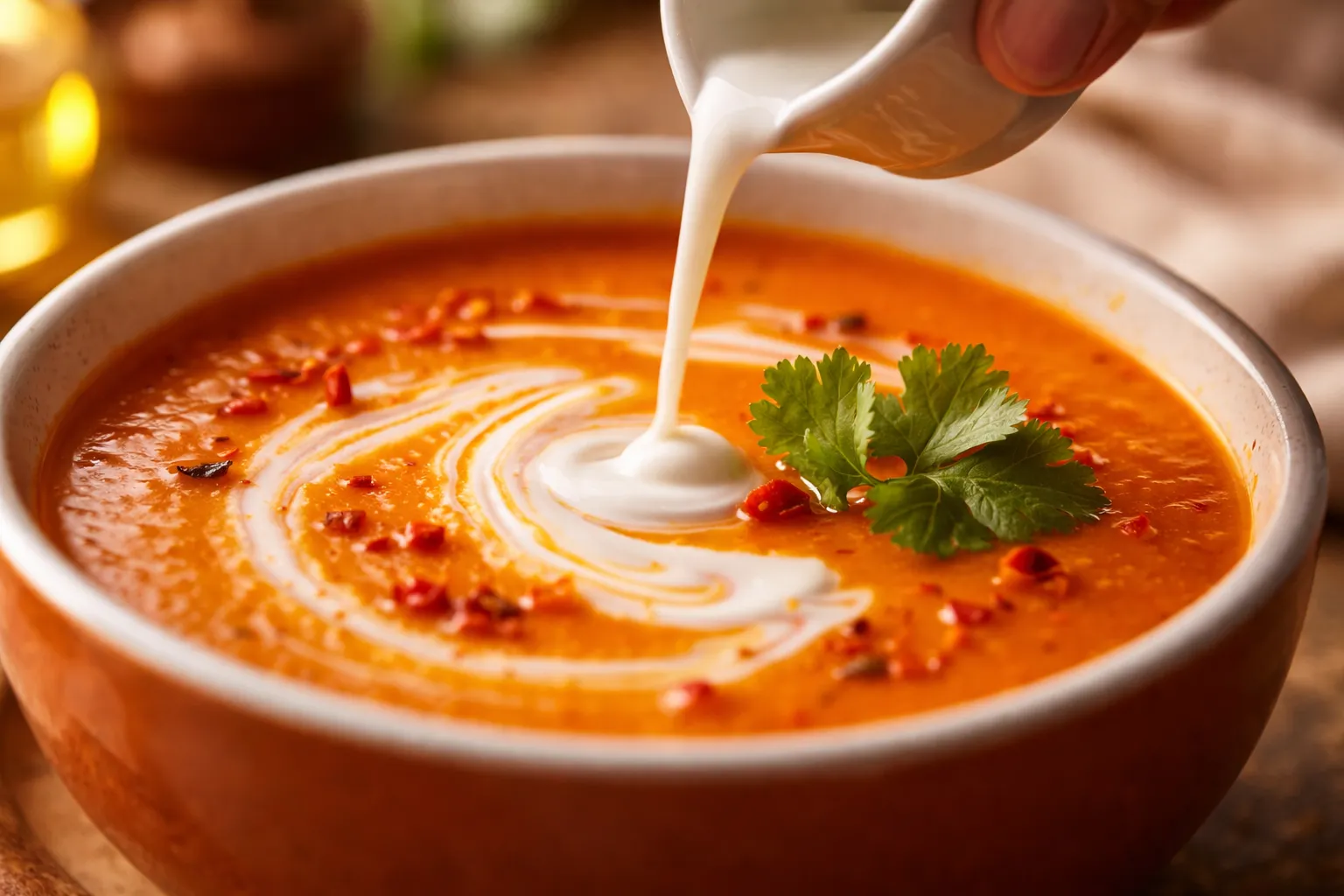
- Creamy Additions: A dollop of cool Greek yogurt or a swirl of silken tofu works wonders. For those keeping it a vegan carrot ginger soup, a spoonful of thick coconut cream or cashew cream provides a luxurious, cooling contrast.
- The Acid Trick: A squeeze of fresh lime or lemon juice won’t just brighten the flavors; it actually helps cut through the heavy heat of the chili.
How to Build Layers of Smoky Flavor
Sometimes, you want the depth of the spice without the raw burn. This is where smoky flavors come into play to create a more sophisticated palate.
- Blooming Spices: Instead of just adding more harissa, try stirring in a teaspoon of smoked paprika or toasted cumin.
- Roasted Aromatics: Roasting your carrots before blending them adds a natural, caramelized char that complements the smokiness of the harissa beautifully.
- Toasted Elements: Garnish with smoked sea salt or toasted pepitas to bring the smokiness to the very top layer of the dish.
Adjusting Spice for Sensitive Palates
Are you cooking for a crowd with mixed preferences? The best approach is a “modular” spice strategy.
“Cooking is like a conversation; you have to listen to the ingredients, but you also have to consider who you are talking to. Spice should be an invitation, not a challenge.” Anonymous Culinary Wisdom
Instead of whisking all the harissa into the pot, start with just one teaspoon to get the base flavor. Then, serve the remaining harissa in a small bowl on the table. This allows the “heat-seekers” in your family to customize their own bowl while keeping the main pot family-friendly.
Serving Suggestions and Pairings
You’ve mastered the heat and perfected that creamy texture now, how do you turn a simple bowl of soup into a full-sensory dining experience? Presentation and “the sidekick” matter more than you might think. Whether you’re serving this as a light lunch or the star of a healthy winter meal prep routine, the right accompaniments can elevate the earthy notes of the carrots and the sharp zing of the ginger.
The Best Artisanal Breads for Dipping
In my house, a soup without bread is just a missed opportunity for dipping. To complement the North African influence of the harissa, you want something that can stand up to the bold flavors.
- Warm Pita or Naan: These soft, pillowy breads are perfect for scooping up the thicker bits of the soup.
- Crusty Sourdough: The slight tang of a fermented sourdough loaf cuts through the richness of the coconut milk beautifully.
- Garlic Crostini: If you want an extra crunch, brush thin baguette slices with olive oil and garlic, then toast them until golden.
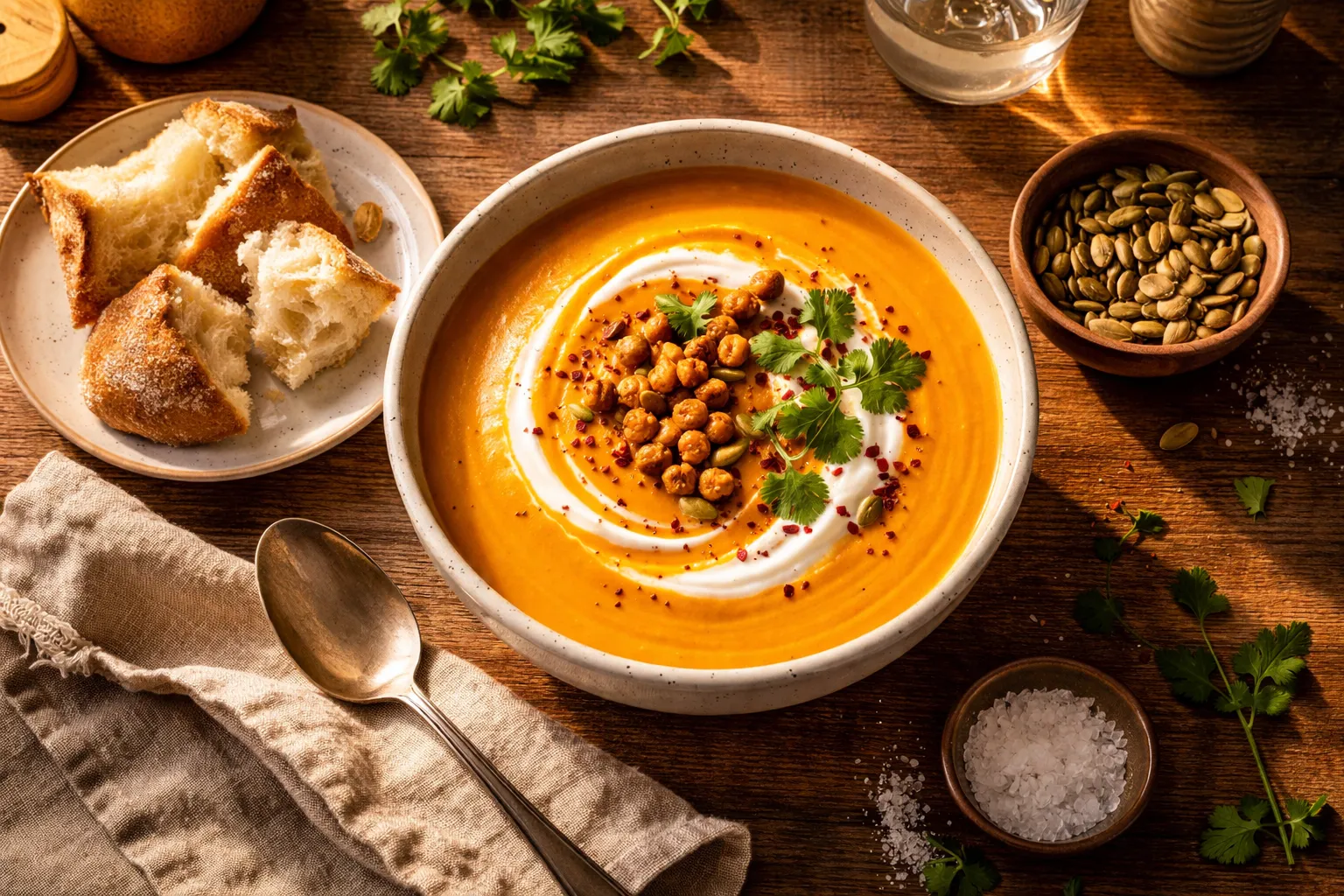
Garnish Ideas for Visual Appeal
We eat with our eyes first, don’t we? A splash of color on top of that vibrant orange base makes the dish look restaurant-quality in seconds.
- Fresh Greenery: A sprig of cilantro or mint adds a burst of freshness that balances the spicy root vegetable soup heat.
- Texture Contrasts: Toasted pumpkin seeds (pepitas) or sunflower seeds provide a much-needed crunch.
- Final Flavor Pops: A drizzle of extra-virgin olive oil, a few cracks of black pepper, or a tiny dollop of extra harissa for those who like a visual “warning” of the spice level.
Storing and Reheating for Meal Prep
One of the best things about this spicy carrot and ginger soup with harissa recipe is that it actually tastes better the next day. As the soup sits, the ginger and harissa have more time to infuse into the carrots.
- Fridge Life: Keep it in an airtight container for up to 5 days.
- Freezing: This soup is freezer-friendly! Since there are no dairy products (if using coconut milk), it won’t separate or become grainy. Freeze for up to 3 months.
- Reheating: Warm it over low heat on the stove. If it has thickened too much in the fridge, simply whisk in a splash of water or vegetable broth to bring it back to that silky-smooth consistency.
Looking for more? If you loved these bold flavors, you might also enjoy our recent post on The Art of Balancing Mediterranean Spices to keep your kitchen inspired all season long!
Conclusion: A Bowl Full of Warmth
This spicy carrot and ginger soup with harissa recipe is more than just a meal; it’s a culinary hug on a chilly day. It’s vibrant, nutritious, incredibly satisfying, and surprisingly simple to make. Whether you’re whipping up a quick one-pot dinner for yourself or impressing guests with a sophisticated starter, you now have all the tools to create a dish that truly warms the soul. So go ahead, embrace the bold flavors, and savor every spoonful. Happy cooking!
Your Questions Answered: FAQs
Got a few lingering questions? Let’s address some common queries to ensure your soup-making experience is flawless.
Q: Can I make this soup without an immersion blender? A: Absolutely! While an immersion blender is convenient for a one-pot dinner, you can carefully transfer the cooked soup in batches to a standard blender. Remember to leave the lid slightly ajar and cover it with a kitchen towel to allow steam to escape safely.
Q: Is this soup naturally vegan? A: Yes, if you use a vegetable broth and full-fat coconut milk (or omit the coconut milk and stick to broth), this vegan carrot ginger soup is entirely plant-based. Just be sure to check your harissa paste ingredients, as some varieties may contain minor non-vegan additives, though most are vegan-friendly.
Q: How can I make this soup even richer? A: For an extra decadent touch, you can roast your carrots and onions before adding them to the pot. This caramelizes their sugars and deepens their flavor. You can also increase the amount of full-fat coconut milk or stir in a tablespoon of cashew butter during the blending stage for added creaminess.
Q: My soup isn’t as spicy as I’d like. What can I do? A: The easiest way to boost the heat is to add a bit more harissa paste, a pinch of cayenne pepper, or a few drops of chili oil when reheating or serving individual bowls. Remember, you can always add more spice, but it’s hard to take it away!