
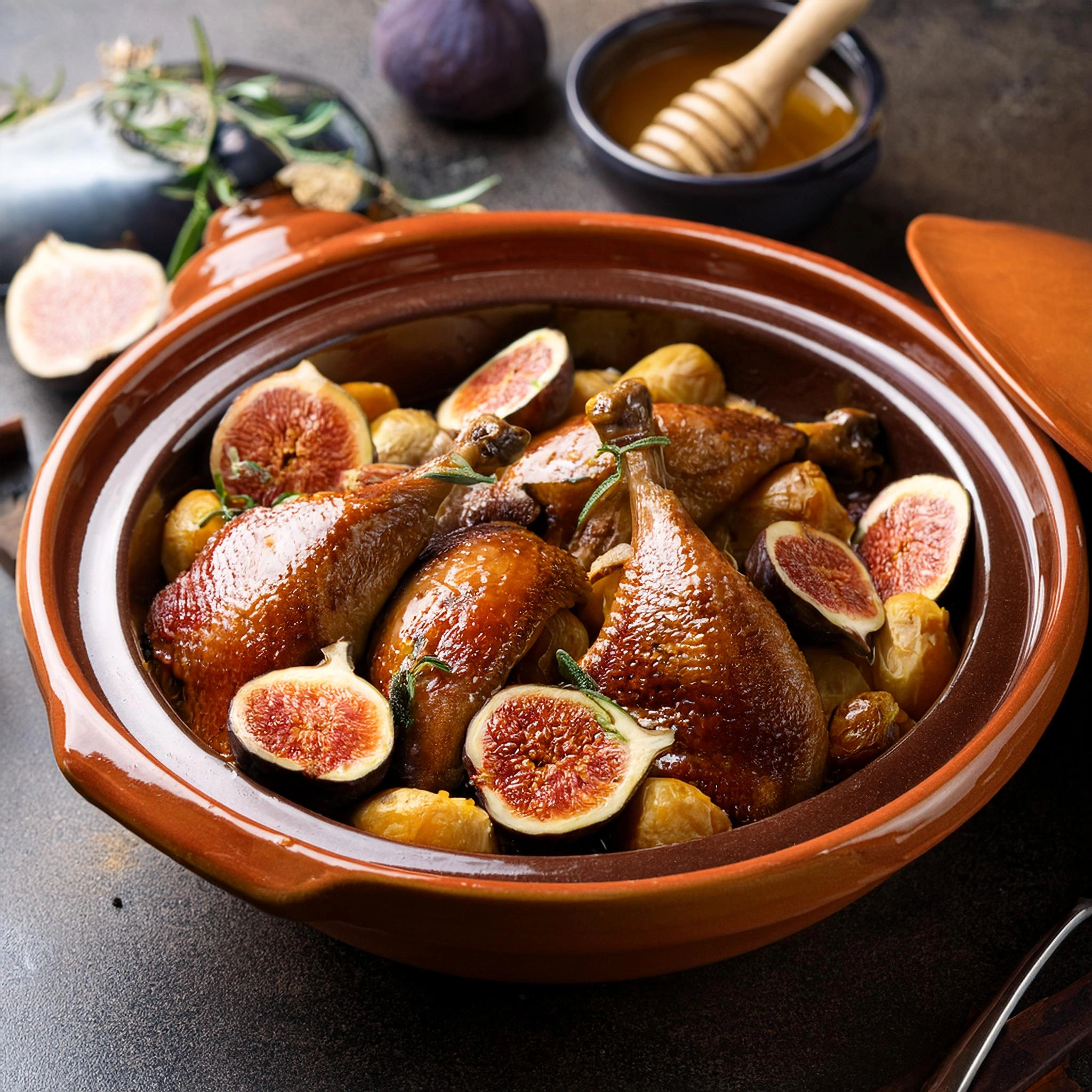
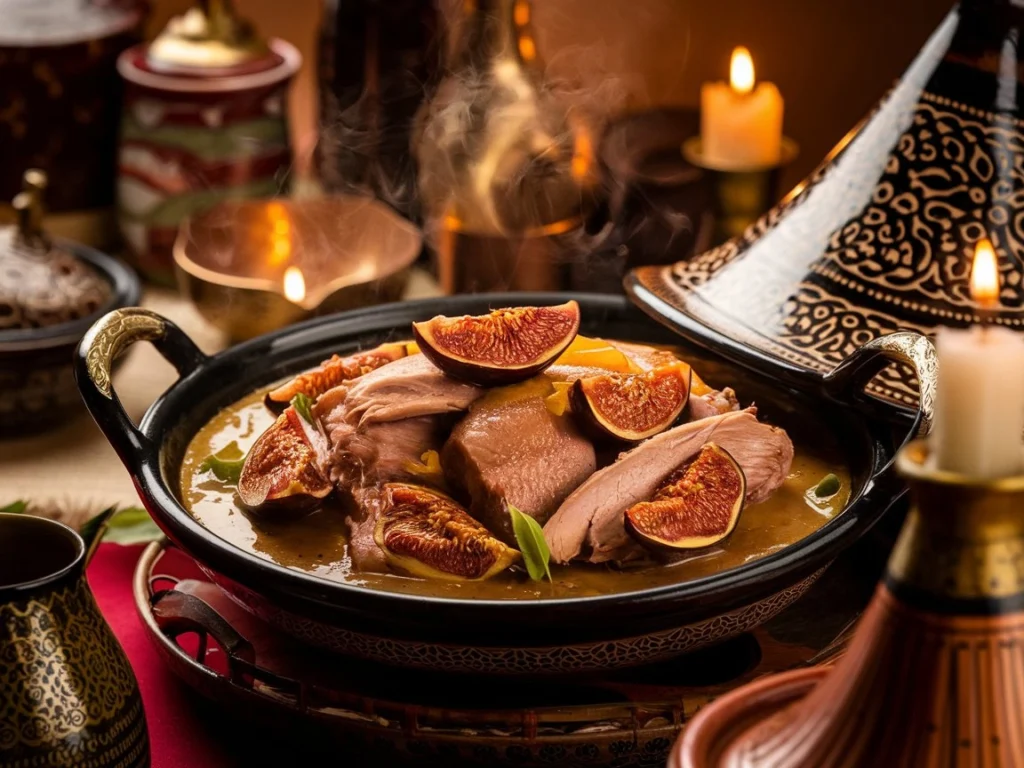
Duck Tagine with Figs and Honey is luxurious and flavorful Dishe. This slow-cooked masterpiece balances savory, sweet, and aromatic spices, creating an unforgettable dining experience. The succulent duck, tenderized over low heat, absorbs the warmth of cinnamon, saffron, and ginger, while dried figs and honey add a caramelized depth of sweetness.
But what makes this dish truly special? It’s not just about the ingredients it’s about the tradition behind it. Moroccan tagines are more than meals; they’re stories told through spices, slow cooking, and shared moments. Whether you’re a seasoned home cook or new to Moroccan flavors, this recipe will transport you straight to the bustling souks of Marrakech.
In this guide, we’ll explore everything you need to create the perfect Duck Tagine from choosing the best duck cuts to achieving the perfect balance of flavors. Ready to dive in? Let’s get started!
Table of Contents
Key Takeaways
- Rich & Aromatic: This dish features a perfect balance of savory duck, warm spices, and natural sweetness from figs and honey.
- Slow-Cooked Perfection: Cooking in a tagine or Dutch oven allows the flavors to meld beautifully, resulting in tender, flavorful meat.
- Authentic Moroccan Touch: Traditional Moroccan spices like cinnamon, saffron, and ginger create a uniquely fragrant dish.
- Perfect for Special Occasions: Impress your guests with a meal that is both elegant and deeply comforting.
- Easily Adaptable: Not a fan of duck? Try substituting with chicken or lamb while maintaining the same delicious flavor profile.
The Rich History of Moroccan Duck Tagine
How Duck Became a Moroccan Specialty
Morocco’s cuisine is renowned for its ability to balance bold flavors, and duck tagine is a perfect example of this culinary artistry. While lamb and chicken are more commonly associated with Moroccan tagines, duck has a long history in North African cuisine. Brought to the region through trade with Andalusia and the Mediterranean, duck found its place in Moroccan kitchens due to its rich, tender meat that pairs beautifully with the country’s signature sweet and savory flavors.
But what makes duck so special in a Moroccan tagine? Unlike chicken, duck has a slightly gamey taste and a higher fat content, which allows it to remain succulent even after hours of slow cooking. This slow braising process, combined with aromatic spices, honey, and dried fruits like figs, transforms duck into a melt-in-your-mouth delicacy.
he Use of Figs and Honey in Moroccan Cooking
Moroccan cuisine often embraces the contrast between sweet and savory, a tradition influenced by Arab, Berber, and Andalusian culinary techniques. Figs and honey are two essential ingredients that create this balance in Moroccan duck tagine:
- Figs add natural sweetness and a chewy texture that complements the tender duck meat. They also infuse the dish with earthy, caramel-like notes.
- Honey is often used in Moroccan tagines to create a glossy, rich sauce that enhances the depth of flavors. Its mild sweetness balances the richness of the duck, preventing the dish from becoming too heavy.
This combination of sweet and savory elements is what makes Moroccan duck tagine such a unique and unforgettable dish.
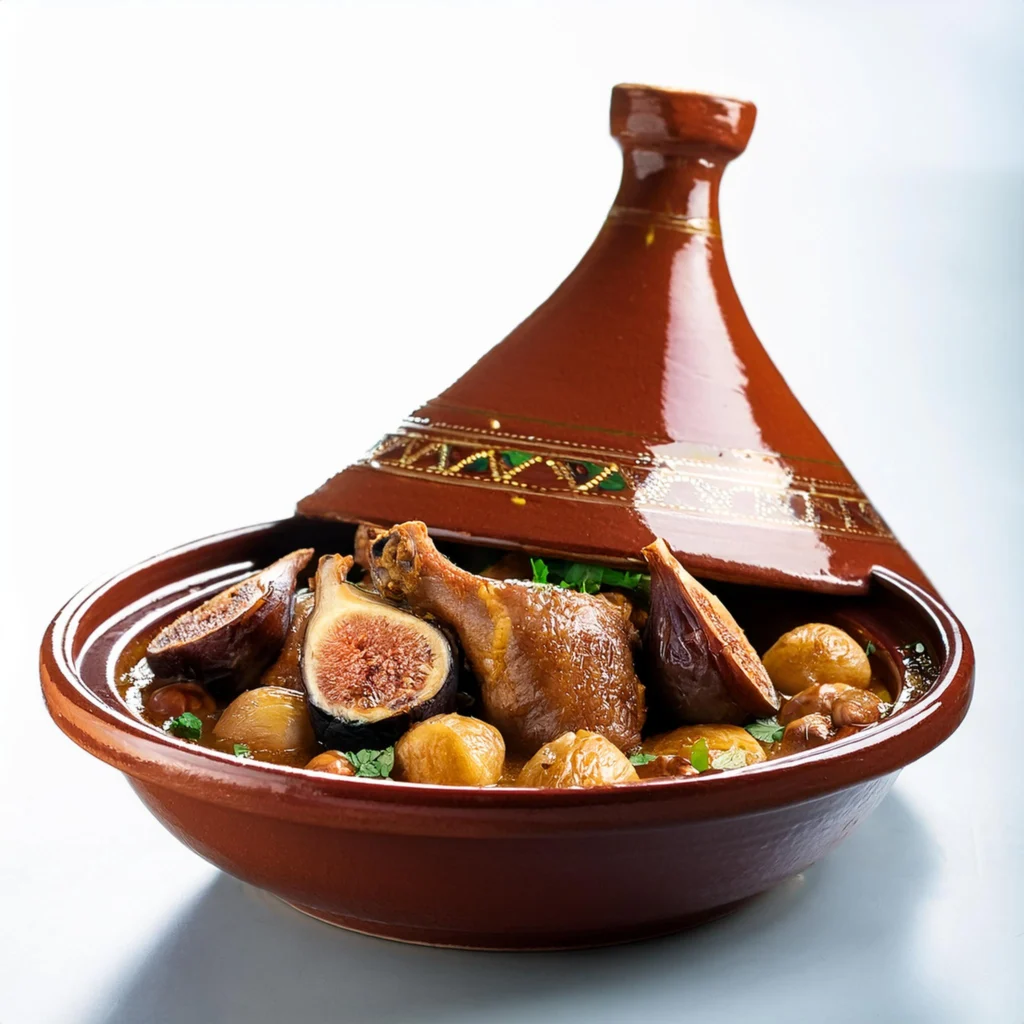
Essential Ingredients for the Perfect Moroccan Duck Tagine
A Breakdown of Key Ingredients
To create a truly authentic Moroccan duck tagine, selecting the right ingredients is crucial. Each component plays a role in developing the deep, layered flavors that make this dish unforgettable.
Below is a breakdown of the key ingredients and their purpose in the dish:
| Ingredient | Role in the Dish |
|---|---|
| Duck | The star ingredient, offering rich, tender meat with a slightly gamey flavor. The fat renders beautifully, creating a luxurious sauce. |
| Figs | Adds natural sweetness and a chewy texture, balancing the savoriness of the duck. |
| Honey | Enhances the dish’s sweet undertones while helping create a glossy, caramelized sauce. |
| Onions | Forms the base of the sauce, adding depth and natural sweetness. |
| Garlic | Brings an aromatic sharpness that complements the other flavors. |
| Cinnamon | One of the signature Moroccan spices, adding warmth and complexity. |
| Ras el Hanout | A traditional Moroccan spice blend that infuses the dish with depth and fragrance. |
| Ginger | Adds a slight heat and earthiness to the dish. |
| Saffron | Lends a golden hue and a delicate floral aroma. |
| Almonds | Toasted almonds provide crunch, adding a contrast to the tender duck and figs. |
| Chicken Broth | Helps to develop the rich sauce while keeping the duck moist during cooking. |
| Olive Oil | Used for searing the duck and bringing out the richness of the spices. |
Ingredient Substitutions for Dietary Preferences
While the traditional ingredients create an authentic experience, you can make modifications based on dietary needs or availability:
- Meat Alternatives: If you prefer a leaner option, you can substitute duck with chicken thighs. If you’re looking for a vegetarian version, jackfruit can mimic the texture of slow-cooked meat.
- Sweeteners: Instead of honey, you can use date syrup or maple syrup for a similar caramelized effect.
- Nuts: If you have nut allergies, try using sesame seeds for a nutty crunch.
These small tweaks ensure you can still enjoy the essence of Moroccan duck tagine while adapting it to your needs.
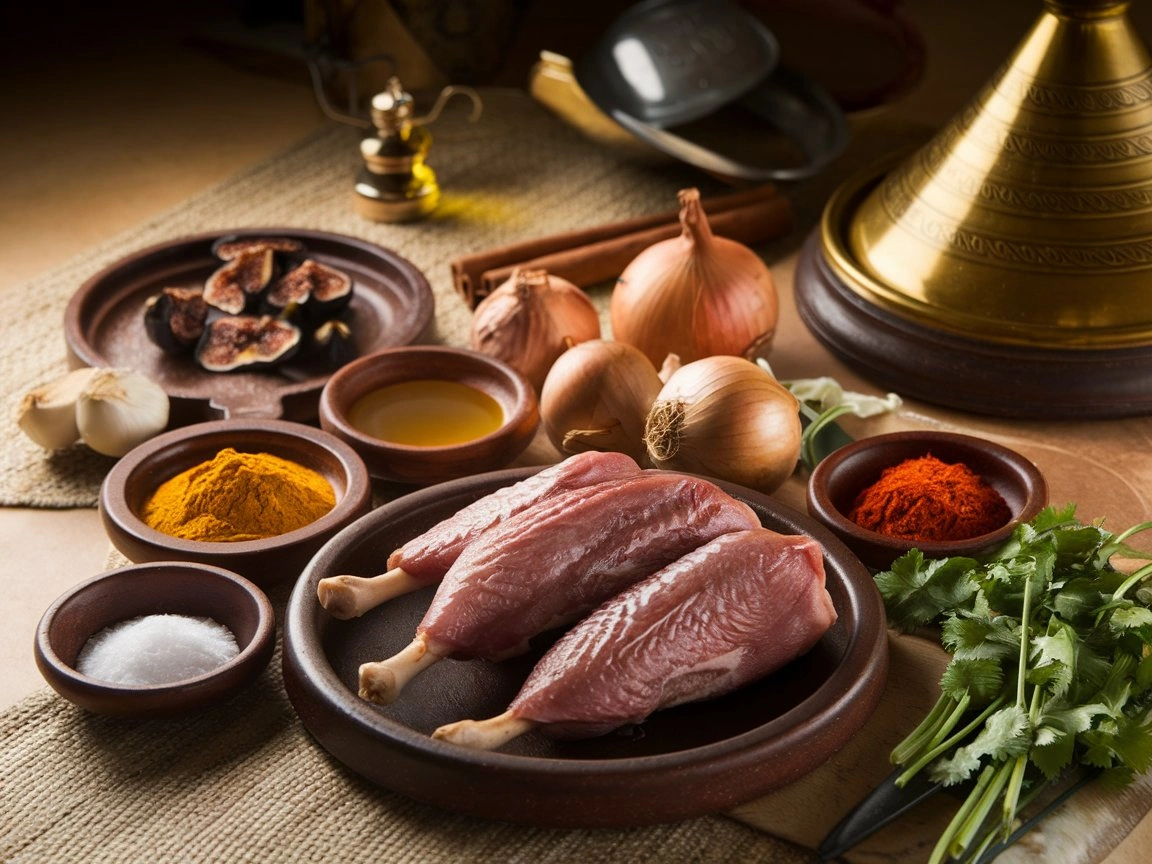
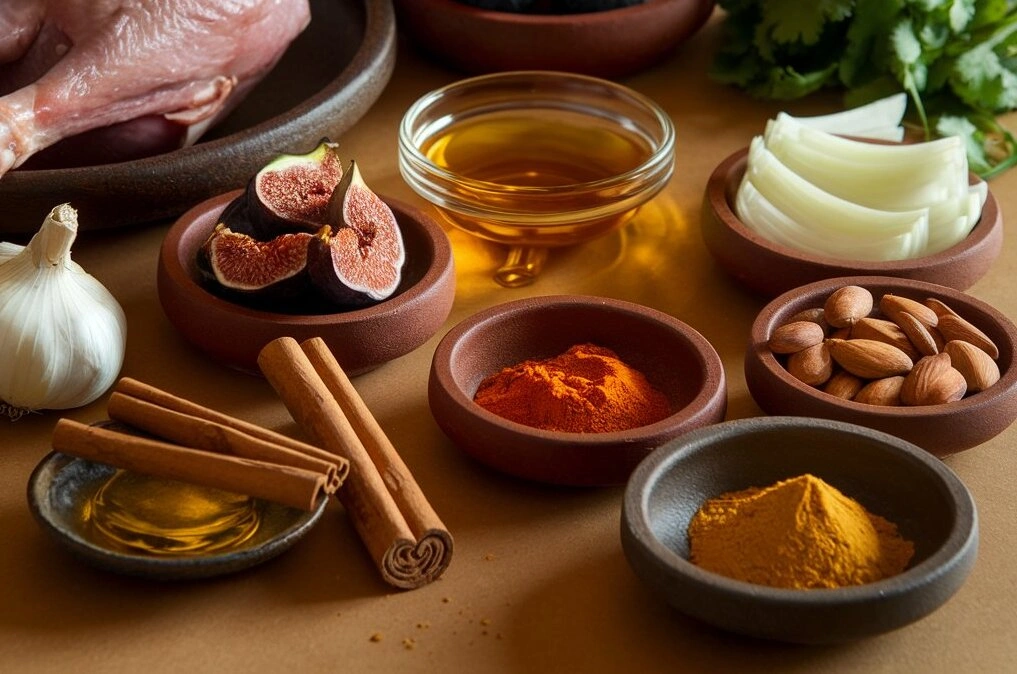
Table Of Ingredients for Moroccan Duck Tagine with Figs and Honey
| Category | Ingredient | Amount | Notes & Substitutes |
|---|---|---|---|
| Protein | Duck legs | 4 legs | Bone-in, skin-on for the best texture and flavor |
| Fruits & Sweeteners | Dried figs | 10-12 figs | Soaked in warm water for 10 minutes |
| Moroccan honey | 2 tbsp | Use raw honey for a richer flavor | |
| Liquids | Chicken broth | 1 cup | Can substitute with vegetable or duck broth |
| Orange juice | ½ cup | Freshly squeezed for natural sweetness | |
| Olive oil | 2 tbsp | Extra virgin, for browning the duck | |
| Spices & Aromatics | Onion | 1 large, diced | Yellow or white onion |
| Garlic cloves | 3 cloves, minced | Fresh for best flavor | |
| Cinnamon | 1 tsp | Ground cinnamon for warmth | |
| Cumin | 1 tsp | Earthy spice, enhances depth | |
| Ginger | 1 tsp | Freshly grated or ground | |
| Saffron threads | 1 pinch | Optional, adds color and aroma | |
| Paprika | ½ tsp | Smoked paprika for depth | |
| Black pepper | ½ tsp | Adjust to taste | |
| Salt | 1 tsp | Adjust to taste | |
| Garnish & Finishing | Fresh cilantro | ¼ cup | Chopped, for garnish |
| Toasted almonds | 2 tbsp | Optional, for crunch and extra flavor |
Step-by-Step Guide to Cooking Moroccan Duck Tagine
Preparing the Duck for Maximum Flavor
Cooking duck for a tagine requires some preparation to ensure it’s tender and flavorful. Follow these steps before adding it to your tagine:
- Score the Skin – Lightly score the duck skin in a crisscross pattern. This helps render the fat while cooking.
- Season Well – Rub the duck with salt, black pepper, and a pinch of ras el hanout. Let it sit for 15 minutes.
- Sear the Duck – Heat a tagine or a heavy-bottomed pot over medium heat. Sear the duck skin-side down for about 5 minutes until golden brown. Flip and cook for another 3 minutes. Remove and set aside.
Building the Perfect Moroccan Sauce
The magic of Moroccan duck tagine lies in its deeply flavorful sauce. Here’s how to build it:
- Sauté Aromatics – In the rendered duck fat, cook onions and garlic until soft.
- Add Spices – Stir in cinnamon, ginger, saffron, and ras el hanout to release their aromas.
- Deglaze with Broth – Pour in chicken broth, scraping the bottom to lift caramelized bits.
- Sweet and Savory Balance – Stir in honey and chopped dried figs, allowing them to soften.
Simmering to Perfection
- Return the Duck – Nestle the seared duck legs into the sauce.
- Cover and Cook – Lower the heat, cover the tagine, and let it simmer for 1.5 to 2 hours. The slow cooking ensures the meat absorbs the flavors and becomes fall-off-the-bone tender.
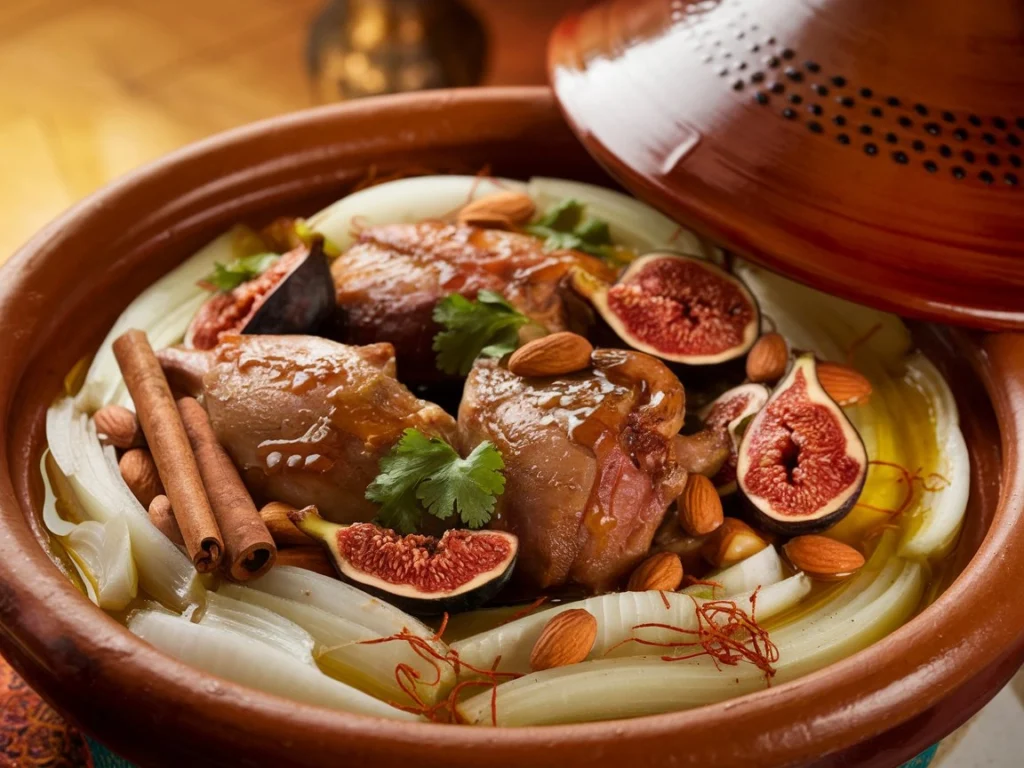
- Finishing Touches – Garnish with toasted almonds and fresh parsley before serving.
The Cultural Significance of Moroccan Duck Tagine
A Dish Rooted in Moroccan Tradition
Moroccan cuisine is famous for its balance of sweet and savory flavors, and duck tagine is a perfect example of this harmony. The use of warm spices, dried fruits like figs, and slow cooking in a traditional clay tagine reflects Morocco’s rich culinary heritage. This dish is often prepared for special occasions, family gatherings, and festive celebrations, symbolizing warmth and hospitality.
Influence of Andalusian and Berber Cooking
Duck tagine has historical influences from both Andalusian and Berber cuisines:
- Andalusian Influence: The combination of poultry with dried fruits and honey dates back to Moorish Spain, where Arab-Andalusian chefs developed elaborate dishes featuring a mix of flavors.
- Berber Roots: The slow-cooking method in a tagine, along with the use of saffron and preserved ingredients, traces back to the Berber communities of Morocco.
A Dish Fit for Royalty
Historically, Moroccan duck tagine was considered a dish fit for sultans and royalty due to its luxurious ingredients saffron, honey, and exotic spices were highly valued in medieval Moroccan kitchens. Even today, this dish carries an air of indulgence, making it perfect for a special dinner.
Quote on Moroccan Cuisine
“Moroccan cuisine is a delightful blend of flavors and cultures, where every dish tells a story of history, trade, and tradition.” — Paula Wolfert, Moroccan Food Expert
How to Make the Perfect Moroccan Duck Tagine
Ingredients You’ll Need
To make a truly authentic Moroccan duck tagine, you’ll need a mix of fresh ingredients, warm spices, and slow-cooking patience. Here’s what you’ll need:
- Duck Legs or Breast – Skin-on for extra flavor
- Olive Oil & Butter – A rich base for cooking
- Onions & Garlic – Essential aromatics
- Spices:
- Ground cinnamon
- Ginger
- Turmeric
- Saffron threads (optional but recommended)
- Honey – Adds a touch of sweetness
- Dried Figs or Prunes – The key to balancing flavors
- Almonds & Sesame Seeds – For texture and garnish
- Chicken or Vegetable Broth – For slow braising
Step-by-Step Cooking Instructions
Follow these steps to make a delicious duck tagine at home:
- Marinate the Duck – Rub the duck with spices and let it marinate for at least 2 hours (overnight is best).
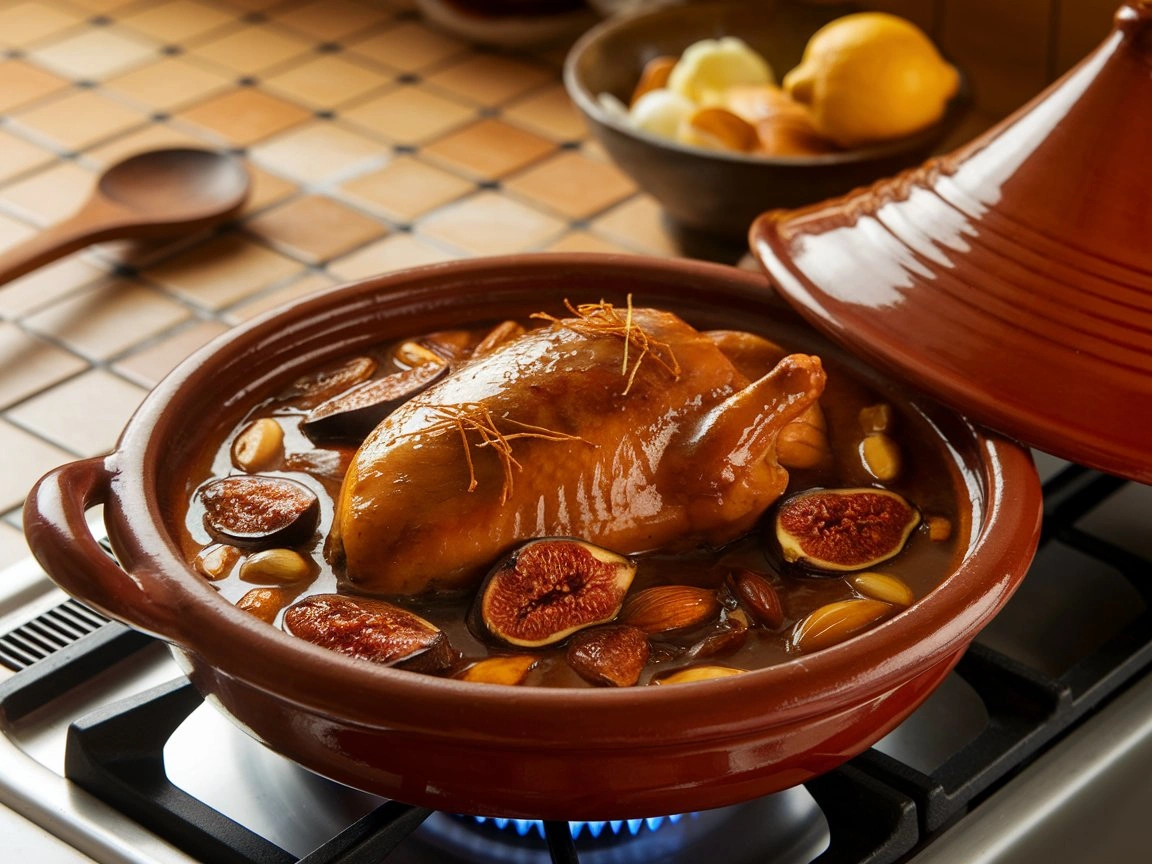
- Sear the Duck – In a tagine or heavy-bottomed pot, brown the duck pieces in olive oil and butter until golden.
- Sauté the Aromatics – Remove the duck, then cook onions and garlic in the same pot until soft.
- Add Spices & Broth – Stir in the ground cinnamon, turmeric, ginger, and saffron, then add the broth.
- Simmer Slowly – Return the duck to the pot, cover, and cook on low heat for about 1.5 to 2 hours.
- Add Sweetness – Stir in honey and dried figs in the last 20 minutes of cooking.
- Garnish & Serve – Top with toasted almonds and sesame seeds before serving.
Cooking Tips for the Best Flavor
- Use a traditional tagine – It enhances the flavor and ensures slow, even cooking.
- Let the spices infuse – The longer the duck marinates, the richer the taste.
- Balance the flavors – Adjust sweetness with honey and acidity with a splash of lemon juice.
- Toast your almonds – This enhances their nuttiness and crunch.
Nutritional Benefits of Moroccan Duck Tagine
Moroccan duck tagine is not just a flavorful dish—it’s also packed with essential nutrients that contribute to a balanced diet. Below, we break down the health benefits of its key ingredients.
Key Nutrients in Duck Tagine
| Ingredient | Health Benefits |
|---|---|
| Duck Meat | High in protein, rich in iron and B vitamins for energy. |
| Figs & Prunes | Excellent sources of fiber, aiding digestion and gut health. |
| Almonds | Provide heart-healthy fats, vitamin E, and antioxidants. |
| Olive Oil | Supports heart health and reduces inflammation. |
| Spices (Cinnamon, Ginger, Turmeric) | Anti-inflammatory properties, aiding metabolism and immunity. |
| Honey | Natural energy booster with antibacterial properties. |
Is Duck Tagine a Healthy Choice?
Yes! While duck is richer in fat than chicken, it contains healthy monounsaturated fats that benefit heart health. Plus, the combination of dried fruits, nuts, and warm spices creates a nutrient-dense meal. For a lighter version, you can:
- Use skinless duck meat to reduce fat content.
- Limit added honey if you’re watching sugar intake.
- Serve it with whole grains like quinoa instead of white bread.
How to Cook Moroccan Duck Tagine Perfectly
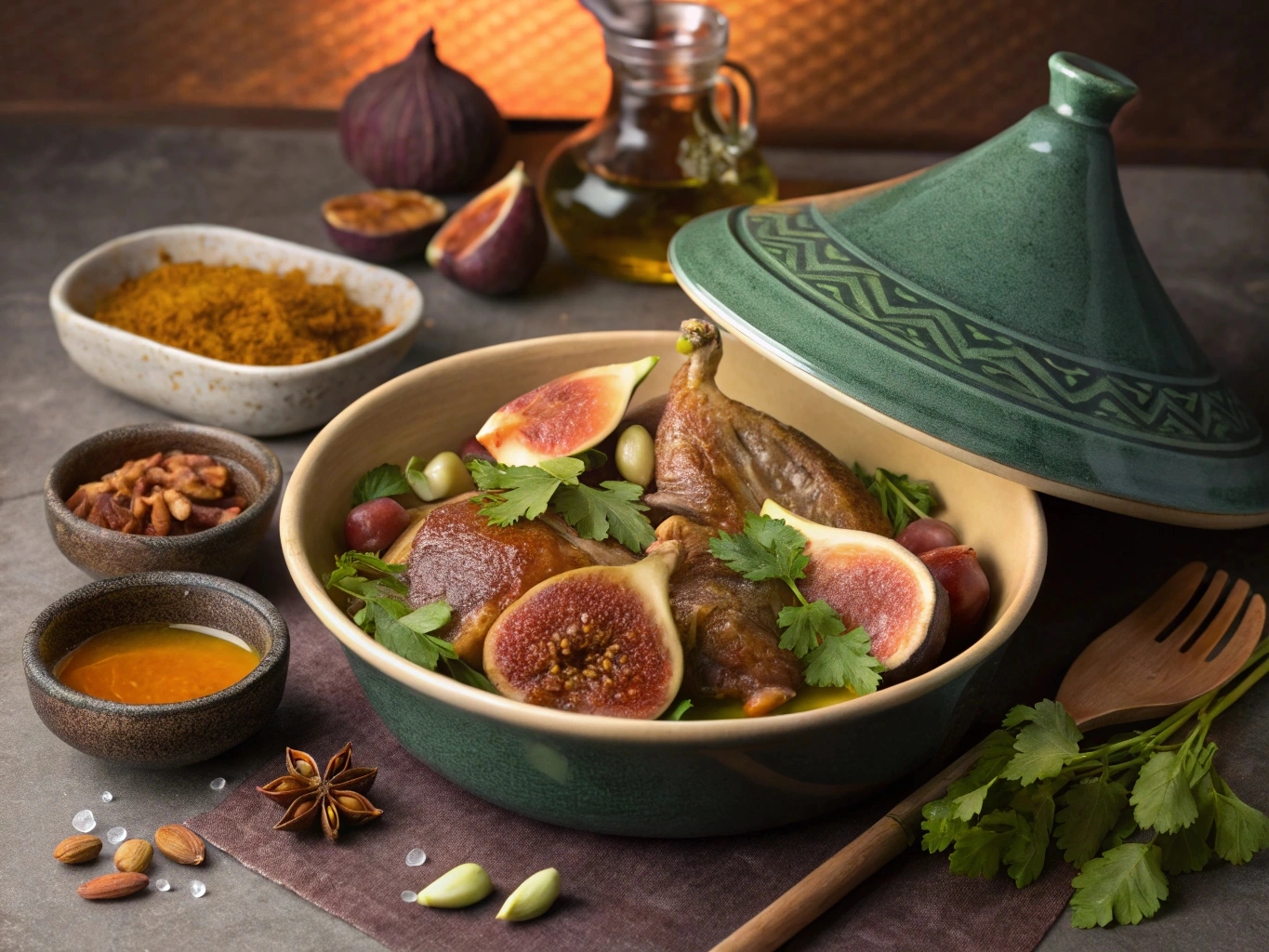
Mastering Moroccan duck tagine requires the right technique, patience, and a deep understanding of its slow-cooked flavors. Below, we’ll go through essential tips and steps to ensure your dish turns out rich, tender, and aromatic every time.
Key Steps for a Flavorful Duck Tagine
- Marinate the Duck – Marination is crucial for deep flavor. Rub the duck with a blend of Moroccan spices like cinnamon, ginger, turmeric, and Ras el Hanout. Let it rest for at least 4 hours or overnight for maximum absorption.
- Sear for a Crispy Skin – Heat olive oil in a heavy-bottomed pan and sear the duck pieces until golden brown. This step locks in juices and enhances texture.
- Layer the Flavors – In a tagine or Dutch oven, sauté onions, garlic, and preserved lemons for a rich base.
- Slow Cook with Aromatics – Add dried figs, almonds, prunes, and a touch of honey. Pour in broth and let the dish simmer for 1.5 to 2 hours until the duck is fall-apart tender.
- Perfect the Balance – Before serving, taste and adjust sweetness, acidity, and seasoning. Garnish with fresh herbs and toasted almonds for a final touch.
Common Mistakes to Avoid
To ensure your duck tagine turns out perfect, avoid these common mistakes:
| Mistake | Why It’s a Problem | Solution |
|---|---|---|
| Overcooking the duck | Can make the meat dry and stringy. | Keep the heat low and check doneness after 1.5 hours. |
| Not marinating long enough | Results in bland, under-seasoned meat. | Let the duck marinate for at least 4 hours or overnight. |
| Using too much liquid | Drowns the flavors and makes the sauce too thin. | Add liquid gradually and allow it to reduce. |
| Skipping the searing step | Leads to a lack of depth in flavor and texture. | Always brown the duck before slow-cooking. |
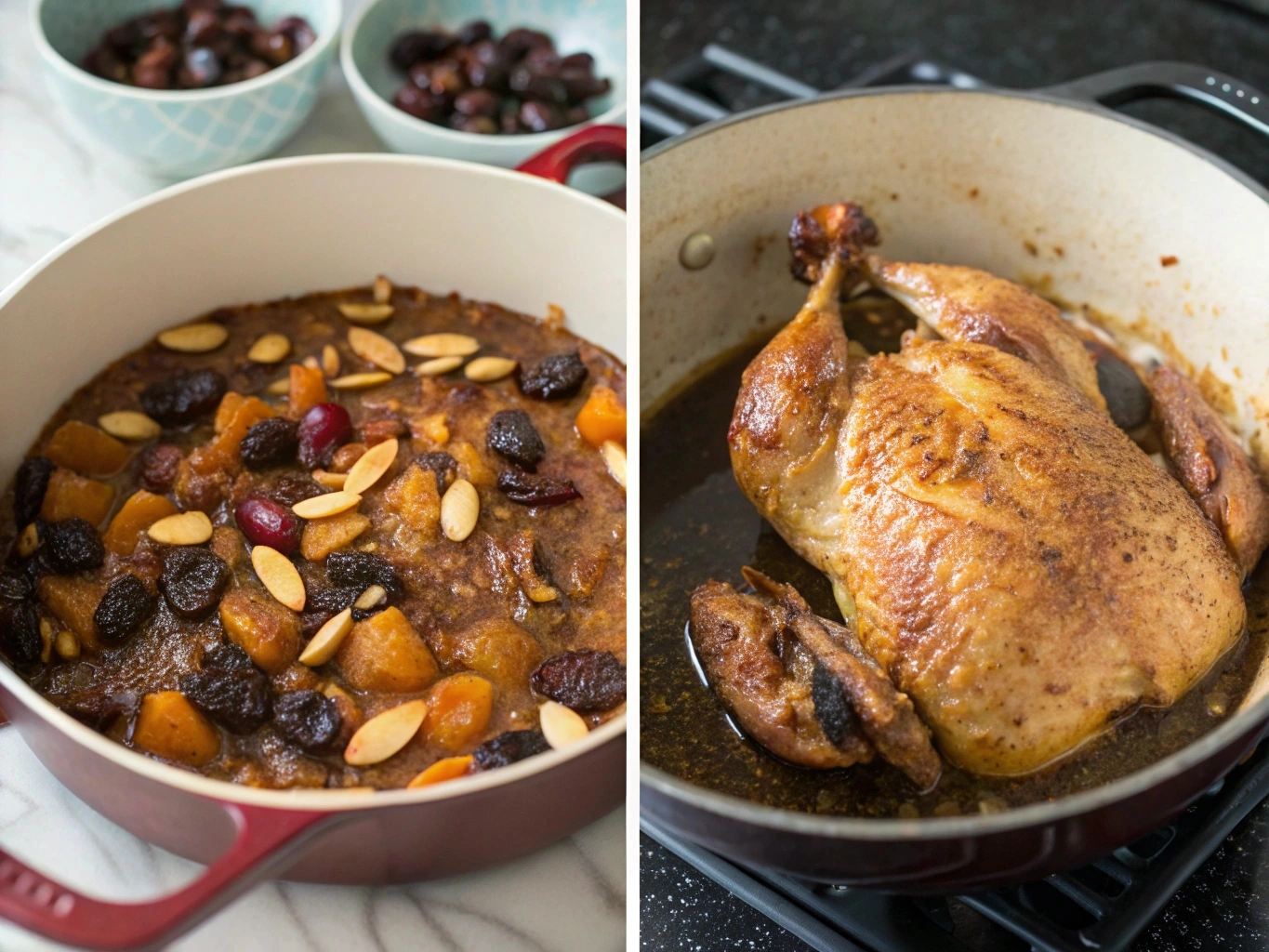
The Unique Flavor Profile of Moroccan Duck Tagine
Moroccan duck tagine is a perfect balance of savory, sweet, and aromatic spices, creating an unforgettable dish. This harmony of flavors comes from a thoughtful combination of spices, dried fruits, and slow cooking techniques that define Moroccan cuisine.
Key Ingredients and Their Flavor Contributions
The magic of Moroccan duck tagine lies in its carefully selected ingredients, each adding a distinct note to the dish. Here’s a breakdown of the essential components:
| Ingredient | Flavor Contribution |
|---|---|
| Duck | Rich, gamey, and deeply flavorful when slow-cooked. |
| Cinnamon | Adds a warm, slightly sweet depth to the sauce. |
| Ginger | Brings a mild heat and earthiness. |
| Turmeric | Provides warmth and a vibrant golden hue. |
| Ras el Hanout | A complex spice blend that enhances overall depth. |
| Preserved Lemons | Adds tangy, slightly fermented citrus notes. |
| Honey | Balances the savory spices with natural sweetness. |
| Dried Figs & Prunes | Infuse the dish with a subtle, caramel-like sweetness. |
| Almonds | Contribute a nutty crunch for added texture. |
Why These Ingredients Work Together
- The contrast of sweet and savory: The sweetness of honey, figs, and prunes complements the rich, fatty duck meat, while spices like cinnamon and ginger enhance the warmth.
- Citrus balance: The addition of preserved lemons cuts through the richness, preventing the dish from becoming too heavy.
- Slow cooking for depth: The long, gentle simmer allows all flavors to meld beautifully, creating a deeply aromatic and well-rounded dish.
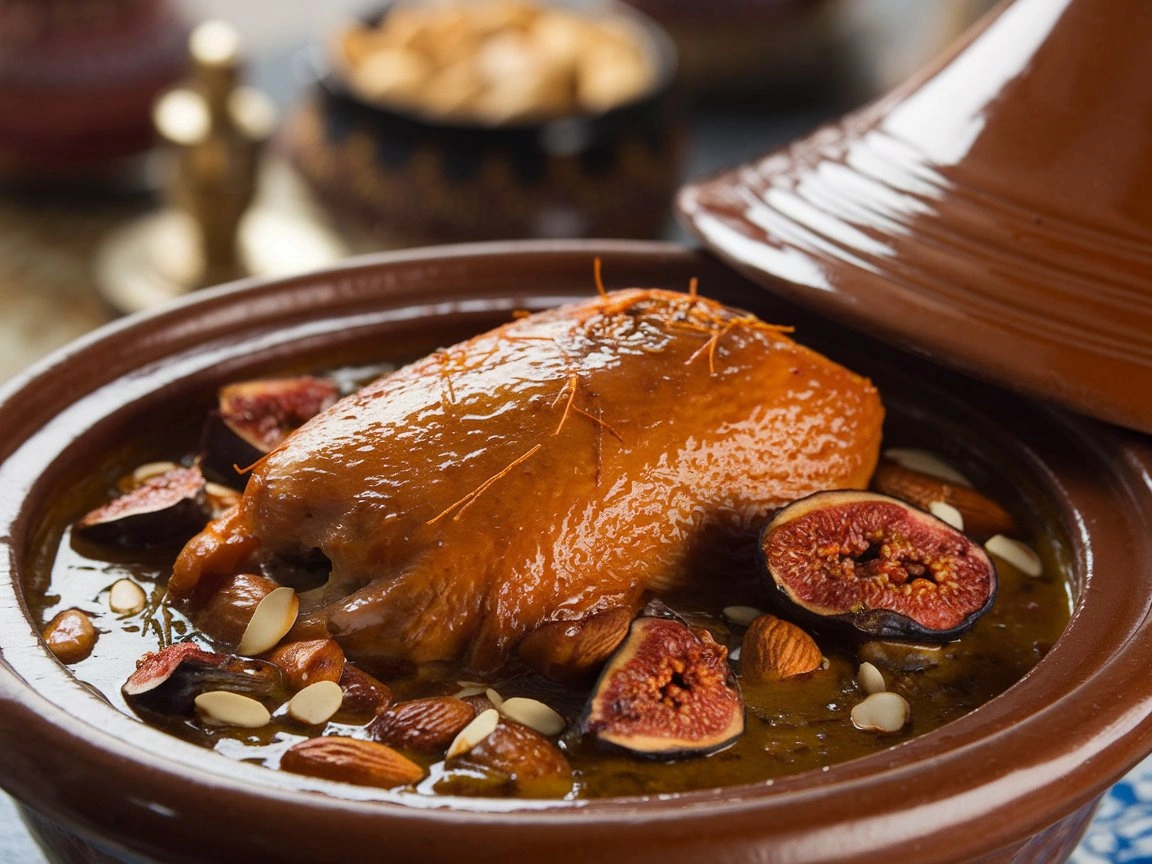
Pro Tips for the Best Results
✔ Marinate the duck overnight with spices and a little olive oil for deeper flavor.
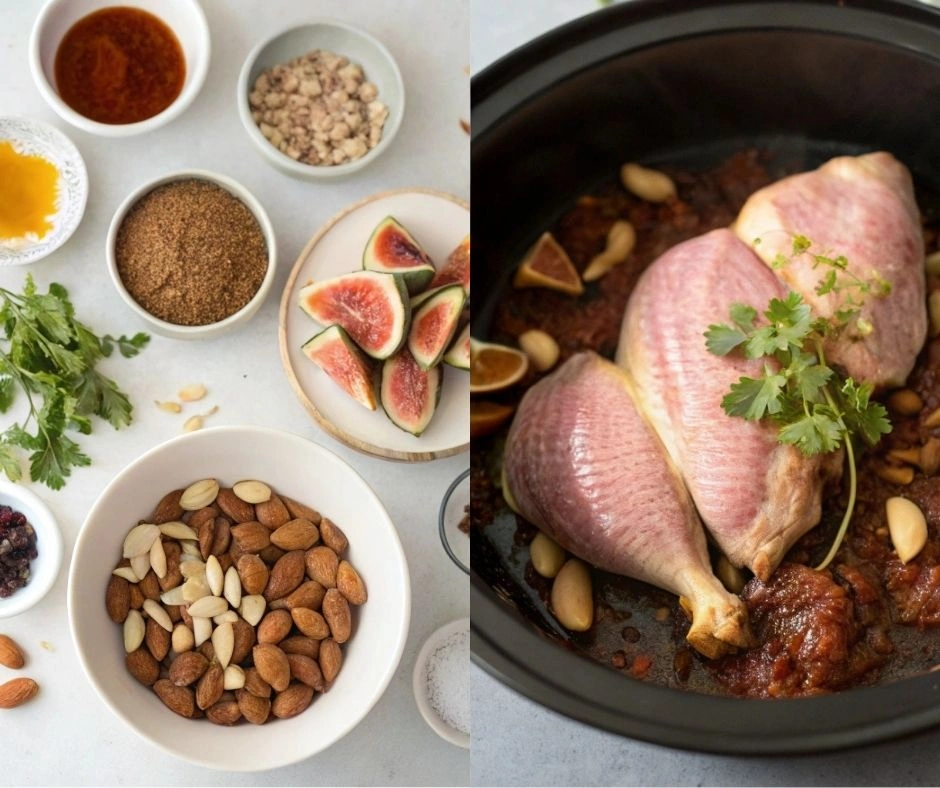
✔ Use a slow cooker if you don’t have a tagine low and slow is the key!
✔ Adjust the sweetness by adding more or less honey and dried fruits to suit your taste.
✔ For a crispier texture, broil the duck for a few minutes before serving.
Nutritional Benefits of Moroccan Duck Tagine
Moroccan duck tagine is not just a feast for the senses it also offers impressive nutritional benefits. The combination of duck, aromatic spices, dried fruits, and nuts creates a dish that is rich in protein, healthy fats, and essential vitamins.
Nutritional Breakdown
Here’s a detailed nutritional profile of Moroccan duck tagine per serving (approximately 1 cup):
| Nutrient | Amount per Serving | Health Benefits |
|---|---|---|
| Calories | ~450 kcal | Provides sustained energy. |
| Protein | 28g | Supports muscle growth and repair. |
| Healthy Fats | 20g | Contains omega-3 and monounsaturated fats, beneficial for heart health. |
| Carbohydrates | 35g | Primarily from dried fruits, offering natural sweetness and fiber. |
| Fiber | 6g | Aids digestion and promotes gut health. |
| Iron | 3.5mg | Helps transport oxygen in the blood and prevents fatigue. |
| Vitamin A | 15% DV | Supports vision and immune function. |
| Vitamin B12 | 40% DV | Essential for nerve health and energy production. |
| Potassium | 380mg | Regulates blood pressure and hydration. |
Why This Dish Is Healthy
✅ Rich in Lean Protein – Duck provides high-quality protein that keeps you full and helps maintain muscle mass.
✅ Packed with Antioxidants – Spices like cinnamon, ginger, and turmeric fight inflammation and boost immunity.
✅ Heart-Healthy Fats – Duck fat is rich in monounsaturated fats, which help reduce bad cholesterol.
✅ Supports Digestive Health – The fiber from dried fruits and nuts aids digestion and prevents bloating.
✅ Balanced Energy Release – The mix of proteins, fats, and natural sugars ensures sustained energy levels without sugar crashes.
Tips for a Lighter Version
If you’re looking for a healthier alternative, try these simple modifications:
✔ Remove excess duck fat before cooking to reduce calorie intake.
✔ Use less honey and dried fruit to cut down on natural sugars.
✔ Serve with quinoa instead of couscous for a high-protein, gluten-free option.
✔ Increase vegetables like carrots, zucchini, and bell peppers for more fiber and nutrients.
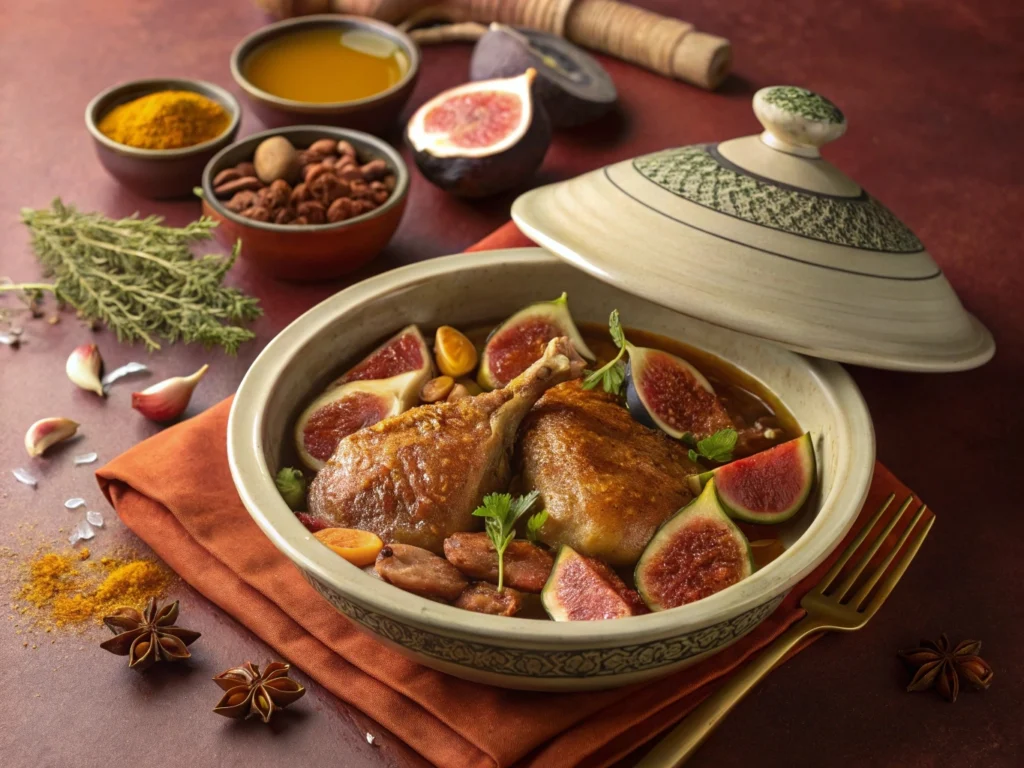
Traditional Ingredients and Their Substitutes
The beauty of Moroccan duck tagine lies in its authentic ingredients that create a harmonious balance of flavors. But what if you can’t find a specific ingredient? Don’t worry! Below is a comprehensive ingredient list with suitable substitutions to ensure you still achieve an incredible dish.
Essential Ingredients and Substitutes
| Traditional Ingredient | Why It’s Used | Best Substitutes |
|---|---|---|
| Duck legs or whole duck | Rich, flavorful meat that absorbs spices well | Chicken thighs (milder flavor) or lamb (for extra richness) |
| Saffron | Adds deep golden color and floral aroma | Turmeric (for color) + a pinch of paprika |
| Cinnamon sticks | Enhances warmth and depth | Ground cinnamon (use sparingly) |
| Ginger & garlic | Provides aromatic, spicy undertones | Fresh or powdered versions work well |
| Dried figs or prunes | Brings natural sweetness | Dates, raisins, or apricots |
| Toasted almonds | Adds crunch and nuttiness | Hazelnuts or pine nuts |
| Honey | Balances the spices with mild sweetness | Maple syrup or brown sugar |
| Preserved lemon | Offers a citrusy, tangy punch | Fresh lemon zest + a pinch of salt |
| Ras el Hanout | A blend of warming Moroccan spices | Garam masala or a mix of cumin, coriander, paprika, and nutmeg |
Using these substitutes allows you to adapt the recipe while maintaining its essence. Whether you’re looking for alternative flavors or working with pantry staples, there’s always a way to keep your tagine delicious.
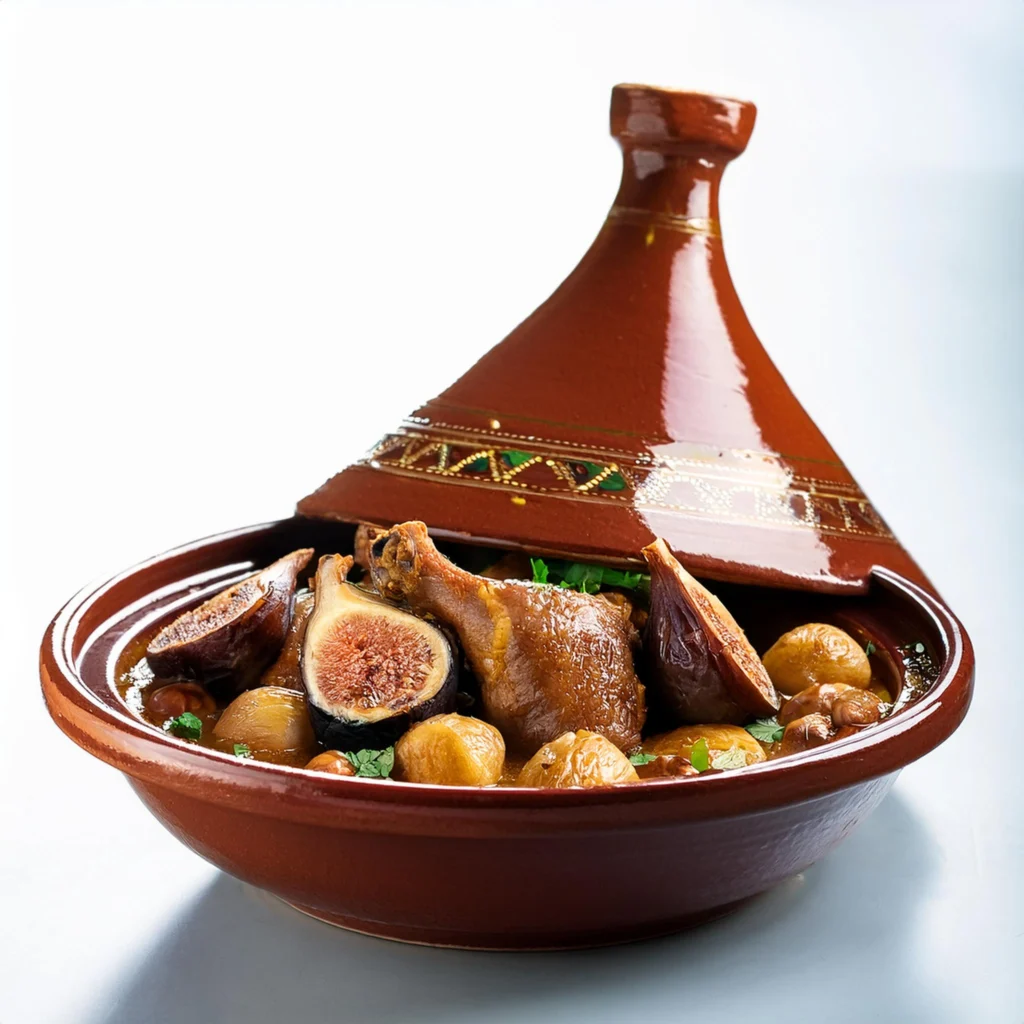
Perfect Pairings for Moroccan Duck Tagine
The rich flavors of Moroccan duck tagine demand a thoughtful pairing to enhance the dining experience. Whether you’re looking for side dishes, beverages, or even dessert, we have some great ideas to complement the complex spices and sweetness of this dish. Let’s dive into the best pairings to serve with Moroccan duck tagine.
Ideal Side Dishes for Moroccan Duck Tagine
- Couscous
- Why it works: The light, fluffy texture of couscous perfectly absorbs the rich, flavorful sauce of the tagine, making each bite a perfect balance of flavors.
- How to serve it: Serve the couscous steamed with a bit of olive oil or sautéed with vegetables like carrots, zucchini, or bell peppers.
- Roasted Vegetables
- Why it works: Roasting vegetables like sweet potatoes, carrots, and parsnips brings out their natural sweetness, complementing the sweet figs and honey in the tagine.
- How to serve it: Season with cumin, cinnamon, and a drizzle of olive oil for a warm, comforting addition.
- Moroccan Flatbread
- Why it works: Traditional khobz (Moroccan bread) or a similar flatbread is perfect for dipping into the sauce. The chewy texture helps soak up the rich flavors.
- How to serve it: Tear the bread into pieces and serve alongside your tagine for a truly authentic Moroccan meal.
Best Drinks to Pair with Moroccan Duck Tagine
- Mint Tea
- Why it works: The refreshing and slightly sweet mint tea provides a delightful contrast to the savory and rich duck tagine. It’s a traditional Moroccan pairing.
- How to serve it: Serve the tea hot, and add a few sprigs of fresh mint for extra aroma.
- Pomegranate Juice
- Why it works: The tartness of pomegranate juice cuts through the richness of the duck, providing a refreshing balance.
- How to serve it: Serve chilled in small glasses to cleanse the palate between bites of the tagine.
Sweet Finishes: Desserts to Complement Your Meal
- Moroccan Orange Blossom Cake
- Why it works: The fragrant orange blossom water adds a light, floral note that perfectly contrasts with the savory richness of the tagine.
- How to serve it: Serve with a dollop of whipped cream or a drizzle of honey for added sweetness.
- Baklava
- Why it works: The crispy, honey-soaked layers of baklava add a touch of sweetness and texture, complementing the figs in the tagine.
- How to serve it: Enjoy a small portion of baklava with a cup of Moroccan mint tea to end the meal on a sweet note.
Tips for Making the Best Moroccan Duck Tagine
To truly master the art of Moroccan duck tagine, it’s essential to follow a few tips and tricks that will help you get the most flavorful and tender results. From choosing the right cut of duck to perfecting the cooking technique, these tips will guide you to an unforgettable meal.
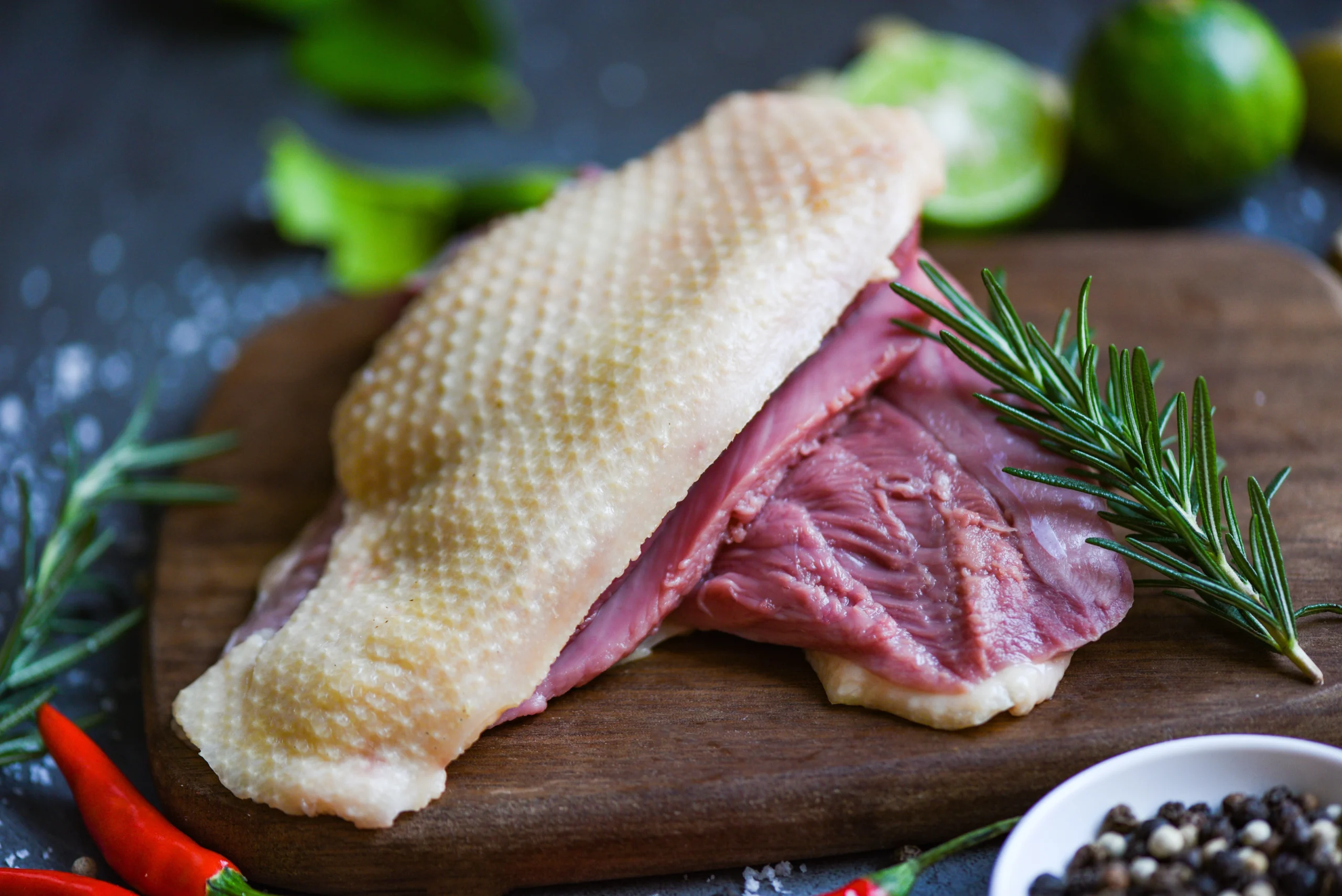
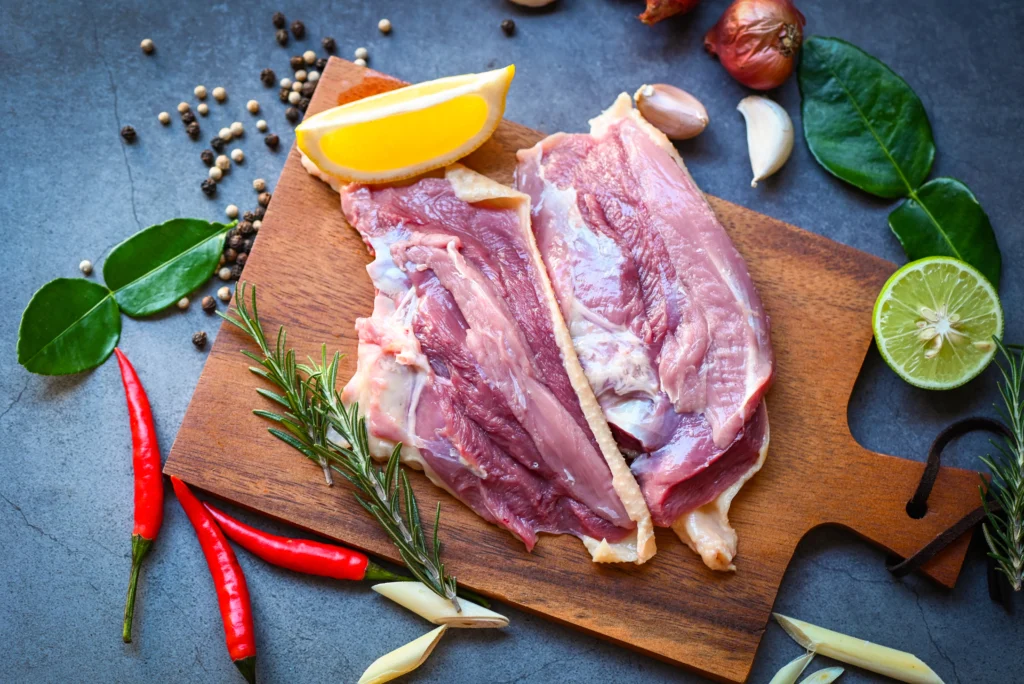
Choosing the Right Cut of Duck
- Duck Legs vs. Duck Breasts
- Why it matters: For tagine, duck legs are the preferred cut as they are more marbled with fat, which keeps the meat moist and tender throughout the slow-cooking process. Duck legs also absorb the spices and flavors better than breasts, which can be tougher.
- Tip: Opt for bone-in duck legs for the best texture and flavor, as the bones will release natural collagen, enriching the sauce.
- Choosing Organic or Free-Range Duck
- Why it matters: Free-range duck tends to have a deeper, more pronounced flavor compared to conventionally raised ducks. The meat is also leaner, making it a healthier option without sacrificing richness.
- Tip: Whenever possible, go for organic or free-range ducks for a higher quality taste that complements the spices in the tagine.
Mastering the Cooking Technique
- Searing the Duck
- Why it works: Searing the duck skin side down at the beginning of the cooking process ensures that the fat renders and the skin becomes crispy. This step also helps lock in the duck’s juices, resulting in a more flavorful dish.
- Tip: Use medium-high heat and be patient. Don’t rush this step, as it creates a crisp crust that adds texture to the final dish.
- Slow-Cooking the Duck
- Why it works: Moroccan tagines are all about slow-cooking to allow the spices and flavors to meld together. Cooking the duck in a tagine at low heat for about 1.5–2 hours will help break down the tough connective tissues in the meat, resulting in a fall-off-the-bone tenderness.
- Tip: If you don’t have a tagine, a Dutch oven works just as well for slow cooking. Keep the heat on low to allow the duck to cook slowly and evenly.
- Braising with Broth and Spices
- Why it works: The duck is braised in a flavorful liquid, which is typically a combination of chicken broth, orange juice, and a mixture of spices like cumin, cinnamon, ginger, and saffron. The liquid helps infuse the meat with flavor while keeping it moist.
- Tip: Don’t skimp on the spices; they’re what give Moroccan tagines their signature depth. Taste the broth as it cooks and adjust the seasoning to your liking.
Adding Sweetness and Balance
- Incorporating Dried Fruits
- Why it works: Dried fruits like apricots, prunes, and figs are traditional in Moroccan tagines, adding natural sweetness to balance the spices. The sweetness also complements the savory richness of the duck.
- Tip: Soak the dried fruits in warm water for about 10 minutes before adding them to the tagine to ensure they soften and release their flavors.
- Using Honey
- Why it works: A drizzle of honey towards the end of cooking adds a subtle, rich sweetness that enhances the dish’s overall flavor profile without overpowering it.
- Tip: Use Moroccan honey if you can find it for a truly authentic taste. It has a unique flavor that pairs beautifully with the spices in the tagine.
Conclusion
A well-made Duck Tagine with Figs and Honey is more than just a dish it’s an experience. The succulent duck, infused with Moroccan spices, paired with the sweetness of figs and honey, creates a harmonious blend of flavors that lingers on the palate. Whether served with fluffy couscous, warm flatbread, or saffron-infused rice, this tagine is bound to be a showstopper at any dinner table.
Now that you have all the secrets to crafting this rich and aromatic dish, it’s time to put your cooking skills to the test. Gather your ingredients, fire up your tagine, and enjoy a taste of Morocco in your own home!
Q&A
❓ Can I use chicken instead of duck?
Yes! Chicken thighs or legs work well as substitutes for duck, though they will cook faster, so adjust the cooking time accordingly.
❓ What’s the best way to get crispy duck skin in a tagine?
For crispy skin, sear the duck first in a pan before adding it to the tagine. This step locks in flavor and adds a beautiful golden crust.
❓ Can I use fresh figs instead of dried?
Absolutely! Fresh figs add a slightly different texture, but they will still caramelize beautifully in the sauce.
❓ What wine pairs well with this dish?
A medium-bodied red wine with fruity and spicy notes like a Grenache or Syrah pairs beautifully with the rich flavors of the tagine.
❓ How do I store and reheat leftovers?
Store leftovers in an airtight container in the fridge for up to 3 days. Reheat slowly over low heat to preserve moisture and flavor.